
Tipp
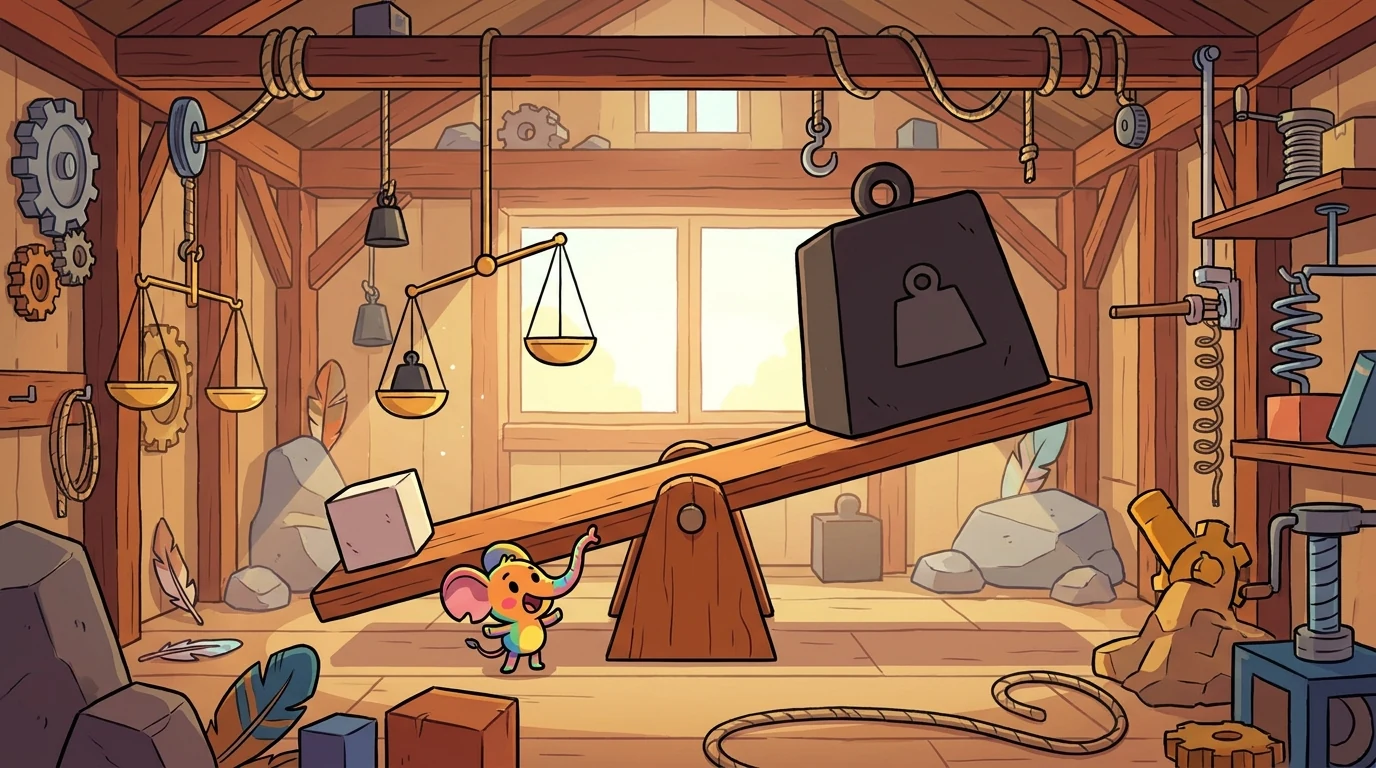
WEIGHT / BALANCE — *the heavier side tips down; add weight to a side and the seesaw goes down there; equal weights balance.*
Listen along — Tipp
Loading audio…
Press play to listen along. The line being read lights up as you go.
Show full transcript
Loading transcript…
Tipp and the Heavier Side
Tipp is a tiny, bright elephant-shrew-kid with a long twitchy nose, who loves the seesaw more than anything. Tipp lives by the balance-beam in the Tinker-Shed, where things are always being weighed, tipped, and balanced.
Tipp shows one clear, tippy truth: the heavier side goes down. Put a big heavy block on one side of the seesaw — down it tips. Put a little light one on the other — up it floats. And when both sides weigh the same, the seesaw sits perfectly level. “Heavier side, down it goes,” Tipp says, nose twitching. “Same weight — it balances.” Weight decides which way things tip.
Tipp learned about balance by playing on the seesaw all day.
When Tipp was little, the seesaw seemed to tip however it liked — down, up, no reason Tipp could see. Then Tipp started noticing: it always tipped toward the heavier thing. A rock beat a feather every time. Two matching blocks made it sit still and level. It wasn’t a mystery — it was the weight! “The heavy side always wins the tip,” Tipp discovered. Now Tipp can look at a seesaw and guess which way it’ll go.
Today, Tink brings the kid over to Tipp’s balance-beam. “Tipp shows how weight makes things tip,” Tink says. “Watch which side goes down.”
“Balance with me,” Tipp says, twitching that long nose. “Put something heavy on one side — which way tips it? Now match it on the other side — what happens?”
Tipp shows the kid a seesaw with a big acorn on one side, empty on the other. “Guess first!” Tipp says, remembering Tink’s trick. “Which side goes down?” Then they watch — the acorn side tips down. A grown-up can weigh-and-balance along too: add things to each side and watch it tip and level together — because tinkering is for balancing together, never a test. And Tipp never says “wrong.” If the kid guesses the empty side will drop, Tipp just twitches happily: “Let’s see! Ooh — the acorn side went down. So the heavier side wins. Now, how do we make it balance?” In Tipp’s corner, every tip shows something, and finding balance is a happy game.
By the end, the kid can guess which side tips — and make the seesaw balance level — all by themselves. Tipp’s nose wiggles with delight.
And here is what Tipp loves most: the perfectly satisfying moment when both sides match and the seesaw floats exactly level — that calm, settled, “there — it balances!” feeling of everything even and steady. Tipp feels it settle warm every time the beam goes still. “Same weight — it balances,” Tipp says, perched happily on the level beam, cozy and content. That steady, settled feeling of perfect balance — that’s the very best part for Tipp.
The TinkerTots ensemble
Tipp is part of TinkerTots's distributed-narrative cast. Each character embodies a different curricular primitive; together they teach the full subject.
-
Tink
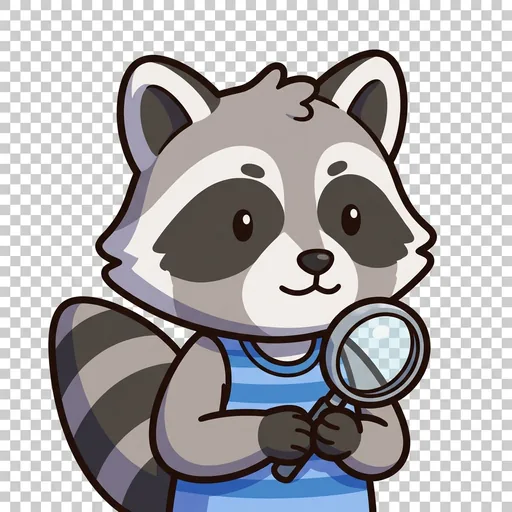
Predict-then-test (hero) — a raccoon who asks 'what will happen if…?' then tries it; the predict-then-check IS science
-
Rolla
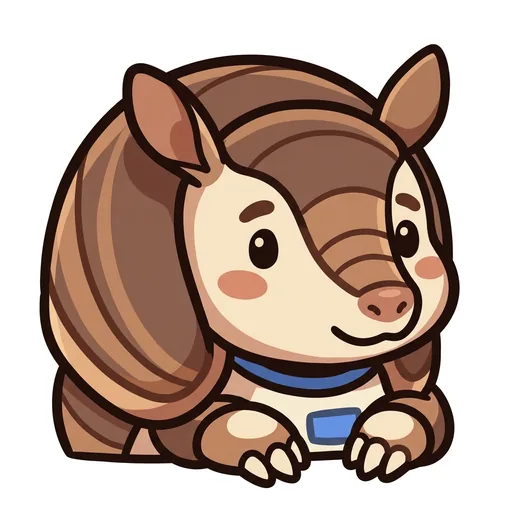
Motion & force — an armadillo who rolls down ramps to push things (a harder push goes farther)
-
Flick
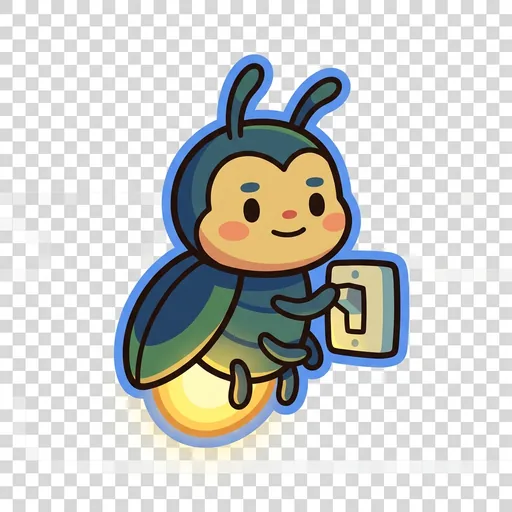
Switch / cause — a firefly who flicks a switch and the light goes on or off