
The Whole Tree
the whole tree is a picture of how YOU learn — a strength for seeing that a stuck branch is rarely the whole story: look lower to the trunk and roots, find the strong root you already have, and lead the stuck part with it
A story read by The Whole Tree
Loading audio…
Press play to listen along. The line being read lights up as you go.
Show full transcript
Loading transcript…
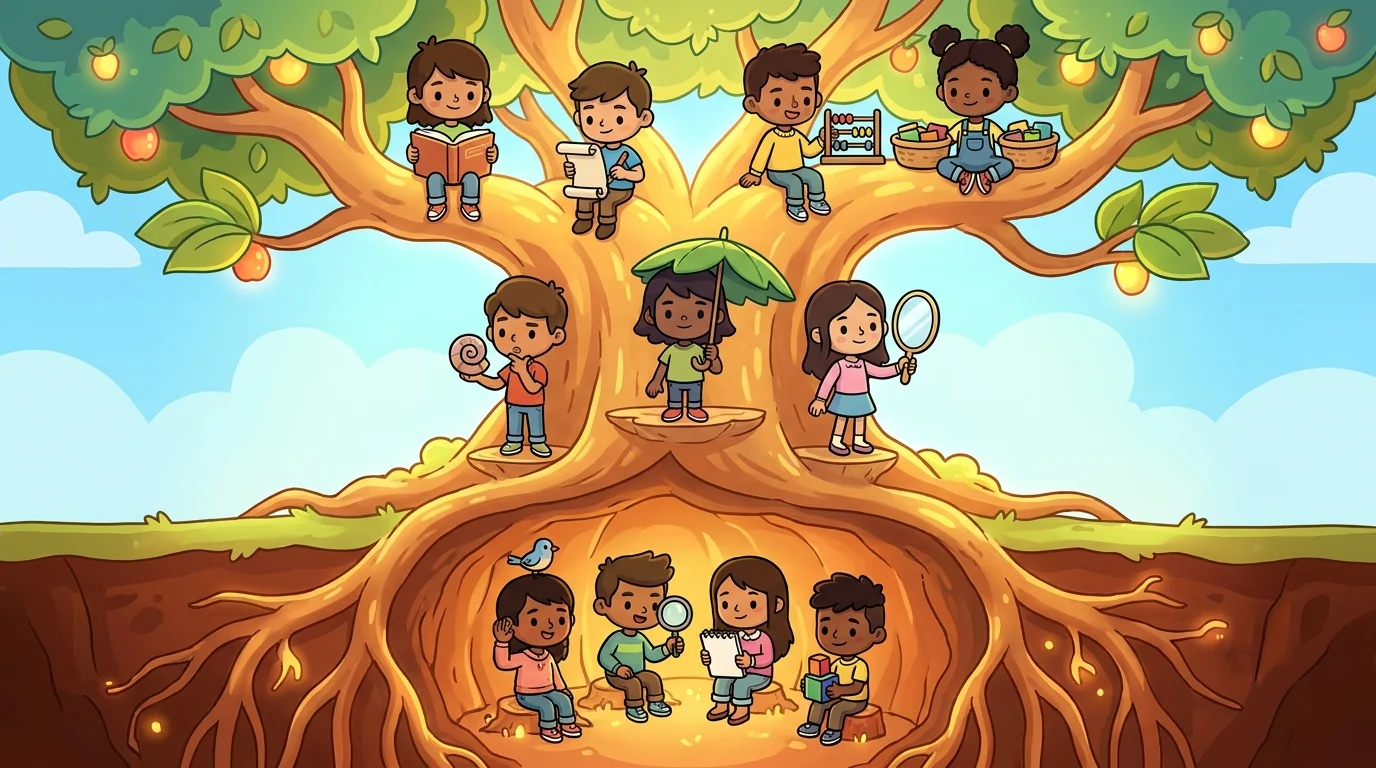
By now you've met the guides one branch, one root at a time. But the Learning Tree only makes sense when you step back and see it whole — because it isn't a list of guides. It's a picture. A picture of how one person — you — takes in the world, thinks about it, and gets things done.
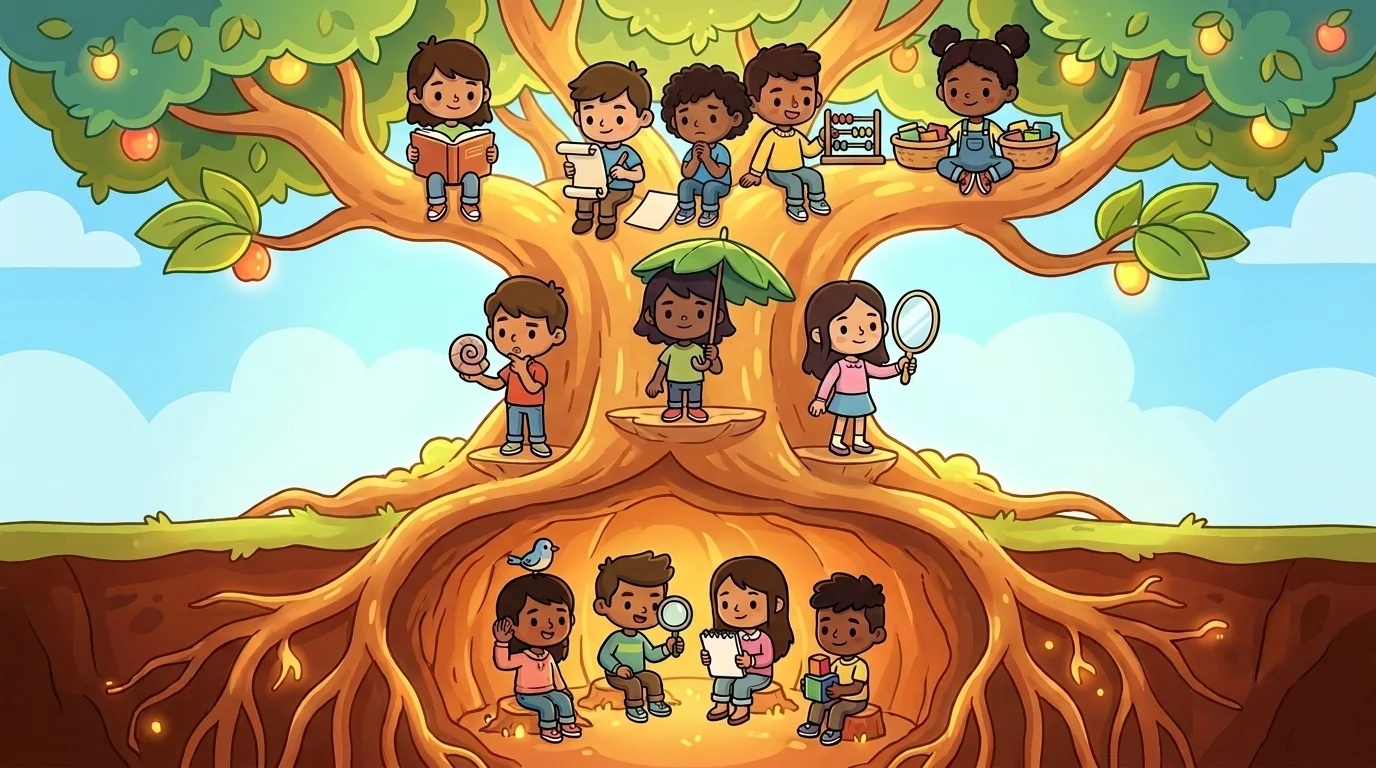
Down at the bottom are the four roots: Hark listening, Glance seeing, Planner doing, Modu steadying. Up the strong middle stand the trunk's three thinkers: Manywhy, Shade, and Mirror. And out at the top, where the light is, hang the branches: Reader, Scribe, Reckoner, Sorter — reading, writing, math, organizing. School lives out on the branches. That's why school is where a person most often feels stuck.
One day a kid climbed all the way out to the writing branch, where Scribe works, and got stuck fast. The words wouldn't come out onto the page. And the branch handed them the worst, oldest thought: I'm just bad at writing.
That's when the whole tree did the thing it's for.
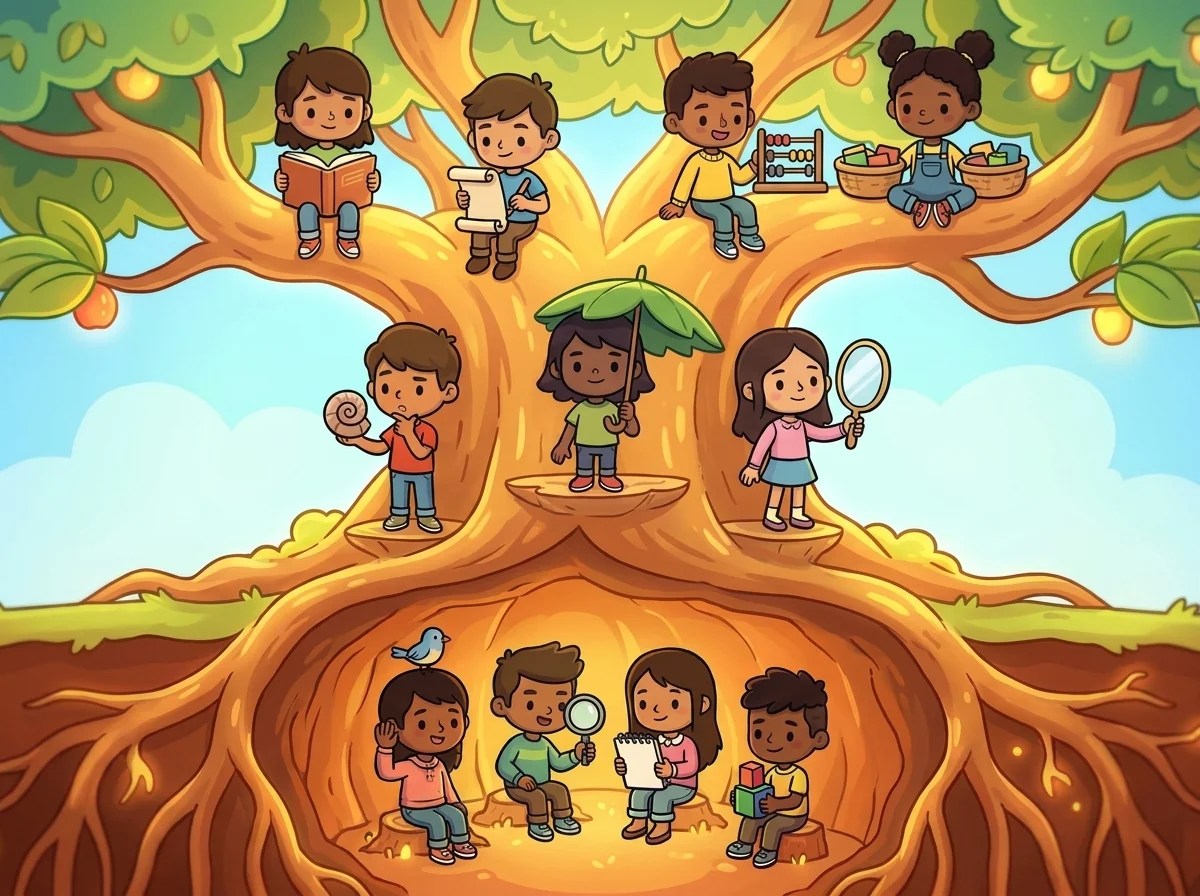
"Don't climb harder," the tree seemed to say. "Look lower."
So the kid climbed back in toward the trunk. Mirror met them there and asked, warmly, "Where is this stuck, really — is it the writing, or something underneath it?" The kid thought. "...It's not the words. I have the words. I can't get them from my head to the page fast enough. My hand loses them."
"So it isn't a branch problem," Manywhy said. "What else is going on, further down?"
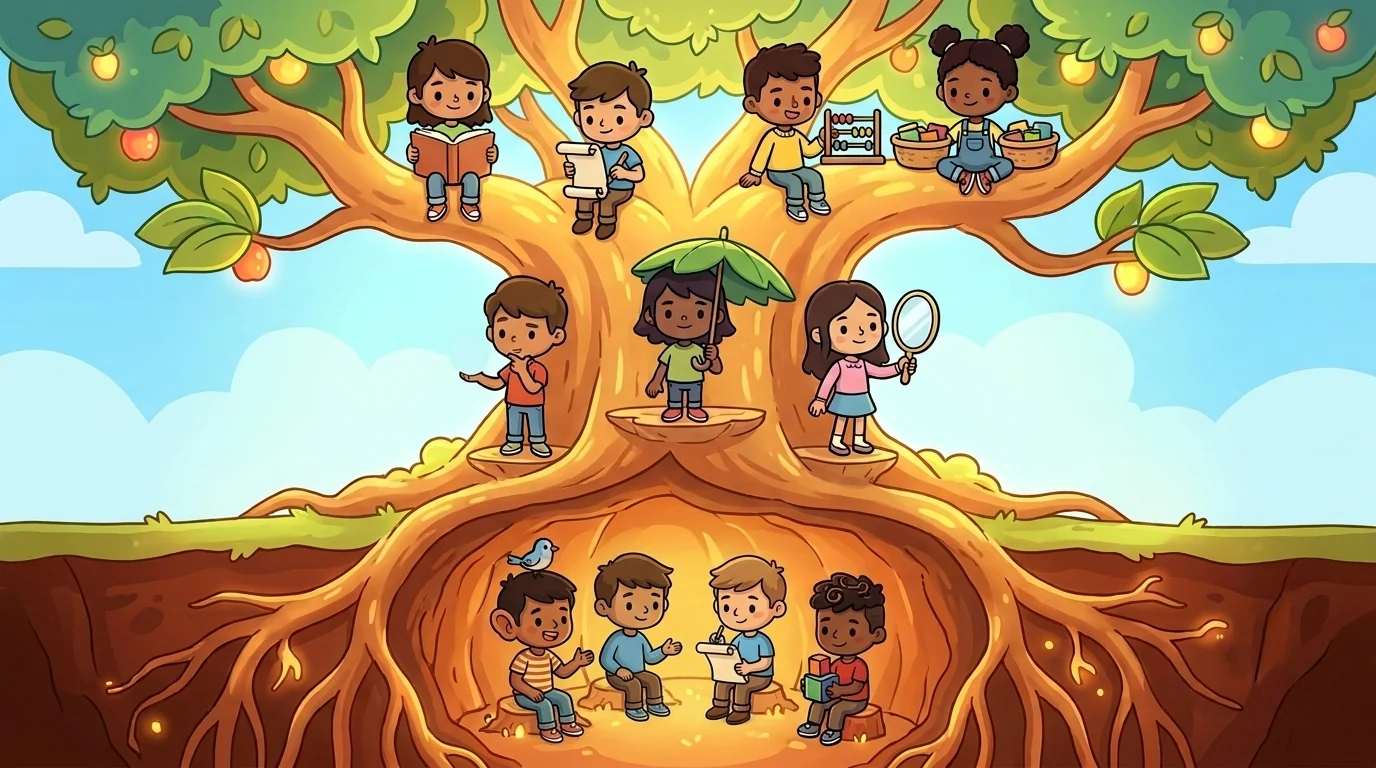
Down they went, past the trunk, into the roots — and there was Hark, the ears root, who catches the whole world by sound. "You said you have the words," Hark said. "You mean you can hear them. You can say them out loud."
The kid nodded slowly. And right there, a knot they'd carried for years came loose — because the stuck thing was never them. The writing branch was thin, but the listening root was strong. They'd just been trying to reach a high branch without standing on their own best root.
So they leaned on Hark. They said the sentence out loud first — the strong root caught it — and then let Scribe copy down what they'd already heard themselves say. The words came. Not because the branch got magically bigger, but because the whole tree worked together, the way it was built to.
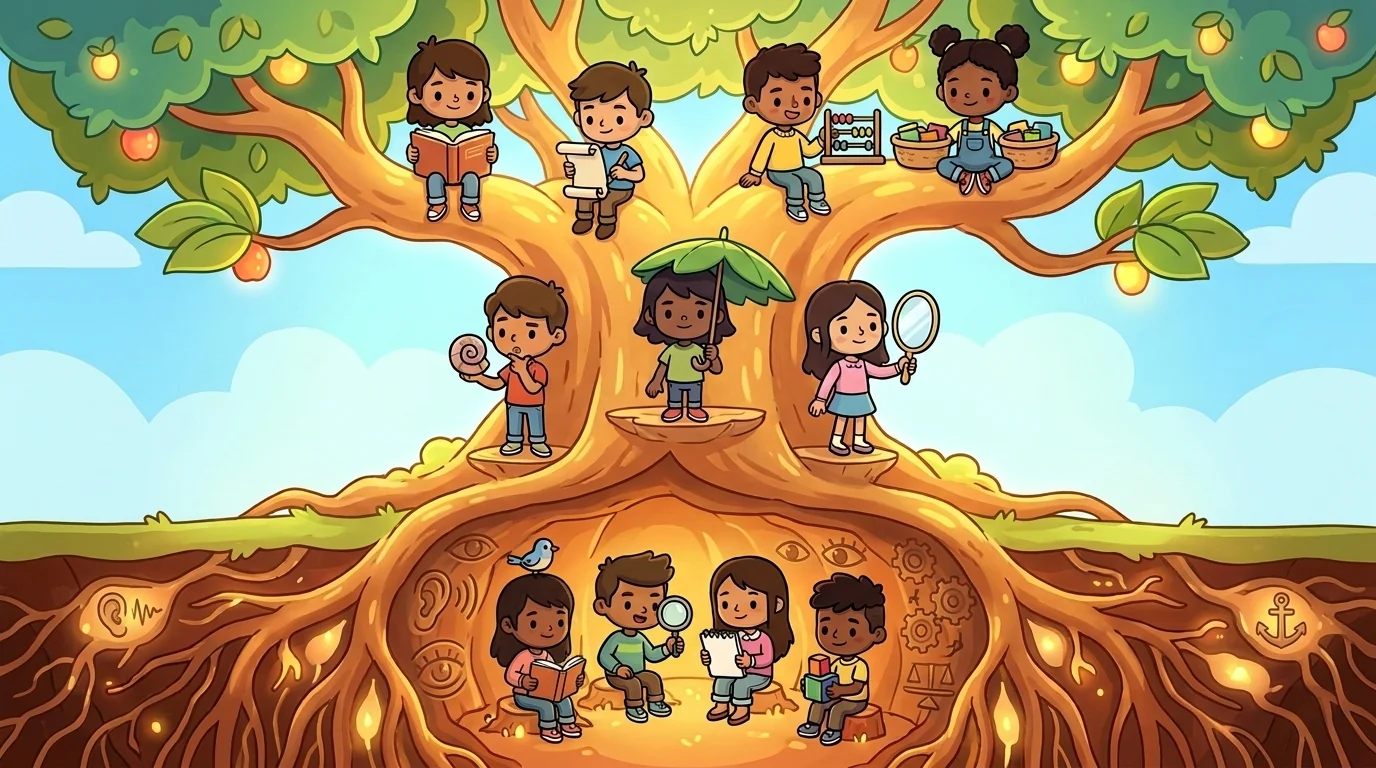
That is the secret the Learning Tree keeps: a stuck branch is almost never the end of the story. Look lower. Somewhere down in your trunk or your roots is a strength that can reach the thing that feels hard.
And here is the part that's true for every single person who climbs this tree: you have a strong root. Maybe it's listening, like Hark. Maybe it's seeing patterns, like Glance. Maybe it's doing-one-step-at-a-time, like Planner, or steadying yourself first, like Modu. Nobody's tree is strong everywhere — and nobody's tree is weak everywhere either. When a branch gets stuck, you don't have to climb harder and harder alone. You look lower, you find the root you already have, and you lead with it.
The tree is a picture of you. All of it. And the strong roots were yours the whole time.
The treeforge ensemble
The Whole Tree is part of treeforge's distributed-narrative cast. Each character embodies a different curricular primitive; together they teach the full subject.