Why did I get a different number the second time?
WobbleForge
Which result would you trust?
Two classmates timed the same swing. Classmate A wrote 1.4 s. Classmate B wrote 1.38 s, 1.45 s, 1.41 s.
How are you feeling?
Where this discovery comes from
Finding Ceres again
On 1 January 1801 the Italian astronomer Giuseppe Piazzi discovered Ceres. He tracked it for 40 days before it was lost in the glare of the Sun, and astronomers wanted to know where it would appear again.
One thing to hold: A stopwatch and a swing: time the same swing three times and write all three numbers down.
Why it matters: The only predictions that let the astronomer Franz Xaver von Zach find Ceres again were made by the 24-year-old Carl Friedrich Gauss, using a method now called least squares: a way to fit one answer to many measurements that do not quite agree. Gauss later showed that, under the right conditions, the average of repeated measurements is the best single guess.
What we don’t know: Adrien-Marie Legendre published the method first, in 1805. In 1809 Gauss claimed he had had the method since 1795, which led to an argument about who came first.
Dates:
- 1801 Piazzi discovers Ceres, then loses it.
- 1805 Legendre publishes least squares.
- 1809 Gauss publishes his method for orbits.
Meet the cast — the characters who teach this
-
 Wobbly measures three times, because one reading could be a fluke
-
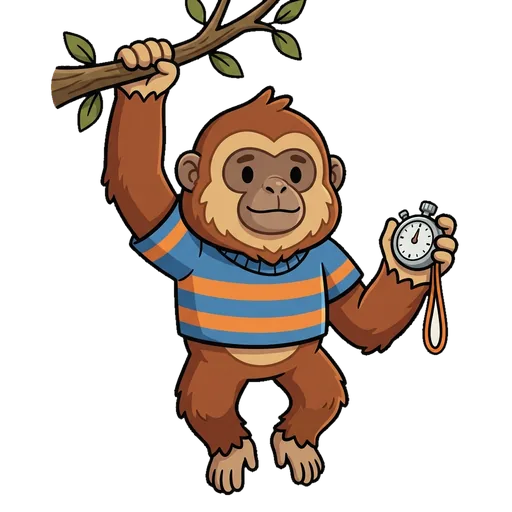 Swingle A gibbon who swings - times ten swings, not one, so a slow thumb matters less
-
 Tiltwhit A giraffe who sights the treetop - distance and tilt together give the height
-
 Spreadle An owl who compares - a difference smaller than the spread is not a real difference
What next? Pick a door
- More like this Science
Forge Is this a fair test? FossilForge How old is this rock layer? DepthQuest What changes as you dive deeper? - A bit harder Biome
Forge Can you keep this little world balanced? EcoSphere What happens if we remove the otters? FarmQuest What is really limiting the harvest? - Something different Voice
Tale How will you tell this tale? CommandForge Which command builds the world you want? WitQuest Can your wits beat the villain?