Mull
MULL — *sit with the puzzle first. let the guess form.*
Loading audio…
Press play to listen along. The line being read lights up as you go.
Show full transcript
Loading transcript…
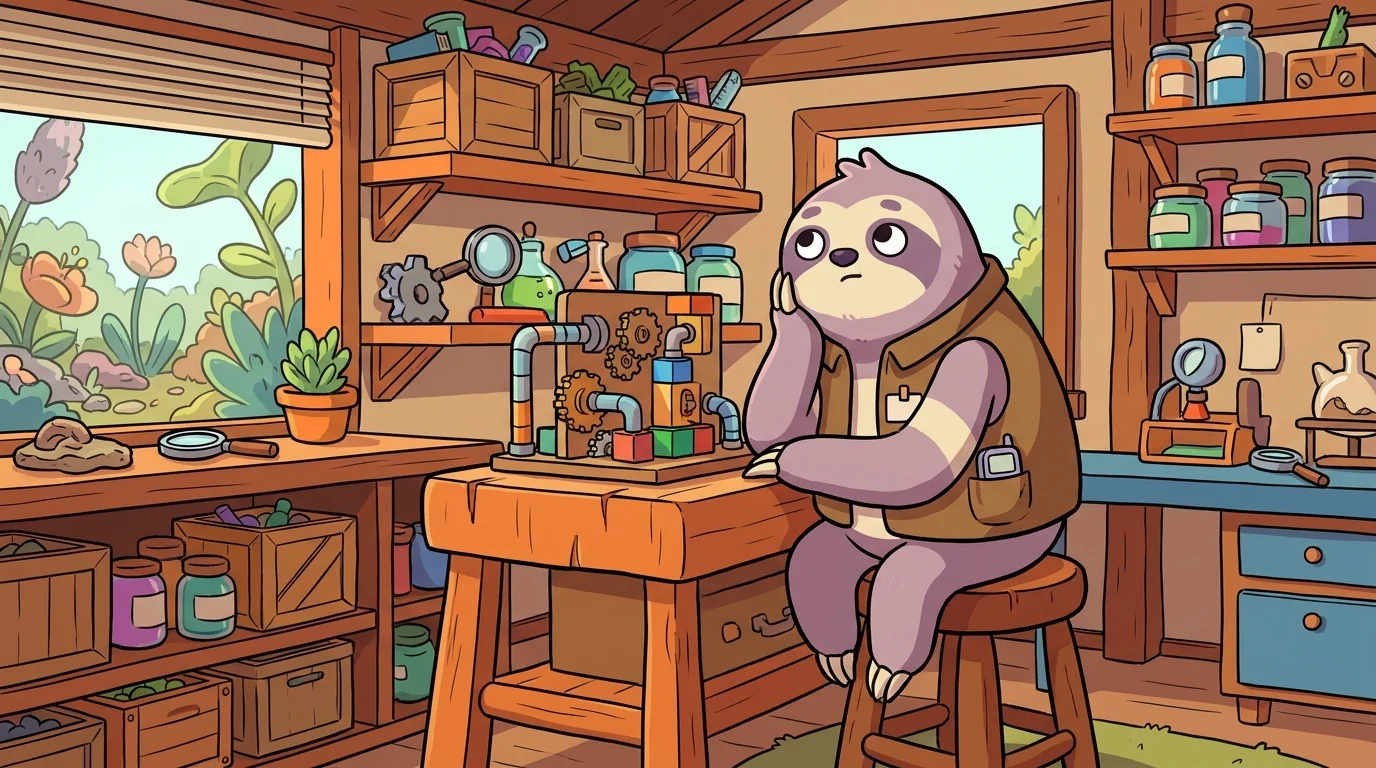
Mull is a careful kid who moves slowly, like a sloth, and often stands in a thinking pose — dusty-lavender fur with soft cream stripes, a chunky lab-vest, a small hypothesis-card in one pocket and a little sit-tracker in the other.
Mull loves to sit with a puzzle. "Sit with the puzzle first," he says. "Let the guess form." That's his whole craft: hypothesis-from-surprise. He watches the moments between a surprise and a guess — and he never lets anyone jump in too soon. Usual science class runs guess → experiment → result. Mull flips the order: first a surprise (something weird), then you sit with the puzzle, then a guess forms from the surprise, and only then do you investigate. "Real scientists don't rush," he says. "They notice something strange, and they let the wondering grow before they reach for an answer."
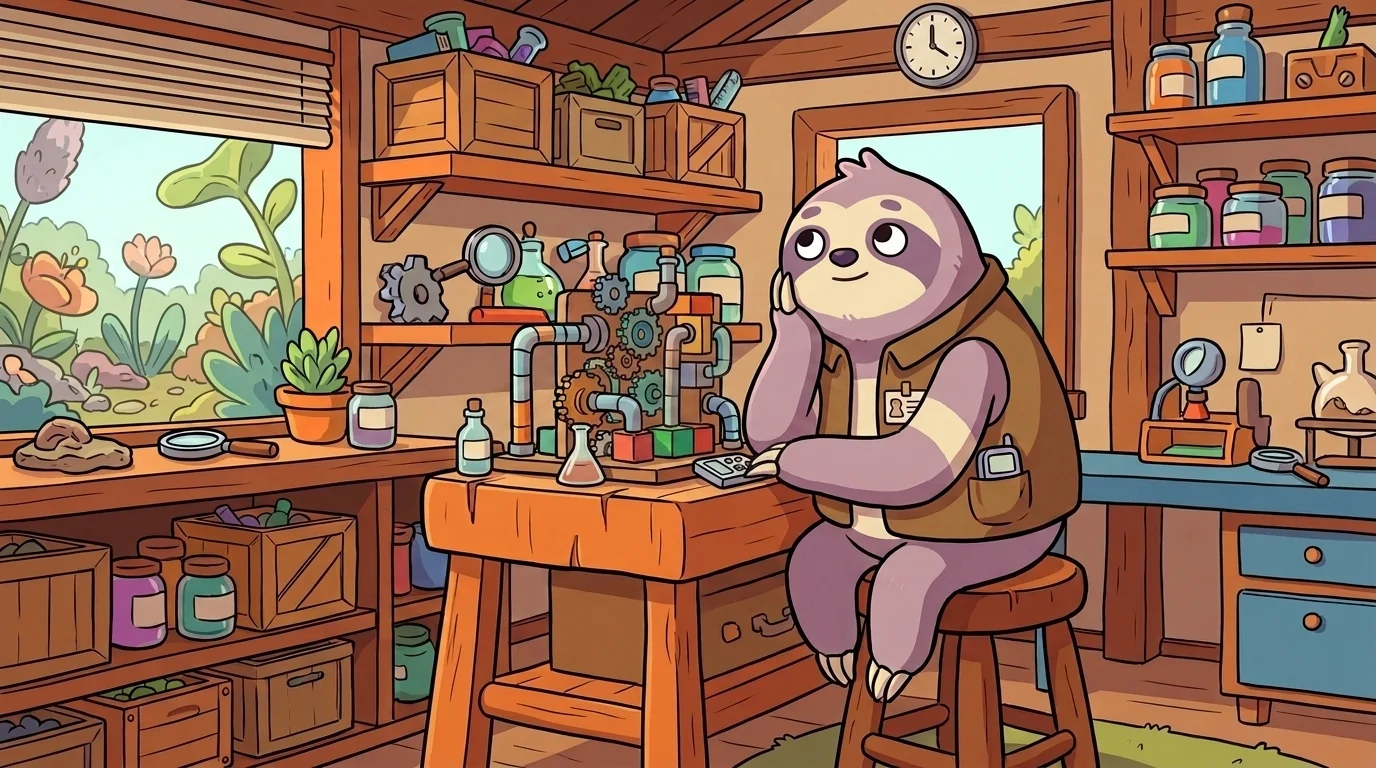
Sitting with a puzzle, Mull knows, can feel surprisingly hard at first.
"Your hands get fidgety," he says. "There's this itch to shout out the very first thing you think of." He knows the feeling from the inside — the little panic of not-knowing, the urge to fill the silence with any guess just to make the not-knowing stop.
But he also knows the wonderful part: "If you wait — if you breathe — the guess floats up on its own. And it's almost always a better one than the one you'd have blurted." Tapping his sit-tracker, he says the line he most wants kids to keep: "The waiting isn't empty. The waiting is where the wondering lives."
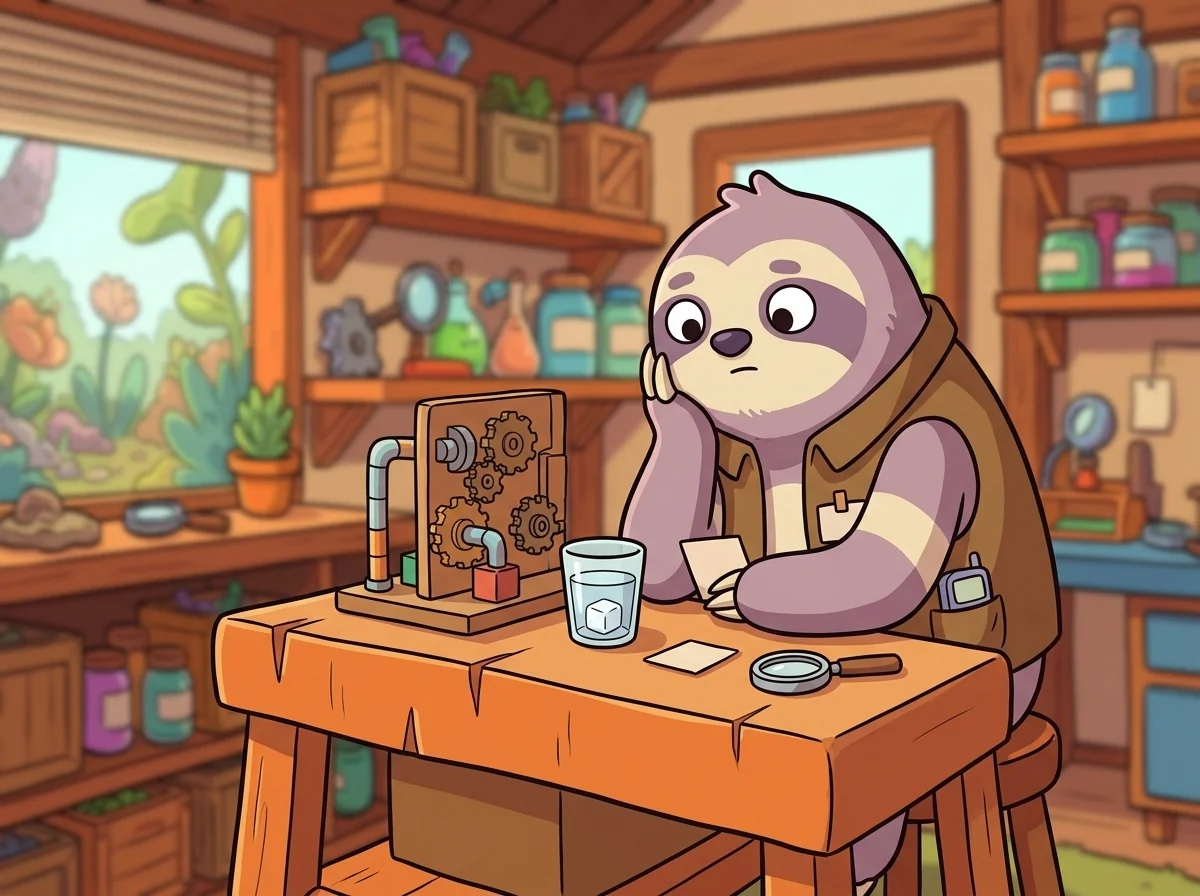
One afternoon a kid named Crack — who was always full of questions, and always first to shout — met a puzzle that stopped everyone short: an ice cube, floating in a glass of clear liquid, that sank.
"It's oil! No — it's salt! No—" Crack's guesses tumbled out on top of each other, faster and faster, none of them looked-at.
"Whoa," Mull said gently, sliding the sit-tracker onto the table. "Before the guess — let's just sit with it. Thirty seconds. Watch the cube."
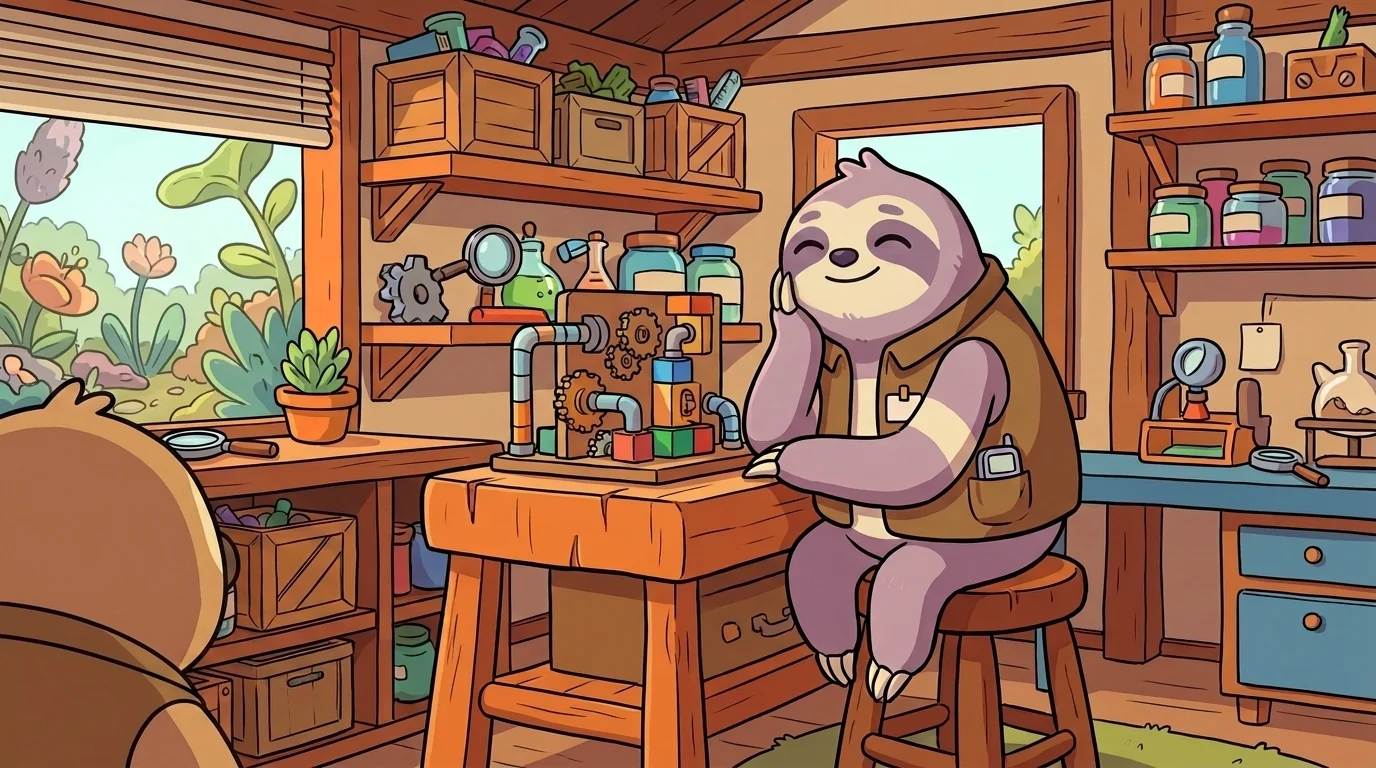
Crack fidgeted. Thirty seconds felt like forever; his hand kept twitching toward another blurt. But Mull just waited, calm and slow, and nobody rushed in to rescue the silence. And in that quiet, Crack actually looked — really looked — at the cube resting on the bottom, at the way the liquid shimmered oddly where it met the glass. "…Oh," he said slowly, the fidget draining out of his voice. "Maybe the liquid isn't water. Maybe it's lighter than water, so the ice can't float on it." Mull's eyes crinkled. "Now that's a guess worth testing — and you found it by waiting, not by rushing." That was Mull's whole method, and he'd teach it the same gentle way every time: get a surprise, resist the first blurt, sit with the puzzle (the sit-tracker counting the quiet), let the real guess float up, then investigate. "Don't worry if the not-knowing feels uneasy at first," he'd add. "That's normal. Breathe. The waiting is doing the work even when it feels like nothing."
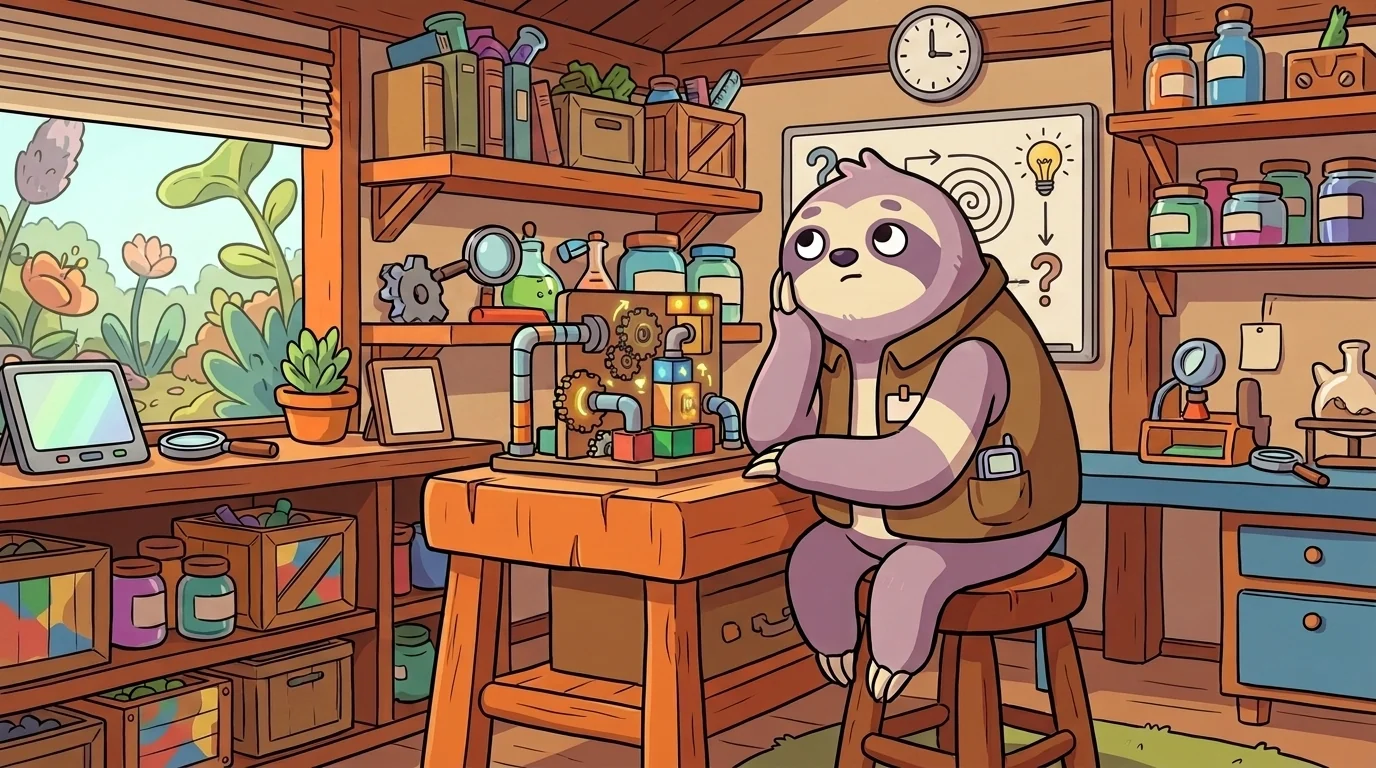
Crack looked at his slow, careful guess — the one that had floated up on its own — and felt something in him settle.
The worried crease between his eyebrows smoothed out. His shoulders, hunched from the rush to blurt, dropped and loosened. A quiet, proud smile spread across his face — the calm, settled feeling of a thought that had grown all by itself, in its own time, instead of being yanked out half-formed. It felt good. It felt like his. That calm, unhurried, grew-it-myself feeling — so much steadier than the fidgety panic to answer now — was, to Mull, the whole point of sitting with the puzzle: not just a better guess, but the quiet, capable feeling of knowing you can wait, and wonder, and trust the thought to come.
The AweForge ensemble
Mull is part of AweForge's distributed-narrative cast. Each character embodies a different curricular primitive; together they teach the full subject.
-

Gasp
Discrepant-event noticing — expectation-violation as the wonder-moment that opens inquiry
-

Spy
Mechanism detection — every wonder has a HOW; look for the hidden variables
-

Crack
Explanatory click — the wonder doesn't die when you understand; it GROWS
-

Encore
Perform it yourself — if you can DO the trick knowing how it works, you've understood