Query and Fiddle
There are two ways into any mystery
Loading audio…
Press play to listen along. The line being read lights up as you go.
Show full transcript
Loading transcript…
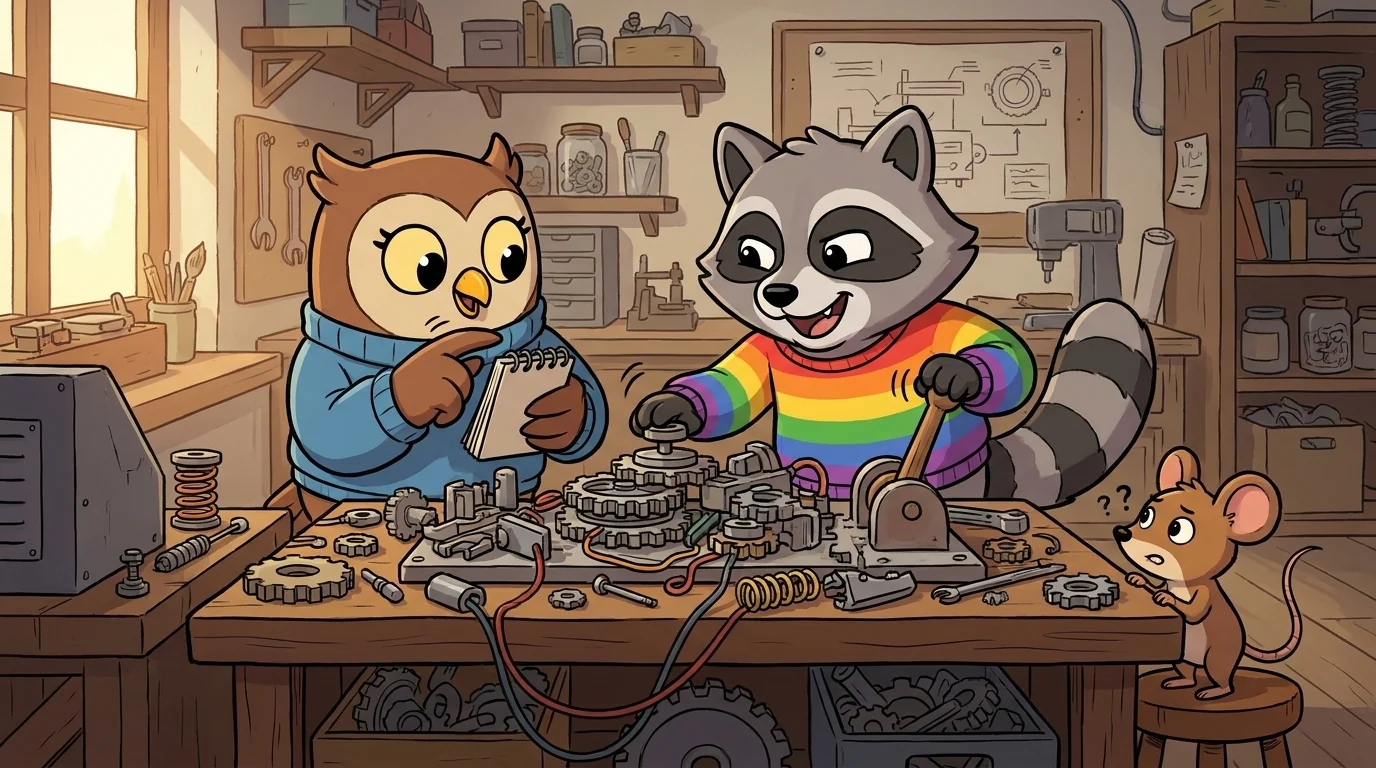
Query the owl and Fiddle the raccoon sat together at a WonderForge bench heaped with a baffling contraption, and a young mouse named Pip couldn't tell why the careful question-asker and the gleeful mess-arounder always tackled the same mystery side by side — they seemed like opposites.
"Because there are two doorways into any mystery," Query said, tilting her head, "and they're not enemies — they're partners." Fiddle wiggled a lever, delighted. "One doorway is THINKING it — going quiet, and sharpening a clear question. That's her." Query tapped her notebook. "And the other is PLAYING with it — messing around, trying stuff, seeing what happens. That's her." Query tilted; Fiddle poked. "There are two ways into any mystery: think it, and play with it. And here's the secret — they feed each other. Playing surfaces questions, and questions guide your play."
Pip frowned. "But you seem SO different. One's all careful thinking, one's all wild messing-around."
"Different doors into the same room," Fiddle said, grinning. "And you don't have to pick just one. Use both, back and forth, and you get inside way faster than either alone."
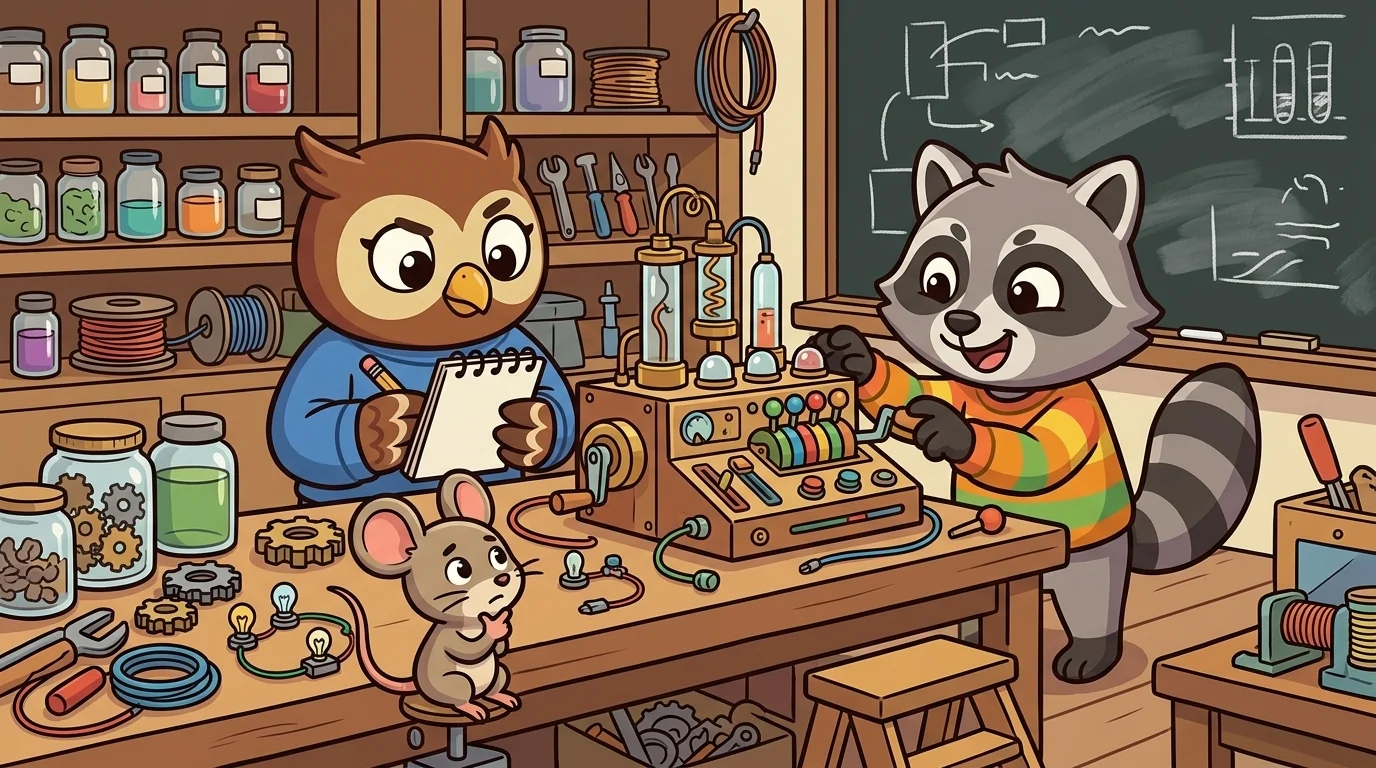
Query went first, to show the thinking doorway.
She studied the baffling contraption and, instead of touching it, went quiet and sharpened a question. "The minds-on way," she said. "I don't poke yet — I look, and I turn my fuzzy confusion into ONE sharp question. This thing lights up sometimes and not others... so my sharp question is: 'what's DIFFERENT about the times it lights up?'" She tapped her notebook. "See? Now I know exactly what to pay attention to — the difference between the light-up times and the dark ones." Pip nodded. "So thinking gives you a clear question," Pip said. Then Query paused. "But here's my limit — I can sharpen the question all day, but at some point, to find the ANSWER, someone has to actually TRY things: press it different ways, change something, SEE what happens." She glanced at Fiddle. "My sharp question says WHAT to look for. But to actually make the thing do stuff and reveal its answer, I need her hands."
Pip considered. "So YOUR doorway — thinking — gives a clear question... but you still have to try things to answer it."
"Only the question," Query agreed. "One doorway. The playing is hers."
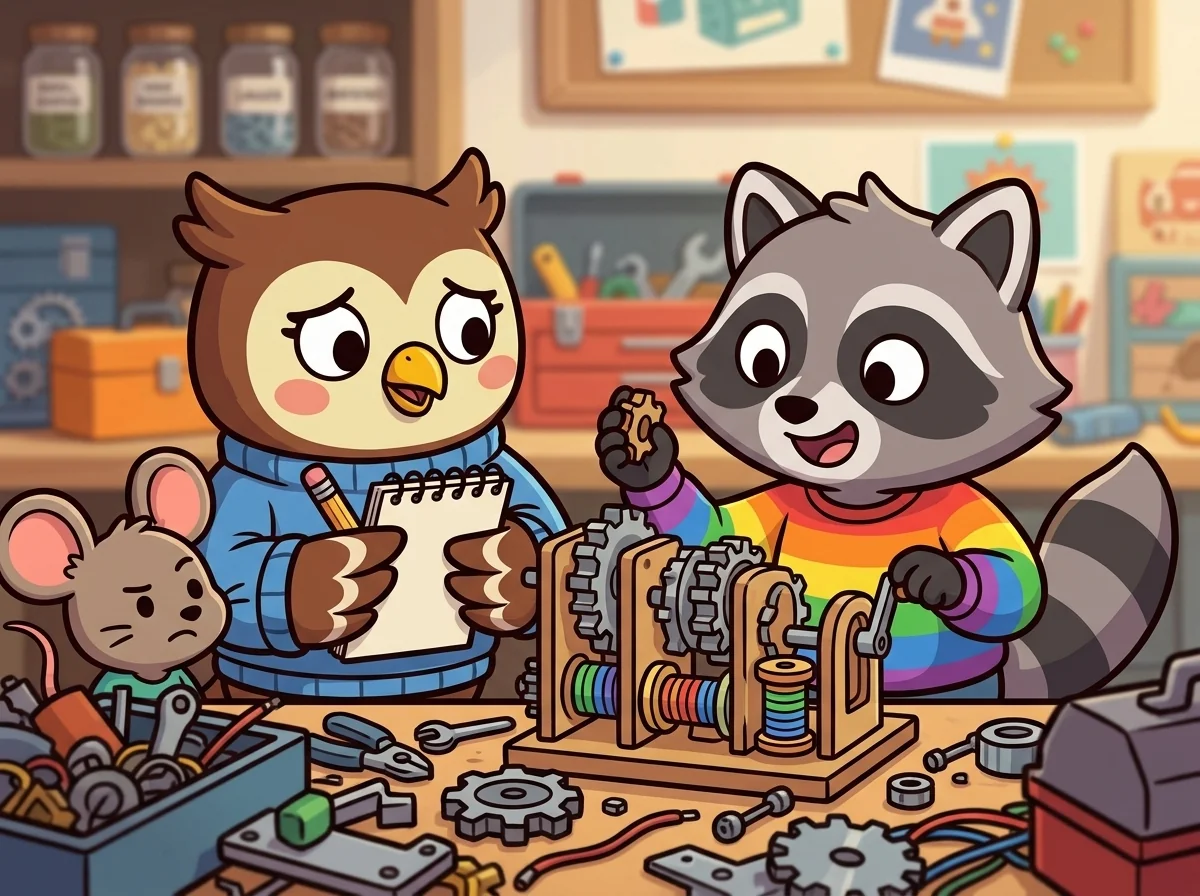
Then Fiddle took over, to show the playing doorway.
She grabbed the contraption and just... played — pushing, twisting, pressing, delighted by every "ooh, what does THIS do?" "The hands-on way," she said. "I don't need a plan — I just try stuff and watch. Push here — it hums. Twist that — a light flickers. Every little try teaches me a piece." She wiggled and prodded, gleeful. "No pressure, no right way — just play, and discover." Pip nodded, watching things happen. "So playing makes discoveries," Pip said. Then Fiddle paused, her pile of random discoveries growing messy. "But here's MY limit — I'm learning tons of scattered little things, but I'm poking kind of randomly. Without a QUESTION guiding me, I might fiddle forever and never zero in on the ONE thing that actually matters. My playing surfaces lots of stuff—" she glanced at Query "—but her sharp question is what tells me which stuff to focus on."
Pip looked from the owl to the raccoon. "So HER doorway — thinking — sharpens the question... and YOUR doorway — playing — makes the discoveries. And they NEED each other — the question aims the playing, and the playing feeds the question!"
"Two doorways," Fiddle said, "that open each other."
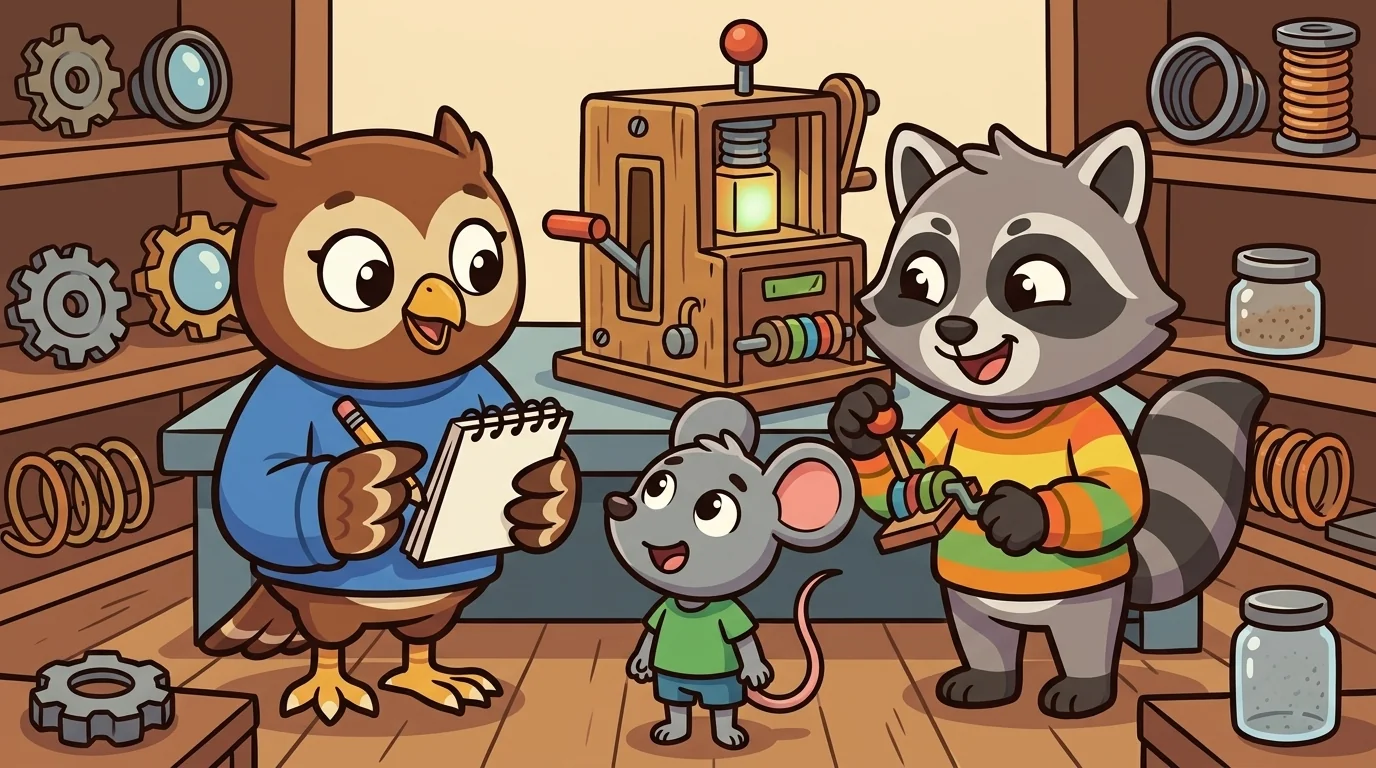
Then Query and Fiddle cracked the mystery TOGETHER, taking turns through both doorways, and Pip finally saw them feed each other.
Fiddle PLAYED first — poking, twisting — and stumbled on something: "ooh, it only lights up when I press it AND cover this hole!" (playing surfaced a clue). That gave Query a sharper QUESTION: "so — is it the covering of the hole that matters, or the pressing, or both together?" (the discovery fed a better question). That sharp question told Fiddle exactly what to PLAY with next: "let me try covering the hole WITHOUT pressing..." — dark. "And pressing WITHOUT covering..." — dark. "Both together..." — LIGHT! (the question aimed the playing right at the answer). Back and forth, think-play-think-play, the two doorways feeding each other, until the mystery cracked wide open: it needed both the press AND the covered hole. Pip watched the turns and understood.
"OH," Pip breathed. "Fiddle's playing found the clue, which gave Query a sharp question, which told Fiddle what to try next — and going back and forth, you cracked it!"
"That's it," Query said. Alone, her questions had no hands to answer them. Alone, Fiddle's playing had no aim. But together — think, then play, then think again — the two doorways drove each other, straight to the answer. "I sharpen the question," Query said. "And I play to answer it — and my playing sharpens the next question," Fiddle said. "Two doorways," they said together, "taking turns. Think it AND play with it, back and forth, and even the baffling contraption opens up."
Pip tried it on a little puzzle-box: he FIDDLED (slid a panel — it stuck) which raised a QUESTION ("does it need to be tilted first?") which told him what to FIDDLE next (tilt, then slide — it opened!). "I thought AND played, back and forth," Pip said, "and it opened!"
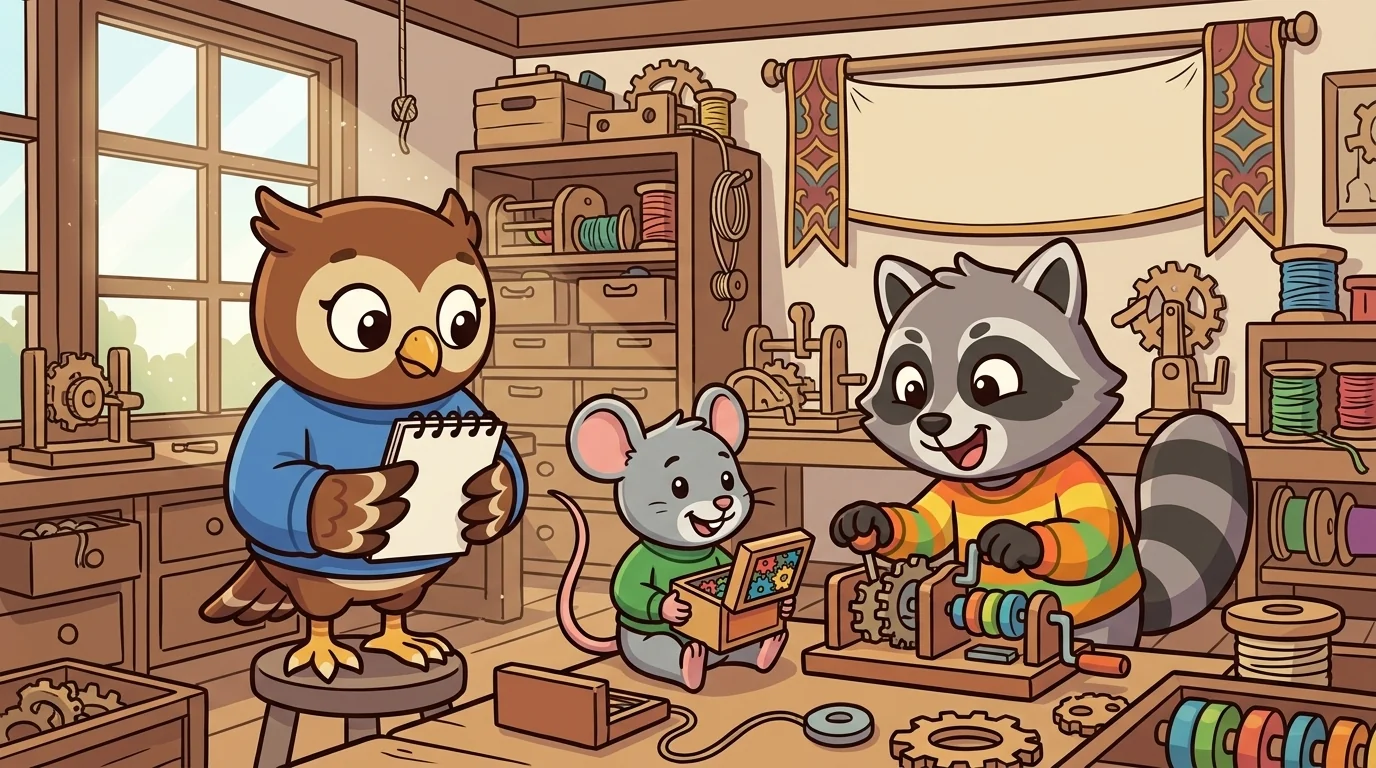
Query and Fiddle let the young mouse crack his puzzle-box, then turned the lesson toward him.
"You'll meet every mystery this way," Fiddle said, "with two doorways — your head and your hands." Query nodded. "Don't feel you have to be all careful-thinker OR all wild-player. The best wonderers are BOTH, taking turns."
"I always feel like I have to pick," Pip admitted. "Either think really hard and never actually try anything, or mess around forever and never figure out what matters. And whichever I do, I get stuck, and feel like I'm doing it wrong."
"You were only using one door," Query said gently. She perched by one of Pip's sides, and Fiddle leaned in at the other. "Sharpen a question," Query said. "Then play to answer it," Fiddle said. "And let each feed the other," they said together, "back and forth, and the mystery opens."
Pip drew a slow breath, holding both doorways at once, and the doing-it-wrong feeling eased into a bright, capable delight — the warm gladness of a young wonderer who's discovered that the way into any mystery isn't thinking OR playing, but both, taking turns, each one opening the door for the other.
The AweForge ensemble
Query and Fiddle is one of the friends in AweForge. Each friend shows you one idea by how they act; meet them all and you have the whole subject.
-

Gasp
Discrepant-event noticing — expectation-violation as the wonder-moment that opens inquiry
-
Mull
Hypothesis-from-surprise — sit with the puzzle, then say what you think MIGHT be happening
-

Spy
Mechanism detection — every wonder has a HOW; look for the hidden variables
-

Crack
Explanatory click — the wonder doesn't die when you understand; it GROWS
-
Encore
Perform it yourself — if you can DO the trick knowing how it works, you've understood
-
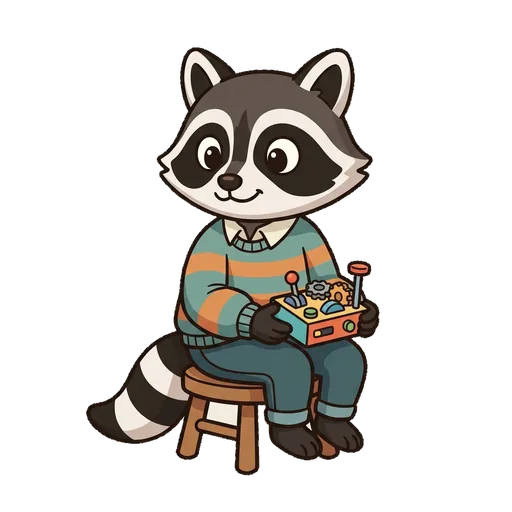
Fiddle
Playful tinkering / learning by messing around
-
Liken
Analogy / "it's like something I already know"
-
Poke
Learn from how things respond / nudge it and watch
-

Query
Question-craft / turning a vague "huh" into a sharp, answerable question
-
Zoom
Scale-shifting / look closer, and the hidden appears