
Before you start
Start here
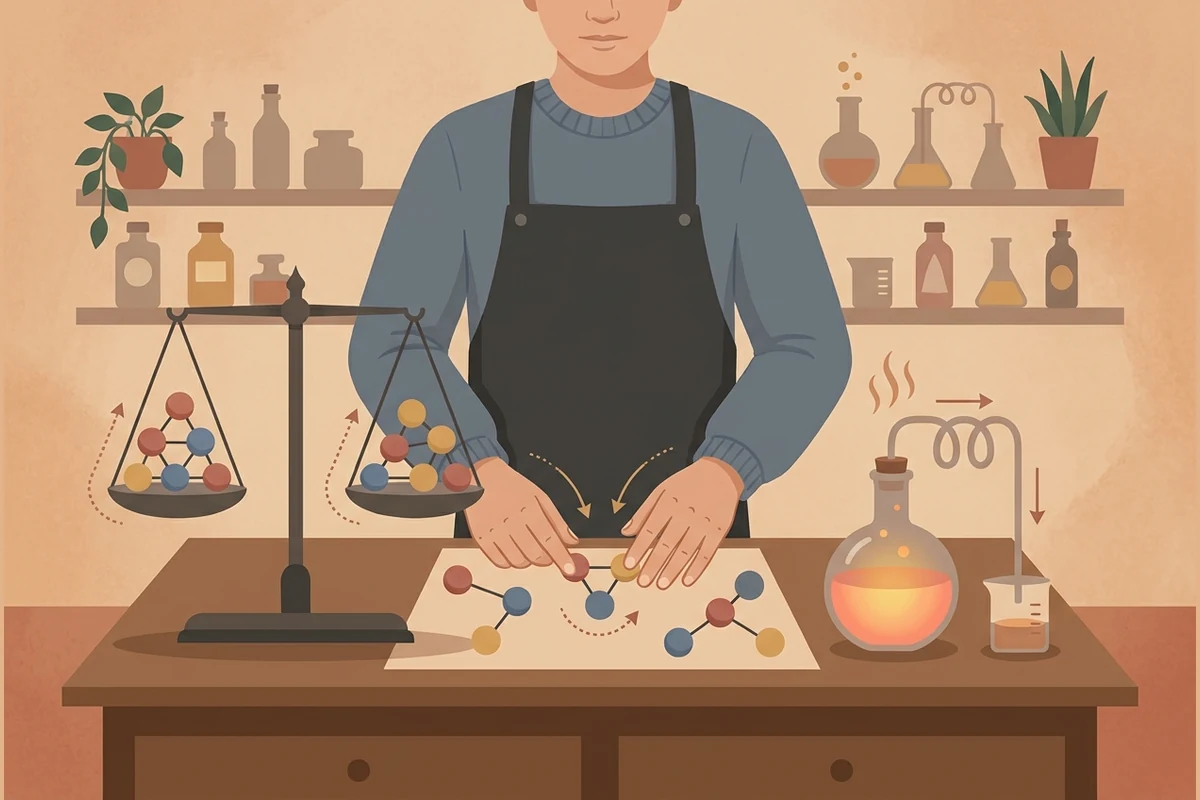
 The Reaction Lab Predict a chemistry result — moles, molarity, pH, gas volume, percent yield — then a pure engine computes it exactly and walks the relationship.
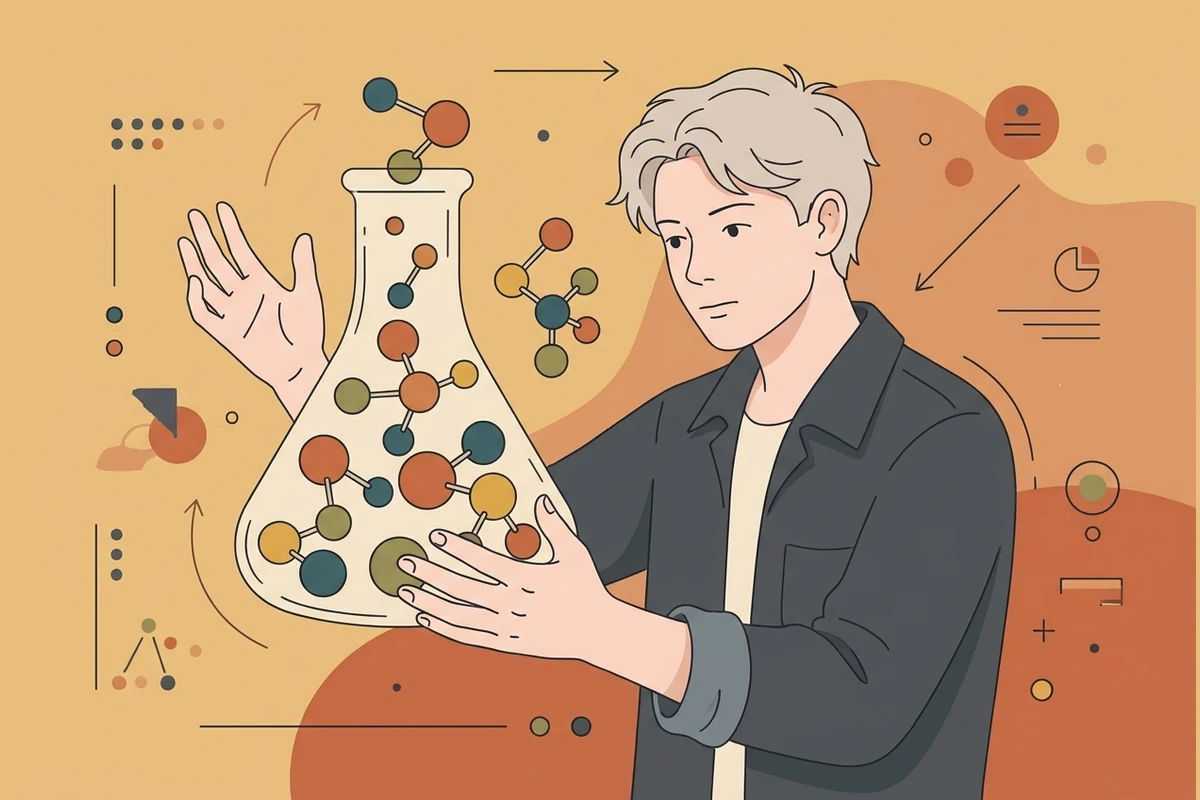
  Which Way Will It Shift? A reaction at equilibrium pushes back — predict the Le Chatelier shift, then see the reasoning (and the catalyst/inert-gas traps).
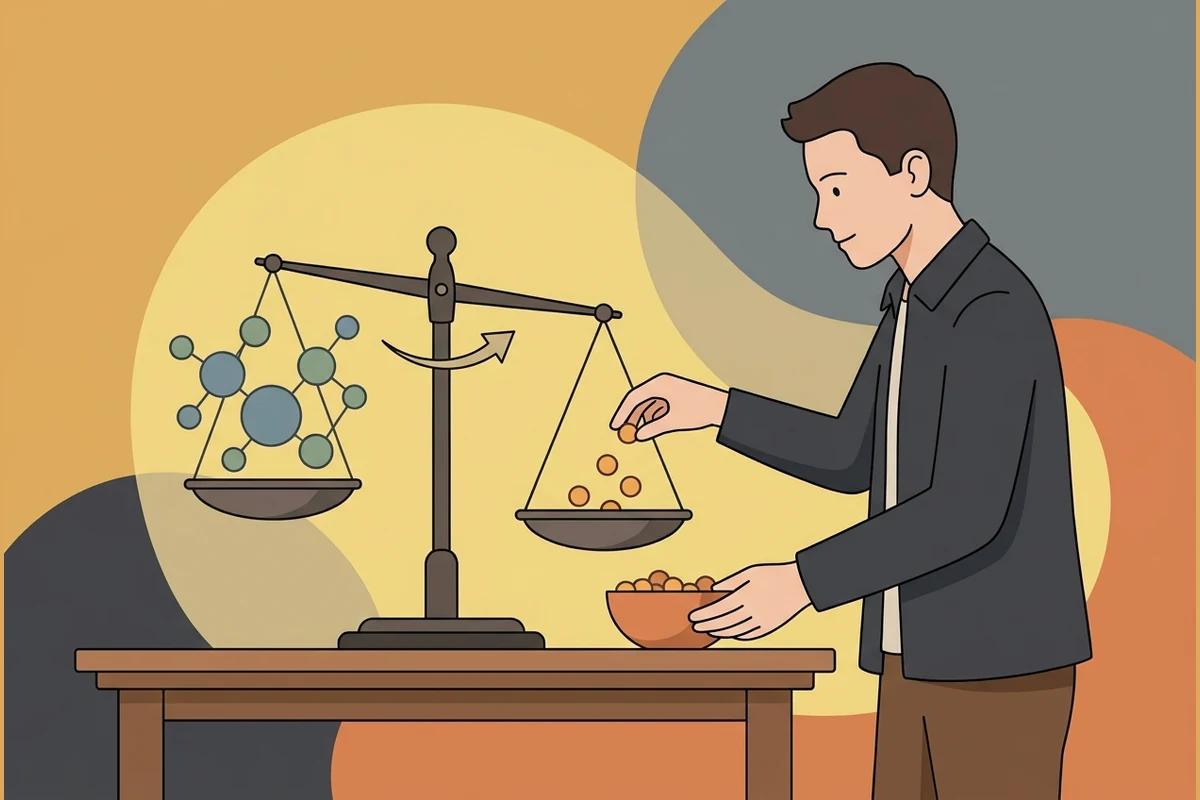
 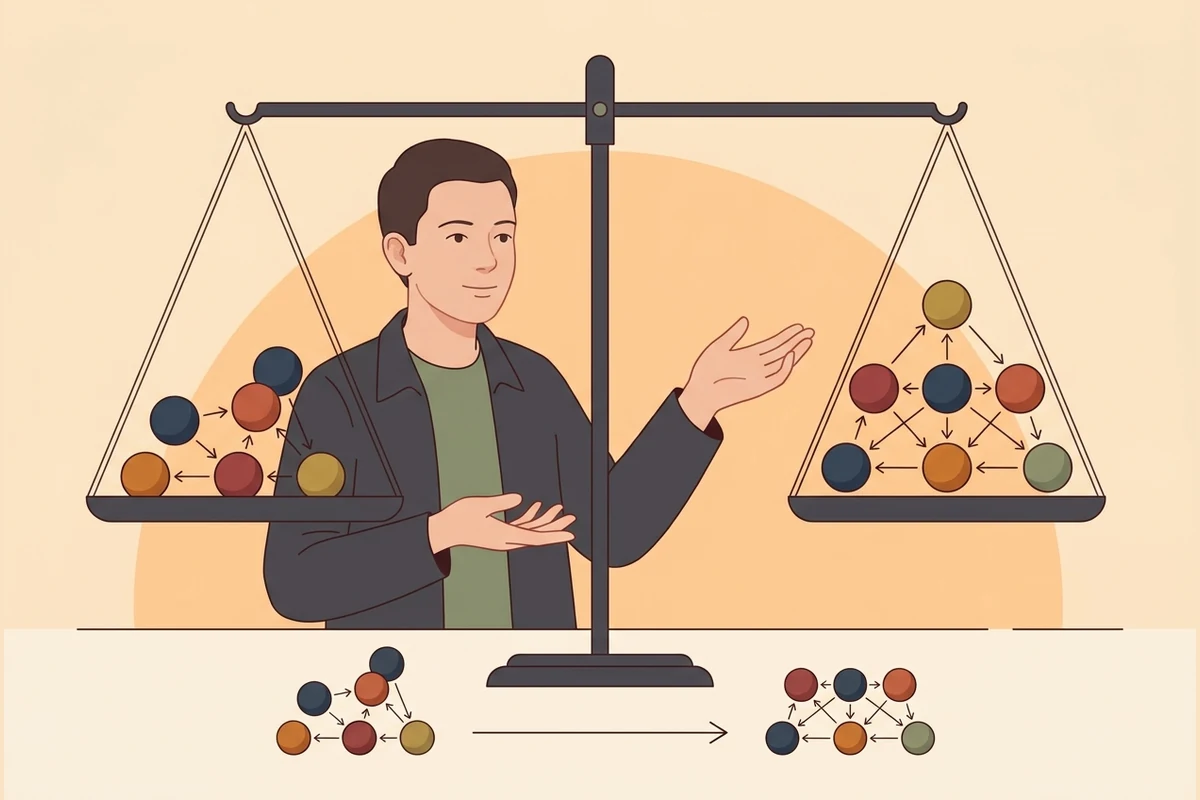 Conservation of Mass Does a reaction make mass appear or vanish? Predict the balance, then a sealed-vs-open reveal shows the atoms only rearrange.
 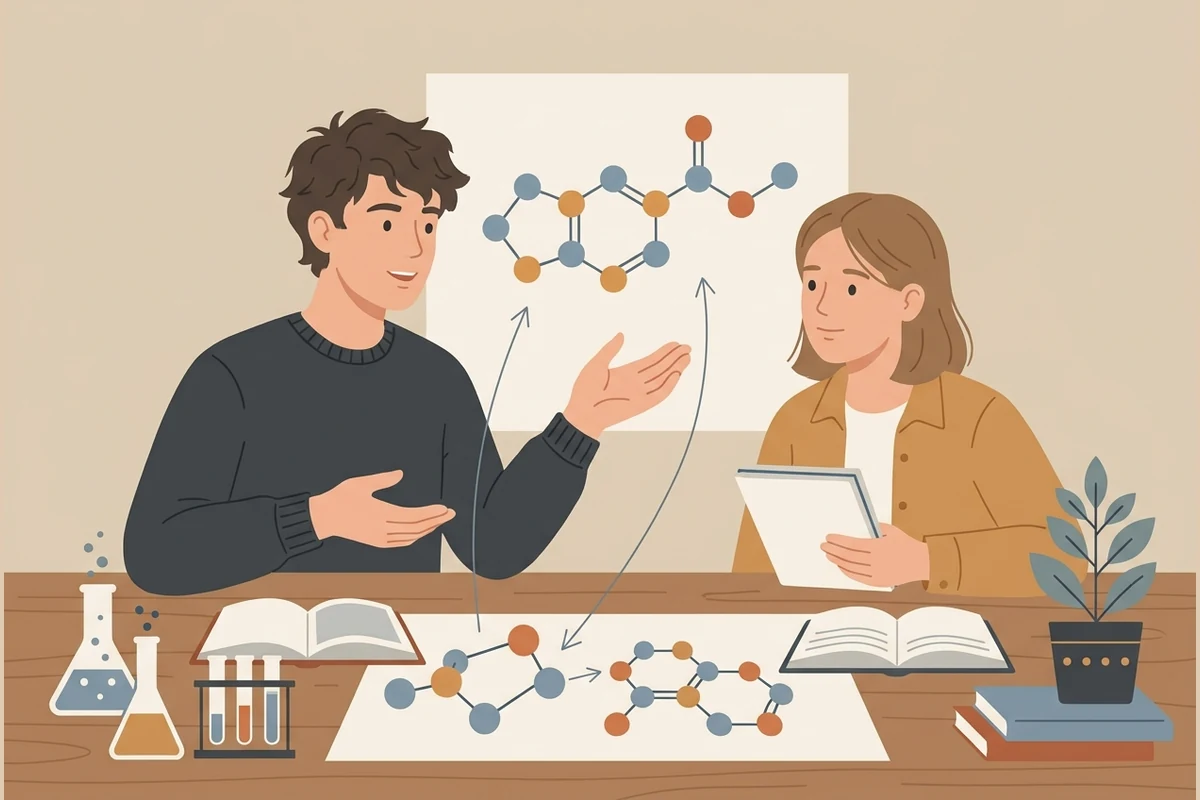 Teach the Cast Teach a chemistry idea to a near-peer still learning it — teaching makes it stick.
 All activities
Predict & compute
The Reaction Lab Moles, solutions, gas laws, acid–base, stoichiometry & thermochemistry — predict the result, then a pure engine computes it exactly. Titration Lab Titrate a strong acid with a strong base — count the protons, predict the equivalence point, then watch the real pH curve jump at n·Mₐ·Vₐ = M_b·V_b. Which Way Will It Shift? Add a chemical, heat it, squeeze it — predict the equilibrium shift; catalysts and inert gases don’t shift it at all. Conservation of Mass Gas fizzes off, a solid forms — predict the balance; in a sealed jar mass never changes, atoms only rearrange.
Practice & teach
Concept Kits — 16 kits of HS chemistry
Kit 1: Atomic Structure Atomic structure — protons, neutrons, electrons, isotopes · 25 questions Kit 2: Periodic Trends Periodic trends — organization and predictable patterns · 25 questions Kit 3: Bonding Chemical bonding — ionic, covalent, and Lewis structures · 25 questions Kit 4: Nomenclature & Formulas Naming compounds and writing chemical formulas · 25 questions Kit 5: The Mole & Stoichiometry The mole and stoichiometry — quantitative chemistry · 25 questions Kit 6: Limiting Reagent Limiting reagent and percent yield · 25 questions Kit 7: Gas Laws Gas laws — pressure, volume, temperature relationships · 25 questions Kit 8: Solutions & Concentration Solutions and concentration — molarity and dilution · 25 questions Kit 9: Reaction Types Reaction types — recognizing patterns of chemical change · 25 questions Kit 10: Kinetics Kinetics — reaction rate and collision theory · 25 questions Kit 11: Equilibrium Chemical equilibrium and Le Chatelier's principle · 25 questions Kit 12: Acids & Bases Acids, bases, and pH · 25 questions Kit 13: Thermochemistry Thermochemistry — energy changes in reactions · 25 questions Kit 14: Redox Redox — oxidation, reduction, and electron transfer · 25 questions Kit 15: Intro Organic Introductory organic chemistry — carbon and functional groups · 25 questions Kit 16: Capstone: Run the Lab Capstone — integrating stoichiometry, energy, and equilibrium · 25 questions
Who you’ll meet
- Dmitri — reads the periodic table for trends (periodicity)
- Halden — balances equations and counts moles (stoichiometry)
- Perrin — relates pressure, volume, moles, and temperature (gas laws)
- Nerys — mixes and dilutes to a target concentration (solutions)
- Yuki — tracks how fast a reaction goes (kinetics)
- Basil — finds the balance point of a reaction (equilibrium)
- Osric — measures acids and bases by pH
- Anwyn — follows the heat in and out of a reaction (thermochemistry)
- Tobias — tracks electrons gained and lost (redox)
- Sabina — the mentor — predict, compute, then reason about the chemistry