
Prance
PRANCE — land light, spring high; heavy feet can't fly, because a soft toe-first landing stores the bounce as elastic energy for your next jump instead of slamming it away.
Loading audio…
Press play to listen along. The line being read lights up as you go.
Show full transcript
Loading transcript…
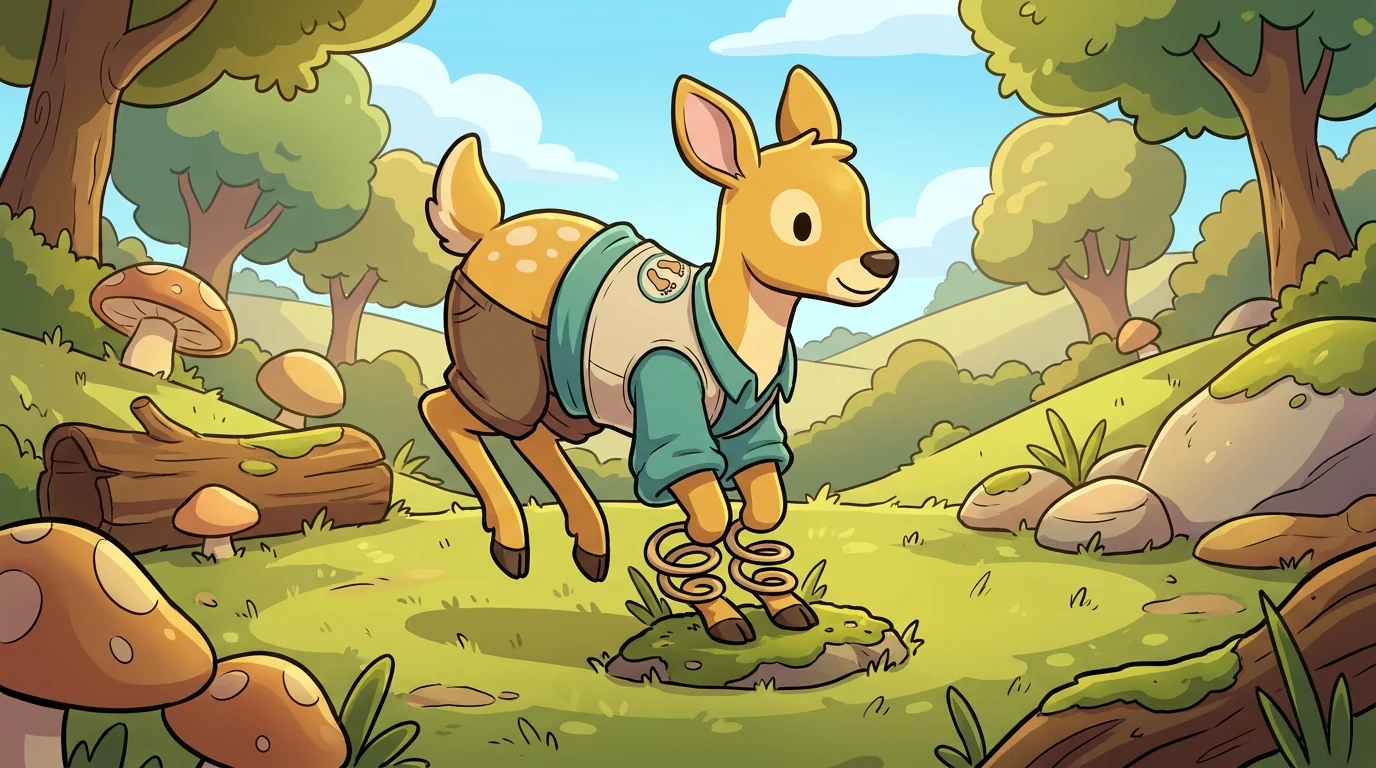
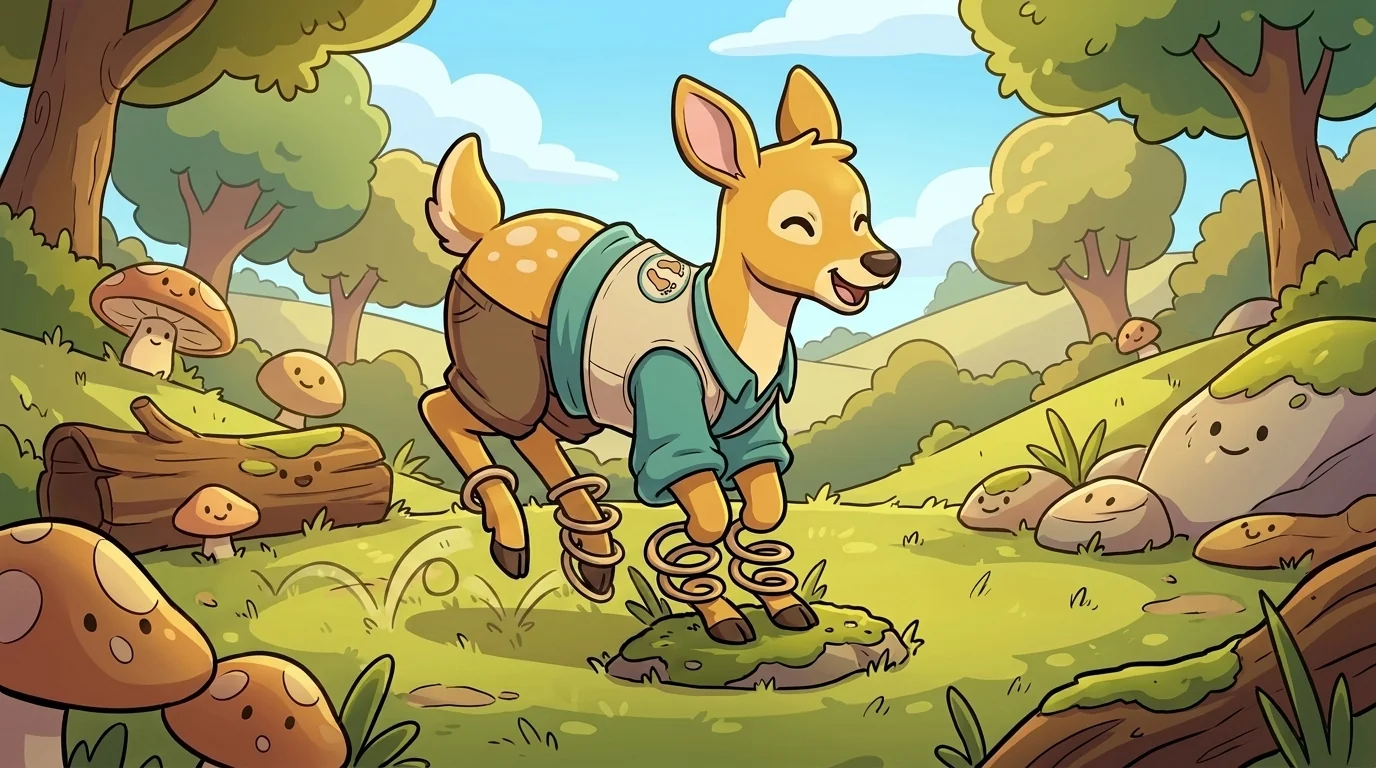
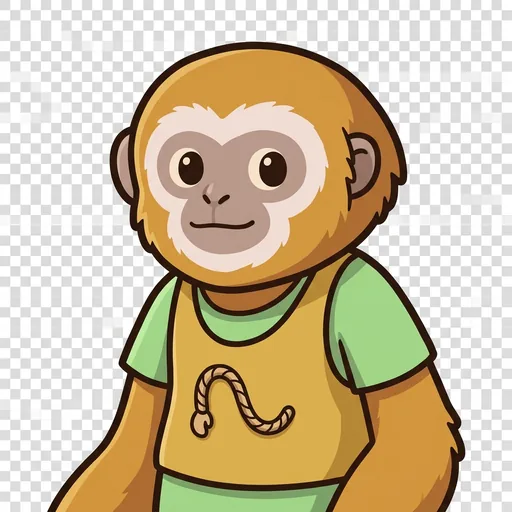
Prance is a fawn — slim and springy, warm tawny-gold with soft pale spots — in a light practice vest showing two feet touching down toe-first with a soft curved spring drawn underneath: her landing-map, showing how a quiet landing becomes the next jump.
Prance never crashes down flat-footed. She touches down toe-first, lets ankles and knees fold soft like little springs, and that soft fold loads her right back up into the next hop. "Land light, spring high," she says, bouncing gently. "Heavy feet can't fly." She teaches the light landing — that how you come down decides how you go up: a soft, quiet landing stores the bounce for your next jump instead of slamming it away. "Everybody stomps down flat and stops dead. But a soft landing is a loaded spring. There's a name for it — the stretch-shortening cycle: your muscles and tendons stretch as you land and snap back as you launch, handing you free elastic energy — but only if you land soft enough to catch it."
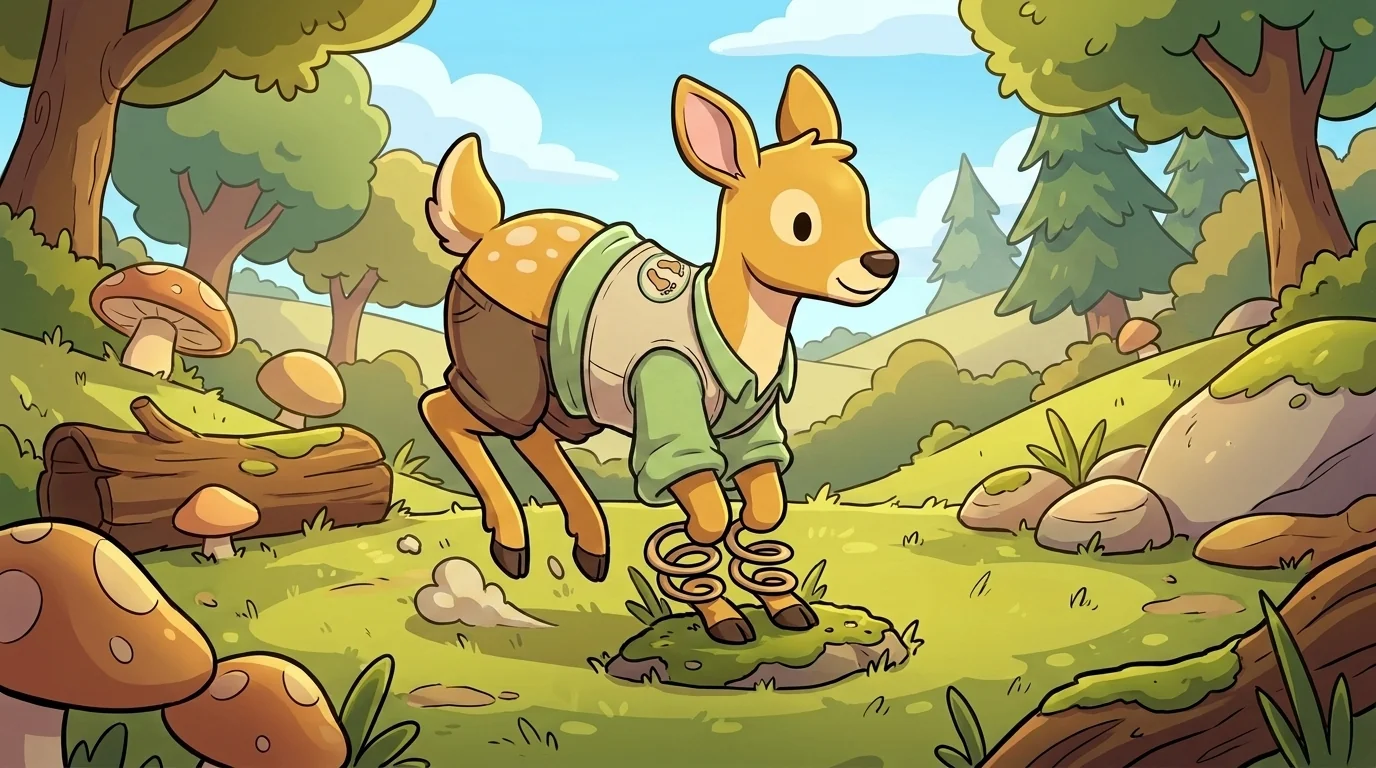
Prance found the light landing after a season of jarring, stompy jumps.
"When I was little, I loved to jump, but I'd land flat and hard — SLAM — and it rattled my teeth and hurt my knees, and I could only manage one jump before I had to stop. I decided I just wasn't a springy kind of deer." She'd started to believe some creatures had bounce and she'd been left out.
Then old Grandma Fern showed her something quiet. "Listen to your landing. If it's loud, you're throwing your bounce away. Land on your toes, let your knees kiss soft and fold, and land silent." Prance tried it — toe-first, ankles and knees giving soft as pillows, silent — and felt her legs coil like springs, ready to launch the very next instant. Here is the physics under it: every landing meets a ground reaction force — the ground pushing back up as hard as you push down. Land stiff and flat, and that force jolts straight through your joints and is lost as a thud. Land soft, folding through toe-ankle-knee, and you catch that force in your stretched tendons and give it back as your next jump. "The bounce wasn't a gift. It was hiding in my landings — I'd been slamming it into the ground and wondering where it went." That was the day Prance decided to teach the light landing — a spring stored in every soft, quiet landing, waiting for a body that lands like a whisper.
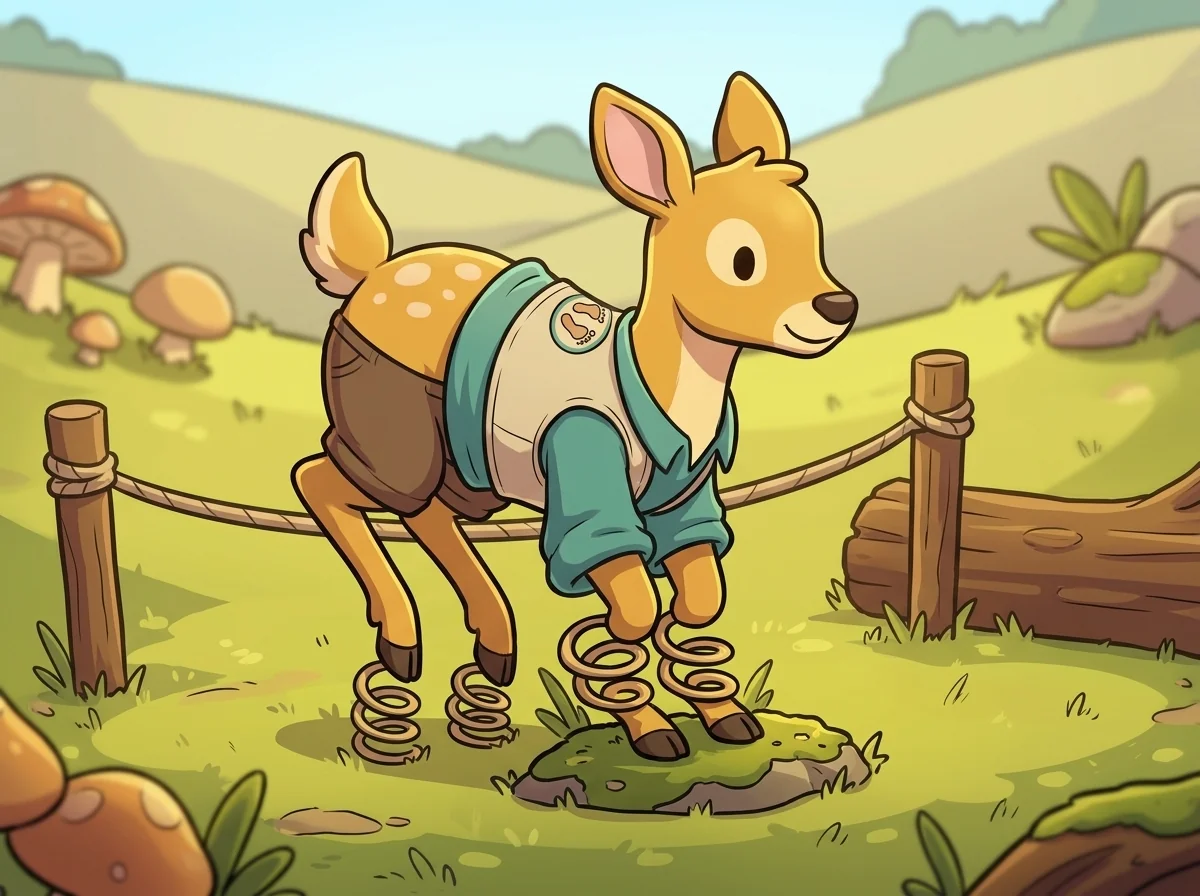
One bright morning Roll was thumping down hard after every jump over a low rope — SLAM, SLAM — landing flat, wincing, and by the third jump rubbing his knees, ready to quit. "Jumping just hurts. And I can't do more than a couple before I'm wrecked." He plopped down, defeated.
Prance bounced over, light on her toes. "Listen to your landings. They're loud. You're slamming your bounce right into the ground."
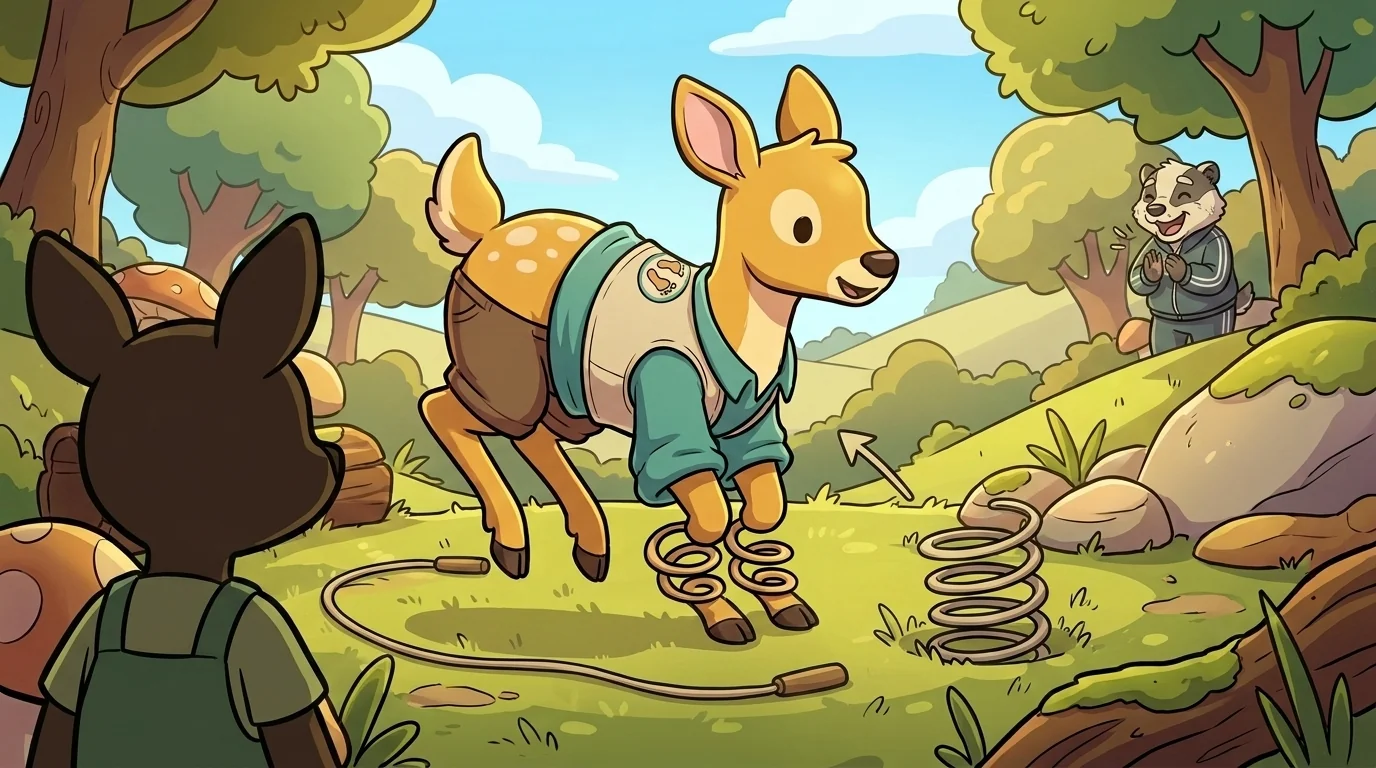
"Come down on your toes," Prance said, and showed him: she leapt the rope and touched down toe-first, knees folding soft and silent, then sprang straight back up without a pause. "Let your knees kiss soft and land quiet. A quiet landing is a loaded spring — it hands the bounce right back." Roll tried again, reached for his toes, let his knees give soft as he came down — and landed almost silently, felt his legs coil, ready. He jumped again off that stored spring, then again — three, four in a row, easy. "It doesn't hurt! And I just keep bouncing!" "Land light, spring high," Prance beamed. "The bounce was in your landings the whole time — you were just throwing it away as a thud. Land soft and you recycle it." Coach Echo cheered: "The light landing — how you come down decides how you go up, and soft landings save your knees for a lifetime." And it's for every body — every kid's ankles and knees fold soft the same way, so it's never about being born springy; it's landing quiet. People everywhere find this spring: a basketball player's soft rebound, a jump-roper barely tapping the floor, a dancer landing a leap without a sound. All different, all the same quiet spring.
"So I'm not bounce-less?" Roll asked, hopping lightly now and grinning. "You were just slamming your spring away instead of keeping it," Prance said warmly. "Nobody's without bounce. Some kids just haven't learned to land quiet yet."
Roll bounded over the rope one more time and landed soft as a snowflake, then popped right back up — and a light, tingly, want-to-leap-again feeling fizzed all through him, from his soft knees to the top of his head. It wasn't about being a naturally springy kid anymore, or crashing down hard and toughing it out. It felt good — light and quiet and bouncy — to feel each soft landing hand him the next jump for free. That light, fizzy, I-could-fly feeling was, to Prance, the very best kind of lightness to share.
The ActiveForge ensemble
Prance is part of ActiveForge's distributed-narrative cast. Each character embodies a different curricular primitive; together they teach the full subject.
-
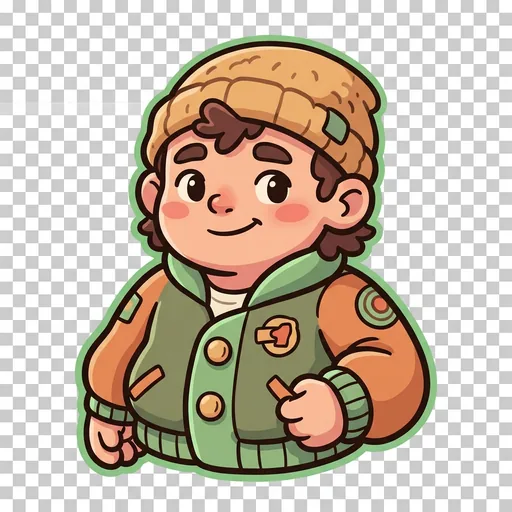
Throw
Overhand-projection motor pattern — targeted-force-at-distance trained-through-practice never-aptitude-test
-

Kick
Lower-body projection — foot-language with five-different-parts-of-foot for different kicks
-
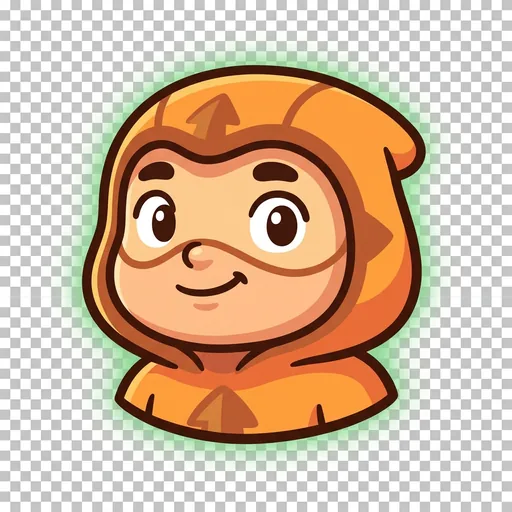
Dodge
Spatial-perception + agility — read-the-space-and-move-EARLIER not-faster; perception-game not speed-game
-
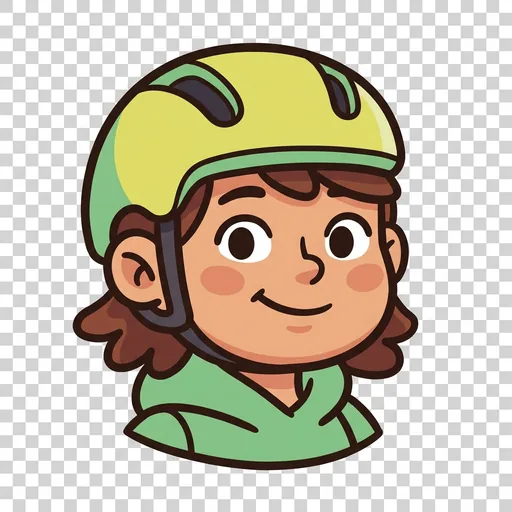
Roll
Tumbling + safe-fall + parkour-shoulder-roll — visible adaptive-PE helmet signals all-bodies-belong
-
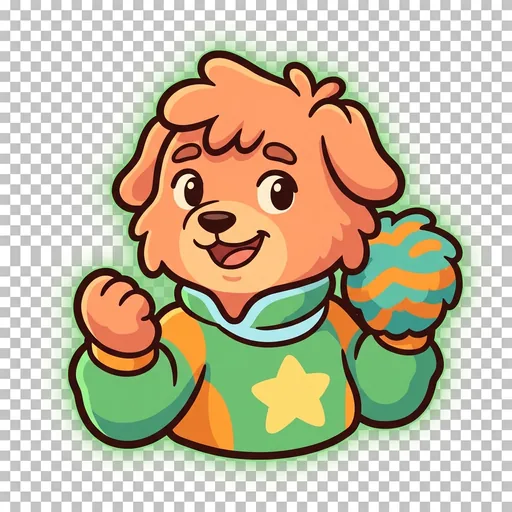
Cheer
Sportsmanship + bystander-presence-in-play — learnable-skill not personality-trait
-
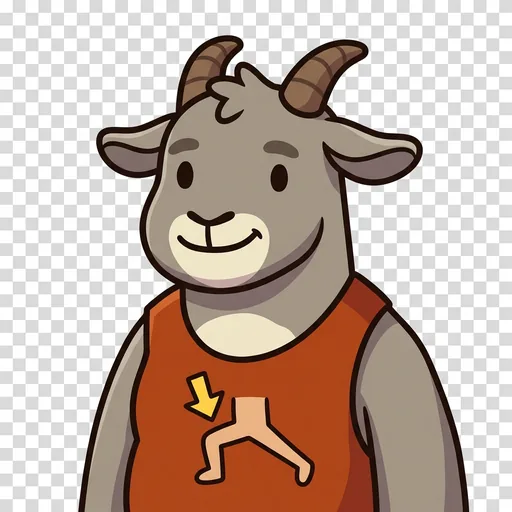
Lunge
Lunge — power lives low: sink the hips, load the back leg, then rise
-
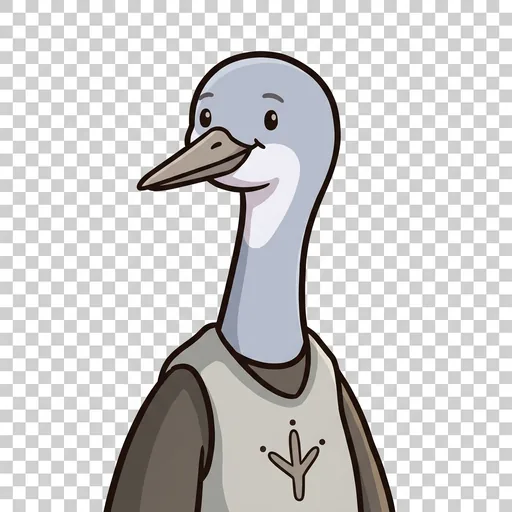
Poise
Poise — stillness is a move: find the base, then you can go anywhere
-
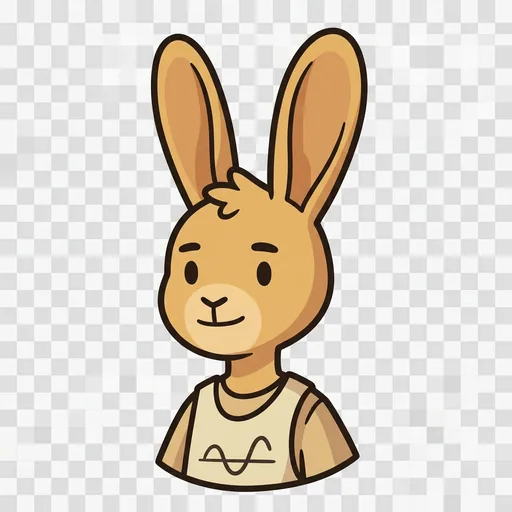
Rally
Rally — the second wind is real: spend, recover, spend again
-
Swing
Swing — let the limb fall and rise like a rope; momentum is free power