Swing
SWING — *let the limb fall and rise like a rope. momentum is free power.*
Loading audio…
Press play to listen along. The line being read lights up as you go.
Show full transcript
Loading transcript…
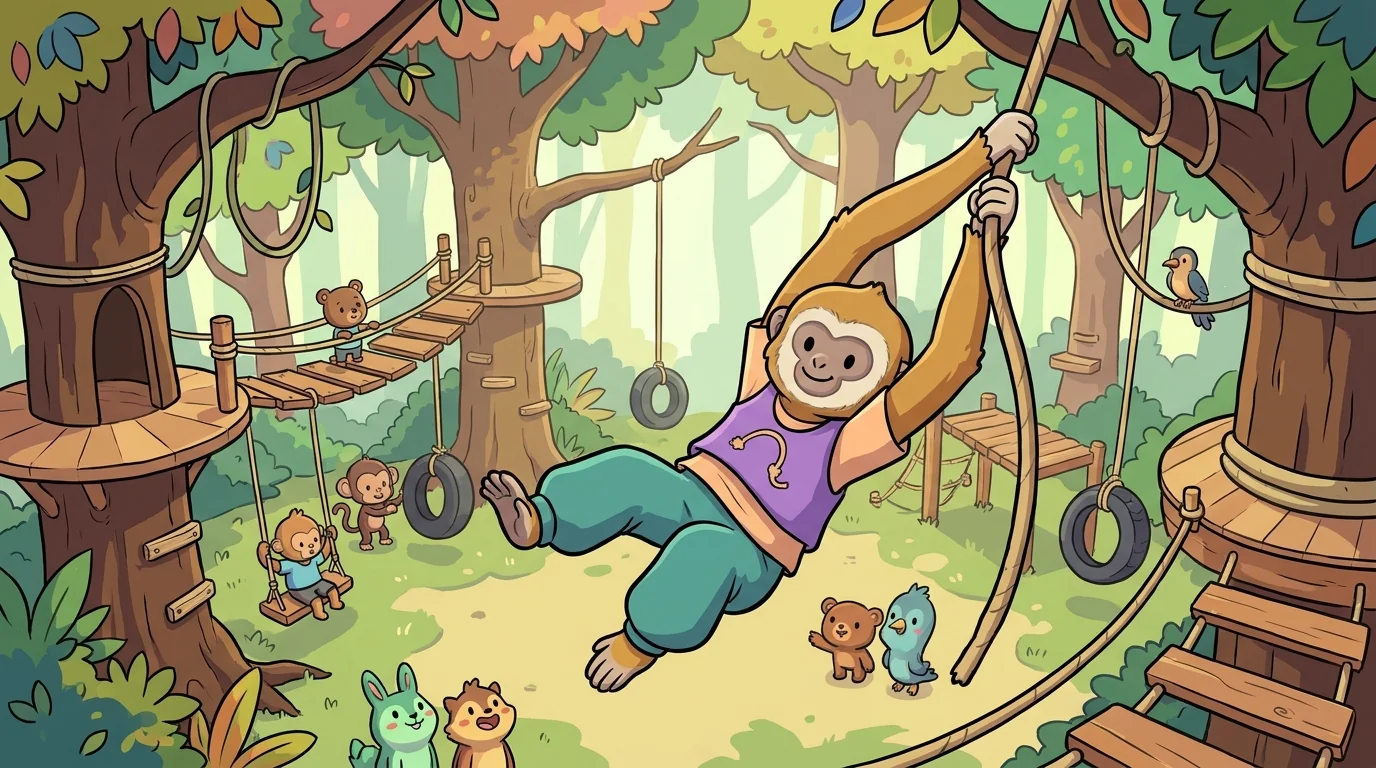
Swing is a gibbon-kid — long-armed and loose, warm honey-brown with a soft pale face-ring — in loose comfy clothes and a stretchy practice vest. On the vest is a little picture of an arm drawn as a curved arc, like a rope looping down and back up: her momentum-map, showing how a swing loans you power for free.
Swing never muscles a movement stiff and hard. She lets her long arms and legs fall and rise like ropes on a hinge, catching the momentum at the bottom and spending it at the top. "Let the limb fall and rise like a rope," she says. "Momentum is free power." She teaches the free swing — the idea that a relaxed limb dropping under its own weight builds up speed for nothing, and if you time your effort to the bottom of the swing, you get power you never had to make. "Everybody clenches up and forces it," she says. "But a stiff arm is heavy and slow. A loose arm is a rope — let it fall, and it comes back up fast, all by itself."
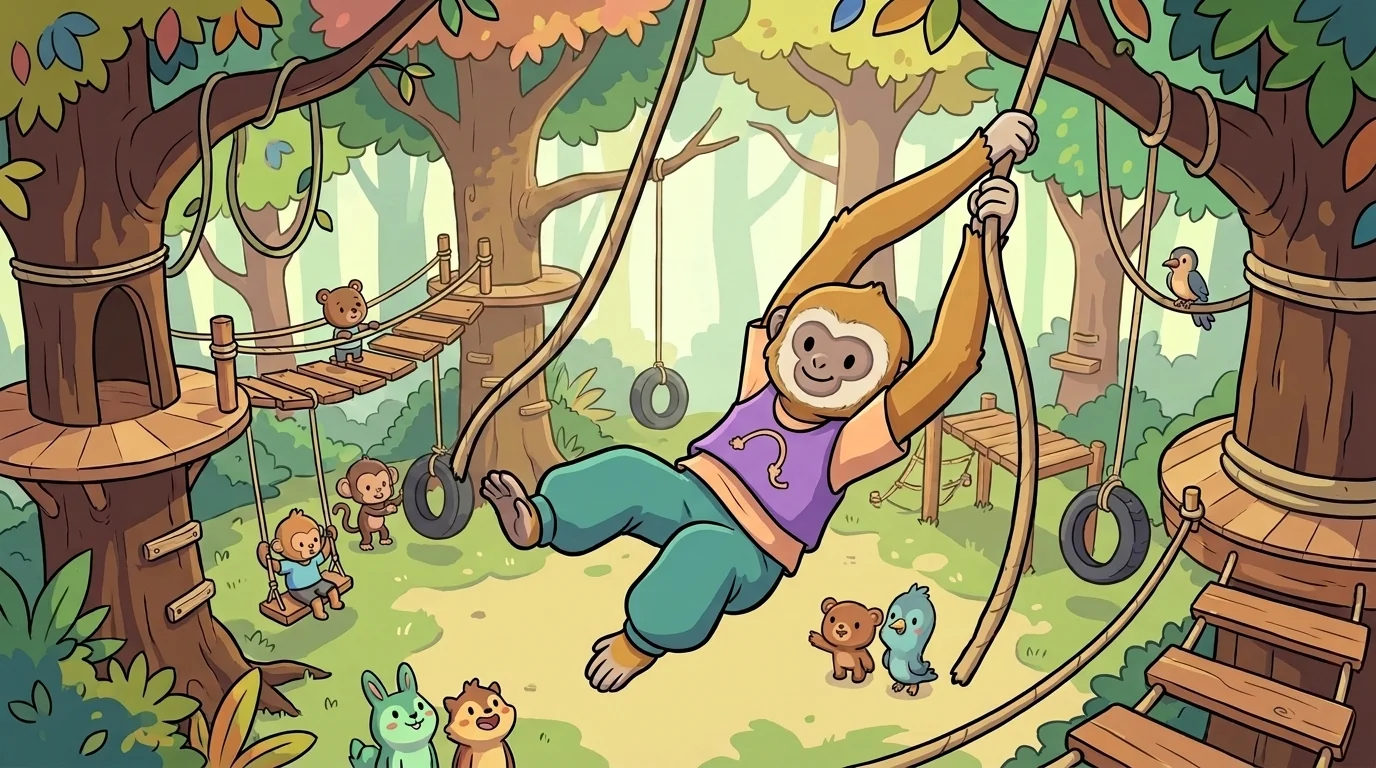
Swing discovered the free power hanging from a low branch.
"When I was little," she says, "I wanted to swing across the monkey bars, and I gripped so hard and pulled with all my little arm muscles — and I'd get two bars and my arms would burn out and I'd drop. I decided my arms were just too weak." She'd started to believe the bars were only for strong kids.
Then an older gibbon named Cousin Rimu showed her something loose. "Stop pulling," he said. "Let your body drop, and when you swing back up, that's when you reach for the next bar — the swing does the work, not your muscles." Swing tried it — she let herself hang loose, let her body fall and swing, and at the top of the swing, when she was light and rising, she reached — and floated to the next bar with almost no effort at all. Then the next, and the next, all the way across. "I was astonished," Swing says. "I wasn't stronger. I'd just stopped fighting my own weight and started using it. The swing was giving me free power the whole time — I'd been too busy clenching to notice. Nobody ever told me that loose is stronger than stiff." That was the day Swing decided her job would be to teach the free swing — because momentum isn't a gift only strong kids get. It's free power, hanging in every loose limb, waiting for a body brave enough to relax.
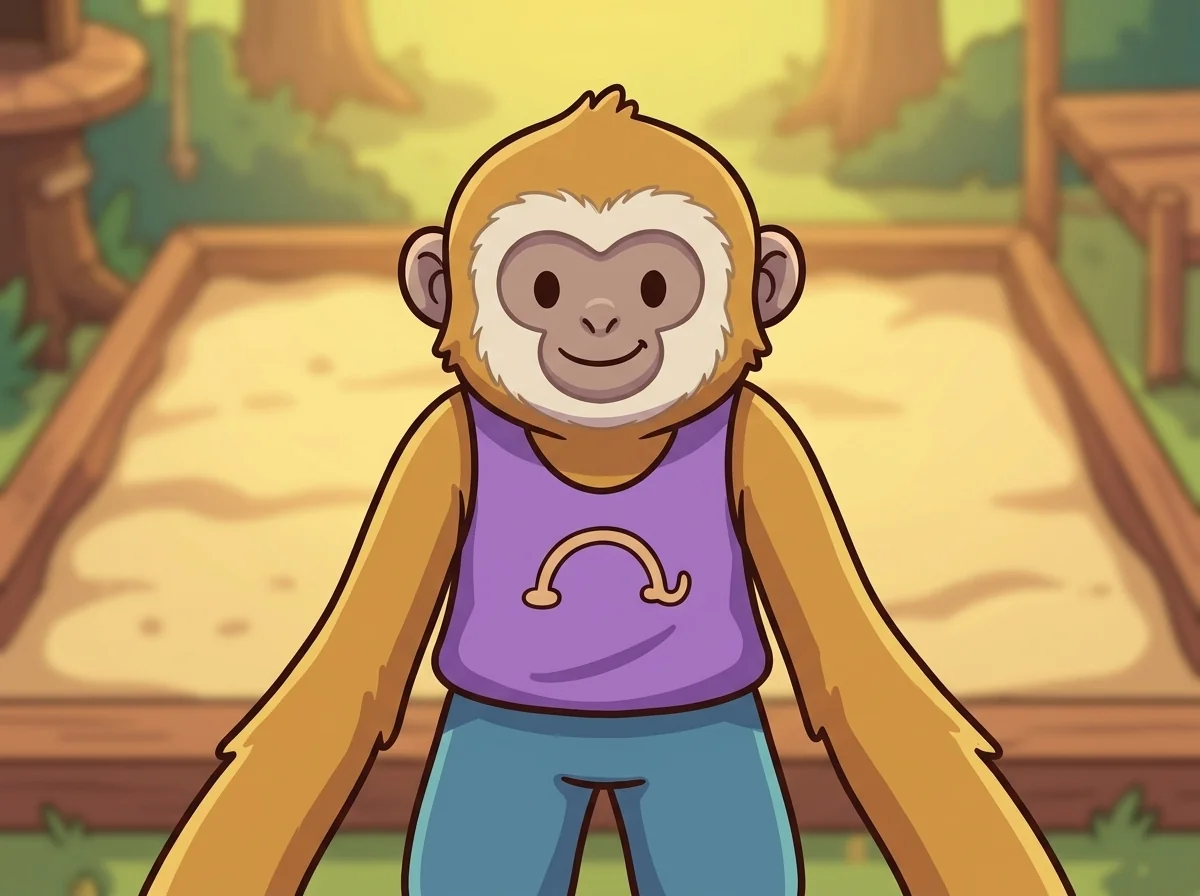
One golden afternoon the cast was taking turns on the rope over the sand pit, and Throw was stuck — gripping the rope white-knuckle-tight, arms rigid, trying to heave himself across by force. He got halfway, stalled, hung there straining and shaking, then swung sadly back to the start. "It's… too… hard!" he grunted. He glared at the rope like it had cheated him.
Swing loped over, long arms loose at her sides. "You're gripping and heaving," she said gently. "Stiff arms are heavy. Let it swing."
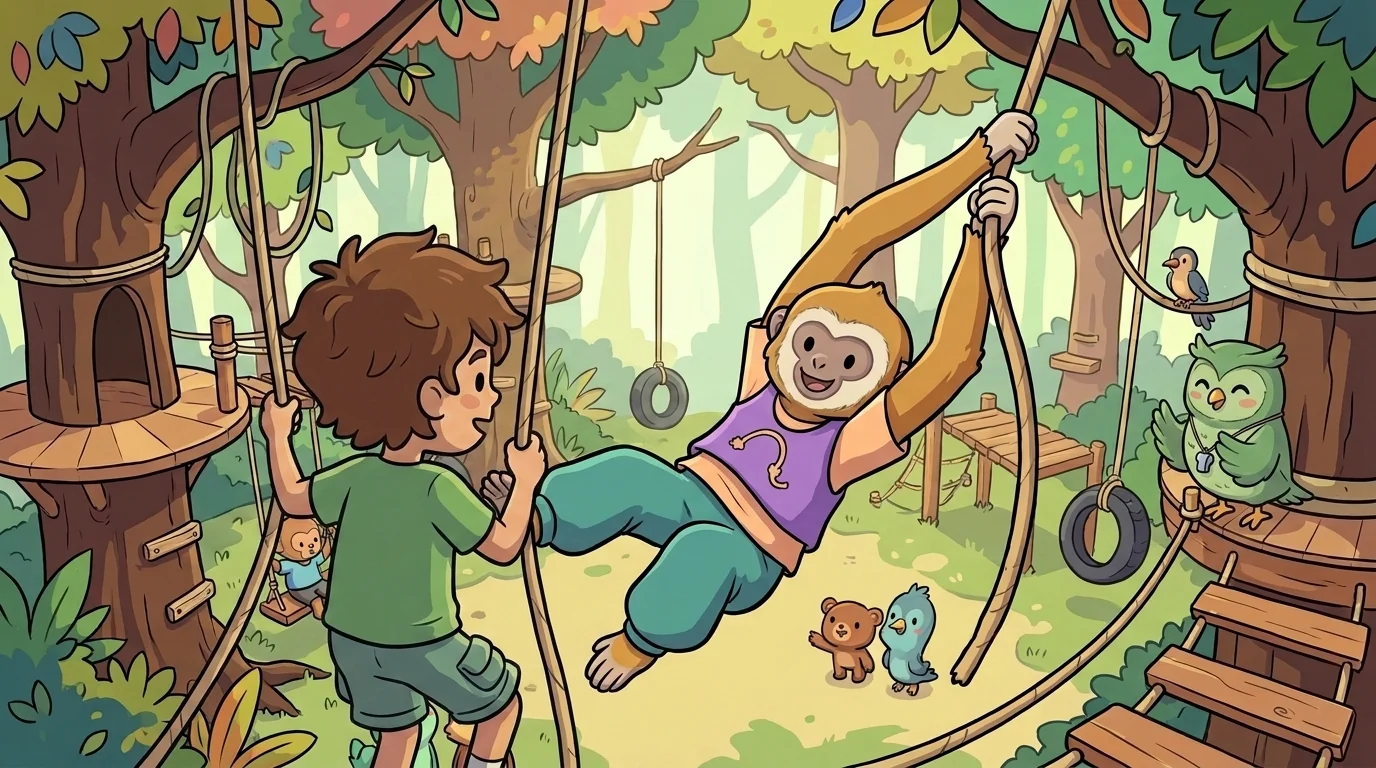
Throw shook his head. "Bend your knees and let yourself drop first," Swing said, and showed him: she hung on the rope, let her whole body fall loose and swing back like a pendulum, and right at the top of the forward swing — light as a feather for one instant — she let go and floated clean across to the far ledge. "See? I didn't pull at all. I let the fall become the fly." Throw took the rope again, unclenched his shoulders, bent his knees, and let himself drop and swing loose instead of forcing it — and at the top of the swing, weightless for a heartbeat, he released and sailed across, landing soft on the far side. His mouth fell open and he whooped: "I flew! And I barely even tried!" "Loose is stronger than stiff," Swing laughed. "The swing was always there. You just had to stop fighting it." Coach Echo clapped from the pit's edge: "The free swing — power you borrow from gravity instead of grinding it out of your muscles." And it's for every body, Swing made sure to say — every kid's arms and legs can swing loose the same way, so it's never about being born strong; it's about learning to relax and time the fall. People everywhere use the free swing: a golfer's easy backswing, a dancer's flowing arms, a kid pumping higher and higher on a playground swing. All different, all the same free power.
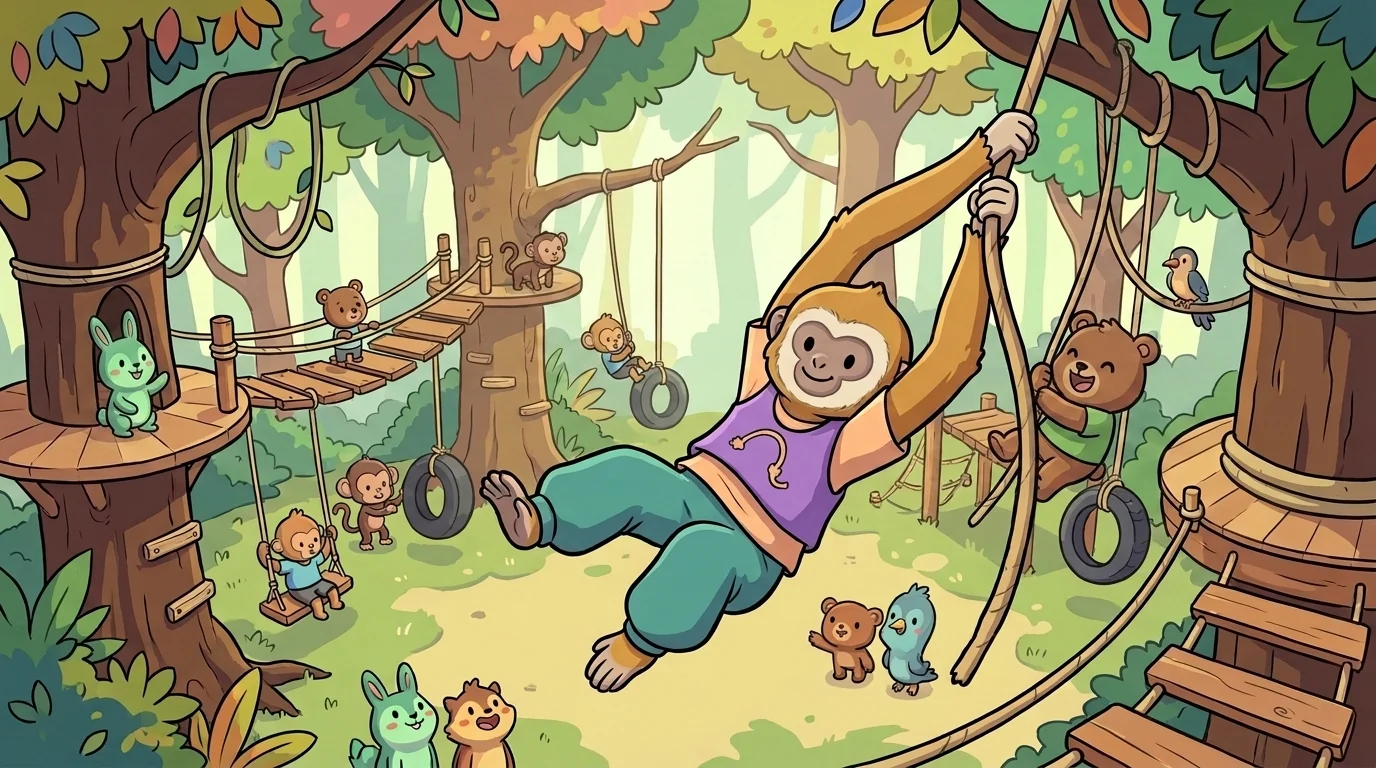
"So I'm not weak-armed?" Throw asked, grinning ear to ear. "You were just fighting your own weight instead of riding it," Swing said warmly. "Nobody's too weak for the swing. Some kids just haven't learned to let go yet."
Throw swung on the rope one more time, loose and easy, and let the momentum carry him — and a light, joyful, almost-flying feeling bubbled up through his chest. It wasn't about being the strongest anymore, or heaving and straining, or being born powerful. It felt good — loose and free and easy — to feel gravity hand him speed he never had to make. That light, delighted, this-is-actually-fun feeling — a body discovering it could borrow power instead of forcing it — was, to Swing, the very best kind of free gift to pass along.
The ActiveForge ensemble
Swing is part of ActiveForge's distributed-narrative cast. Each character embodies a different curricular primitive; together they teach the full subject.
-
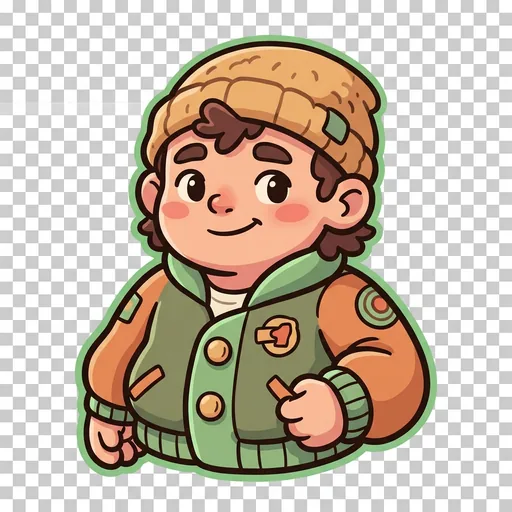
Throw
Overhand-projection motor pattern — targeted-force-at-distance trained-through-practice never-aptitude-test
-
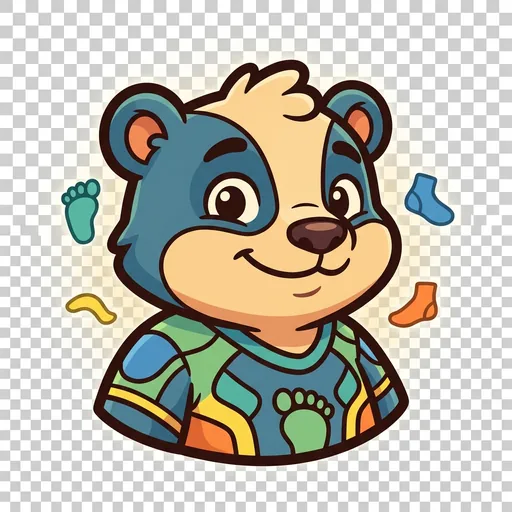
Kick
Lower-body projection — foot-language with five-different-parts-of-foot for different kicks
-
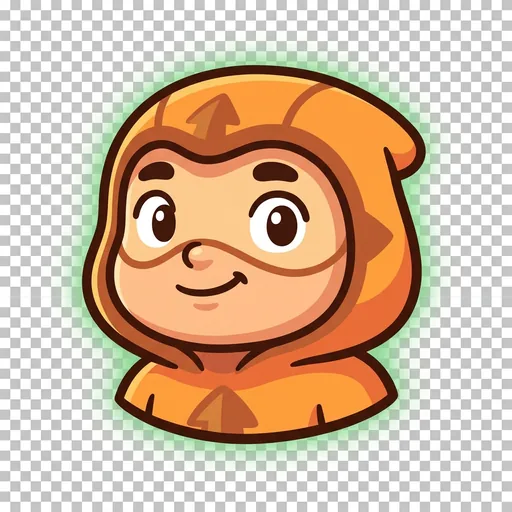
Dodge
Spatial-perception + agility — read-the-space-and-move-EARLIER not-faster; perception-game not speed-game
-
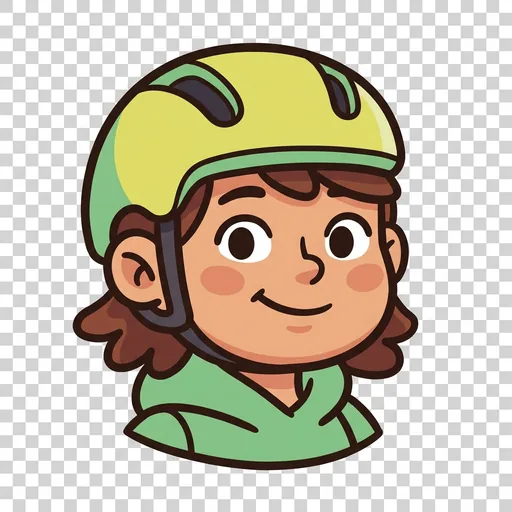
Roll
Tumbling + safe-fall + parkour-shoulder-roll — visible adaptive-PE helmet signals all-bodies-belong
-
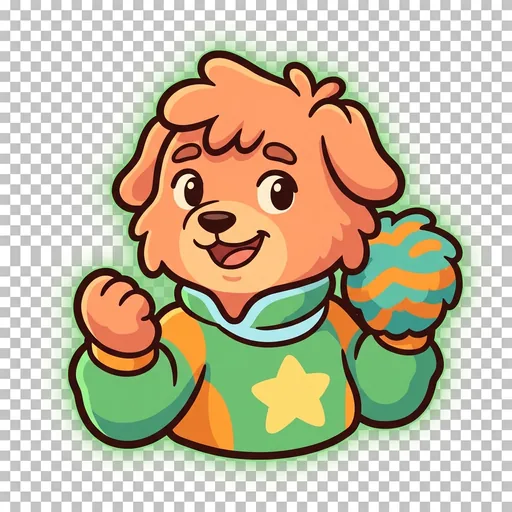
Cheer
Sportsmanship + bystander-presence-in-play — learnable-skill not personality-trait
-
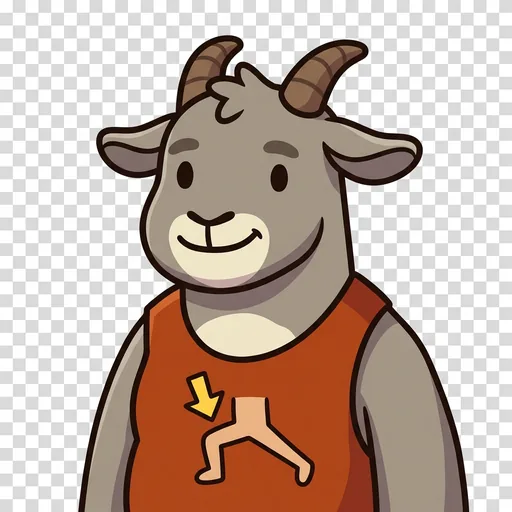
Lunge
Lunge — power lives low: sink the hips, load the back leg, then rise
-
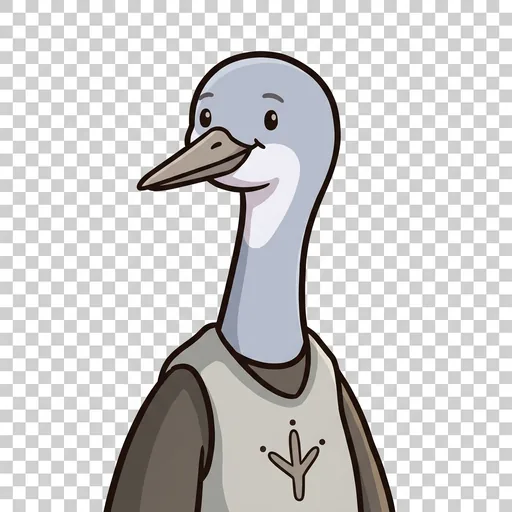
Poise
Poise — stillness is a move: find the base, then you can go anywhere
-
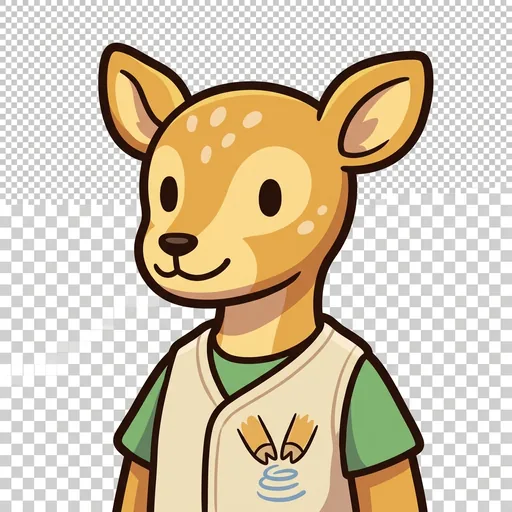
Prance
Prance — land light, spring high; heavy feet can't fly
-
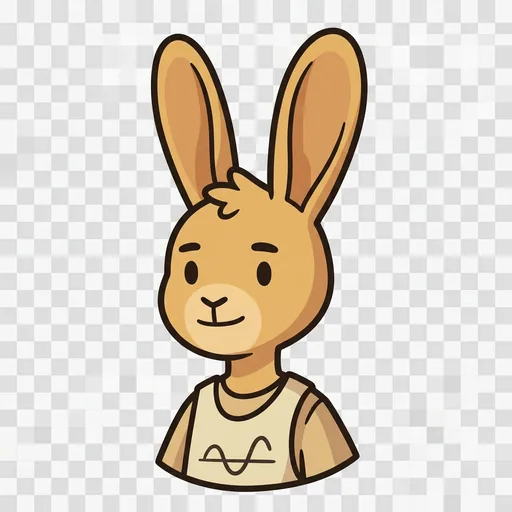
Rally
Rally — the second wind is real: spend, recover, spend again