
Throw and Kick
SEND — step, rotate, release; the arm and the foot both send it the same way, because power flows up a chain from the ground through the hips to the limb, and a throw and a kick are the same sequence pointed two directions.
Loading audio…
Press play to listen along. The line being read lights up as you go.
Show full transcript
Loading transcript…
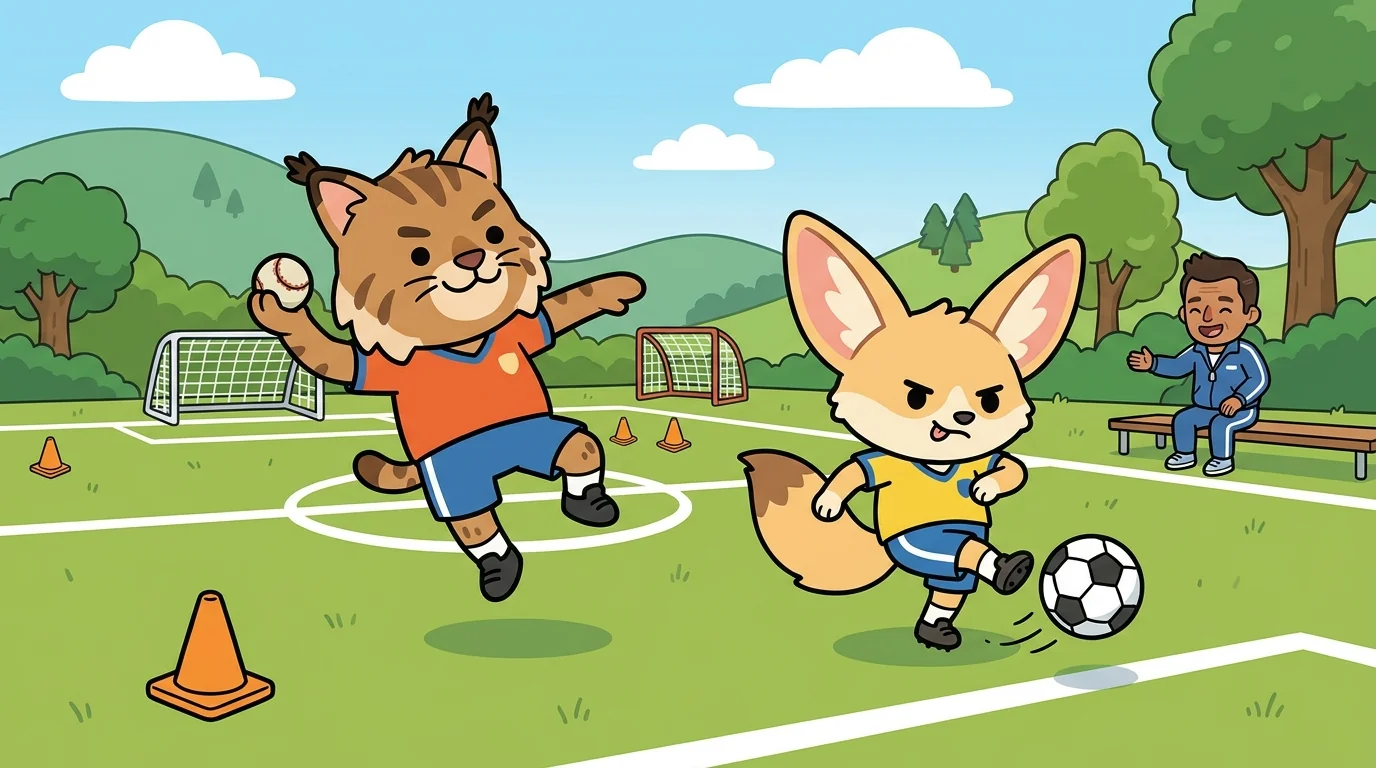
Throw the young bear and Kick the young kangaroo ran the send-it station together, and the athletes who came through arguing over which was harder — throwing or kicking — always left having learned they were, underneath, the same move pointed two different directions.
"Everybody thinks I throw with my arm," said Throw, winding up.
"And everybody thinks I kick with my leg," said Kick, planting her big foot.
"And everybody's wrong," they said together. "It comes from the ground."
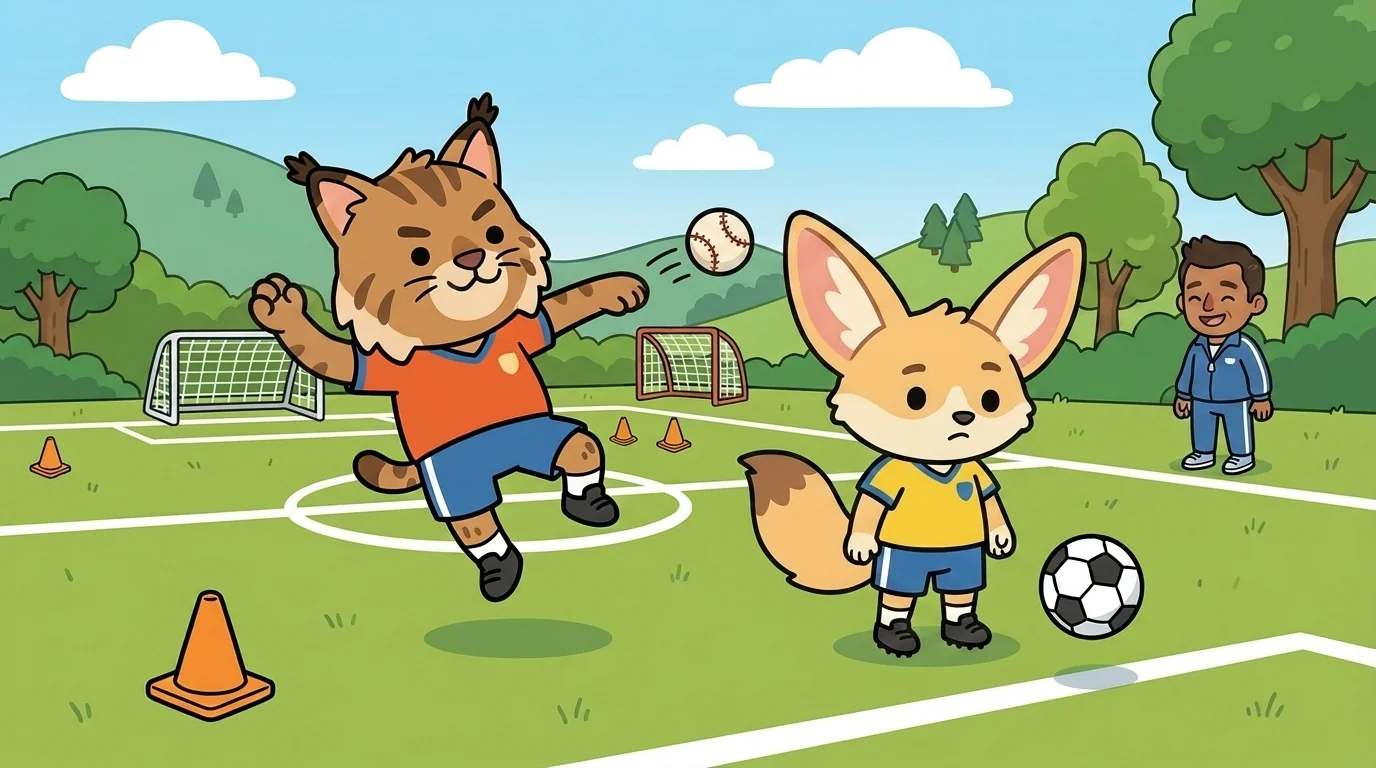
Throw went first, and slowed his throw down so the sequence showed. "Watch. If I throw with just my arm—" he flicked a limp arm, and the ball plopped a few feet away "—that's all the little arm muscles can do. Now watch the whole thing." He stepped toward the target, then his hips rotated open, then his shoulder came round, then his arm whipped last, and then the release — and the ball rocketed away. "Feel the order? Step, rotate, release — bottom to top. The power starts in my planted foot, climbs through my hips, up my trunk, out to the shoulder, and the arm is the last link, not the first. There's a name for it — the kinetic chain: each big part fires in turn and hands its speed up to the next, so the little arm rides on top of everything below it. Throw with the arm alone, you throw with a twig. Throw with the chain, you throw with your whole body."
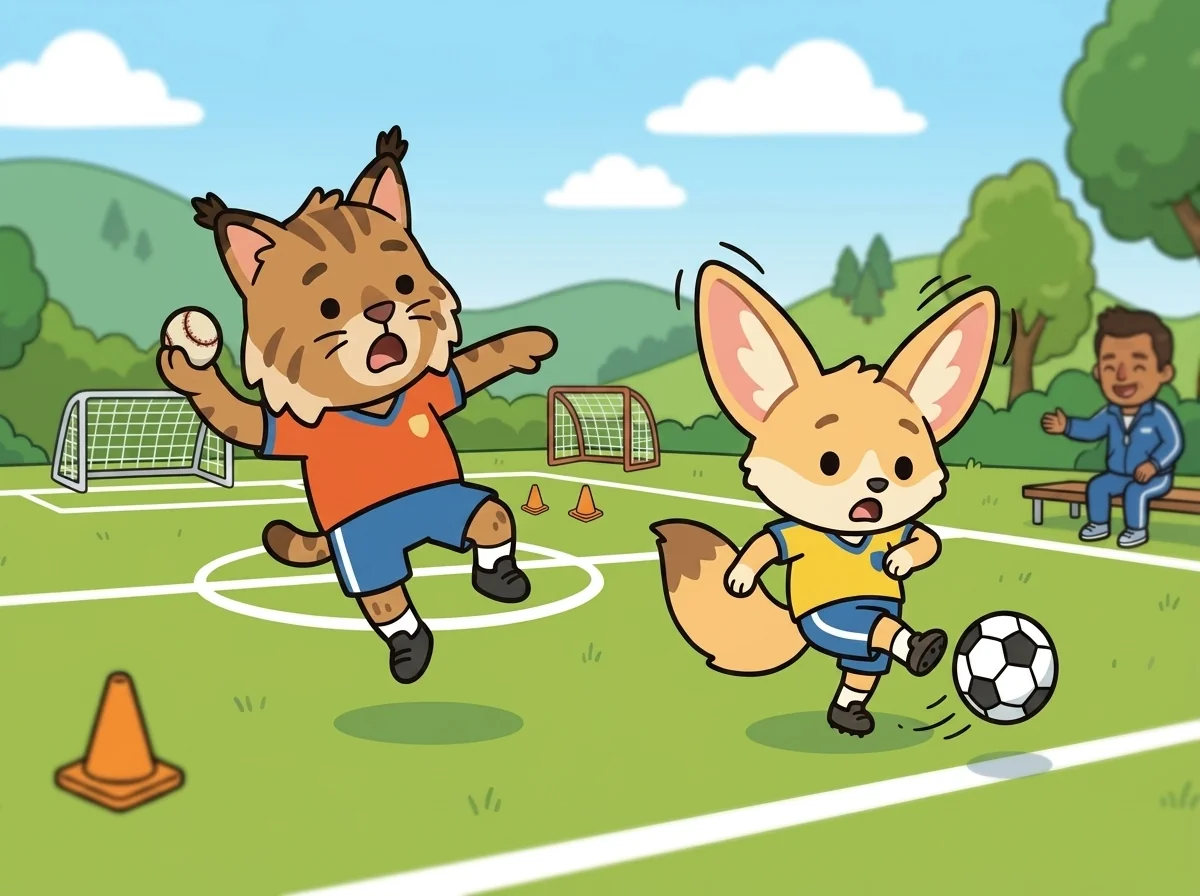
Then Kick stepped in, and slowed her kick the same way. "Now watch mine — and watch how it's the same sequence." She stepped with her plant foot, her hips rotated, her thigh swung, and her lower leg whipped through last, and then contact — and the ball flew. "Step, rotate, release — foot instead of hand, but the exact same order, the exact same chain. Power up from the planted foot, through the hips, down the leg, and the shin snaps last." She grinned at Throw. "For years we thought we were doing opposite things. We were doing the identical thing, just sending it out a different limb. Your chain ends at a hand; mine ends at a foot. Everything below the last link is the same."
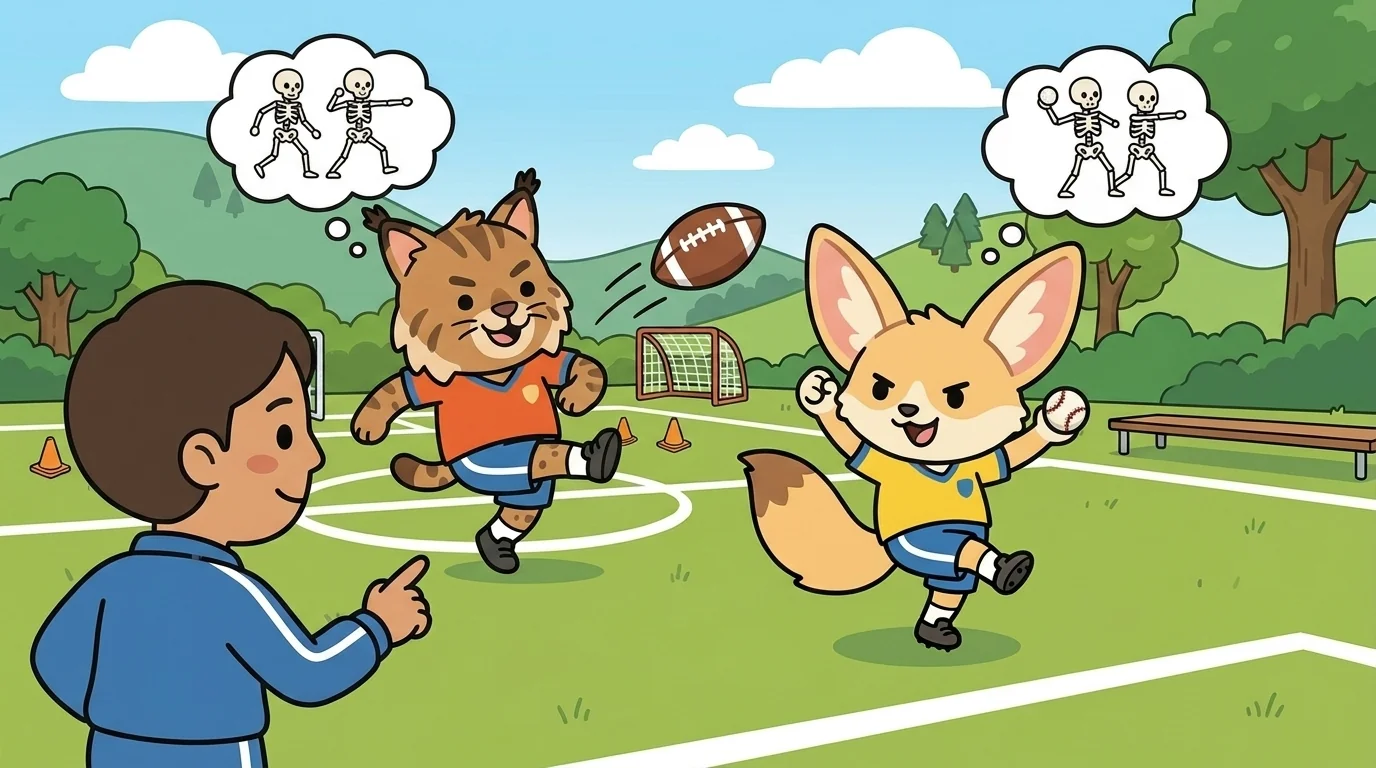
An athlete who'd been struggling with both said the thing they'd been waiting for: "So if I learn the sequence for one, I've basically learned it for the other — step, rotate, then let the limb go last."
"That's the whole of it," said Throw.
"The power's summed up the chain, ground to limb, whichever limb it is," said Kick. "It's why the same order shows up everywhere you send something: a pitcher's throw, a soccer strike, a tennis serve, a boxer's cross, a volleyball spike. Every one is step, rotate, release — big parts first, the last link last. Learn to feel the sequence, and you can send anything: a ball, a punch, a serve. The limb is just the tip. The whole body is the whip."
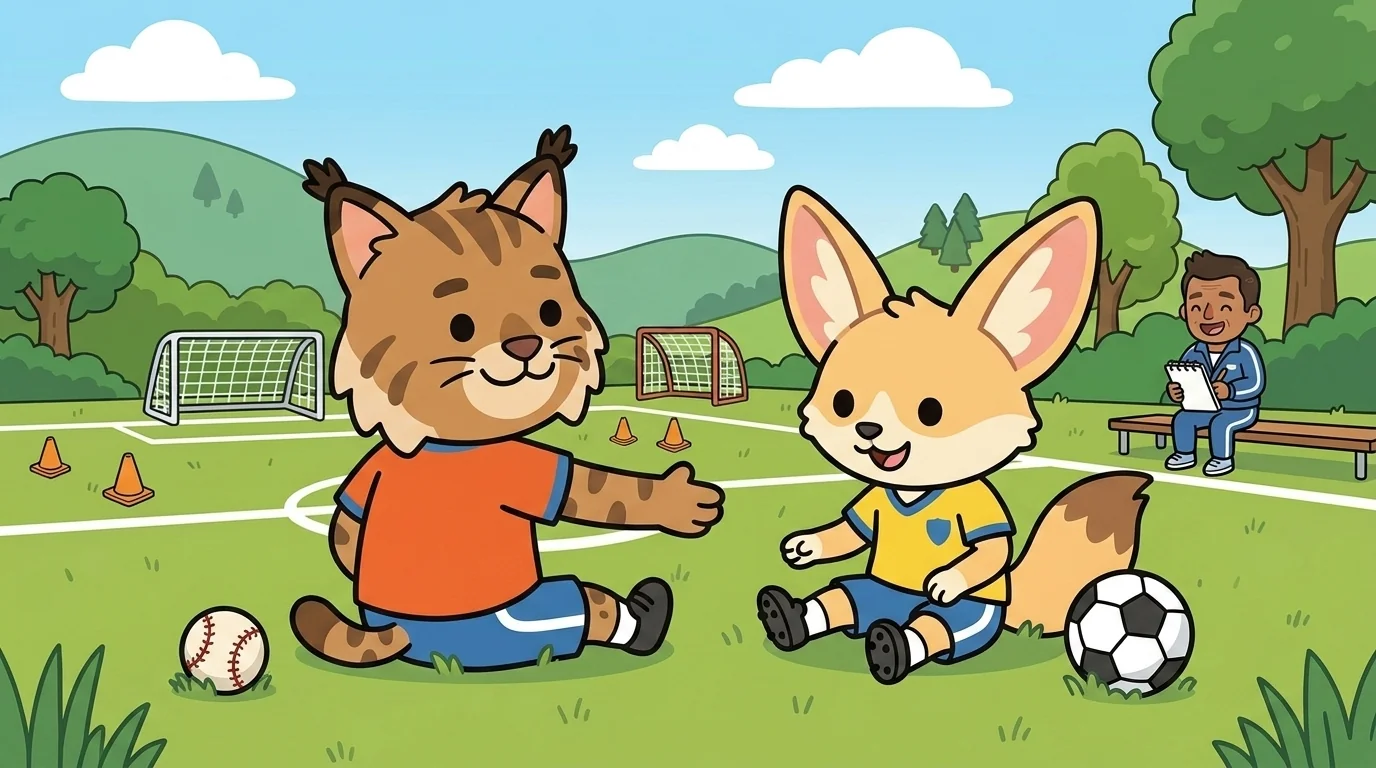
And so the athletes stopped filing "throwing" and "kicking" in two separate drawers, and stopped believing power lived in the arm or the leg. They learned the one truth under both: real force is summed up a chain — planted foot, rotating hips, then the limb whipping last — and a throw and a kick are that same chain aimed two ways. Use only the end of the chain, and you use only a scrap of your strength. Fire the whole chain in order, and the smallest link rides on the power of everything beneath it.
"Step, rotate—" said Throw.
"—release," finished Kick. "Same sequence. Whichever way you're sending it."
There is a satisfying, connect-the-dots joy in learning that two skills you'd struggled with separately are secretly one pattern — that the body doesn't have a throwing engine and a separate kicking engine, but one way of sending, run up from the ground through the hips to whatever limb points at the target. The strongest throwers and the strongest kickers aren't using different secrets. They're both firing the same chain in the same order, letting the last link go last, so that the whole body — not the arm, not the leg — is what actually sends it.
The ActiveForge ensemble
Throw and Kick is part of ActiveForge's distributed-narrative cast. Each character embodies a different curricular primitive; together they teach the full subject.
-

Throw
Overhand-projection motor pattern — targeted-force-at-distance trained-through-practice never-aptitude-test
-

Kick
Lower-body projection — foot-language with five-different-parts-of-foot for different kicks
-
Dodge
Spatial-perception + agility — read-the-space-and-move-EARLIER not-faster; perception-game not speed-game
-
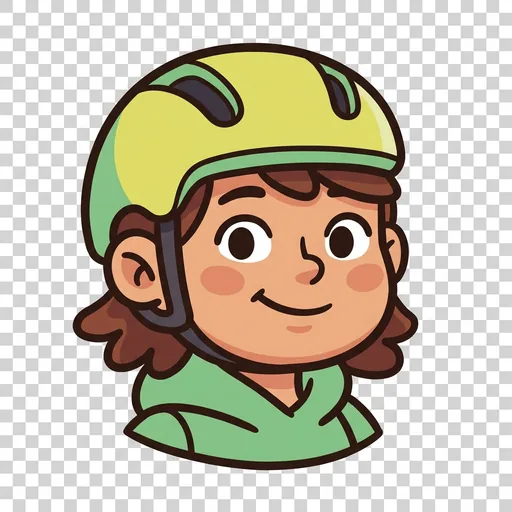
Roll
Tumbling + safe-fall + parkour-shoulder-roll — visible adaptive-PE helmet signals all-bodies-belong
-
Cheer
Sportsmanship + bystander-presence-in-play — learnable-skill not personality-trait
-
Lunge
Lunge — power lives low: sink the hips, load the back leg, then rise
-
Poise
Poise — stillness is a move: find the base, then you can go anywhere
-

Prance
Prance — land light, spring high; heavy feet can't fly
-
Rally
Rally — the second wind is real: spend, recover, spend again
-
Swing
Swing — let the limb fall and rise like a rope; momentum is free power