Timber
copying a model
Loading audio…
Press play to listen along. The line being read lights up as you go.
Show full transcript
Loading transcript…
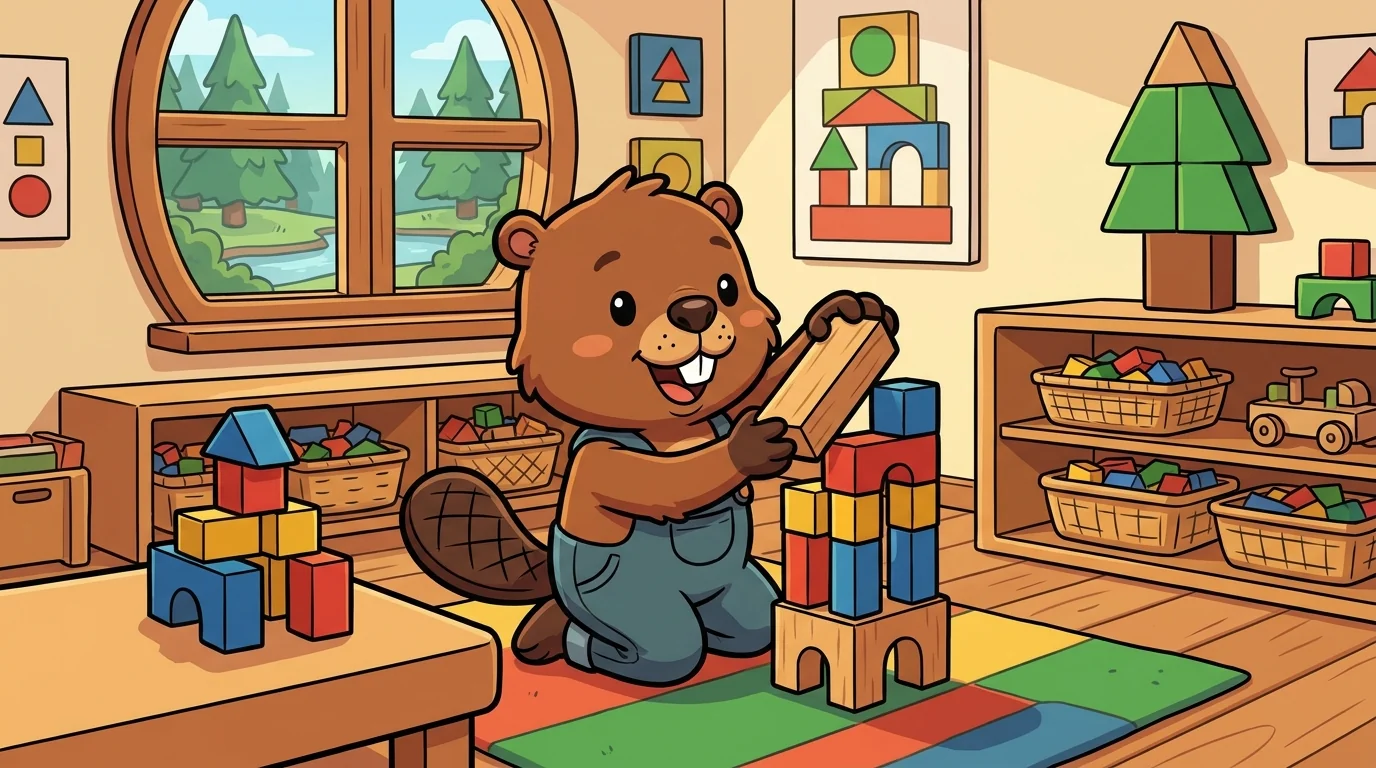
Timber was a young beaver who loved to build with blocks. But Timber's favorite challenge was copying: someone would show a little tower, and Timber would build one exactly the same. "Look close," Timber always said, "then match it, piece by piece."
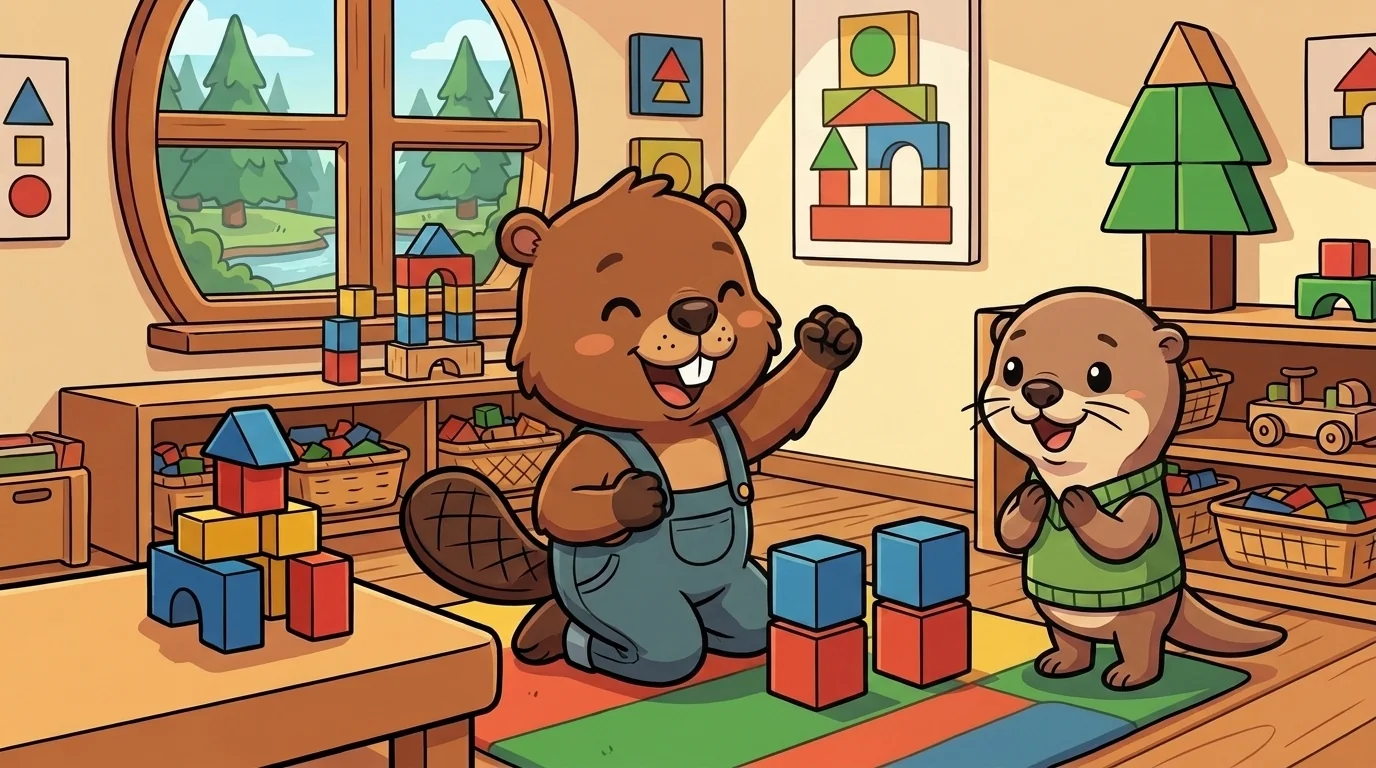
An otter set down a tower — red block on the bottom, blue on top. Timber looked hard. Then he placed a red block down, and a blue block on top. Two towers, exactly the same. "You copied it!" said the otter. Timber beamed.
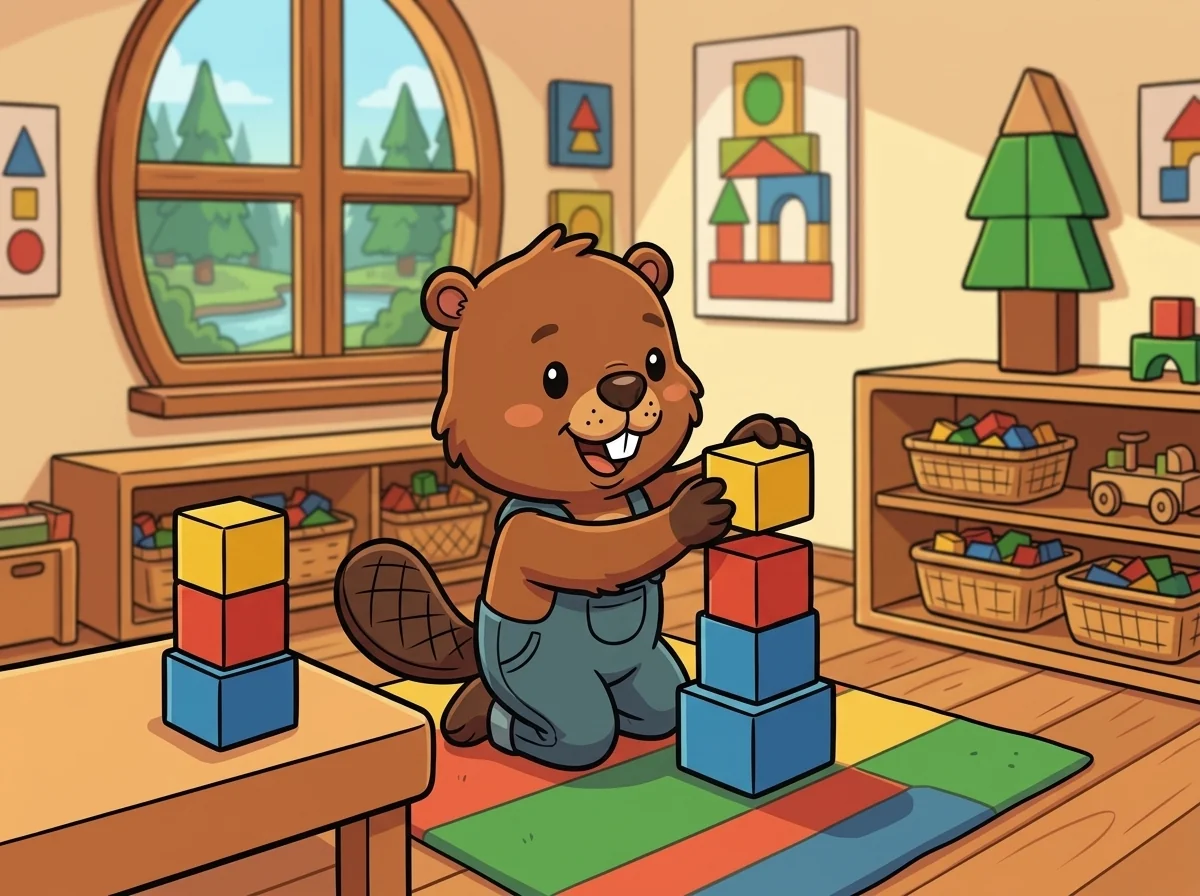
The next tower was trickier: blue, then red, then yellow, bottom to top. Timber didn't rush. He looked at the bottom first — blue. Placed blue. Then the middle — red. Then the top — yellow. Building in order, bottom to top, helped him match it just right.
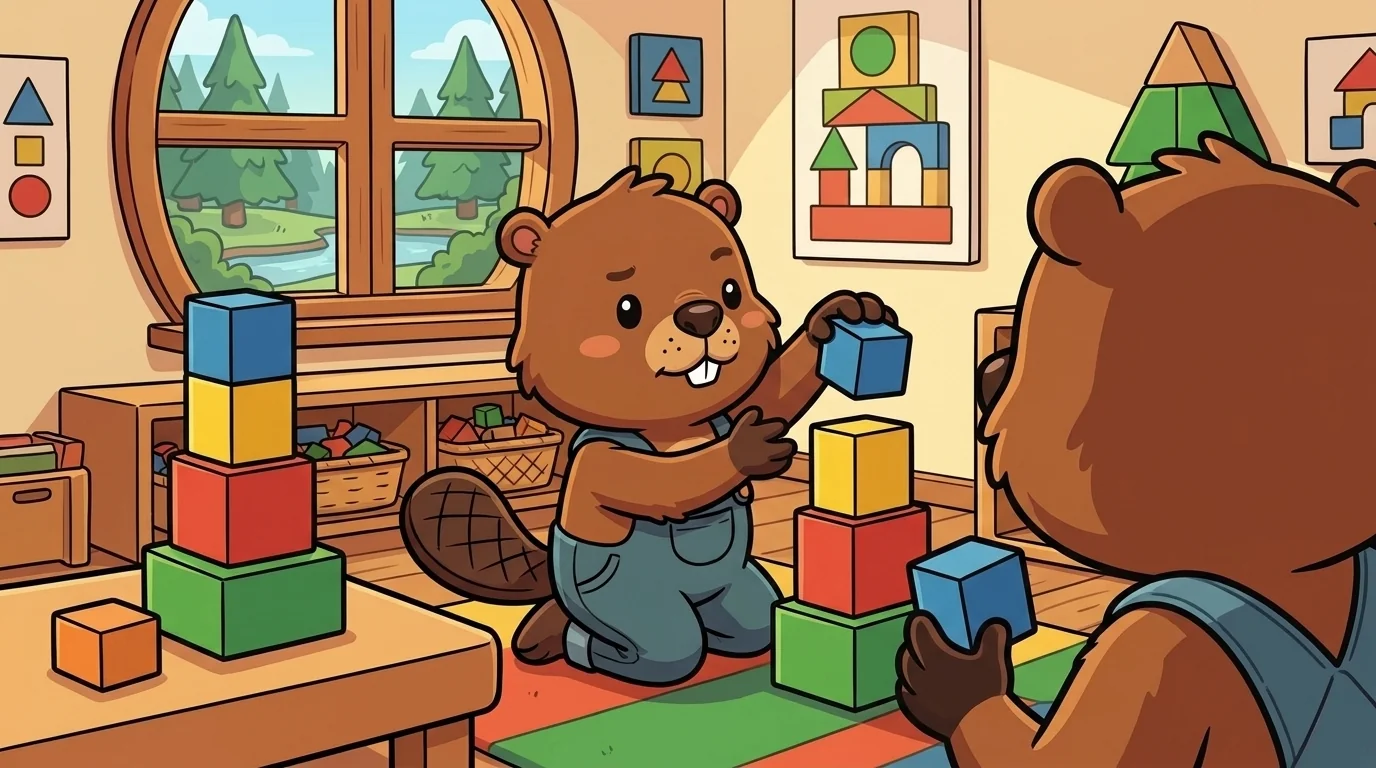
Once Timber grabbed the wrong color and his tower didn't match. But that was okay. He looked back at the model, saw the mix-up, swapped the block, and tried again. "Check, fix, match," he hummed. Copying meant looking, and looking again.
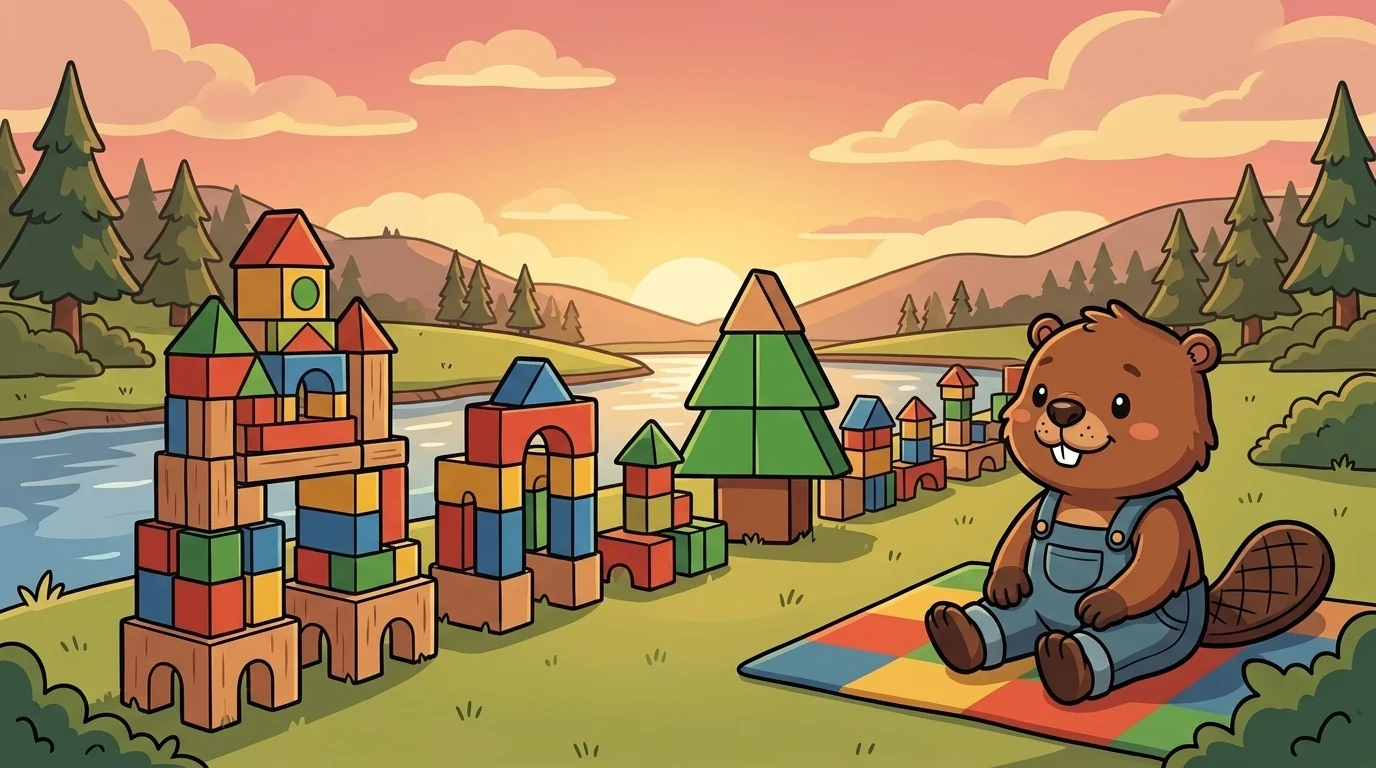
By evening the riverbank was full of matching towers — Timber's copies standing right beside every model. He walked down the row, comparing each pair. They matched. They really matched.
Timber sat down, tired and glad. It felt good to look carefully at something and build it true — to make his own tower stand up exactly like the one in his mind.
Hear it as an audio drama
A short play starring Timber, from BlockTots. Different voices, same idea. Listen any time after you read.
Loading audio…
Read the drama script
- Narrator: From Spark and Anvil and Blocktots — this is Timber, in chapter 1 of the Blocktots cast.
- Narrator: This drama uses an AI-generated voice. Voiced via Gemini 2.5.
- Narrator: Timber is a young beaver who loves to build with blocks. But Timber's favorite challenge is copying — someone shows a little tower, and Timber builds one exactly the same.
- Timber: Look close, then match it, piece by piece.
- Narrator: An otter set down a tower — red block on the bottom, blue on top.
- Timber: I look hard. Red on the bottom... blue on top. There — two towers, exactly the same!
- Otter: You copied it!
- Narrator: The next tower was trickier: blue, then red, then yellow, bottom to top.
- Timber: I don't rush. I look at the bottom first — blue. Place blue. Then the middle — red. Then the top — yellow. Building in order, bottom to top, helps me match it just right.
- Narrator: And Timber's tower looked just like the otter's.
- Timber: Look close. Build in order. Match it, piece by piece. That's what makes Timber, Timber.
- Narrator: You've been listening to a Spark and Anvil chapter, written by the Spark and Anvil writing team for ages 9 to 14.
- Narrator: Apps stay free forever.
- Narrator: Curriculum aligned to Common Core and Next Generation Science Standards.
- Narrator: Released under Creative Commons BY-NC-SA 4.0 for educational reuse. Visit Spark and Anvil for the full transcript.
Reading together with a grown-up? A card for the grown-up
For the grown-up: ask one question, then wait. When they answer, add one word to what they said. Tap the button when they have said something — that is one turn each, a circle. Nothing is recorded or kept.
Let them finish it
Say “Timber looks at the tower, then stacks it too — copy …” and stop. Let them finish it.
Now wait. Count slowly to five in your head. Their answer is worth the quiet.
Circles together: 0
The BlockTots ensemble
Timber is one of the friends in BlockTots. Each friend shows you one idea by how they act; meet them all and you have the whole subject.
-

Spindle
Mental rotation — a squirrel who turns a piece in her paws until it drops into the hole; rotating-to-fit IS mental rotation
-

Fitz
Composition / decomposition — a bird who fits small shapes together to build a bigger one; composing a whole from parts IS spatial composition
-

Cubby
Spatial relations & vocabulary — a mouse who tucks himself over/under/inside/next-to on cue; enacting the position words IS spatial language