Rima
RHYME ON THE STRESSED SOUND
Listen along — Rima
Loading audio…
Press play to listen along. The line being read lights up as you go.
Show full transcript
Loading transcript…
Rima and the Strong Beat
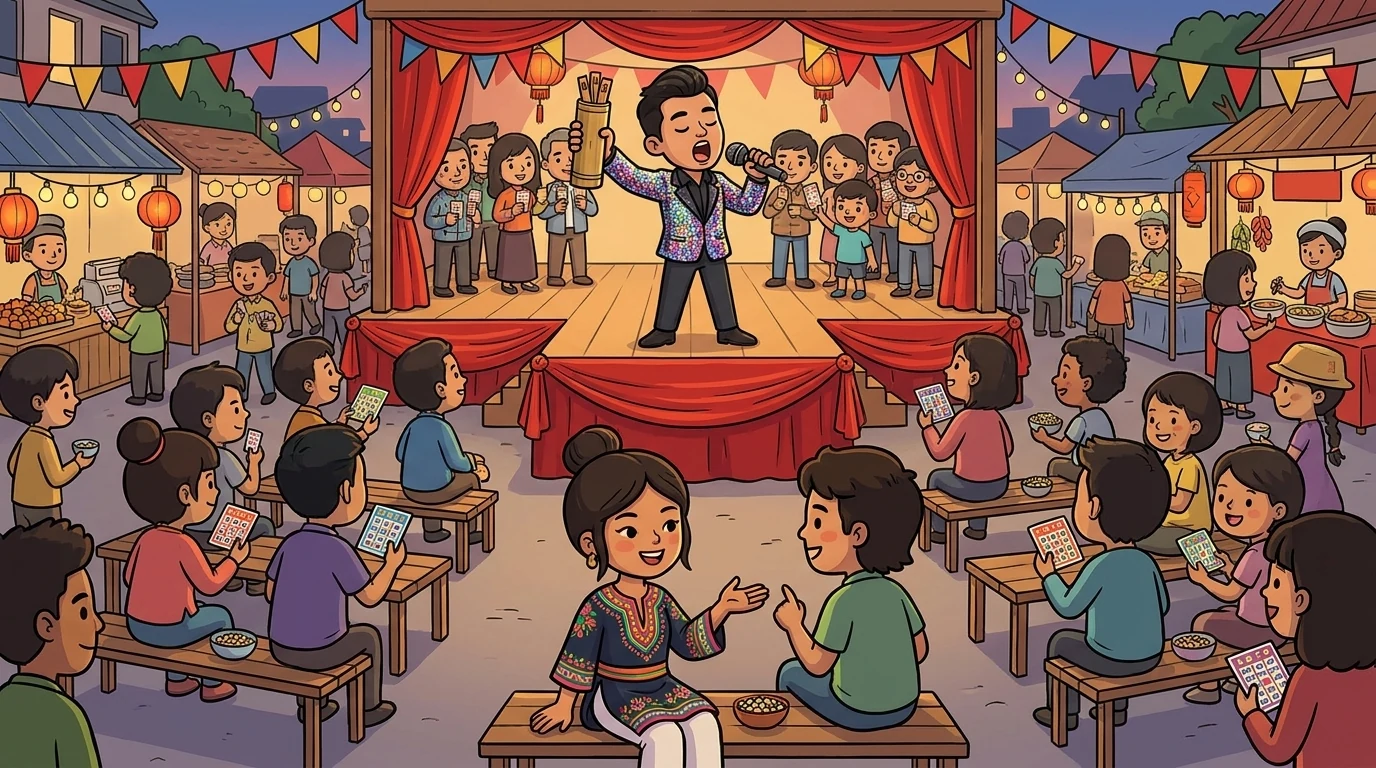
The second Tết that the cage brought them home, Rima let Ama call a whole round in English on the little stage at the end of the market, for the tourists and the children who didn’t speak Vietnamese.
“Every number ends on a rhyme,” said Rima. “That’s the only rule.”
Ama practised all afternoon behind the noodle stall. Most of her rhymes worked. The baker baked a loaf for me, and that’s my number: twenty-three. The cat climbed up the old pine tree, it’s lucky number twenty-three. Then she got stuck on thirteen.
“I’ve got one,” she said, “but it sounds wrong, and I don’t know why.”
“Sing it,” said Rima.
“I fed the ducks beside the river, number thirteen, I’m a giver.”
Rima made a face, very kindly. “Sing it again, and listen to the end.”
Ama sang it again. Thir-teen, I’m a giv-er. It wobbled. The line didn’t land.
“Now say thirteen like you mean it,” said Rima. “Just the number.”
“Thirteen.”
“Where does your voice push?”
Ama said it again, slowly. “Thir-TEEN. On the second bit.”
“And giver?”
“GIV-er. On the first bit.”
“There it is,” said Rima. “A rhyme isn’t just matching letters. It’s matching the strong beat at the end of the line, the part your voice leans on. Thirteen leans on teen. Giver leans on giv. They don’t land in the same place, so the line stumbles.”
Ama thought about it. “So thirteen has to rhyme with something that leans on a -een.”
“Try.”
“Seen. Clean. Green. Queen.” Ama’s face brightened. “The frog sat on a lily, green, his lucky number is thirteen.”
It landed. Ama felt the click in her whole body, like a key turning.
“Now thirty,” said Rima.
Ama said it carefully. “THIR-ty. It leans on the front.”
“So what rhymes?”
“Dirty. Thirty and dirty. My little brother’s knees are dirty, so his number must be thirty.” She giggled.
Rima clapped. “And now you’ve solved something bigger than a rhyme. Thirteen and thirty sound alike when someone shouts them across a noisy market. But your two rhymes sound nothing alike. Green and dirty. Nobody will ever mix up your thirteen with your thirty.”
Ama remembered Kelly on the ferry, saying that fifteen and fifty blurred together in the wind. “So a good rhyme does the same job as a good nickname.”
“It carries the number,” said Rima. “And if you put the number’s strong beat right at the end of the line, where everyone’s ear is waiting, it rings out clear.”
That evening, Ama called her round. The tourists and the children sat on the little plastic stools with their tickets. Tam turned the tube and passed her the sticks.
“The frog sat on a lily, green: his lucky number is thirteen!”
A boy in the front row giggled and put a bean down.
“My little brother’s knees are dirty, so this one must be number thirty!”
More giggles. Two beans, from two different children, on the right numbers.
She sang fourteen, fifty, sixteen and sixty, each with a rhyme built to lean where the number leaned. Nobody muddled the teens and the tens all night. When she sang I lost my hat at the county fair, and seventy’s here, just sitting there, she realised it worked even though fair and there were spelled completely differently, because the ending sounds matched.
Afterwards, while Rima packed the bamboo tube away, Ama asked about the lô tô songs she sang in Vietnamese.
“Do they work the same way?”
“The idea is the same,” said Rima. “In Vietnamese, every syllable has its own tone, and our verses have their own patterns for where the rhymes fall. My grandmother sang them the way her grandmother did. But the heart of it is the same everywhere: the rhyme comes where the ear expects it, and the number rides on the rhyme.”
“Your grandmother sang lô tô too?”
“She sang it at this market for fifty years,” said Rima. “She told me the crowd is not an audience. The crowd is helping you. Every person waiting for the end of the line is leaning towards you. You just have to put the number where they’re leaning.”
Ama thought about the boy in the front row, leaning forward on his stool, waiting for the last word.
That night she wrote in the call book: Lô tô in English. A rhyme lands on the strong beat. Thir-TEEN rhymes with green; THIR-ty rhymes with dirty. Put the number’s strong beat at the end of the line, and the teens and the tens never get mixed up.
The CallerTales ensemble
Rima is one of the friends in CallerTales. Each friend shows you one idea by how they act; meet them all and you have the whole subject.
-
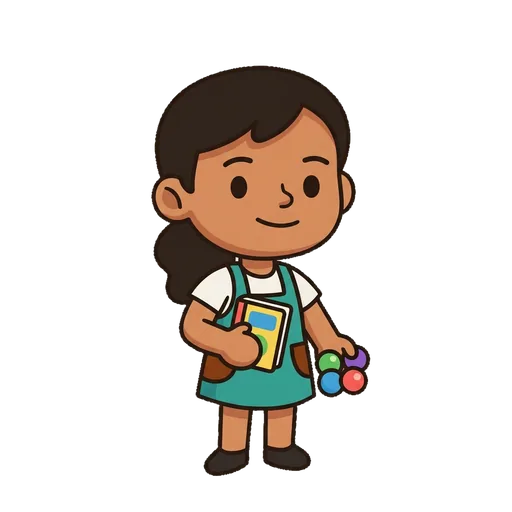
Ama
Draws the balls and keeps the call book
-
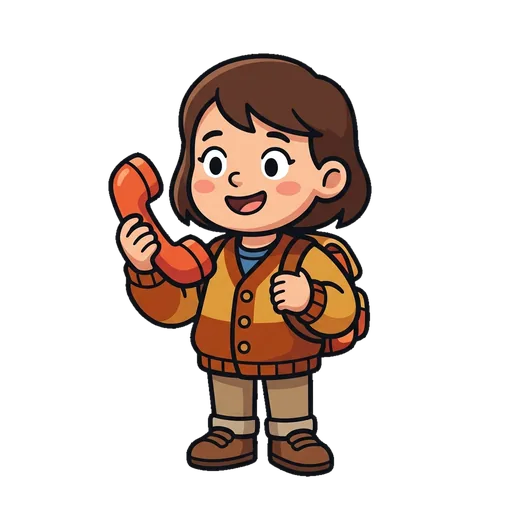
Tam
Reads every call aloud, and gets braver each stop
-

Riddla
Never names a thing — only riddles it, like a cantor
-

Smorfia
Sees a picture in every number, as tombola players do
-

Hiệu
Sings the hint before the card, the way bài chòi is sung
-
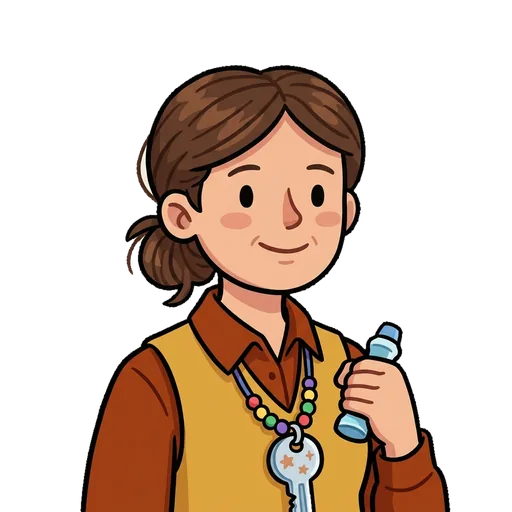
Kelly
Gives every number a nickname, like a housie caller
-

Beano
Marks with whatever is to hand — beans, bottle caps, buttons
-

Cartella
Is a tombola card: three rows, five numbers each, every column its own decade
-
Quina
Shouts the moment five in a line are marked, and checks the line twice