Sift
FREQUENCY ANALYSIS + CRYPTANALYSIS-BY-STATISTICS
Loading audio…
Press play to listen along. The line being read lights up as you go.
Show full transcript
Loading transcript…
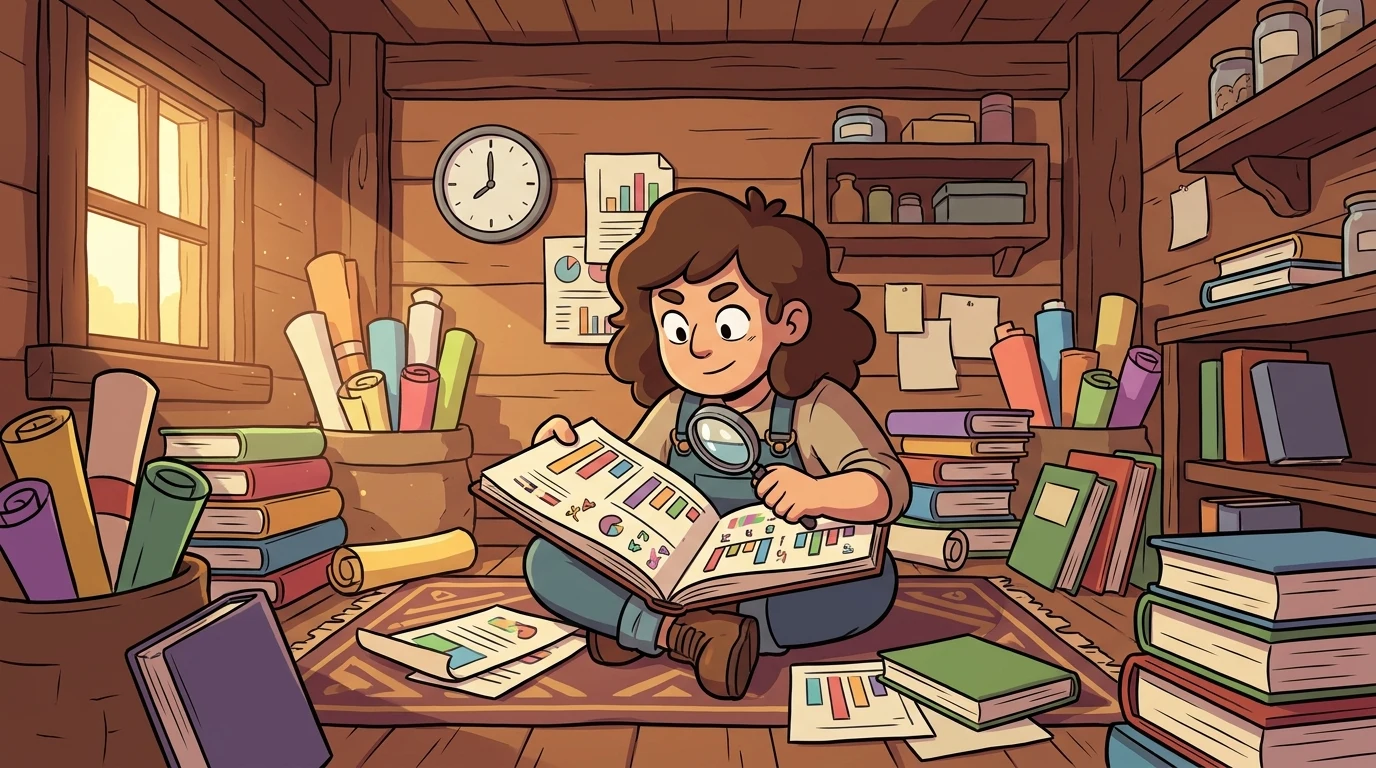
Sift was a small hound-tween. She moved with a quick-eyed, pattern-spotting bearing, always ready to notice details. Her brown-and-cream fur was soft, and her long, floppy ears often twitched, catching faint sounds others missed. In one paw, she carried a small magnifying glass. In the other, a small, folded card. This card was her signature feature: a frequency-chart. It showed the typical pattern of English letters (E ~12.7%, T ~9.1%, A ~8.2%, O ~7.5%, I ~7%, N ~6.7%, and so on) and common two-letter pairs, called digraphs (TH, HE, IN, ER, AN, RE, ON, AT, EN, ND).
Sift embodied the discipline of frequency analysis. This method uses statistical patterns of letters, digraphs, and even whole words to break ciphers. Imagine English as a unique fingerprint. Even when scrambled by a simple cipher, some parts of that fingerprint usually remain. If a secret message's most common letter is "Q," but English's most common letter is "E," then "Q" probably stands for "E." You would then check the next most common letter, and the next. Most simple substitution ciphers fall apart in minutes when faced with this technique.
Sift never thought of cryptanalysis as something only for geniuses. "Every cipher has a tell," she often said. "Patterns in the plaintext leak into the ciphertext, usually." She explained that frequency analysis worked on simple substitution ciphers, and even on more complex ones like Vigenère (once you found the keyword length) or Playfair (using digraph statistics). "But it does NOT work on modern ciphers," she warned. "They're designed to flatten frequency. The lesson is simple: which cipher you're breaking determines which attack works."
One afternoon, Sift stood before a group of students. A scrambled message, a monoalphabetic substitution cipher, glowed on the screen. It looked like a jumble of random letters.
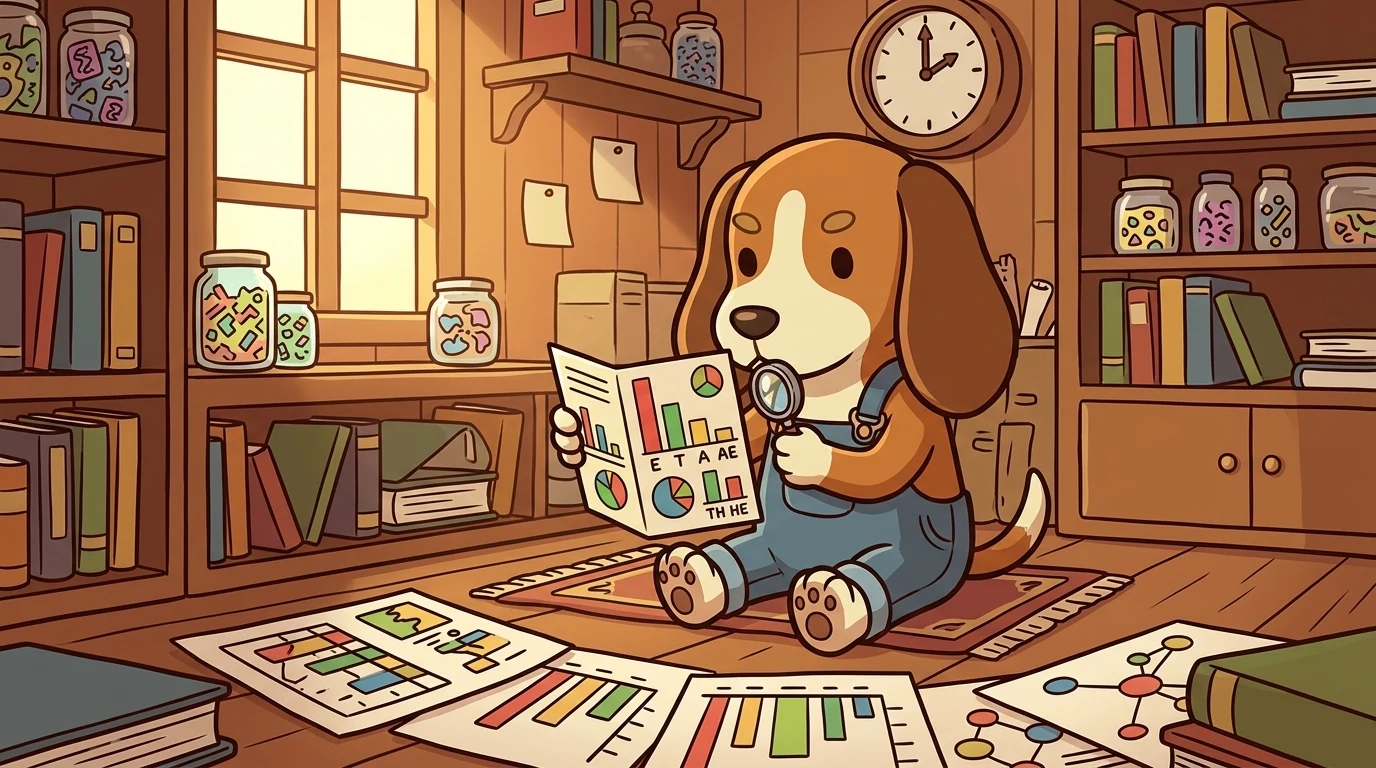
"Who wants to try?" Sift asked, her tail giving a small, hopeful wag.
A boy named Leo raised his hand. He was good at puzzles, but this one felt different. He typed in a guess for the first letter, then another. The screen showed gibberish. He sighed.
"You're guessing," Sift said gently. "That's one way. But it's like trying to find a specific grain of sand on a beach. What if we looked for a pattern instead?"
She tapped her frequency-chart card. "This is our map. Think of it as a cheat sheet for the English language."
Leo leaned closer. "What does it mean, 'E is 12.7 percent'?"
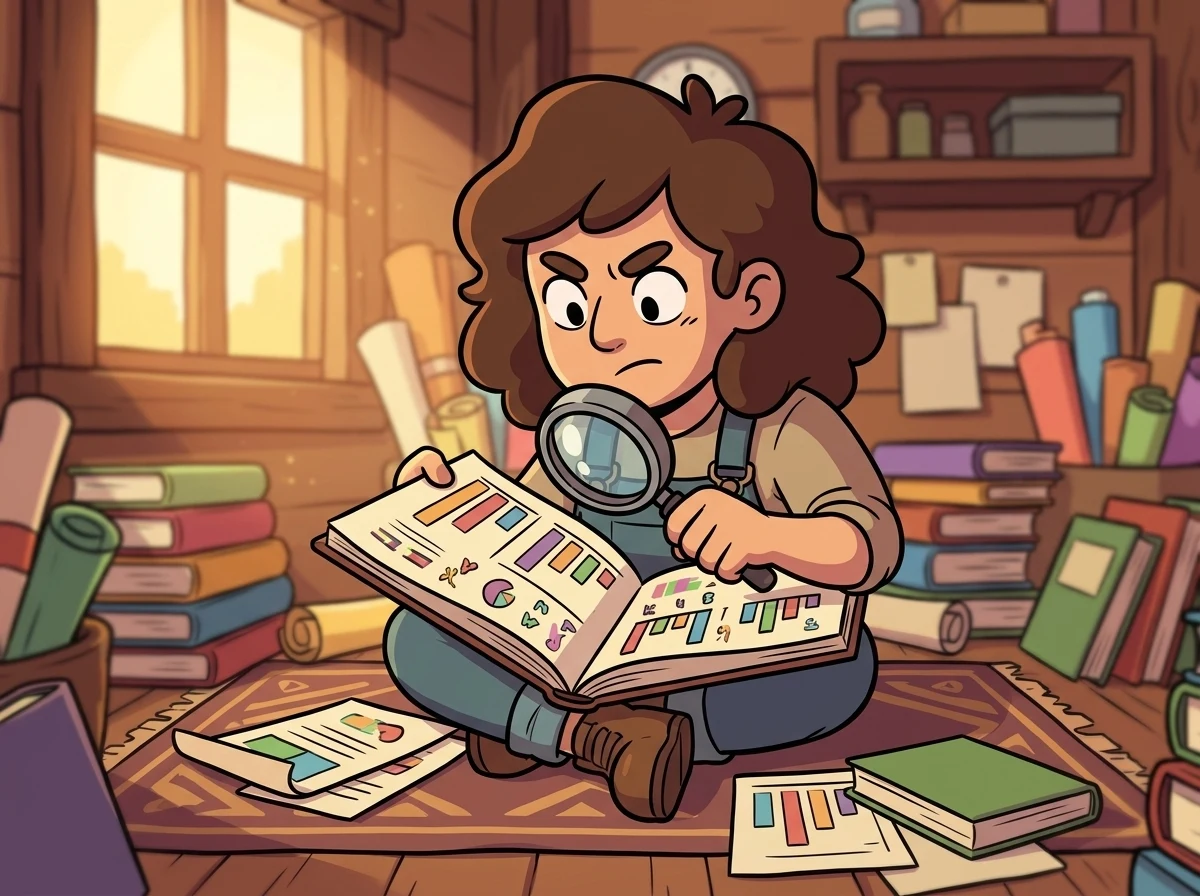
"It means that in almost any long piece of English text, the letter 'E' will show up about twelve point seven percent of the time," Sift explained. "It's the most common letter. Then 'T,' then 'A.' They're like the loudest voices in a crowd."
Sift showed them the first scaffold for frequency analysis: 1. English letter frequencies. "First, count how many times each letter appears in the cipher text," she instructed. "Then, list them from most common to least common."
The students, guided by Sift, worked together. They counted the letters in the scrambled message. Soon, a new list appeared on the screen: 'X' was the most common, then 'P,' then 'J.'
"Now, compare that to our chart," Sift said, pointing to her card. "What's the most common English letter?"
"E!" several students called out.

"Exactly. So, our first guess is that 'X' in the cipher text probably stands for 'E' in the real message." This was the frequency-based first-guess.
They tried it. Every 'X' in the cipher text changed to an 'E.' Suddenly, the message looked a tiny bit less random. There were still many unknown letters, but 'E's started to form small, recognizable chunks.
"Next, look for common digraphs," Sift said, moving to the second scaffold. 2. Common digraphs. "These are two-letter combinations that appear often. Like 'TH' or 'HE' or 'IN.'"
Leo spotted a sequence: 'PXE'. If 'X' was 'E', then 'PE' was a possibility. He looked at the chart. 'HE' was a common digraph. "What if 'P' is 'H'?" he wondered aloud.
"Try it," Sift encouraged. "This is all about testing your guesses."
They changed all the 'P's to 'H's. The message shifted again. Now, 'H' and 'E' started to form words like 'THE' and 'HERE.'
"See that?" Sift asked. "You're not just guessing anymore. You're using patterns to make smart guesses." This was the test against known short words. 3. Common short words. "Words like 'the,' 'and,' 'a,' 'of,' 'to,' 'in,' 'is' are like anchors," Sift explained. "If your guesses lead to a common short word, you're on the right track. If it makes 'thq,' your guess is probably wrong."
The students continued, replacing letters based on their frequency and the appearance of common digraphs and short words. The scrambled message slowly, steadily, revealed itself. It was a simple riddle.
"It's not hard," Sift said, once the message was clear. "It is spot the tell, then iterate. Every cipher has a frequency-fingerprint — until modern ciphers." She paused, her ears drooping slightly. "Modern ciphers are designed to flatten those statistical distributions. Frequency analysis fails on them. Other attacks, like chosen-plaintext, come into play then." 4. Modern ciphers resist. "They're built to hide their patterns," Sift concluded. "So, you need different tools for different locks."
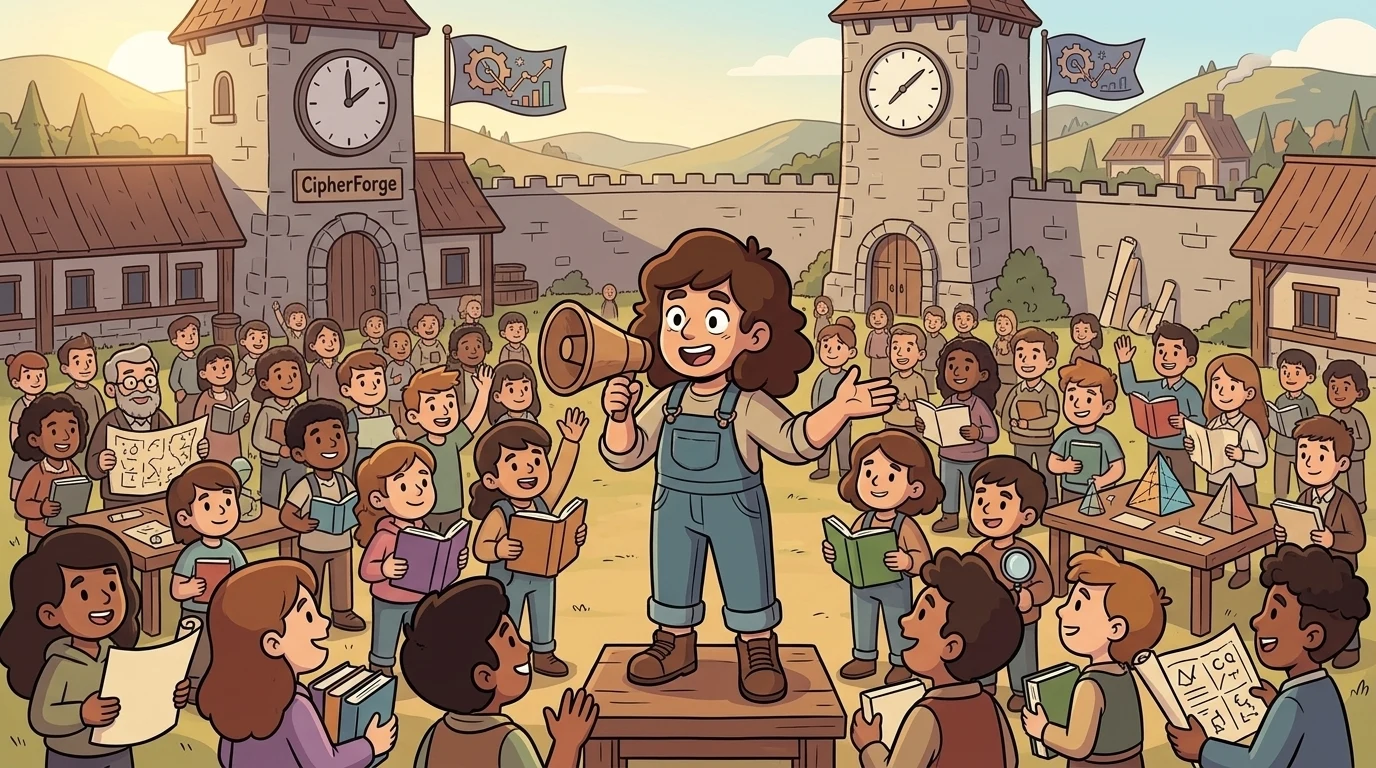
Sift had grown up in a small village where her family had been the "letter-sniffers." They were the hounds who could sense if a letter was authentic, if its patterns felt right. It was a strange, old tradition, but it taught her to see the hidden structures in language. When she came to CipherForge, Cypher had asked her, "What is frequency analysis?" Sift had given him her usual answer, clear and confident, and Cypher had appointed her on the spot.
"You might even see me in EscapeForge," Sift mentioned, almost as an aside. "Same me. In EscapeForge, my work is a fun puzzle for escape rooms. Here, in CipherForge, it's systematic cryptanalysis curriculum. Same character, just two different angles." She winked, and her floppy ears lifted with a happy, contented warmth. "But the patterns are always there, if you know how to look — and honestly, there's nothing that makes me feel more at home than that."
Hear it as an audio drama
A short play starring Sift, from CipherForge. Different voices, same idea. Listen any time after you read.
Loading audio…
Read the drama script
- Narrator: From Spark and Anvil and CipherForge — this is Sift, in chapter 1 of the CipherForge cast.
- Narrator: This drama uses an AI-generated voice. Voiced via Gemini 2.5.
- Narrator: Sift is a hound-tween, a blur of brown-and-cream fur. Her floppy ears twitch as she spots things others miss.
- Narrator: In one paw, a magnifying glass. In the other, a worn card showing the frequency of every letter in the alphabet.
- Sift: I am Sift. A cryptanalyst. I don't see jumbled letters; I see the hidden heartbeat of a message.
- Narrator: Sift practices frequency analysis. The idea that patterns in a language survive the scrambling of a cipher.
- Sift: Every cipher has a tell. A fingerprint. The most common letters in a secret message point to the most common letters in English.
- Sift: We just count the letters. We compare their frequency to my chart. The most frequent symbol is probably 'E'.
- Narrator: Sift grew up in the CipherForge. She didn't learn to read words, but the statistical patterns behind them.
- Sift: By age seven, I knew the lesson. Every message has a rhythm, a pulse you can find if you just listen by counting.
- Narrator: At her final exam, the academy posed one challenge: a page of scrambled nonsense with no key provided.
- Sift: I didn't need a key. I just needed my counter and my chart. I listened for the pattern.
- Narrator: She unscrambled the message in minutes. The academy appointed her on the spot.
- Narrator: The frequency-fingerprint. The statistical tell. That's the whole method. That's what makes Sift Sift.
- Narrator: You've been listening to a Spark and Anvil chapter, written by the Spark and Anvil writing team for ages 9 to 14.
- Narrator: Apps stay free forever.
- Narrator: Curriculum aligned to Computer Science Teachers Association standards.
- Narrator: Released under Creative Commons BY-NC-SA 4.0 for educational reuse. Visit Spark and Anvil for the full transcript.
The CipherForge ensemble
Sift is one of the friends in CipherForge. Each friend shows you one idea by how they act; meet them all and you have the whole subject.
-

Caesar
Caesar shift / monoalphabetic shift cipher
-

Mask
Atbash + general monoalphabetic substitution (every letter has a fixed substitute)
-
Vigenère
Vigenère / polyalphabetic keyword cipher (the Caesar-on-a-rotating-keyword pattern)
-

Echo Pair
Playfair digraph cipher (letters encoded in pairs through a 5×5 grid)
-

Rail
Rail-fence + columnar transposition ciphers (rearrange letter order without changing the letters themselves)
-

Tally
Number-based codes (A1Z26, ASCII, binary, book ciphers — any mapping that converts letters to numbers)
-

Lattice
Modern cryptography fundamentals — XOR, public-key concept, hashing (the irreversible / asymmetric family)
-

Hollow
Hides a secret message inside something ordinary, so nobody even knows there is a message to look for.
-
Tome
Keeps a shared code-book where whole words stand for secret words, so only someone with the same book can read the note.