
Tome
CODEBOOK — swap whole words and phrases, not single letters. Both sides share a book that maps eagle to 613 and a whole message to a code-phrase. Letter-ciphers scramble inside words; a codebook replaces the words themselves with code-words from a shared list.
Loading audio…
Press play to listen along. The line being read lights up as you go.
Show full transcript
Loading transcript…
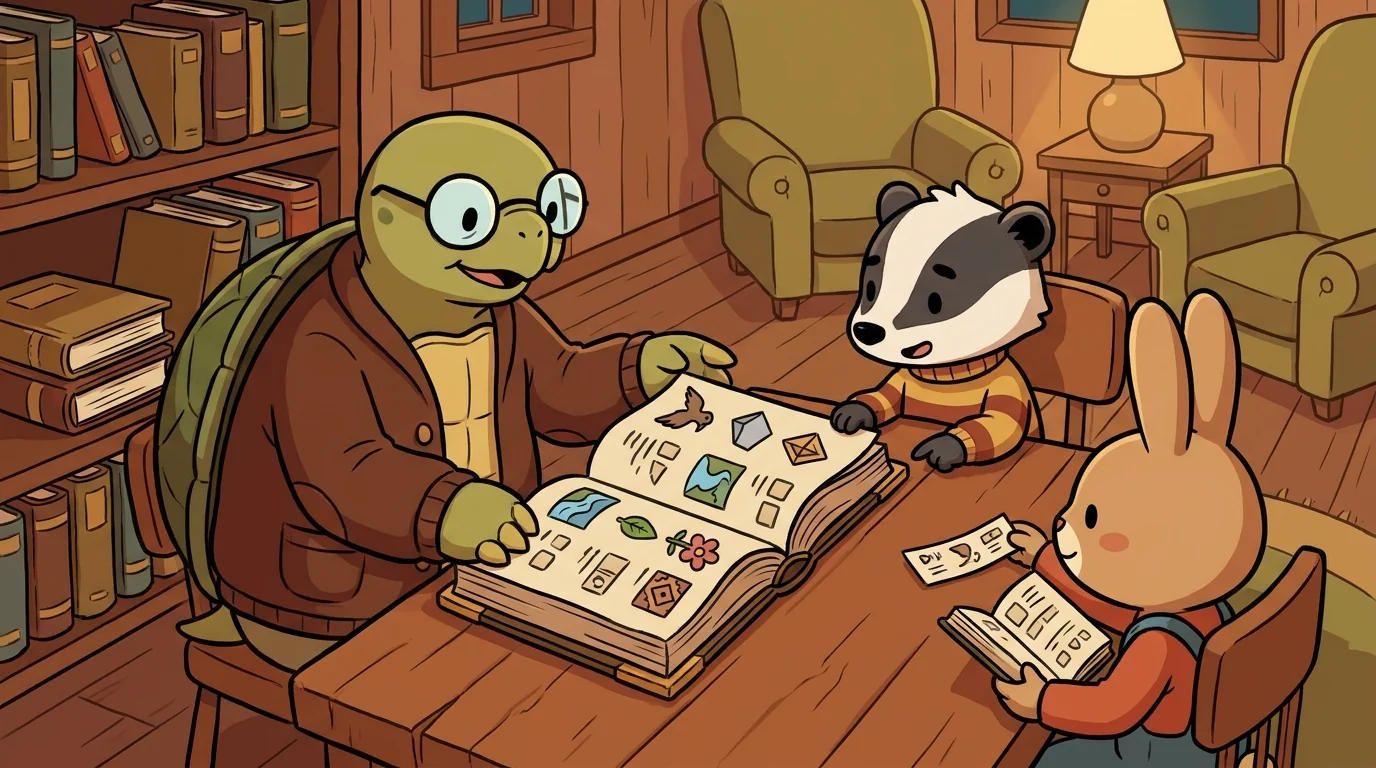
Tome — a sturdy, spectacled tortoise in a deep-pocketed cardigan — set a thick, worn volume on the table between two friends and opened it slowly, with both paws, the way you open something you love. Its pages held no scrambled letters at all. They held long, neat lists, each ordinary thing sitting beside a secret stand-in: a soaring bird beside a small number, a river beside a picture of a leaf, an entire message beside a single flower.
"Give me something to say," he told the first friend, a badger named Wren.
"Tell her the falcon flew home," Wren said. Tome ran a claw down his lists, found the falcon, and copied out its stand-in number. He found flew home and copied its stand-in leaf. He never touched a single letter. He simply traded whole ideas for the code-words waiting in his book, and handed the strange little strip of numbers-and-pictures across to the second friend — who opened her own matching copy of the very same book, ran her claw down the very same lists in reverse, and read the falcon home again.
"See what I did?" Tome said, tapping the cover. "Caesar and Mask work inside a word, jumbling its letters about. I never bother with letters. I trade whole words, whole meanings, for the stand-ins in this book." He smiled, slow and warm. "And so counting letters won't help a soul — because the letters were never the secret. The words were. The only way in is to hold the same book."
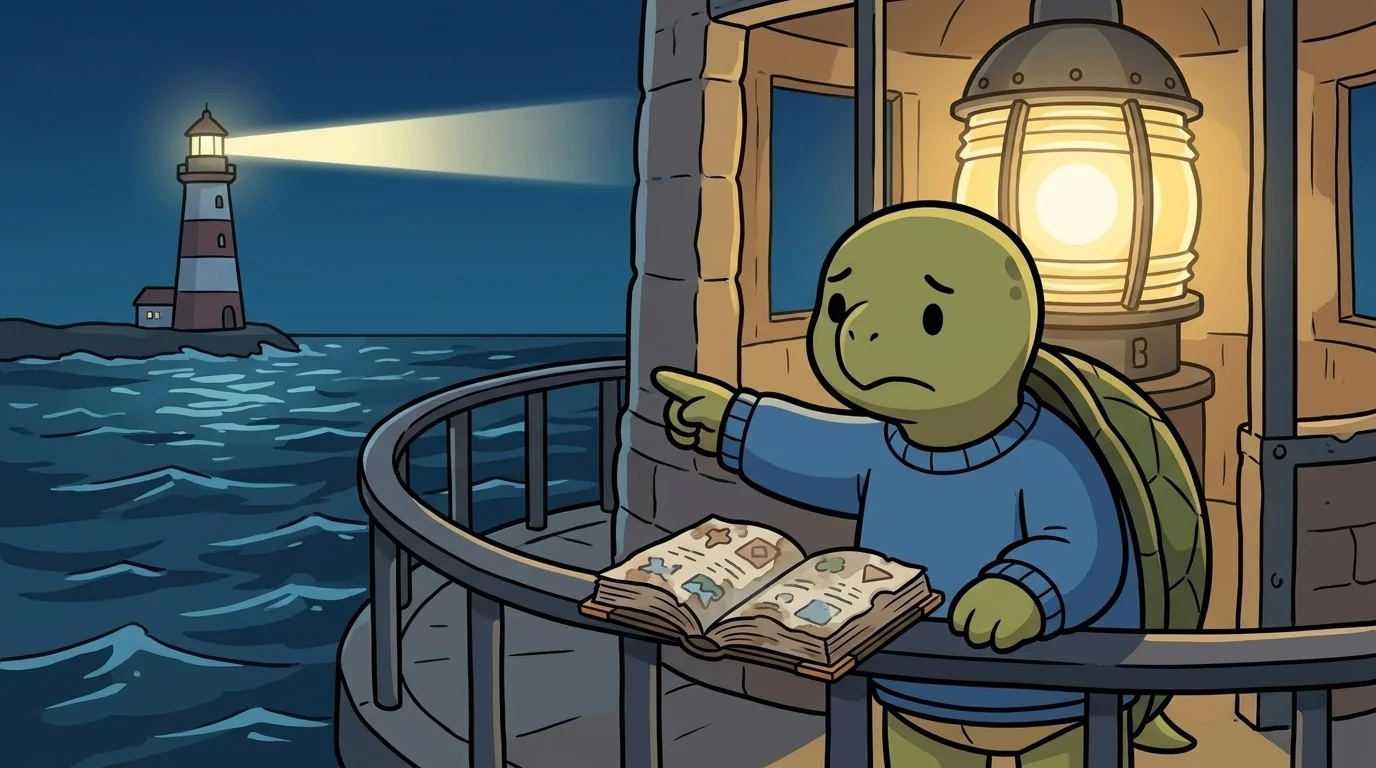
Tome had grown up in a lighthouse-keeper's family, where messages crossed the dark water by lamp and by flag. On a howling night there was never time to spell anything out letter by patient letter — so every lighthouse along that coast shared one signal book. A single long beam meant all clear. A red flag and two short blinks meant rocks ahead, steer wide. Whole careful sentences, folded down into one steady flash of light.
Young Tome loved that book more than any toy he owned. It meant his tired father could send an entire warning to the whole coast with one patient lamp — if, and only if, the far shore was holding the same book too. The book, Tome came to understand, was the friendship between the lights.
Then one autumn a leak ruined a neighbouring lighthouse's copy, and for a whole week its lamp blinked out signals that nobody could read. The beam was as bright as it had ever been. It simply meant nothing now, because the shared book was gone. Standing at the rail in the wind, watching that brilliant, meaningless light sweep the water, Tome understood a thing he never afterward lost: the code had never lived in the lamp. It lived in the book two shores held between them. Without it, the brightest signal in all the world was only light.
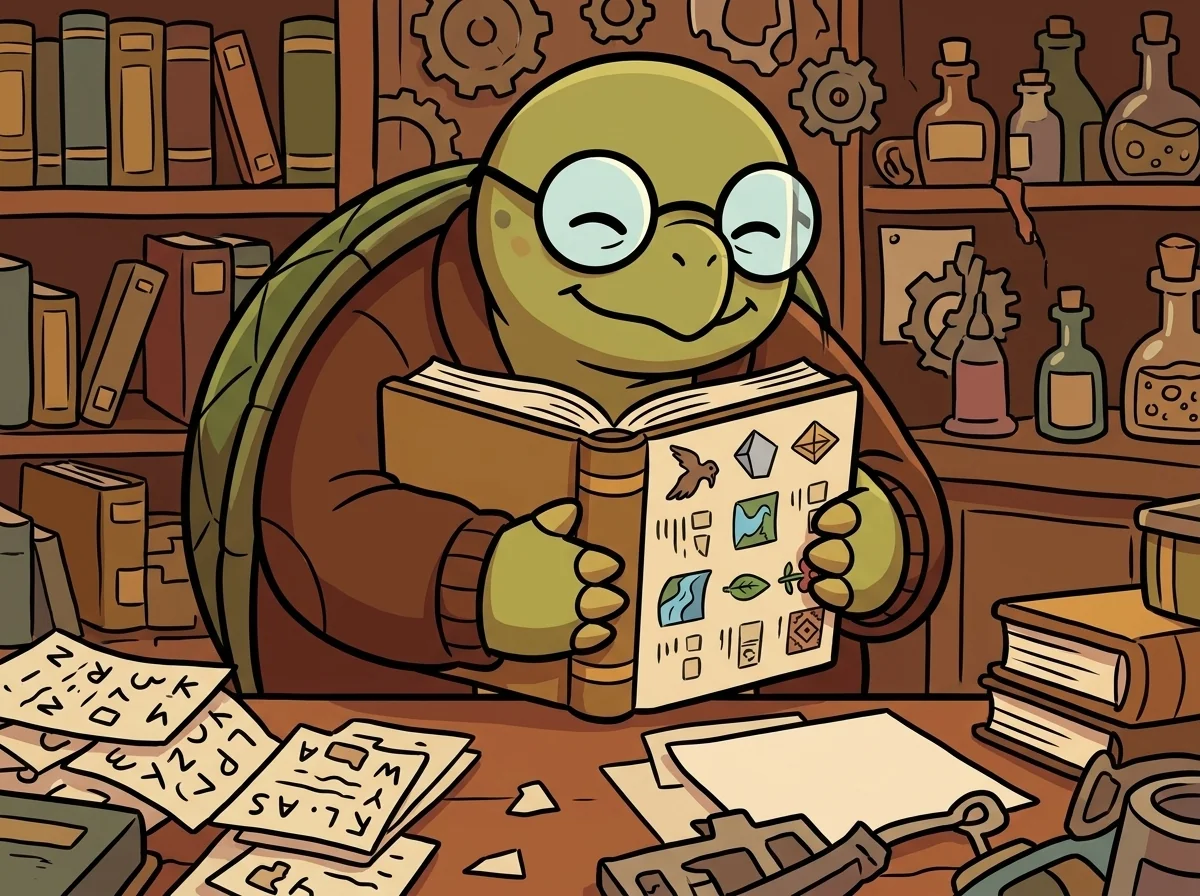
Grown, Tome carried his fat book the long, slow road to CipherForge. Cypher, the workshop's old keeper, waited behind a desk piled high with jumbled letter-notes, and set a fresh blank sheet down between them.
"Show me your way," Cypher said.
Tome laid the heavy book open with both hands. "Give me a sentence," he said. Cypher spoke one, and Tome traded its words for the stand-ins in his lists — a number here, a leaf there, a flower for a whole phrase — and passed the strip back across the desk. Cypher counted the letters in it, out of long habit, and the counting told him precisely nothing. He tried to reason out a rule, some pattern he could turn like a key, and there was no rule there to find. Then Tome slid a second, matching copy of the book across the desk, and with it in hand Cypher read the whole sentence back in a matter of moments.
"The letters were never the secret," Cypher said slowly, turning the book over in his hands. "This isn't a rule a clever person can puzzle out alone. It's a thing two people have to share." He almost smiled. "Stay, and teach it. Keep the shared book." Tome bowed, slow and deeply pleased, and hugged the volume against his cardigan.
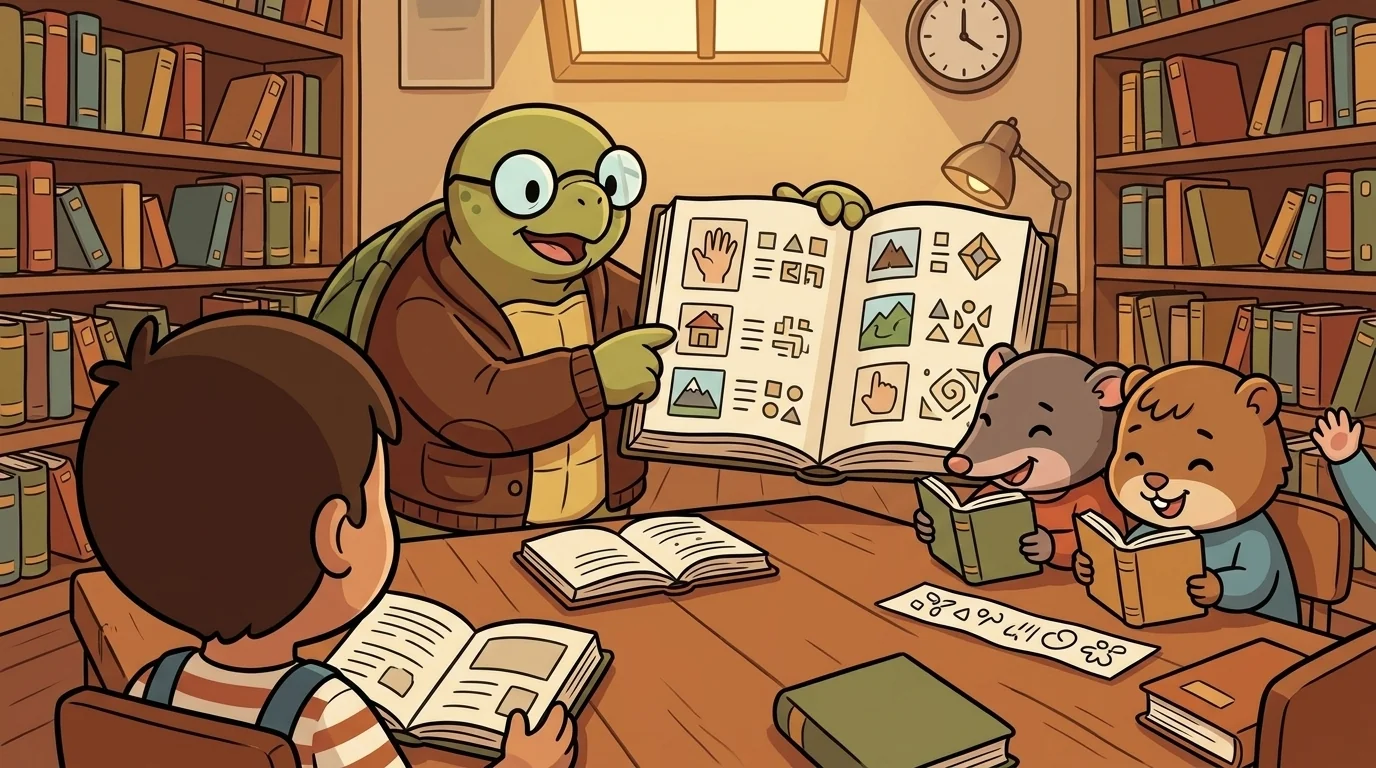
In his classroom — every shelf crammed with little books — Tome liked to begin by giving a pair of students one tiny shared book between them and letting them pass notes that no one else in the room could read. Two friends, a shrew and a vole, bent over theirs, giggling as their gibberish-looking strips resolved into private jokes.
"Now watch what makes it work," Tome told the class, holding his own book aloft. "One stand-in for a whole thing — a word, a name, an entire phrase. Both friends need the exact same book, or the message stays gibberish forever. Some books use numbers, some use innocent-looking little pictures, so that a coded note reads like ordinary chatter about the weather." He turned a page. "And here is the part you must guard with your life: your message can be perfectly, flawlessly safe — and still, if someone steals the book, the whole code springs open at once. The book is the real secret. Mind it like a treasure."
The vole raised a paw. "Can you make it even sneakier?"
"Ah — a CipherForge favourite," Tome said, delighted. "Take your code-word note, and tuck it inside an ordinary letter — that is Hollow's craft. Now it reads like chit-chat, it looks like chit-chat, and it means something else entirely, but only to the one friend who holds the book." The vole and the shrew had already put their heads together to try it.
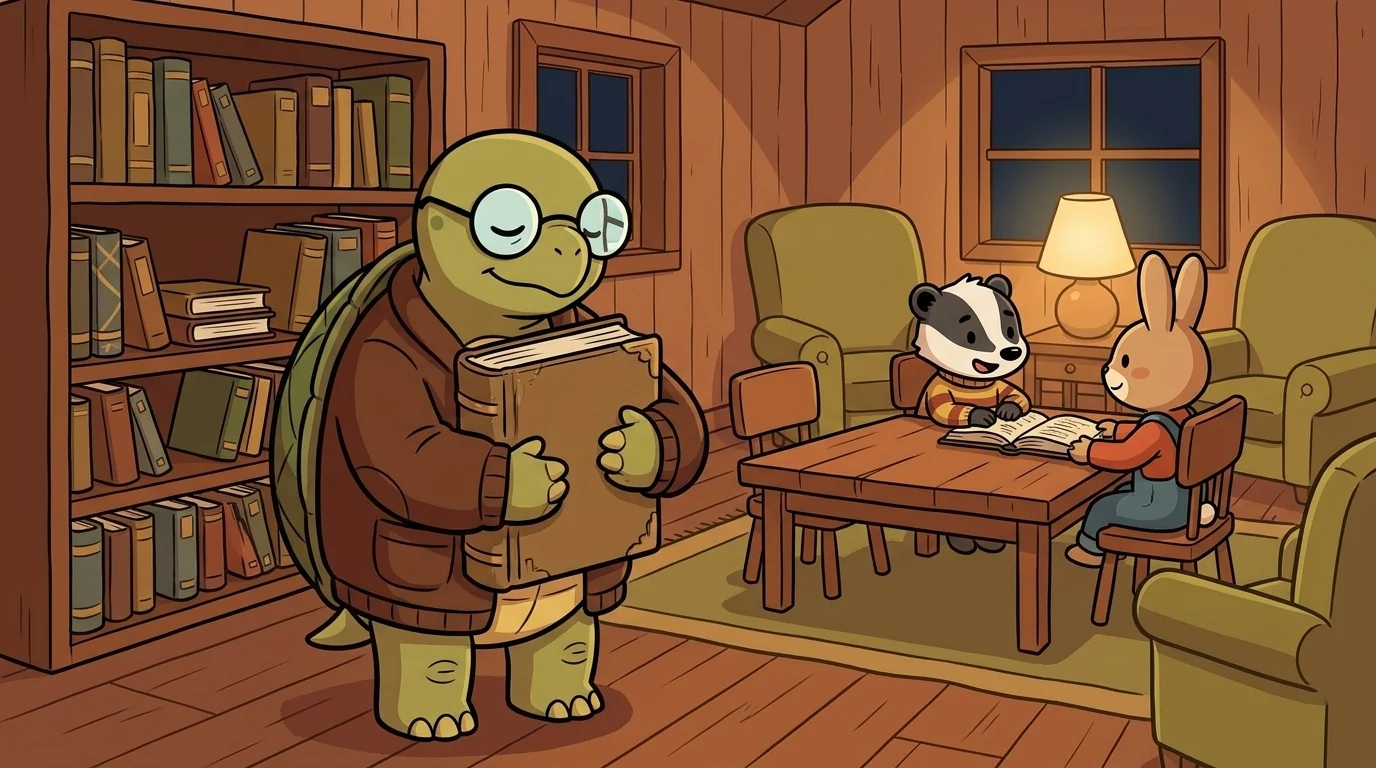
At the close of every lesson Tome did something quietly tender. He had the two friends who'd spent all class passing book-notes lend their little shared book to the whole room for a single moment — and at once everyone could read the once-secret notes, and the magic simply drained out of them, ordinary now.
"Feel that?" he said, gentle. "When everyone holds the book, the secret stops being a secret at all. A codebook isn't strong because it is clever. It is strong because it is shared by just the right two people." He gave the book back to its pair, and the warmth flooded straight back into their faces — the cosy, particular gladness of a private language spoken with someone you trust.
That gladness, Tome thought, hugging his fat book against his chest, was the whole of the treasure — not the cold pride of an unbreakable code, but the soft ache-and-warmth of there is a language only my friend and I can speak. His own book was heavy against his cardigan, worn soft from years of being shared, and holding it close he felt that quiet closeness settle in him, steady and sure. A letter-cipher is a rule, he liked to say. A codebook is a relationship.
The CipherForge ensemble
Tome is part of CipherForge's distributed-narrative cast. Each character embodies a different curricular primitive; together they teach the full subject.
-

Caesar
Caesar shift / monoalphabetic shift cipher
-

Mask
Atbash + general monoalphabetic substitution (every letter has a fixed substitute)
-
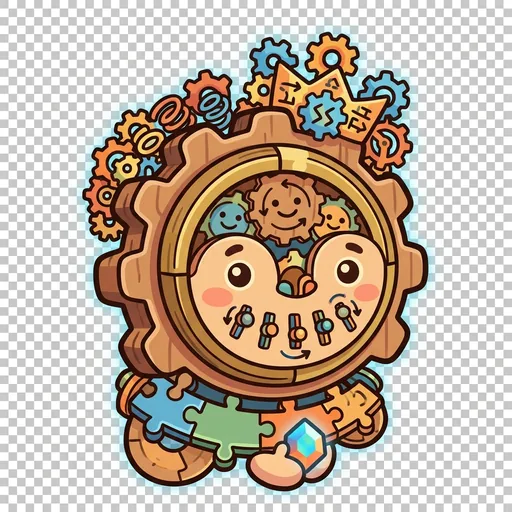
Vigenère
Vigenère / polyalphabetic keyword cipher (the Caesar-on-a-rotating-keyword pattern)
-

Echo Pair
Playfair digraph cipher (letters encoded in pairs through a 5×5 grid)
-

Rail
Rail-fence + columnar transposition ciphers (rearrange letter order without changing the letters themselves)
-

Tally
Number-based codes (A1Z26, ASCII, binary, book ciphers — any mapping that converts letters to numbers)
-

Sift
Frequency analysis + cryptanalysis-by-statistics (the cipher-breaking method, not a cipher itself)
-

Lattice
Modern cryptography fundamentals — XOR, public-key concept, hashing (the irreversible / asymmetric family)
-

Hollow
Hides a secret message inside something ordinary, so nobody even knows there is a message to look for.