
Whendle
when <condition> do <action> — act only if the condition holds
Whendle and the Rule of When
Whendle was a watchful meerkat who stood a little taller than the rest, because she was always checking something before she did anything at all.
This drove her cousins wild. “Whendle! The gate! Open the gate!” And Whendle would not just open the gate. First she’d ask, quietly, “Open it when?” — because she had learned, the hard way, that “do it now” and “do it when” are not the same thing, and that the second one is almost always what people actually mean.
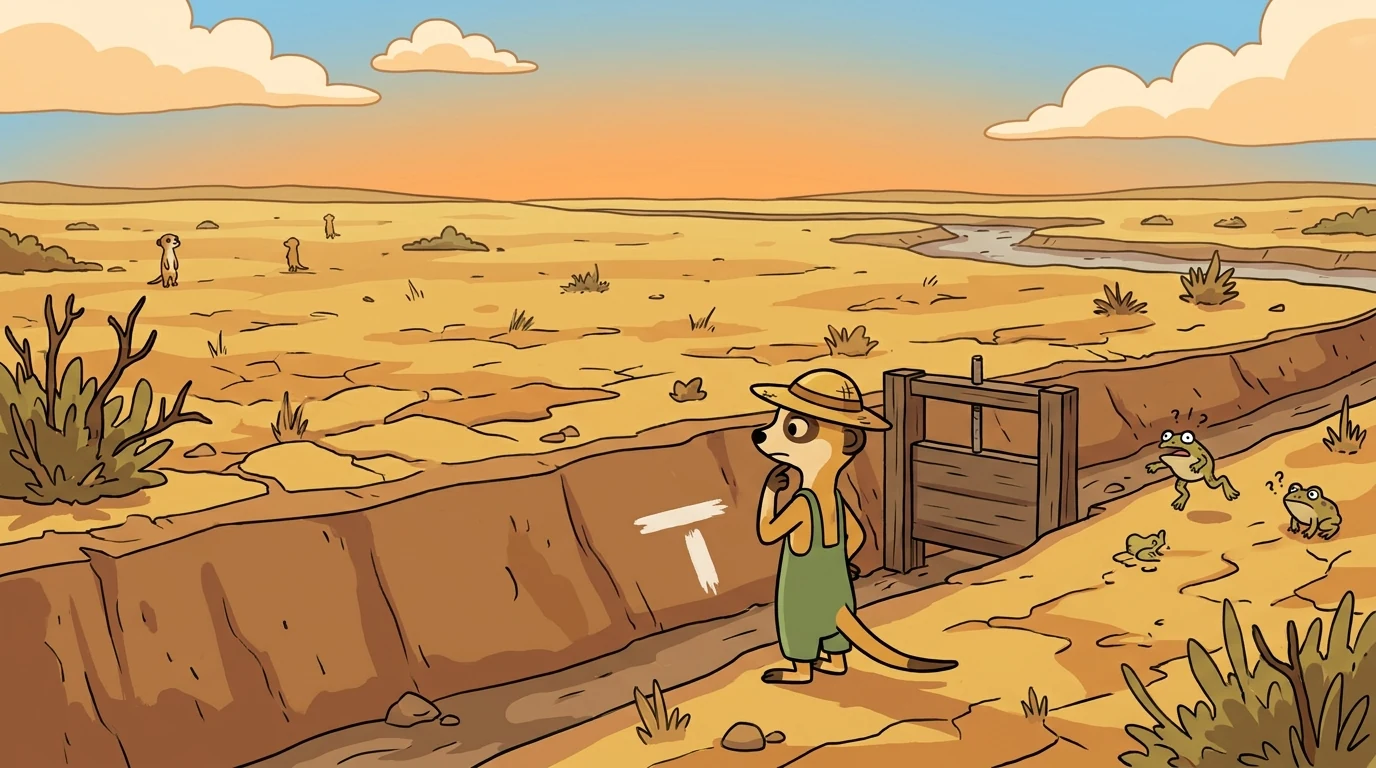
The hard way had gone like this. Long ago there was a water channel with a little door, and Whendle’s one job was to open the door so the field could drink. So the first dry morning, keen and proud, she opened it. Now — the channel was empty that morning. No water had come down yet. All she let into the field was a puff of dust and one very confused frog. She’d done the do without checking the when.
After that, Whendle made herself a rule, and the rule had two halves. The first half was a question — the when. The second half was an action — the do. And the do was not allowed to happen until the when was true.
So now, at the channel, she didn’t open the door in the morning. She opened it when the water reached the mark. Some mornings the water came early. Some mornings it came late. Some mornings, in a drought, it didn’t come at all — and on those mornings Whendle did nothing, which felt strange to her cousins but was exactly right. No water, no when, no do. The field stayed patient and the frogs stayed unbothered.
Her cousins slowly noticed something. Whendle’s field never flooded and never went dusty. It drank exactly when there was water to drink.
“You just… wait?” one of them asked.
“I watch,” said Whendle. “Waiting is doing nothing on purpose. Watching is holding the do in one paw and the when in the other, and only letting them meet when it’s true.”
She showed them her rule, out loud, the way she always said it to herself: when the water reaches the mark, open the door. One check. One action. The action locked safely behind the check, so it could never fire at the wrong moment again.
Her youngest cousin tried it on his own little gate the next day — “when the sheep are all in, close it” — and for the first time ever, closed it on zero tails.
When you write when … do …, you are being Whendle: you name the moment first, and the action waits behind it until it’s true.
The commandforge ensemble
Whendle is part of commandforge's distributed-narrative cast. Each character embodies a different curricular primitive; together they teach the full subject.