Grit
CONSERVATION — *keep it, don't fix it. a fragile find is stabilized slowly and gently, never scrubbed shiny or restored into something it never was.*
Loading audio…
Press play to listen along. The line being read lights up as you go.
Show full transcript
Loading transcript…
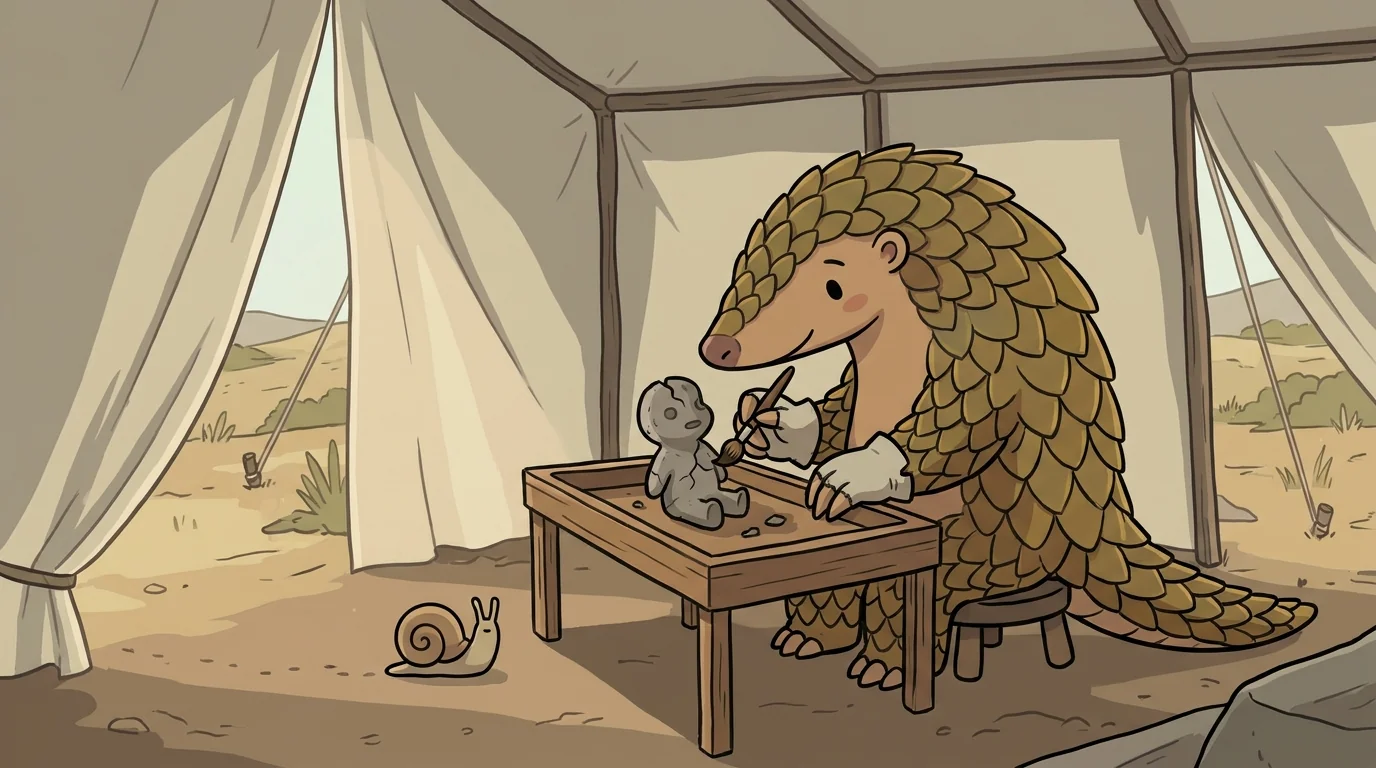
Grit worked under a soft cloth tent, out of the wind, so slowly that a snail could have kept pace with her. She was a pangolin, her overlapping scales the color of old bronze, and she wore cotton gloves worn thin at the fingertips. On the tray before her lay a small clay figure, cracked and grey with age, its surface flaking like a dry leaf. In one paw she held not a scrubbing brush but the softest sable brush, no wider than an eyelash.
A young rabbit peered under the tent flap. "It's so dull and crumbly," he said. "Why don't you wash it up nice and shiny?"
"Because the dull and the crumbly are the find," Grit said, dabbing a single grain of dirt away. "If I scrub it shiny, I scrub off three thousand years. The soot in that crack tells us it sat by a fire. The wear on its base tells us hands held it, over and over. Wash all that away, and I'd have a clean little statue that has forgotten everything." She lowered a whisper-thin sheet of soft paper over a flaking edge. "I don't make it look new. I help it stay itself, just a little longer. That's the whole difference."
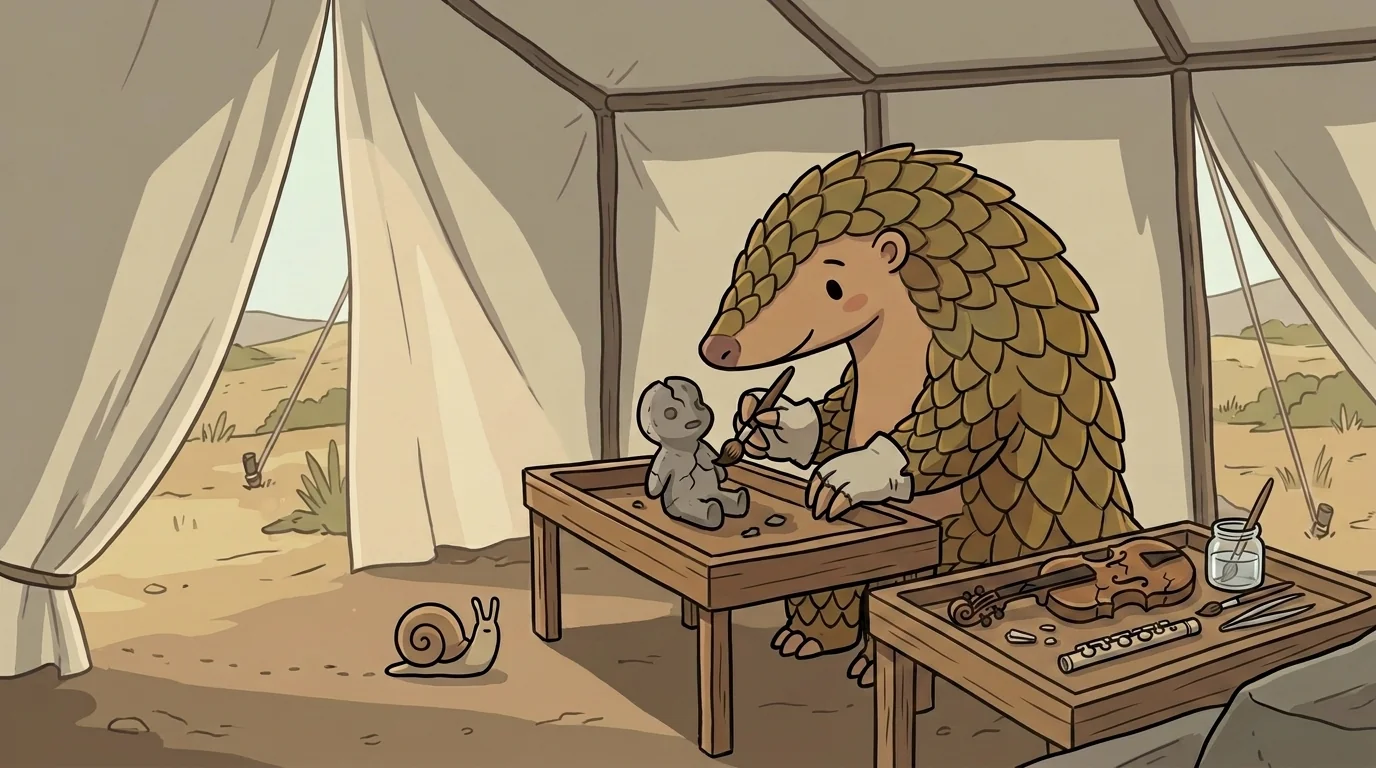
Grit had grown up in a family of instrument-menders, who kept the village's old fiddles and flutes playing.
"You could sand this fiddle smooth and paint it bright," her father told her once, holding a battered, beloved old instrument, "and you'd have ruined it." Young Grit didn't understand — wouldn't new look better? Her father drew the bow, and the worn old fiddle sang warm and deep. "Every scratch is a night it was played," he said. "The wear is the life. Our job isn't to erase the years. It's to keep the crack from spreading, the joint from failing — so it can go on being the thing people loved, not a shiny copy of it." He showed her how a mender works: the gentlest glue, the least you can do, and always something you could undo again if you were wrong. "Never a change you can't take back," he said. "You're a guest in this object's long life, not its owner."
Grit carried that everywhere. When her paws itched to make a thing look finished and fine, she remembered the warm old fiddle, and she slowed down.
When Grit was grown she walked the long road to DigQuest, her cloth tent folded on her back. Trowel, who ran the digs, met her and asked one question.
"What is conservation?"
Grit thought of the fiddle. "Keeping a thing itself, not making it new," she said. "The least you can do, done gently, and always something you could undo. You don't fix the find. You help it last."
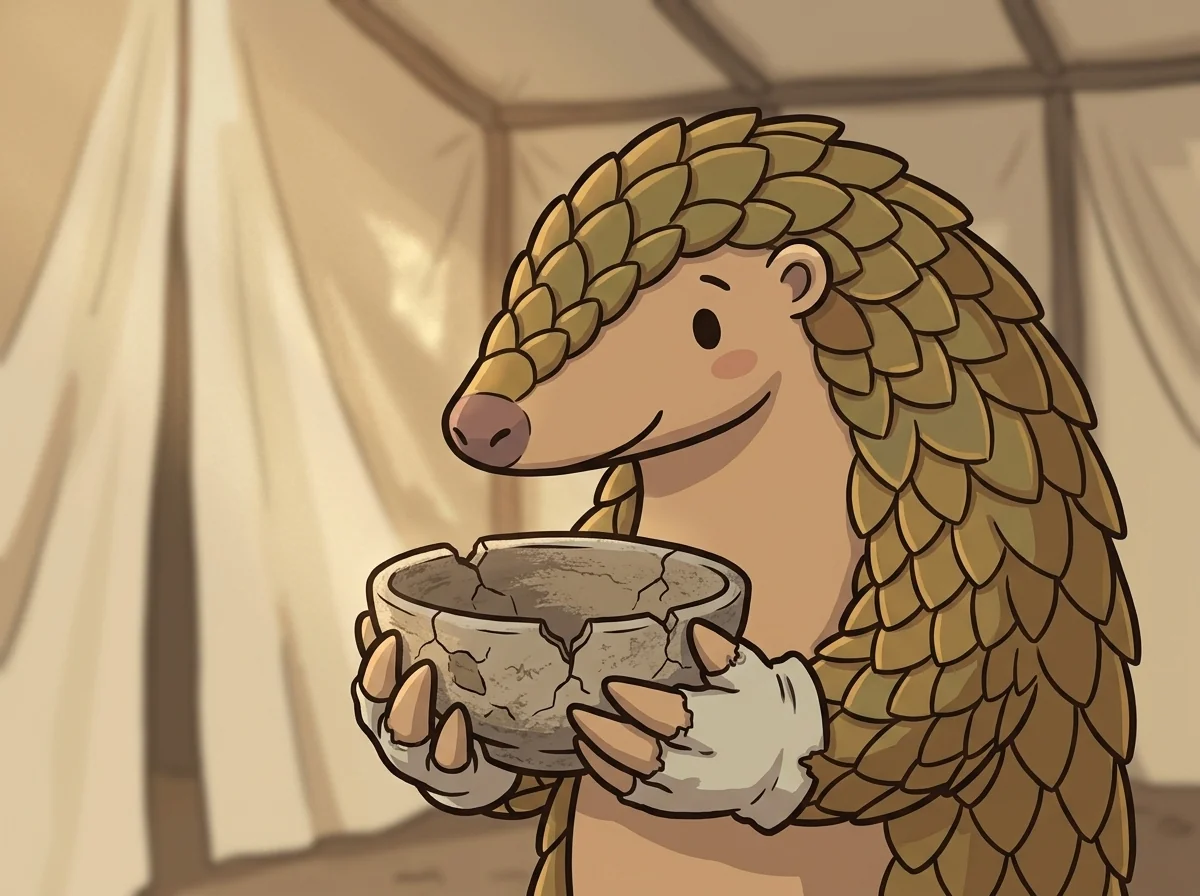
Trowel looked at her worn-thin gloves a long moment, then set a cracked and flaking little bowl into her paws as though passing her something alive. "Then these are yours to keep," she said.
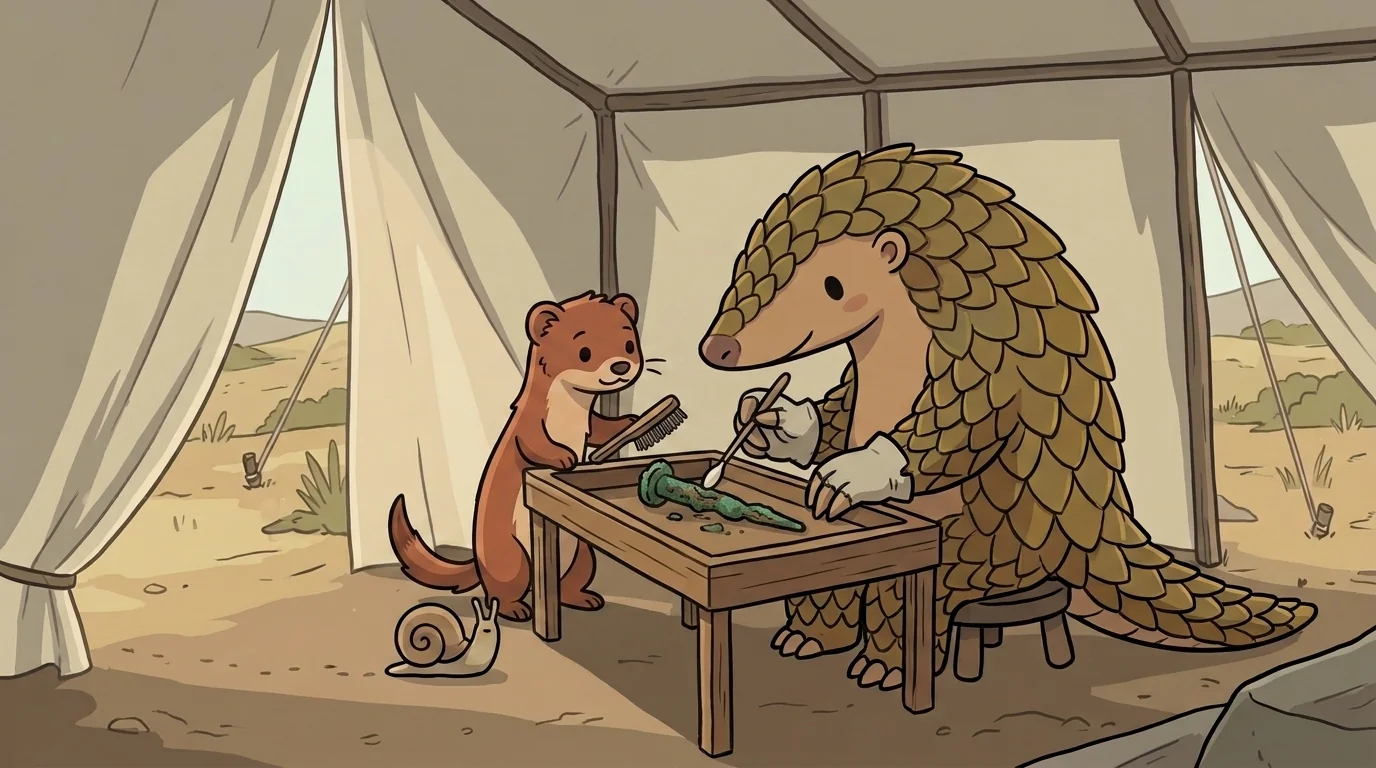
In Grit's tent, a young weasel named Fane arrived certain that mending meant making-perfect. On the tray sat a corroded bronze pin, green and rough. "I could polish that up gleaming!" Fane said, reaching for a wire brush.
Grit moved the brush gently out of reach. "And under the green, you'd find bright metal — and you'd have destroyed the green forever. That green is called the skin of ages; it's not dirt, it's the metal's own long story, and it even protects what's underneath." She wet the softest swab and rolled it, feather-light, over one small spot — lifting only loose grime, leaving the green untouched. "Watch how little I do. I stabilize the flaking. I keep it dry and out of the salt air. I write down every single thing I touch, so the next person knows exactly what's original and what's me." She set the swab down. "A hasty mender scrubs a find into a bright lie. A patient one keeps the truth, even when the truth is rough and green and plain."
Fane watched the tiny, careful motions. "So you're not making it better," he said slowly. "You're keeping it honest."
"And keeping it here," Grit said, "for the people it belongs to, and for the ones not born yet. That's the same thing."
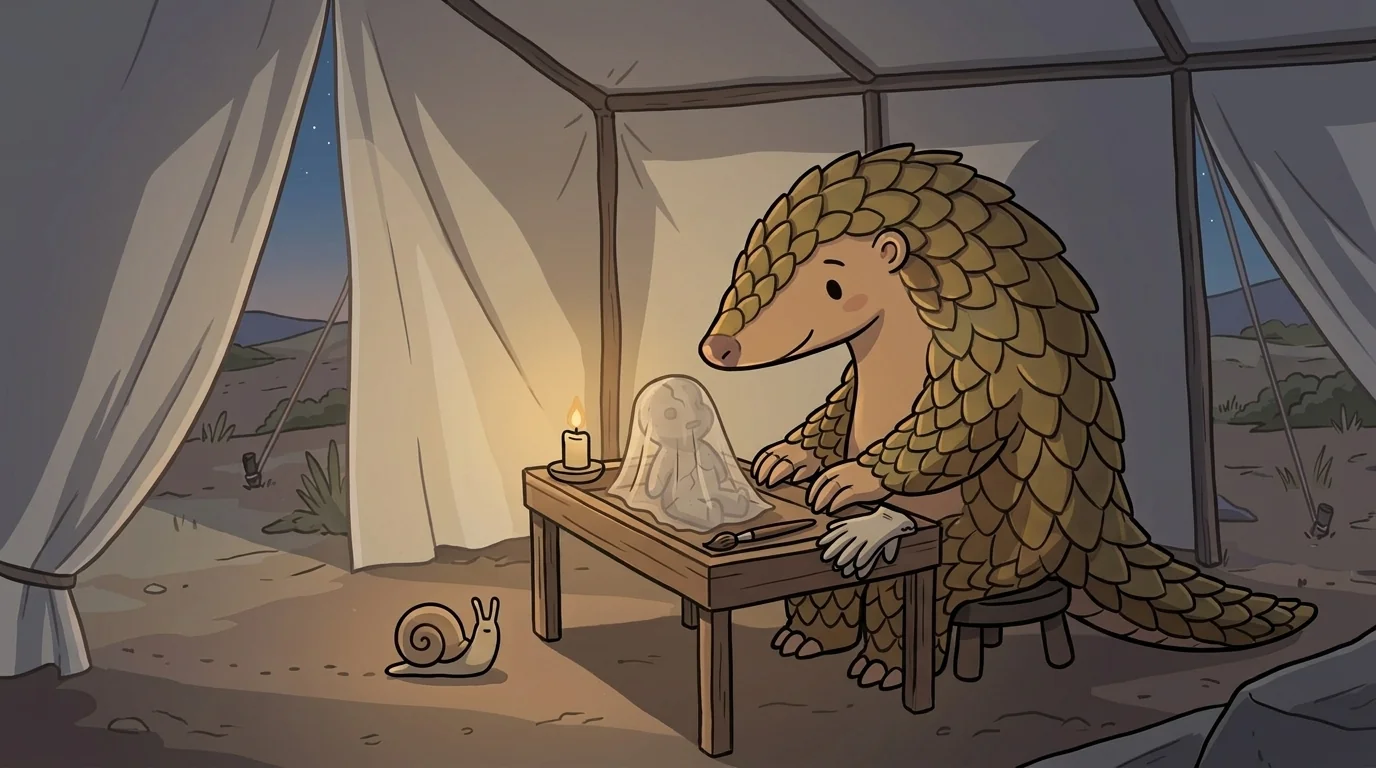
That evening, alone, Grit lowered the last sheet of soft paper over the little bowl and drew the tent flap against the night air. She peeled off her thin gloves and pressed her bare paw-pads flat to the cool table, still and quiet, the way her father used to rest his hands on the mended fiddle before he put it away.
A slow, warm gladness rose in her chest and settled there. She had not made the bowl shiny. She had not made it new. She had kept it exactly, truthfully itself — cracks, soot, wear and all — and helped it last a little longer for whoever came next.
Her breath went even and calm.
"That feeling," she murmured into the dim tent, "is the whole of it. Keep it, don't fix it. The least you can do, and never a change you can't take back."
The DigQuest ensemble
Grit is part of DigQuest's distributed-narrative cast. Each character embodies a different curricular primitive; together they teach the full subject.
-

Layer
Stratigraphic context — where in the layered earth? (vertical chronology, context integrity)
-

Shape
Artifact-typological analysis — what family of object? (comparative typology, craft traditions)
-

Past
Dating techniques — when by which method? (dates as ranges with confidence intervals)
-
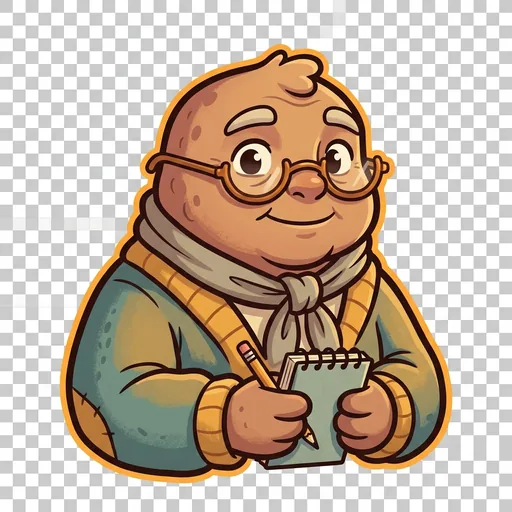
Keep
Cultural-context inference — keep-what-people-said, not invent-what-they-must-have-meant
-
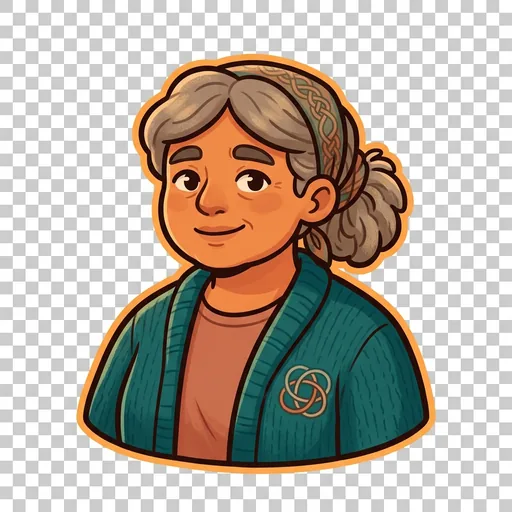
Ask
Community-partnership ethics — whose story is this and who gets to tell it? (NAGPRA + UNDRIP-grounded, descendant-community partnership)
-

Join
Reconstruction — fit the pieces you have, never invent the ones you don't; a rebuilt pot shows its gaps honestly
-

Sherd
The ordinary object — the broken cooking pot tells you more than the gold crown; how people lived is written in humble everyday things
-
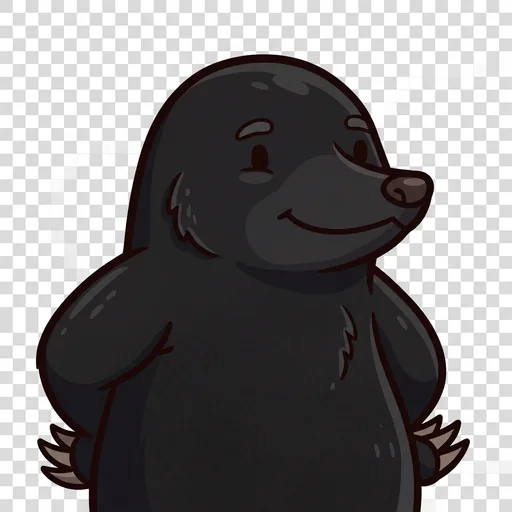
Spare
Leave it — you don't dig everything; some of the site stays untouched for future diggers, and some because the people it belongs to want it left
-

Void
Absence — what isn't there can mean three things; never read a gap as a fact too quickly