Grit and Spare
STEWARDSHIP — caring for the past takes two moves at once: Spare decides how little to take (leave most of the site for the future and for the people it belongs to), and Grit tends gently and reversibly whatever must be lifted. Take less; keep-honest what you do take. Together they treat a find as held in trust, never owned.
Loading audio…
Press play to listen along. The line being read lights up as you go.
Show full transcript
Loading transcript…
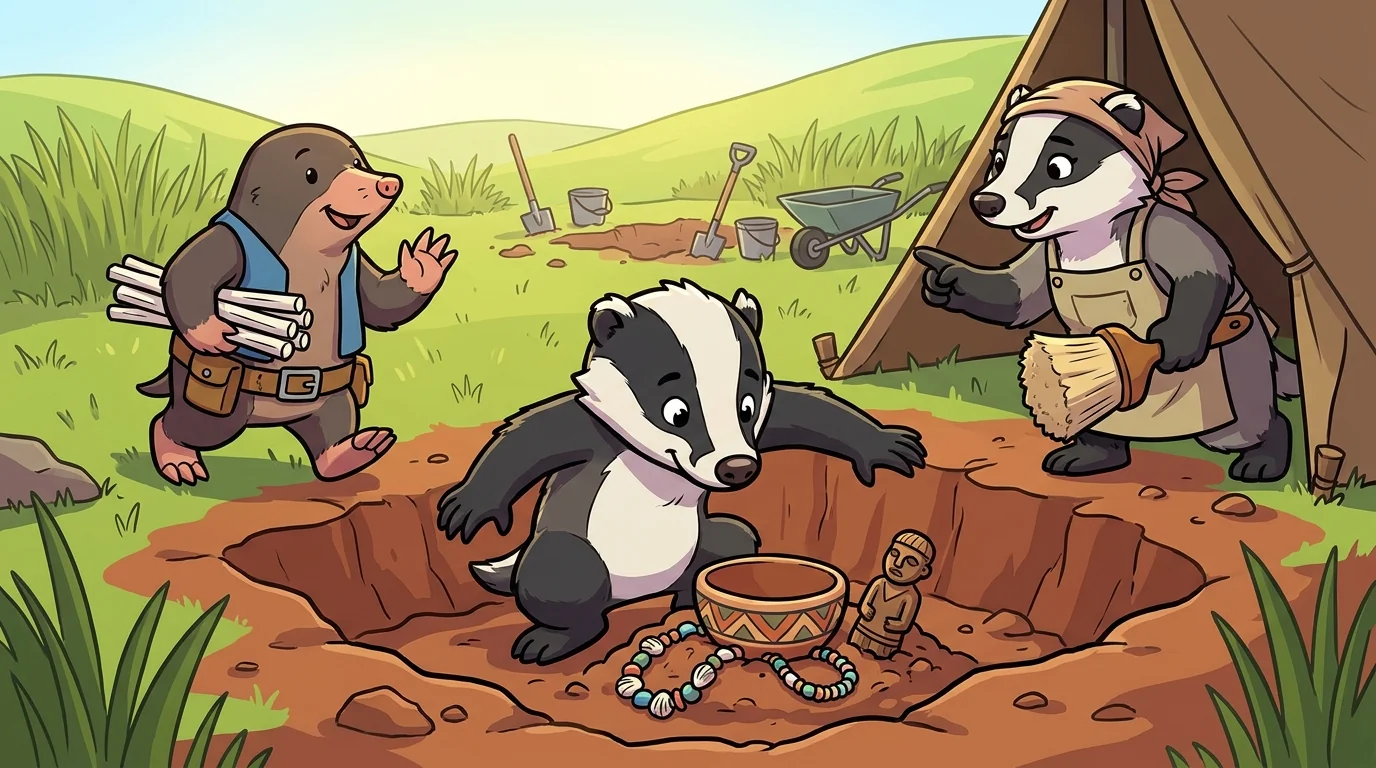
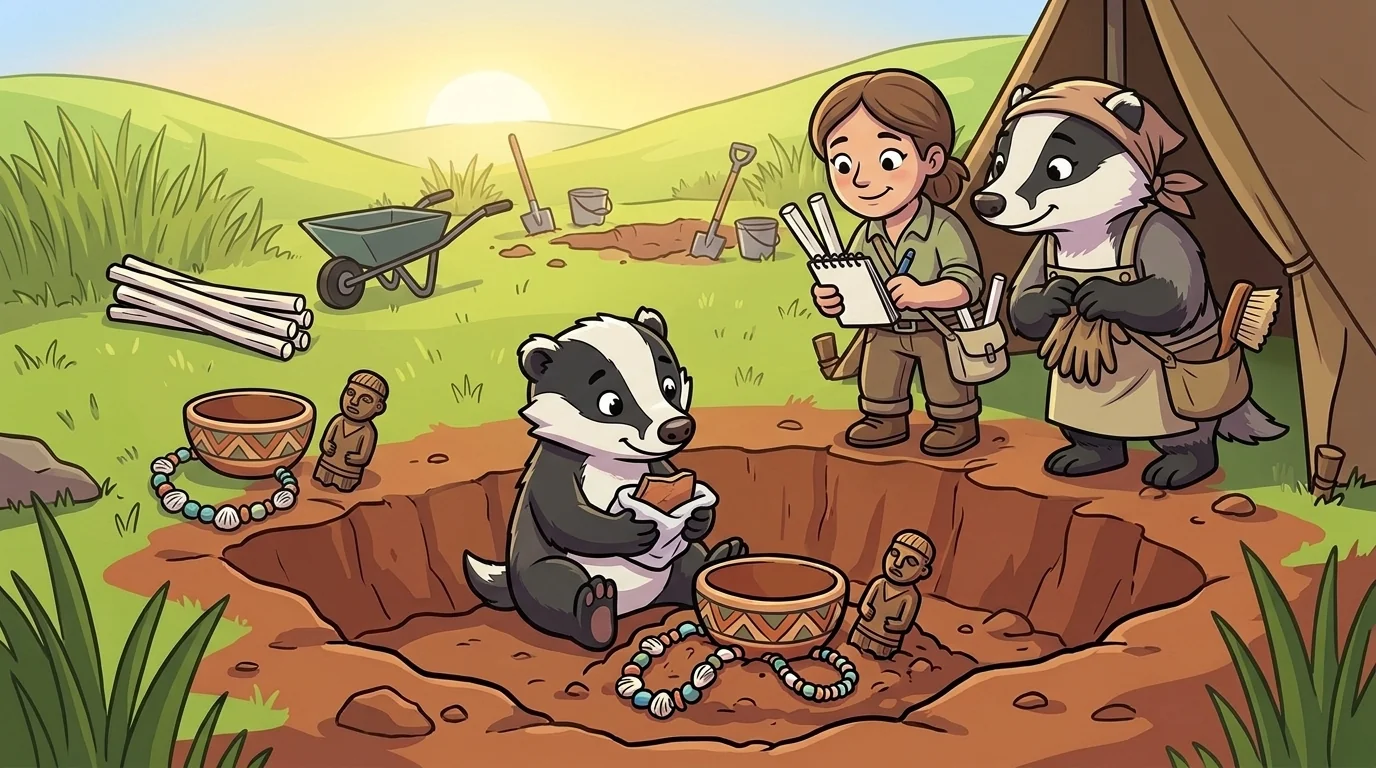
A young badger named Tumble had opened a small chamber in an old dig and was about to lift out everything in it, arms wide, when Spare arrived from the grass with her white stakes and Grit arrived from her tent with her softest brush — each certain Tumble was about to get the care wrong.
Inside the little chamber sat a whole cluster of things left long ago: a painted bowl, a string of shell beads, a small carved figure, all resting together in the dark exactly where someone had placed them.
"Don't lift it all," said Spare. "Take only what your question needs."
"And don't handle it like that," said Grit. "Anything you do take, take gently."
They looked at each other, and each saw the other held half of one care.
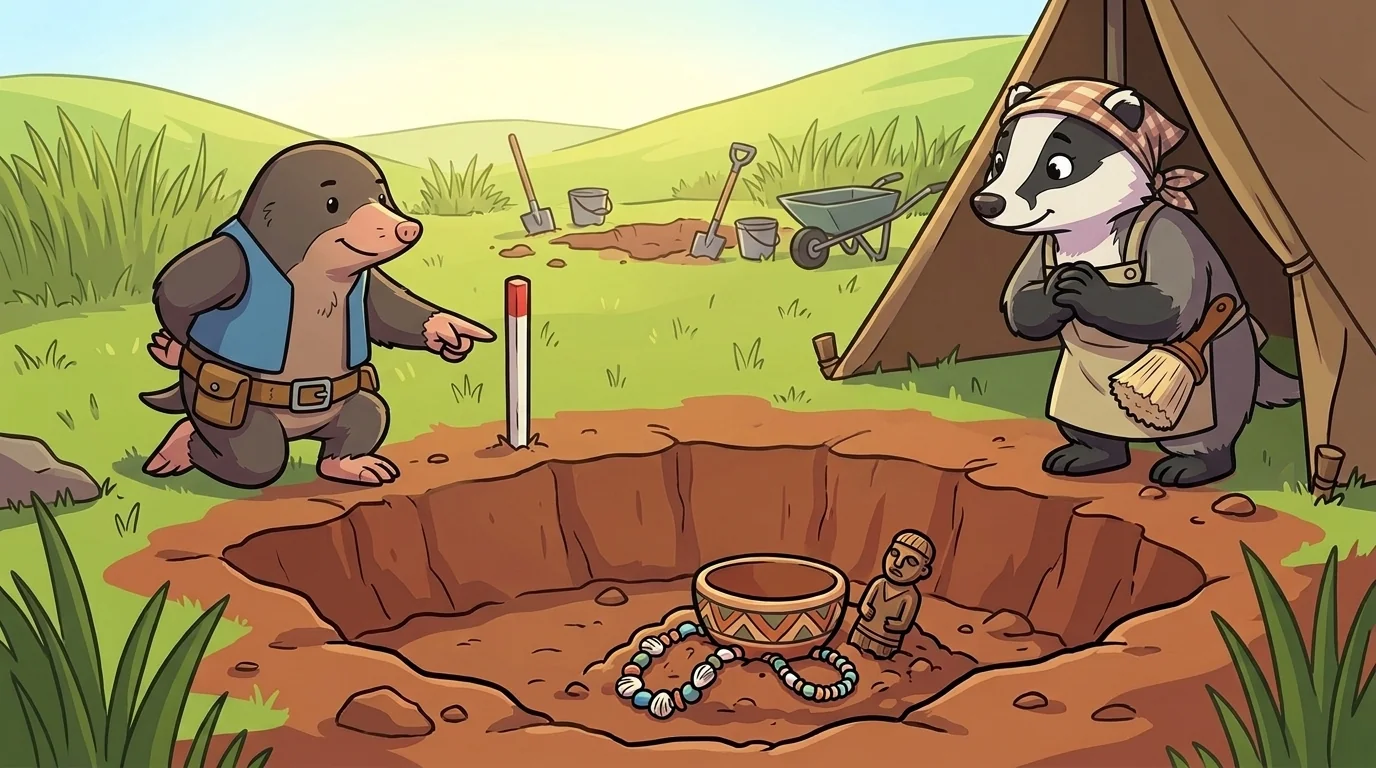
Spare knelt at the chamber's edge, folding her strong digging paws behind her back. "First — how much of this do we truly need to touch?" she asked. "Every single thing we lift, we lift forever — the chamber will never again be as someone arranged it." She pointed to the careful cluster. "Look how it was placed: the bowl beside the figure, the beads laid just so. That arrangement is itself a message — someone meant these things to rest together. If we snatch them all out, we lose the placing, even if we keep the objects." She set a stake. "So we photograph and draw it exactly as it lies. We ask the families whose ancestors these may be what they want done. And we take only what we must to understand it — perhaps nothing at all. The rest stays, arranged as it was left, for hands and tools kinder than ours."
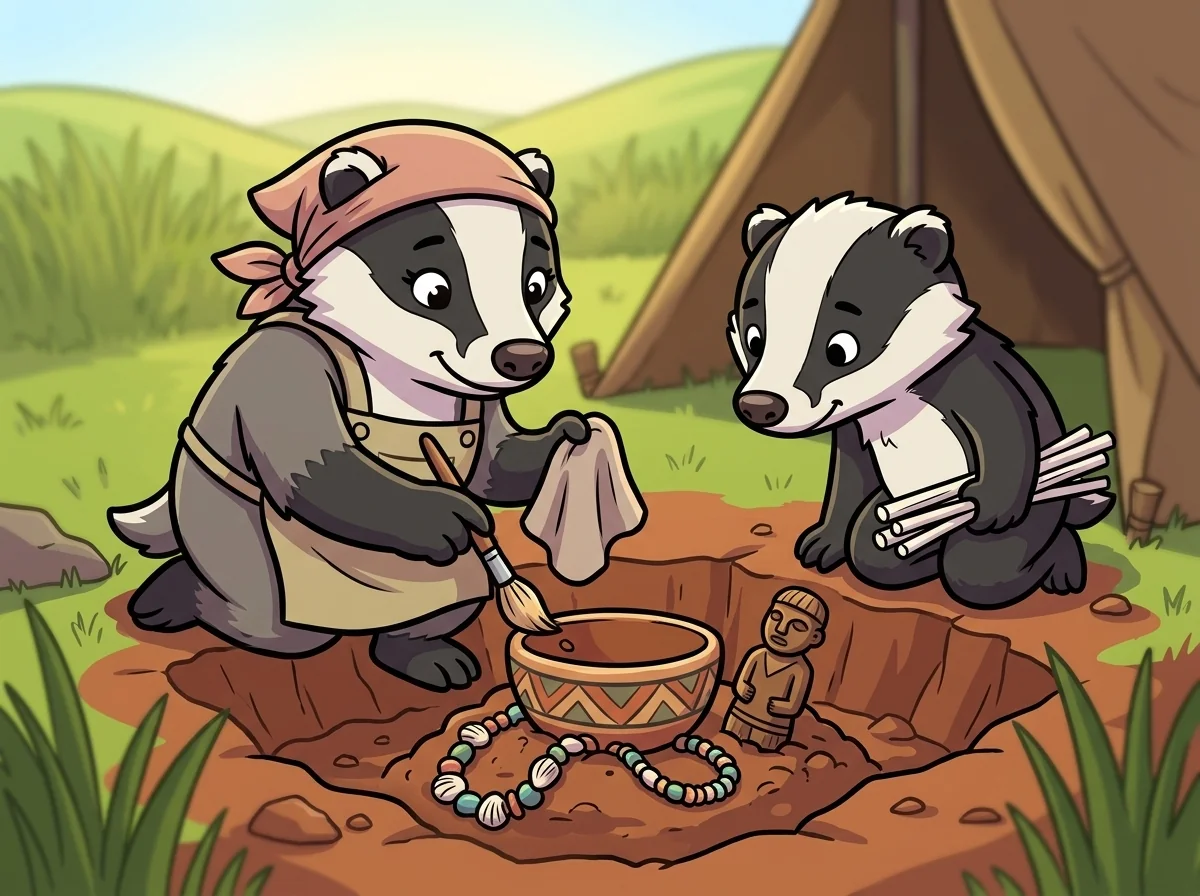
Then Grit crept close with her cloth and her eyelash-thin brush. "And whatever we do decide to lift," she said softly, "we lift like it's made of breath." She showed Tumble the painted bowl, its surface flaking. "See how the paint lifts at a touch? Grab it, and you'll leave the color behind in the dirt. So — a support cradle under it first. Lift the bowl and the block of earth it sits in, together, so nothing shifts. Then, slowly, under the tent, out of the drying wind." She dabbed a single loose grain away and stopped. "And I don't scrub it bright afterward. The dirt in these grooves, the wear on this rim — that's the bowl's true story. I keep it itself. The least I can do, gently, and always something I could undo."
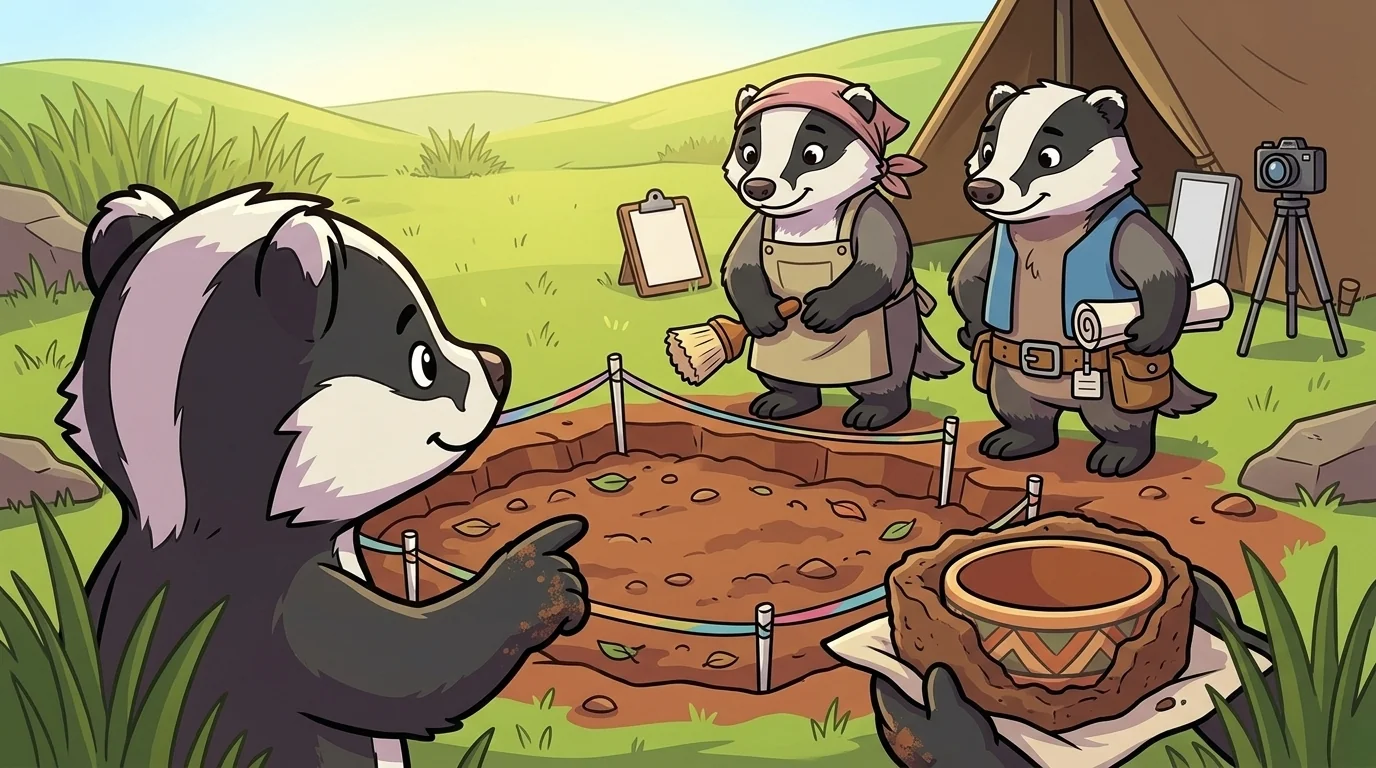
Tumble looked from the ringed, mostly-untouched chamber to the one carefully cradled bowl, bewildered. "So you're both telling me to go slow — but about different things."
Grit and Spare glanced at each other and, for the first time, smiled the same quiet smile.
"Two halves of one care," said Spare. "I decide how little leaves the ground—"
"—and I decide how gently it travels once it does," said Grit. "You need both. Take everything, and even my gentlest hands can't undo the loss of the placing. But take only a little and then grab it roughly, and you've spared the chamber only to ruin the bowl."
"Take less," said Spare, "and keep-honest what you take," finished Grit. "That's stewardship. The find was never ours to own. We're only looking after it — for the people it belongs to, and for everyone who comes after."
And so they did it together: photographed and mapped the whole cluster, asked the descendant families and honored their wishes, left most of the chamber resting untouched, and lifted only the one bowl — cradled in its block of earth, tended under the tent, kept truthfully itself.
Tumble sat back on his heels, looking at how much had been left, and how tenderly the little that was taken had been carried. "I was going to just... scoop it all out," he said quietly. "I thought finding meant getting."
"Almost everyone thinks that at first," said Spare, gently. "But getting isn't finding. Getting is taking. Finding is looking after."
"Take only what you must," said Grit, folding her worn-thin gloves, "and tend it like it's borrowed — because it is."
A warm, steady gladness spread through Tumble's chest as he looked at the honored chamber and the cradled bowl — not the sharp thrill of having grabbed a treasure, but the deeper, quieter warmth of having cared for one. His shoulders loosened; his breath came slow.
And Grit and Spare climbed out of the dig together, the brush and the stakes swinging side by side — the gentle-handler and the leave-it-be — each knowing the past would have been the poorer if the other hadn't come.
The DigQuest ensemble
Grit and Spare is part of DigQuest's distributed-narrative cast. Each character embodies a different curricular primitive; together they teach the full subject.
-
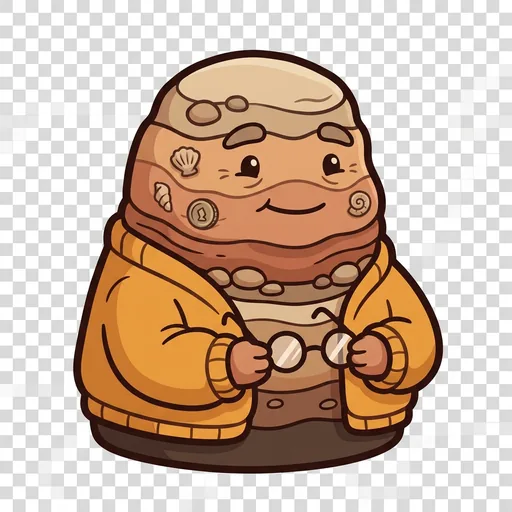
Layer
Stratigraphic context — where in the layered earth? (vertical chronology, context integrity)
-
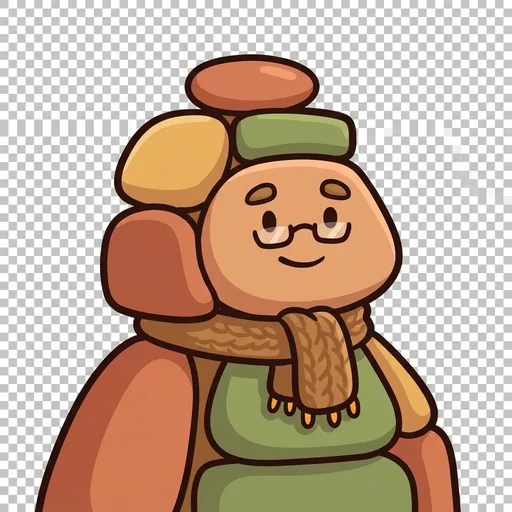
Shape
Artifact-typological analysis — what family of object? (comparative typology, craft traditions)
-
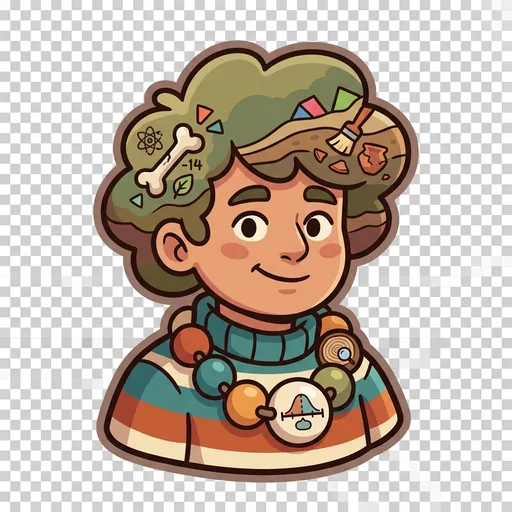
Past
Dating techniques — when by which method? (dates as ranges with confidence intervals)
-
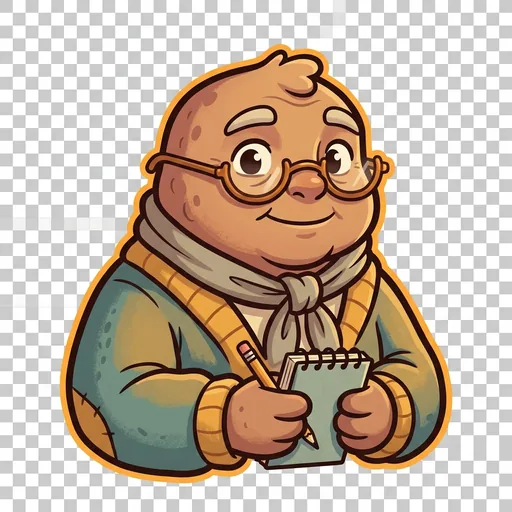
Keep
Cultural-context inference — keep-what-people-said, not invent-what-they-must-have-meant
-
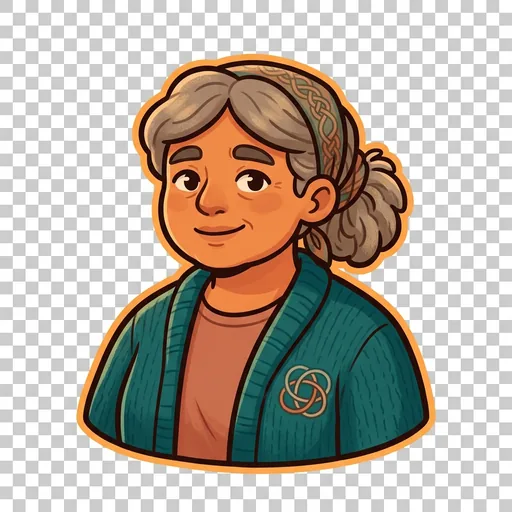
Ask
Community-partnership ethics — whose story is this and who gets to tell it? (NAGPRA + UNDRIP-grounded, descendant-community partnership)
-
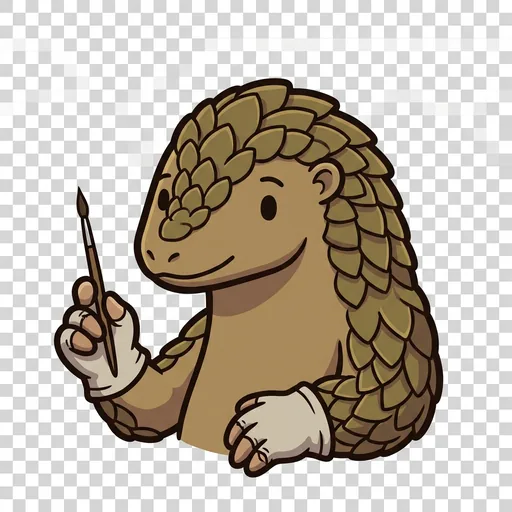
Grit
Conservation — keep it, don't fix it; a fragile find is stabilized gently, never scrubbed shiny or restored into something it never was
-
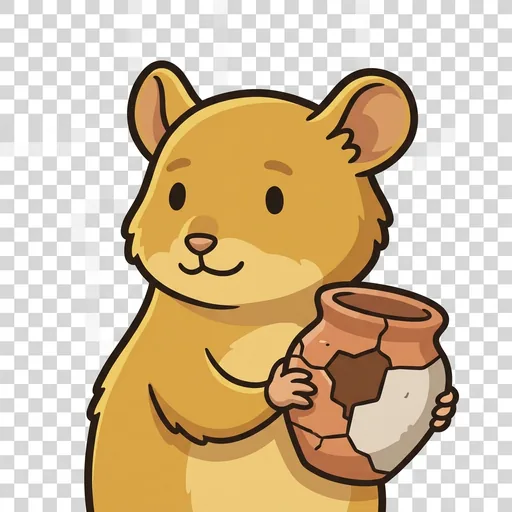
Join
Reconstruction — fit the pieces you have, never invent the ones you don't; a rebuilt pot shows its gaps honestly
-
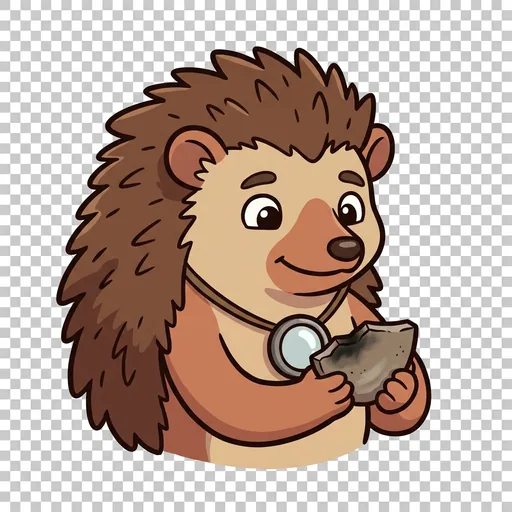
Sherd
The ordinary object — the broken cooking pot tells you more than the gold crown; how people lived is written in humble everyday things
-
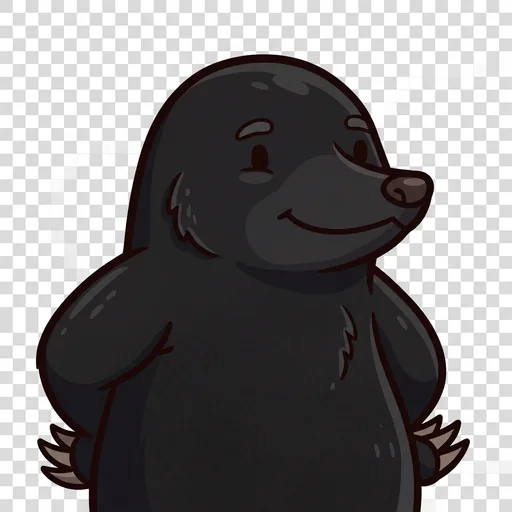
Spare
Leave it — you don't dig everything; some of the site stays untouched for future diggers, and some because the people it belongs to want it left
-
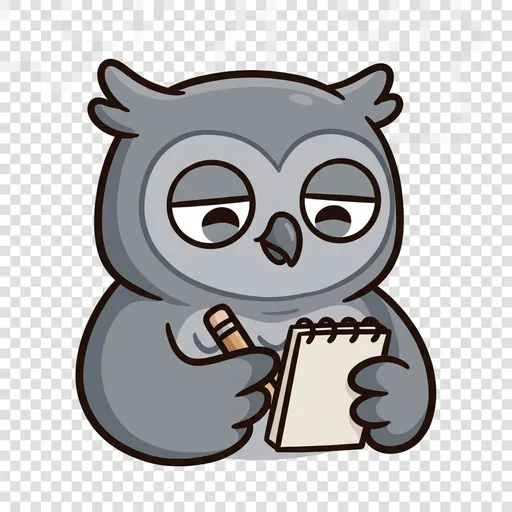
Void
Absence — what isn't there can mean three things; never read a gap as a fact too quickly