
Join and Void
HONEST WHOLE — telling the past truthfully takes two moves at once. Join fits the real pieces back into a shape; Void keeps every missing piece an honest, un-filled question. Rebuild from what survived; never invent the gaps, and never read a gap as a fact.
Loading audio…
Press play to listen along. The line being read lights up as you go.
Show full transcript
Loading transcript…
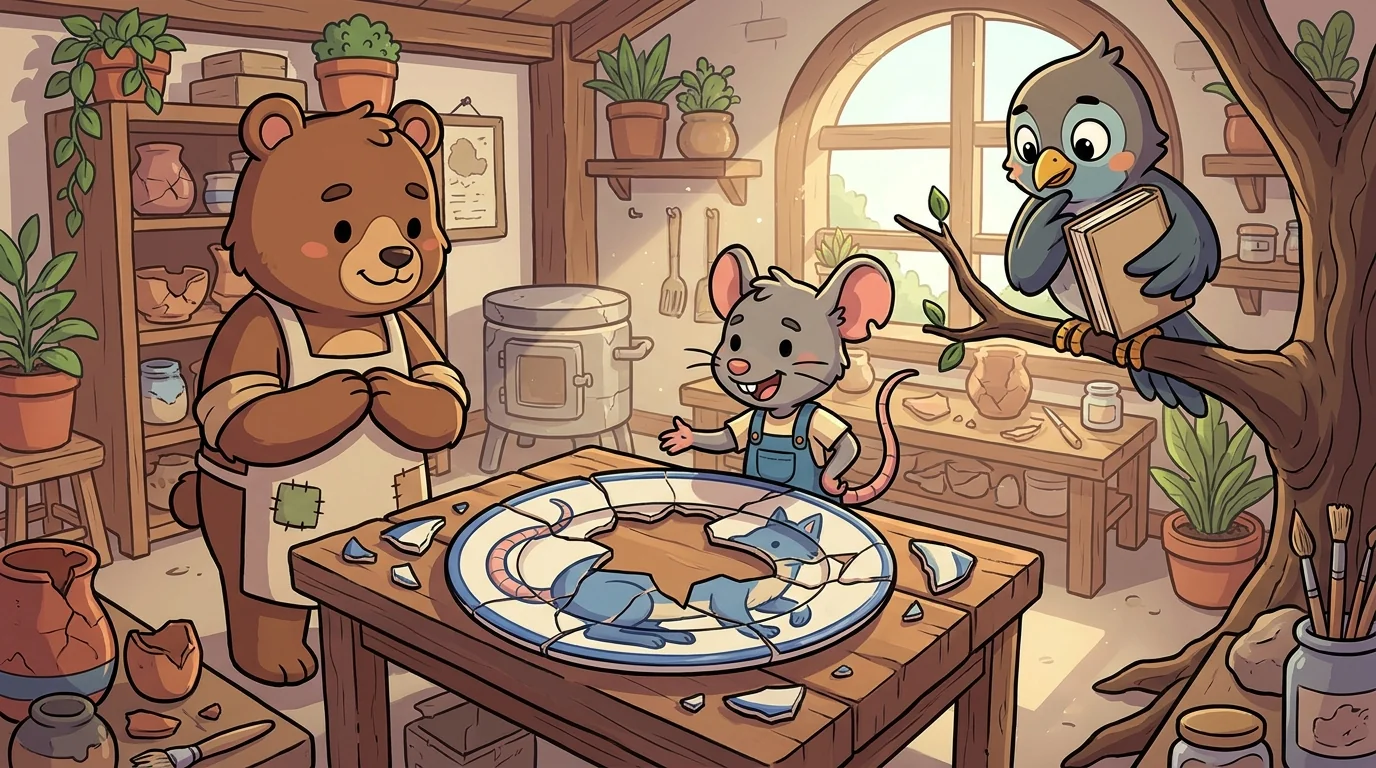
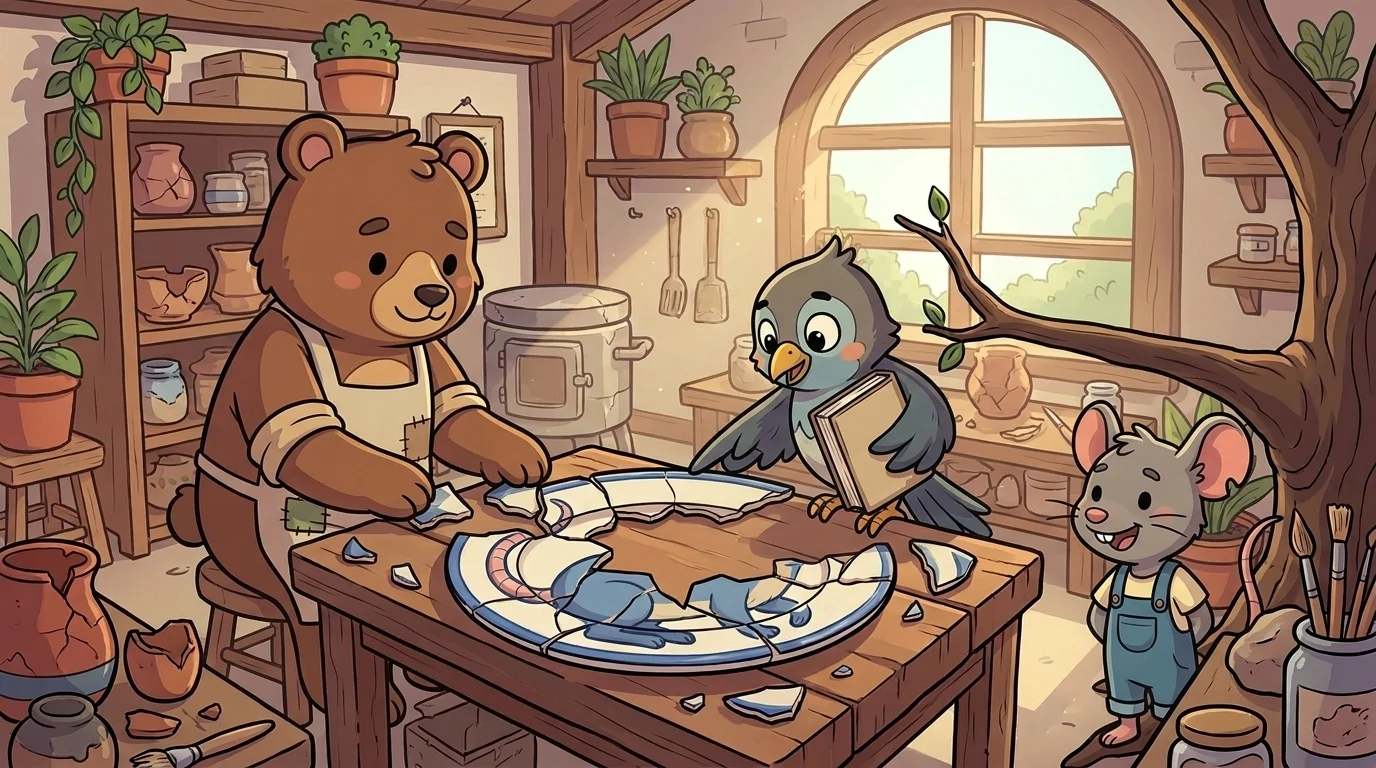
A young rat named Skiff had spent all morning on a broken painted plate and had just triumphantly announced what its picture must have shown — when Join arrived from the sherd-table with her patient paws and Void drifted down from her branch with her book of absences, each certain Skiff had gone one honest step too far. On the table lay the plate: perhaps half its pieces fitted into a curve, painted with part of an animal — a tail, a haunch, the start of a back — and a wide empty space where the rest would have been.
"You've fitted the real pieces beautifully," said Join.
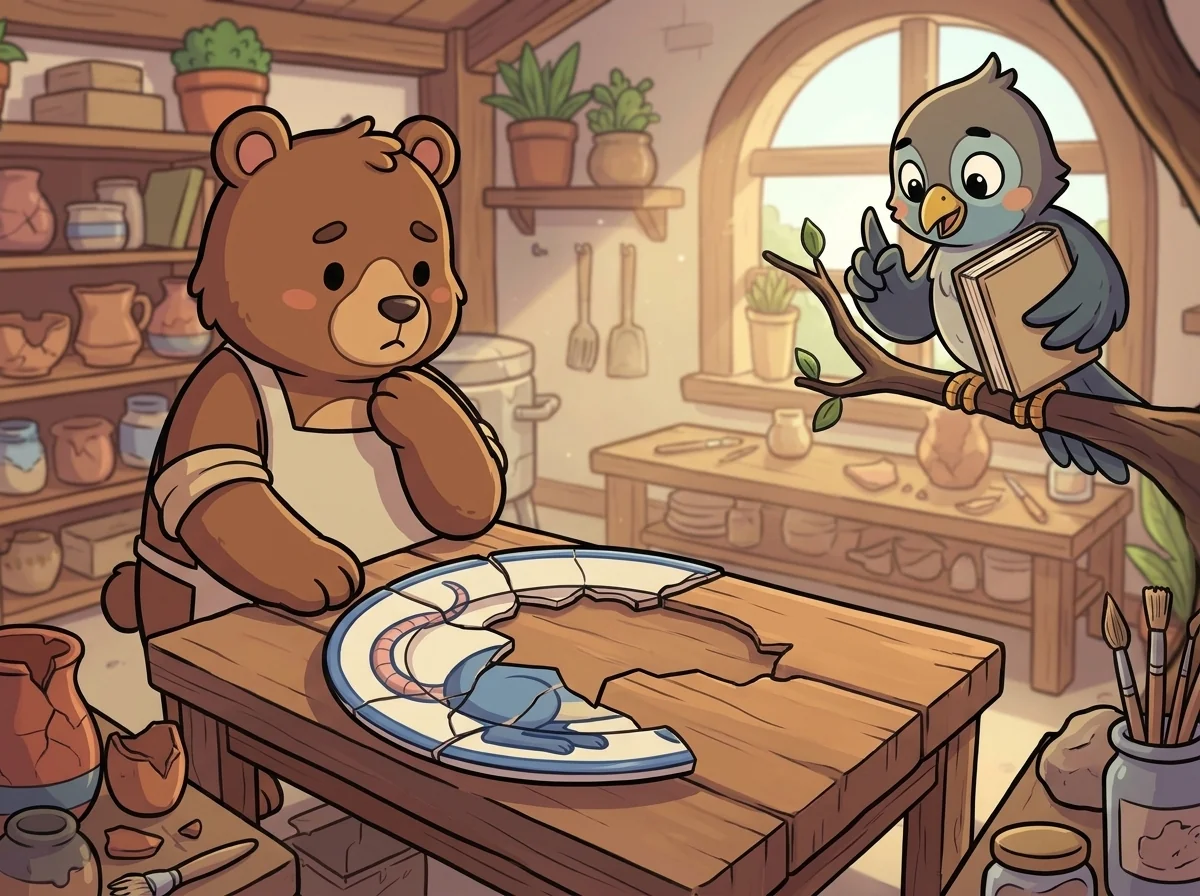
"But you've just told me what filled the gap," said Void, "and that you cannot know." They looked at each other, and each saw the other held half of one honesty.
Join settled first and pressed two more true sherds into place. "Let's be exact about what we have. These pieces are the original fabric — every curve and brushstroke made by the ancient potter. So I fit them edge to edge and the real shape returns: yes, a round plate; yes, an animal painted on it. And look where I stop — right at the edge of the last real piece. Where it's missing, I use a plain, reversible fill, left a shade off so no one mistakes it for the original. The shape comes back only from what survived. Not one brushstroke I invented."
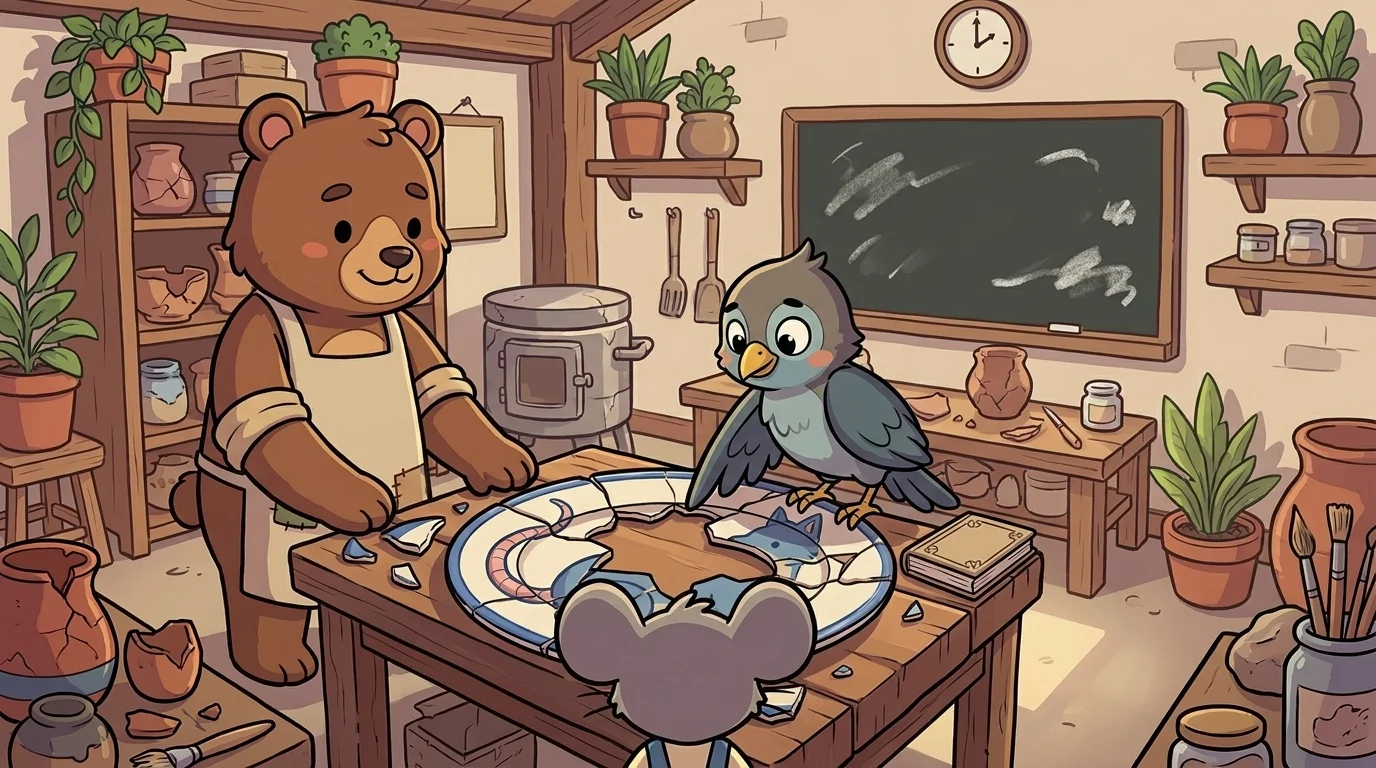
Then Void tilted her round head over the wide empty space. "And that gap is exactly where Skiff slipped. He saw a tail and a haunch and announced, 'It's a lion.' But that's an argument from silence dressed as a finding. What's missing could be several things: maybe a lion — or a dog, a horse, a creature we've never heard of; the head that would tell us is in the piece we don't have. Or the piece is still in the ground. Reading the gap as 'lion' is over-interpretation: mistaking the most exciting inference for evidence."
"So here's how we keep it honest," Void went on, smoothing her notebook. "I record only the true observation — an animal, four legs, a long tail — and I do NOT record the interpretation, lion. The gap isn't a lion-shaped hole; it's a question-shaped one. Evidence is what the surviving pieces actually show. Inference is the story we build around them. An honest whole keeps those two visibly apart — the reconstructed shape and the un-inferred gap — so the next person can always tell what we found from what we merely guessed."
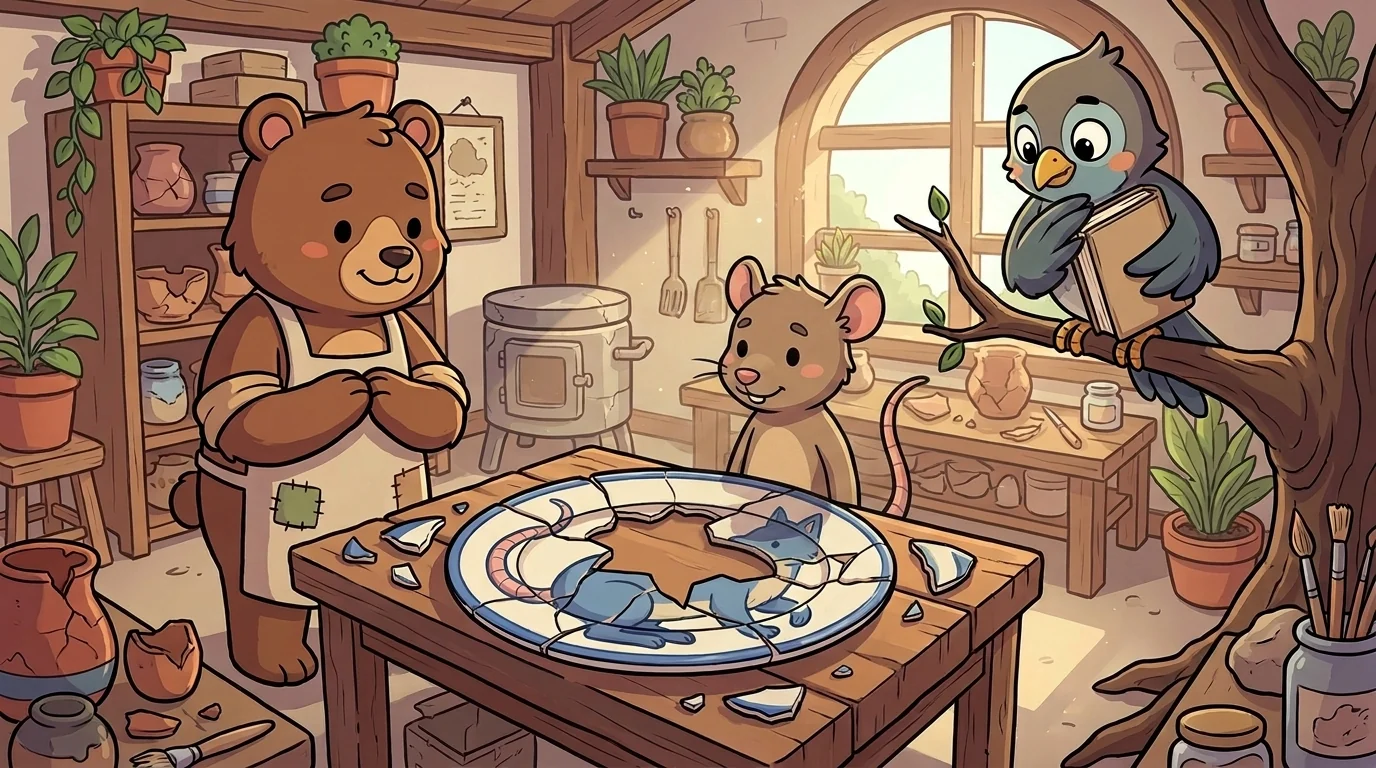
Skiff looked from the honestly-fitted pieces to the honestly-empty gap, deflating a little. "So I did two things right and one wrong?" Join and Void glanced at each other and smiled the same quiet smile. "You fitted the real pieces true — Join's half, well done," said Void. "But then you filled the missing part with a guess, out loud, as if it were fact — that's the slip." — "The two go together," said Join. "I make the shape honest by fitting only what's real and marking the fills—" "—and I keep it honest by refusing to fill the empty part with a story," said Void. "Rebuild from what survived; never invent the gap, and never read the gap as a fact. Do only one and you'll still fool someone: a rebuilt plate with a confidently-painted lion looks complete, and it lies twice over."
So they finished it together: Join fitted every true sherd and marked the fills plainly; Void labelled the gap animal — species unknown; head missing. The plate stood on its stand — half real, half honestly empty — telling exactly the truth: this much we found; this much we cannot yet say. Skiff studied it a long moment. "It's less exciting than a lion," he admitted, "but I believe it. Every part." "That's the trade," said Join gently. "You give up the thrilling guess and you get something you — and everyone after you — can actually trust." "The empty space isn't a failure," said Void, ruffling her feathers. "It's the most honest thing on the plate. It says, plainly, here is where our knowing stops." A calm, clear gladness settled through Skiff's chest — not the sharp thrill of a bold answer, but the steadier warmth of having told no lie, not even an exciting one; his breath came slow and even. And Join and Void gathered the sherd-tray and the book of absences and moved off together — the piece-fitter and the silence-reader — each knowing that half an honesty is still a lie, and that it took the two of them to leave the plate wholly true.
The DigQuest ensemble
Join and Void is part of DigQuest's distributed-narrative cast. Each character embodies a different curricular primitive; together they teach the full subject.
-
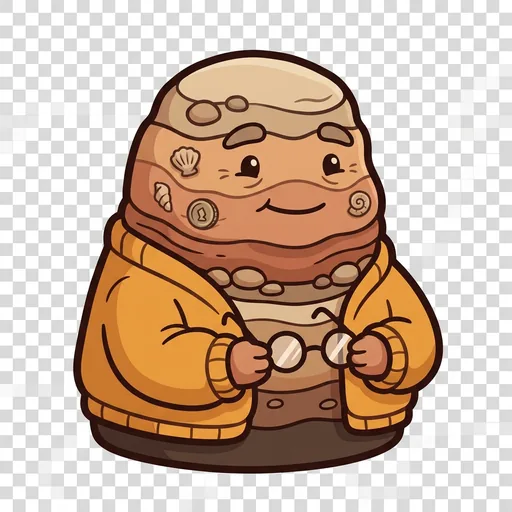
Layer
Stratigraphic context — where in the layered earth? (vertical chronology, context integrity)
-
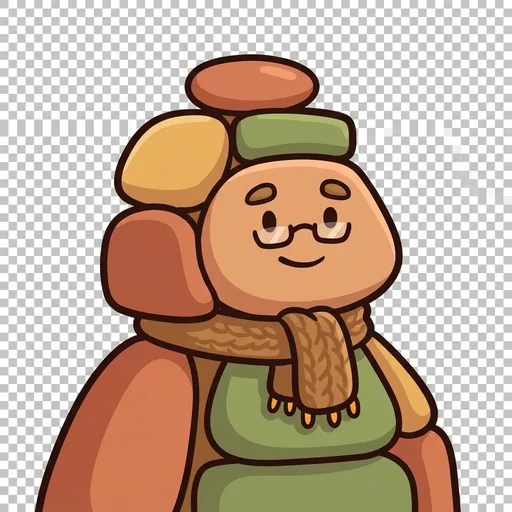
Shape
Artifact-typological analysis — what family of object? (comparative typology, craft traditions)
-
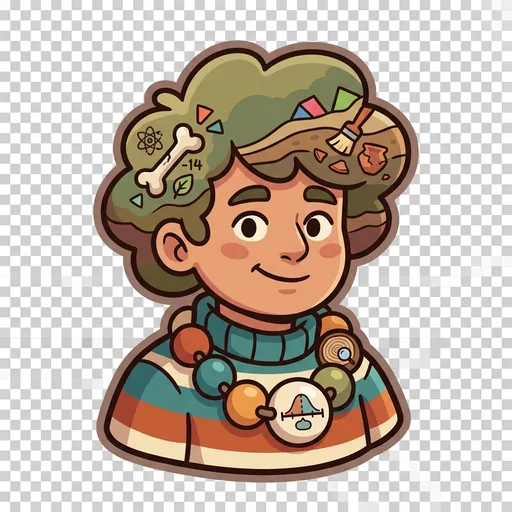
Past
Dating techniques — when by which method? (dates as ranges with confidence intervals)
-
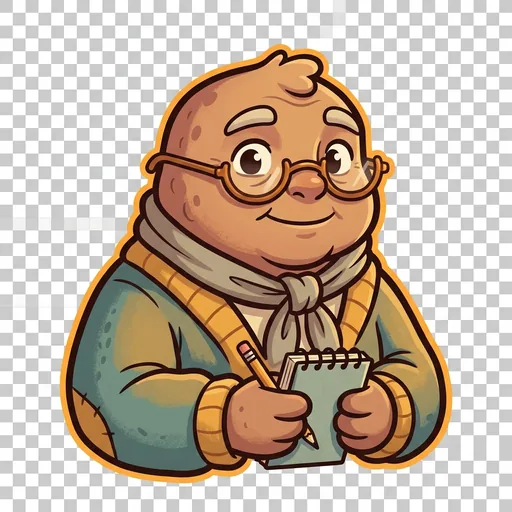
Keep
Cultural-context inference — keep-what-people-said, not invent-what-they-must-have-meant
-
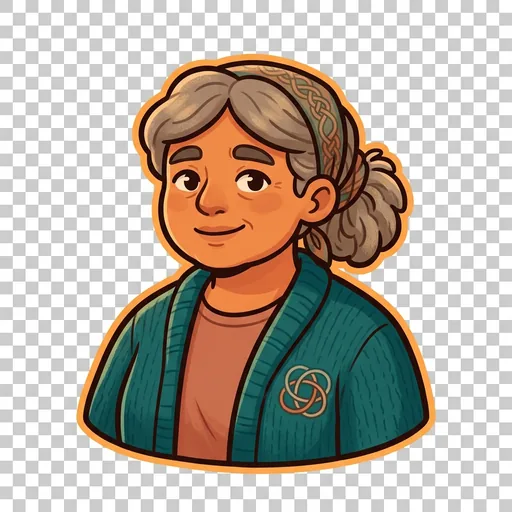
Ask
Community-partnership ethics — whose story is this and who gets to tell it? (NAGPRA + UNDRIP-grounded, descendant-community partnership)
-
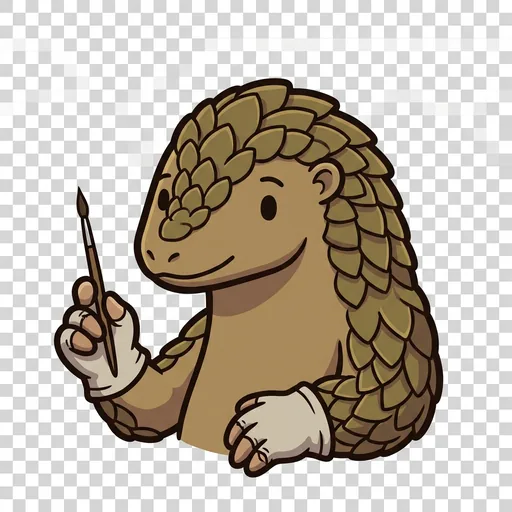
Grit
Conservation — keep it, don't fix it; a fragile find is stabilized gently, never scrubbed shiny or restored into something it never was
-
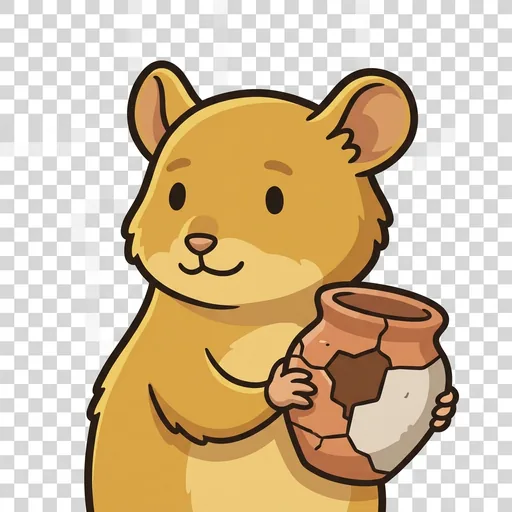
Join
Reconstruction — fit the pieces you have, never invent the ones you don't; a rebuilt pot shows its gaps honestly
-
Sherd
The ordinary object — the broken cooking pot tells you more than the gold crown; how people lived is written in humble everyday things
-
Spare
Leave it — you don't dig everything; some of the site stays untouched for future diggers, and some because the people it belongs to want it left
-
Void
Absence — what isn't there can mean three things; never read a gap as a fact too quickly