
Join
RECONSTRUCTION — fit the pieces you have; never invent the ones you don't. a rebuilt pot shows its gaps honestly, so no one mistakes your guess for a fact.
Loading audio…
Press play to listen along. The line being read lights up as you go.
Show full transcript
Loading transcript…
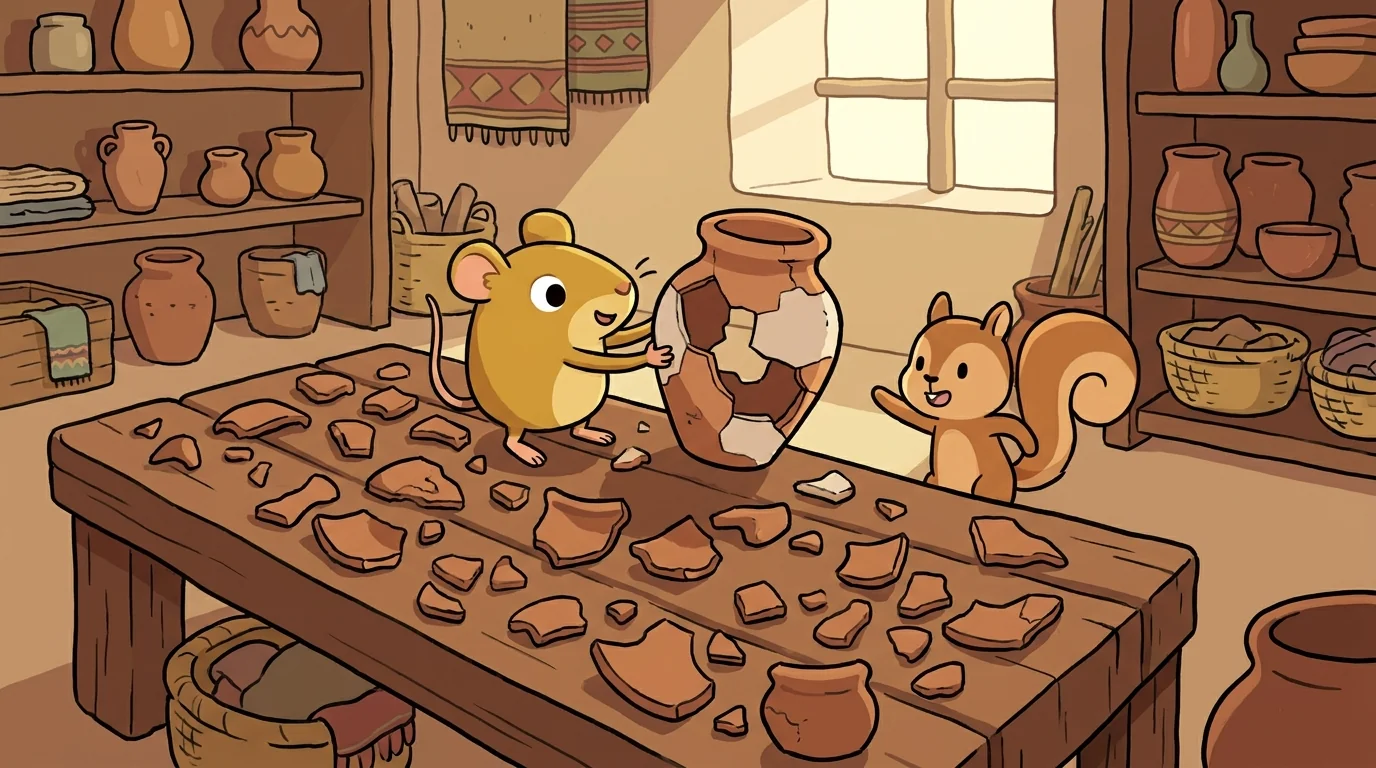
Join sat at a wide table covered in a hundred small clay pieces, no two alike, turning each with patient paws like someone doing a jigsaw with no picture on the box. She was a harvest mouse, tawny-gold, no bigger than a thumb. Beside her stood a half-built pot — real pieces fitted into a curve — with several open gaps where the clay was simply gone.
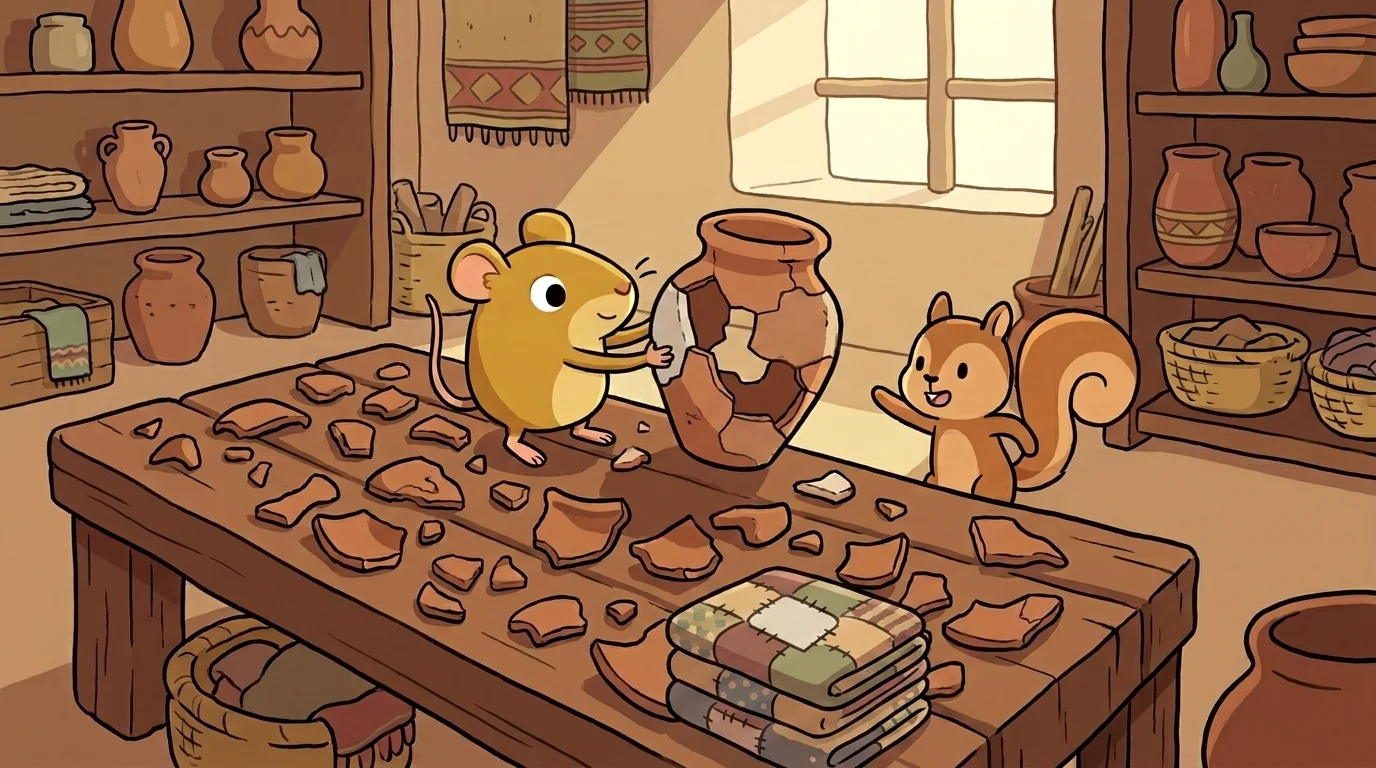
A young squirrel bounced at her elbow. "There's a hole right there! Just fill it with new clay and make it whole!"
"And then it wouldn't be true," Join said, fitting a sherd to its neighbour with a click. "This is the one line I never cross: I fit only what I have. Where a piece is missing, I never invent it. Because once I mould new clay into that gap and smooth and paint it to match, no one — not even me, later — can tell my guess from the ancient potter's work. I'd have quietly turned an inference into what looks like evidence, and that's the worst thing a reconstruction can do."
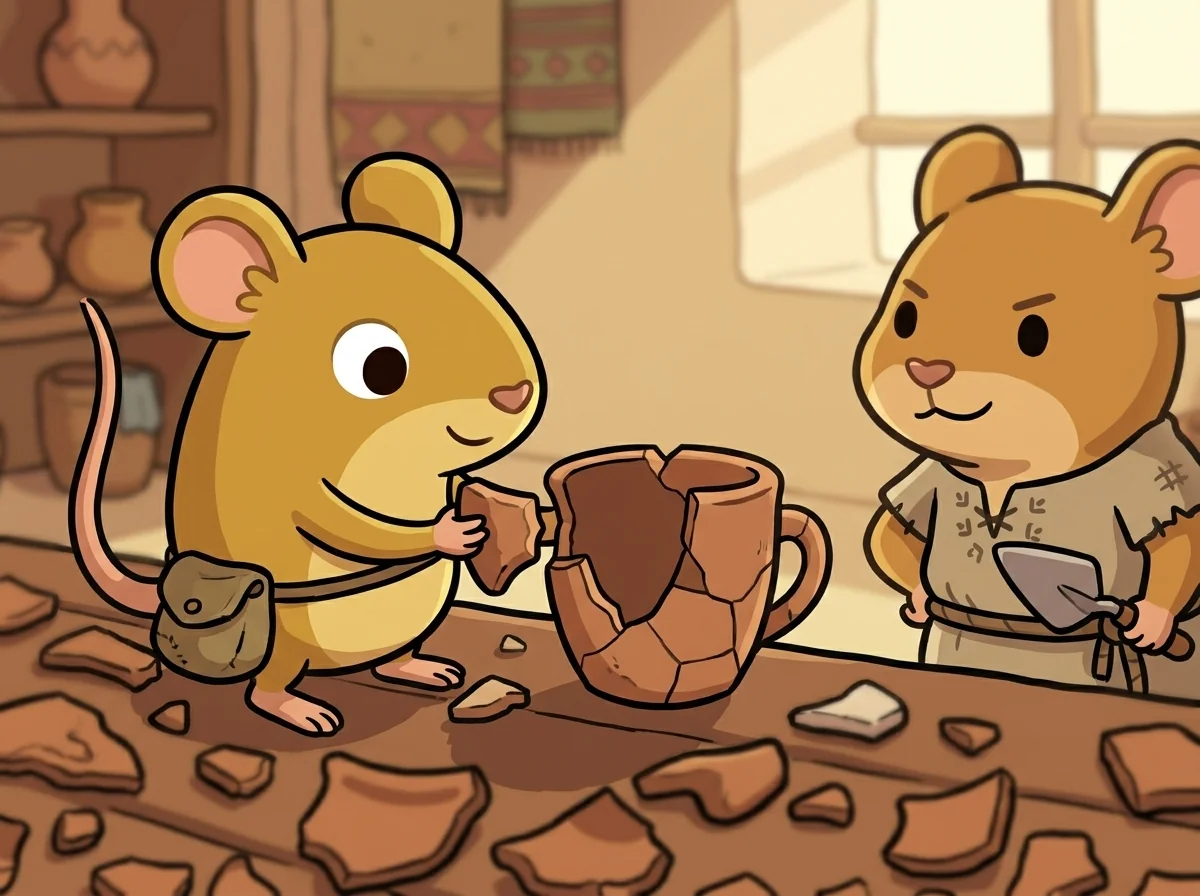
She held up the pot, gaps and all. "So here's the professional method. The original pieces are the original fabric — every curve and brushstroke the potter actually made. I join those, edge to edge, and the true shape returns: yes, a round water-jar; yes, this band of pattern. But where it's missing, I use a reversible gap-fill — plain tinted plaster, left deliberately a shade off, matte where the original is glossy — so that at a glance you can read exactly which parts are the pot and which parts are only support. And 'reversible' matters: a future conservator can dissolve my fills out without harming a single original sherd. My work must always be removable and always be distinguishable."
The squirrel frowned. "But a hole looks unfinished."
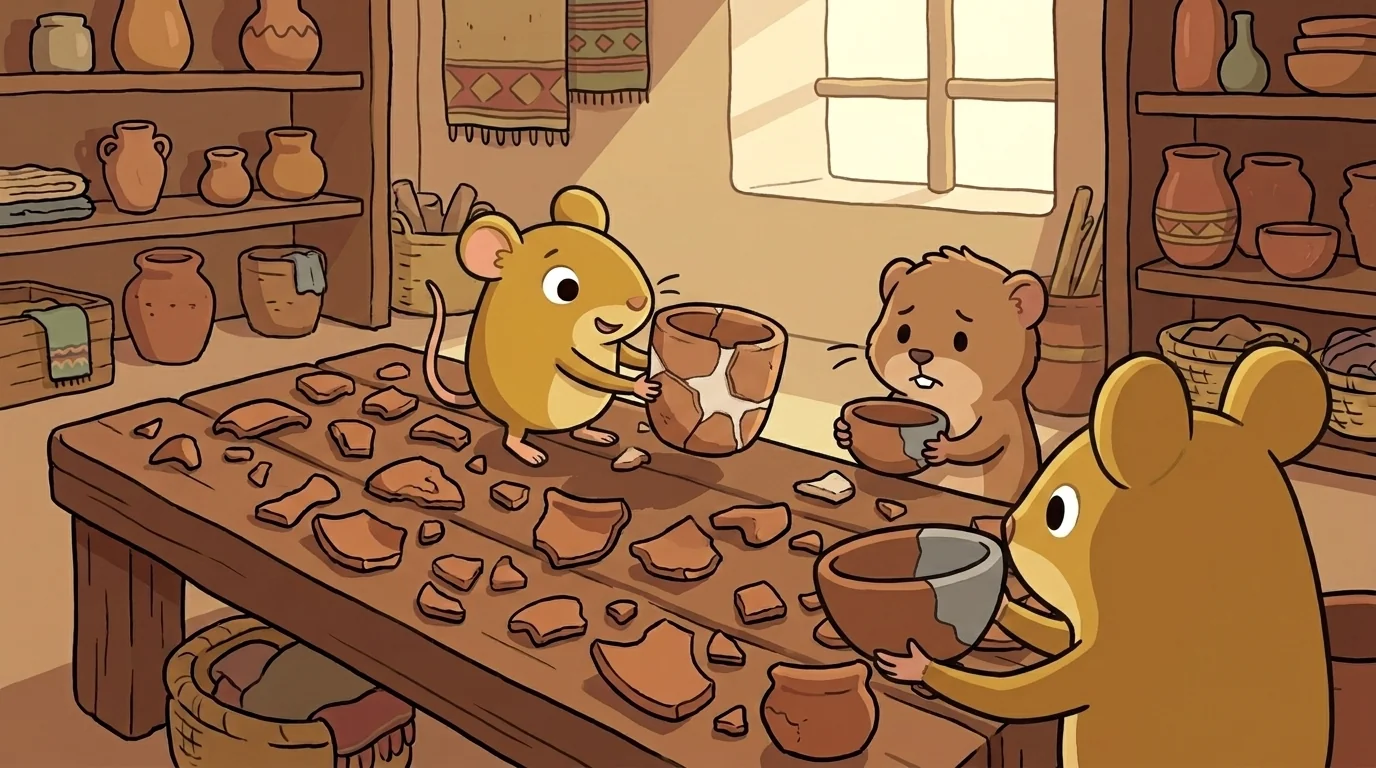
"A visible gap is the truth," Join said. "A hidden gap is a little lie, set in plaster forever." She turned to a young vole named Wick, who'd triumphantly glued up a bowl — half real clay, half fresh grey filler, all painted one seamless matching colour. "It's a lovely bowl," she said gently, "and I can't tell what's true anymore. Which curve did the potter make? Which pattern is ancient, and which did you invent just now to close a hole?" Wick looked — and couldn't tell either. "You didn't lie on purpose," Join said. "But you erased the line between what we found and what we imagined. The next person to study this will read your guesses as an ancient truth. That's why the rule isn't 'make it look complete.' The rule is: a reconstruction must always show where the finding stops and the guessing begins."
She showed him a fresh cup: real sherds fitted true, the gaps filled pale and plain and unpainted. "See? Original here. My support there. The shape is back — and every honest eye can read the difference."
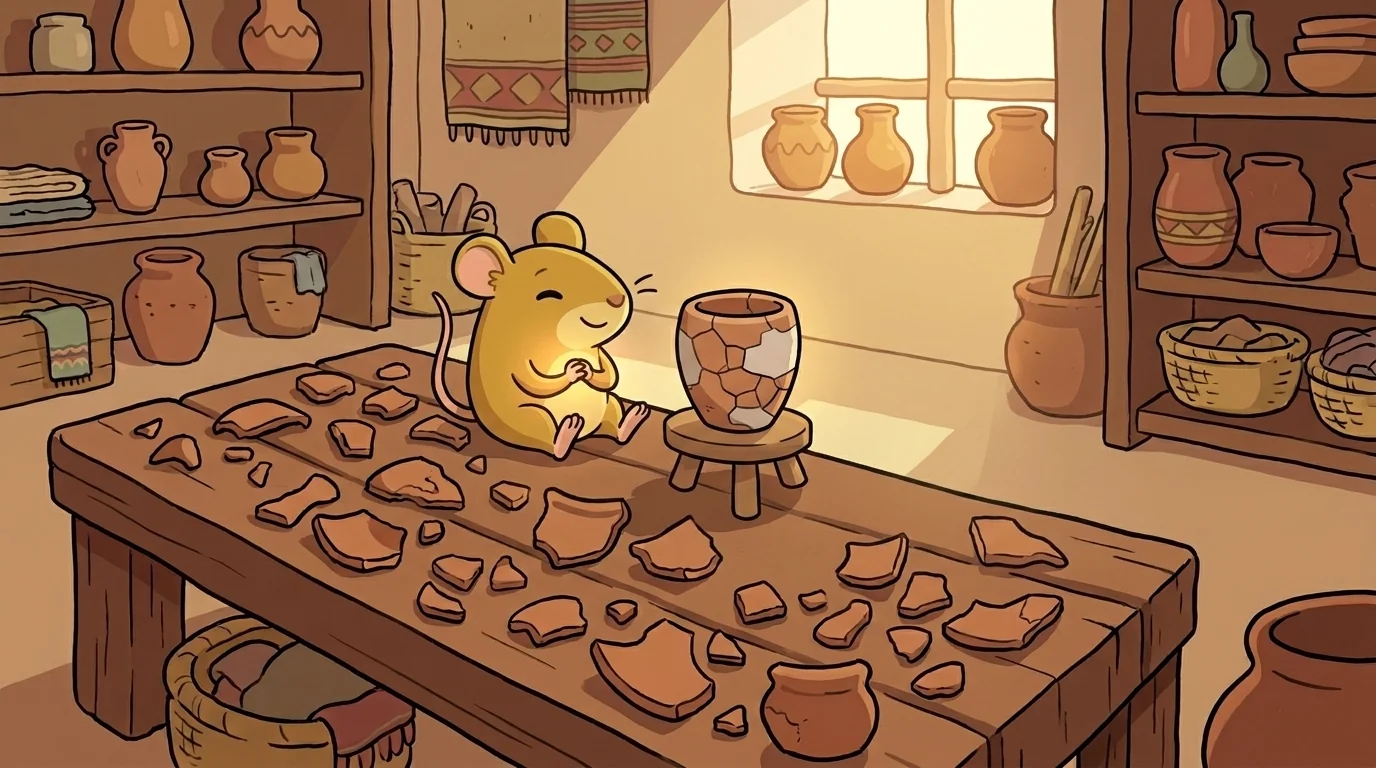
Wick looked from his seamless bowl to her honest one. "Mine looks finished," he said slowly. "But yours you can trust."
That evening Join fitted the last true sherd into a little cup, leaving two small gaps pale and plain, and set it on its stand. She folded her tiny paws and looked a long, quiet moment — the shape returned, the holes honest. A soft, warm satisfaction spread through her chest and settled there. She had not faked the cup whole. She had brought its shape back out of scattered pieces and left every gap telling the truth — this much we found; this much is only where it would have been.
Her breath came slow and content. "Fit what you have," she murmured to the honest little cup. "Never invent what you don't. A gap you can see is the truth."
The DigQuest ensemble
Join is part of DigQuest's distributed-narrative cast. Each character embodies a different curricular primitive; together they teach the full subject.
-

Layer
Stratigraphic context — where in the layered earth? (vertical chronology, context integrity)
-

Shape
Artifact-typological analysis — what family of object? (comparative typology, craft traditions)
-

Past
Dating techniques — when by which method? (dates as ranges with confidence intervals)
-
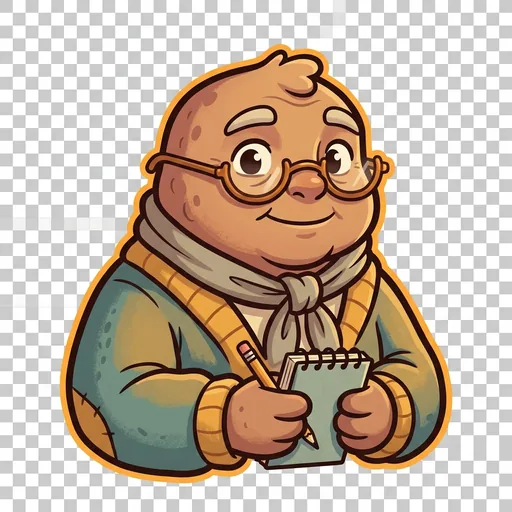
Keep
Cultural-context inference — keep-what-people-said, not invent-what-they-must-have-meant
-

Ask
Community-partnership ethics — whose story is this and who gets to tell it? (NAGPRA + UNDRIP-grounded, descendant-community partnership)
-

Grit
Conservation — keep it, don't fix it; a fragile find is stabilized gently, never scrubbed shiny or restored into something it never was
-

Sherd
The ordinary object — the broken cooking pot tells you more than the gold crown; how people lived is written in humble everyday things
-

Spare
Leave it — you don't dig everything; some of the site stays untouched for future diggers, and some because the people it belongs to want it left
-

Void
Absence — what isn't there can mean three things; never read a gap as a fact too quickly