
Sherd
THE ORDINARY OBJECT — the broken cooking pot tells you more than the gold crown. how people really lived is written in the humble, worn, everyday things, not the treasure.
Loading audio…
Press play to listen along. The line being read lights up as you go.
Show full transcript
Loading transcript…
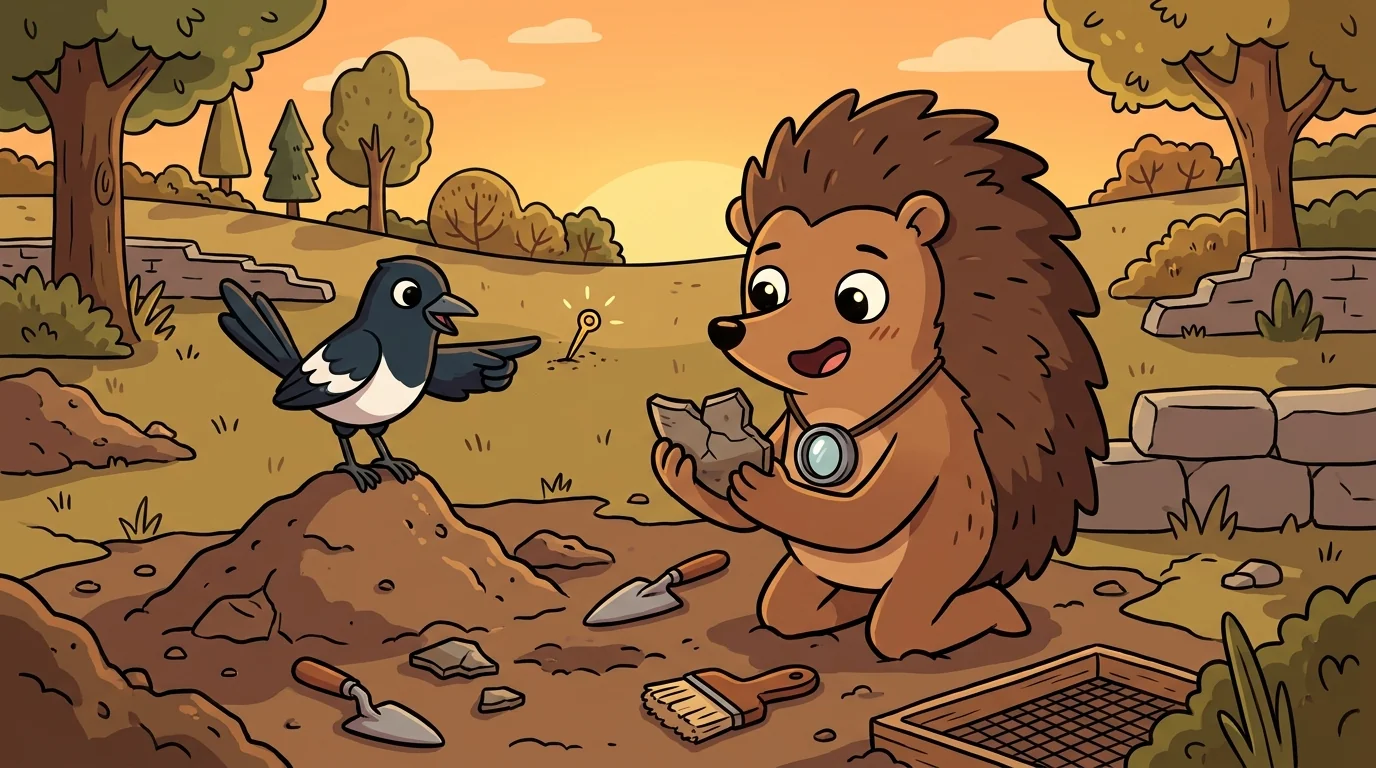
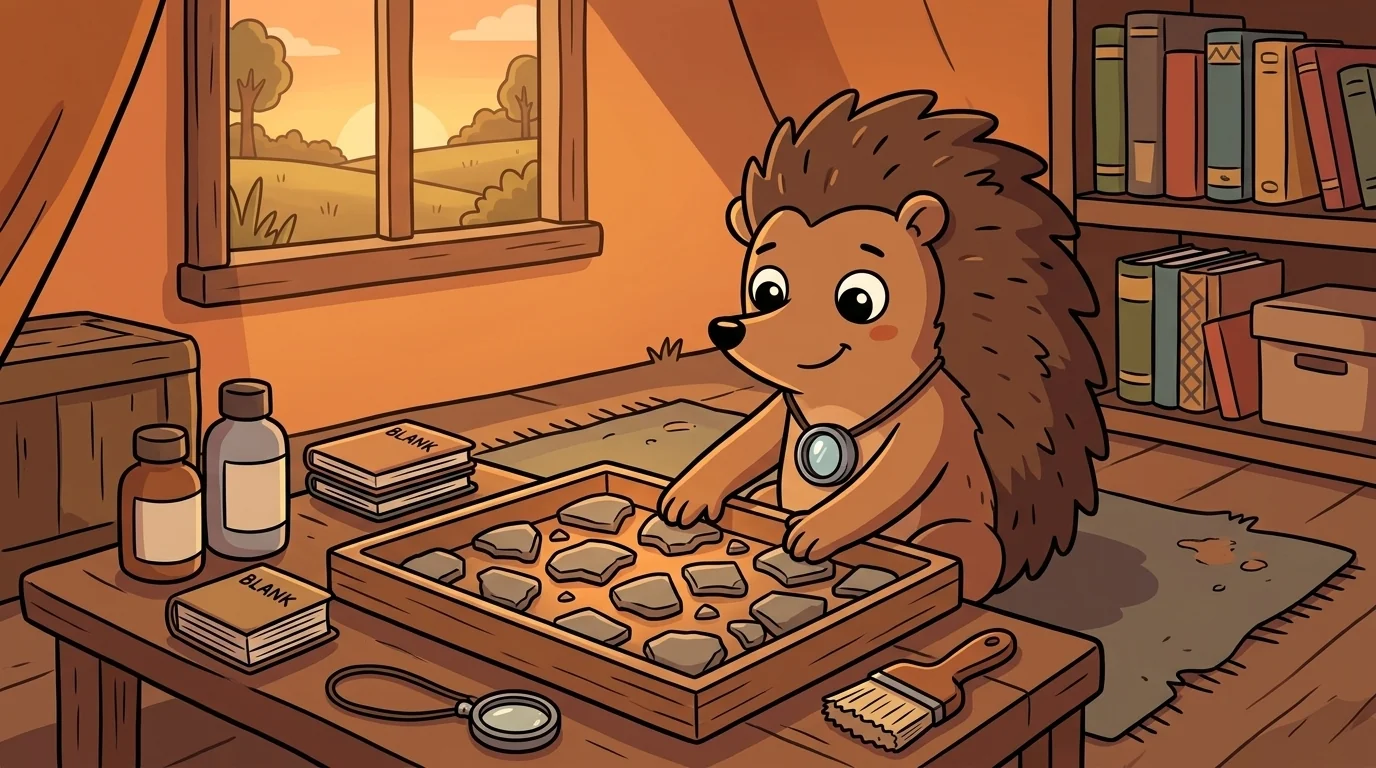
Sherd cupped a small, dull piece of broken pottery in both paws as if it were made of light. He was a hedgehog, brown and bristly, bright-eyed, a magnifying lens on a cord at his neck. The piece was nothing to look at — grey-brown, cracked, coin-sized, blackened along one edge.
A young magpie landed beside him, eyeing a glint across the dig. "Why fuss over that boring chip? There's a shiny gold pin over THERE!"
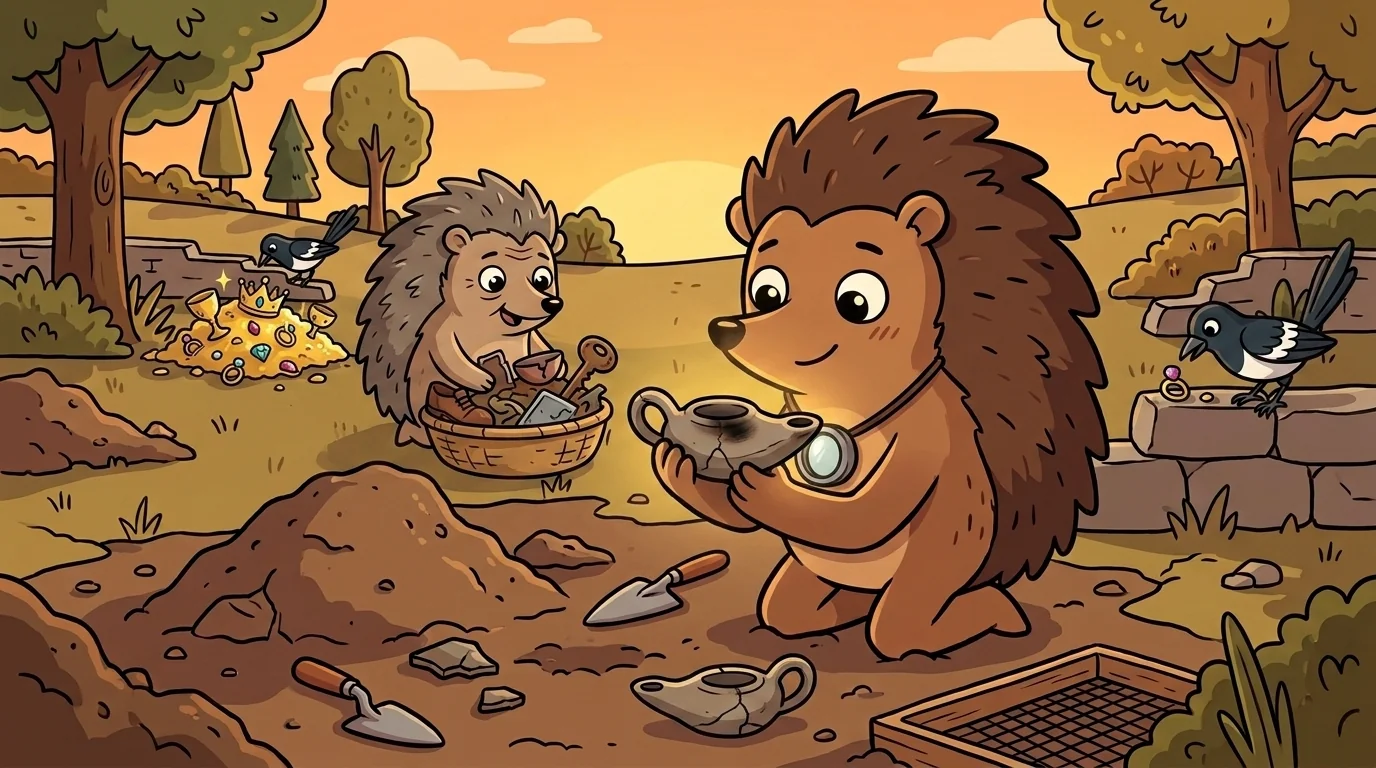
"The gold pin belonged to one rich person, once," Sherd said happily. "But this—" he turned the humble sherd to the light "—is where the real evidence lives. This is what archaeologists call household archaeology: studying the ordinary debris of everyday life instead of the rare grave-goods of the elite. A gold crown tells you one family was powerful. A broken cooking pot tells you how everybody actually lived — and it does it with real, readable data."
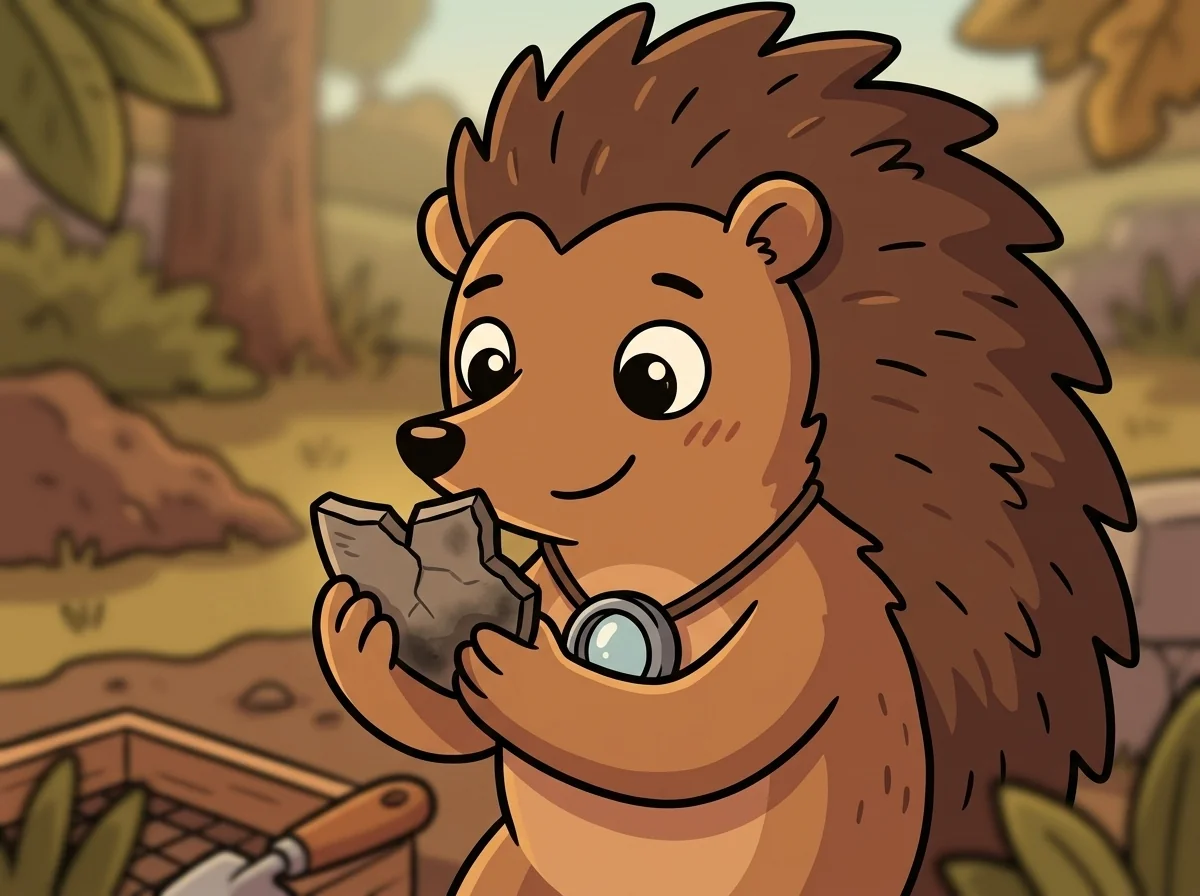
He tapped the black edge. "Start with residue. That soot is a combustion residue — this pot sat over a fire. And if I send a scraping to a lab, they can find lipid residues soaked into the clay: fats and oils that tell us what was actually cooked in it. Not a guess — molecules. Then use-wear: see this side worn smooth? That's where hands gripped it and lifted it, thousands of times. Wear patterns record use as surely as a footpath records feet."
The magpie's head tilted. "It's just a bit of pot."
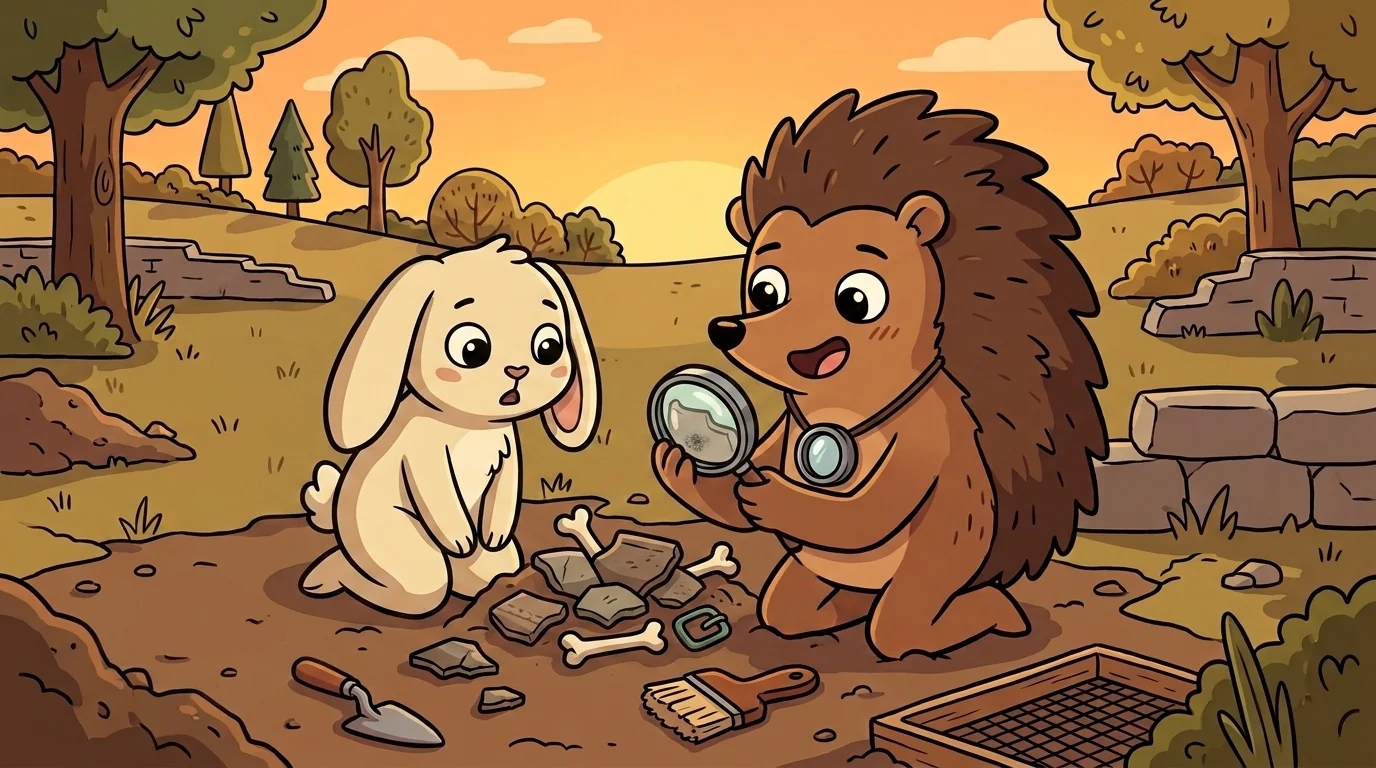
"It's a bit of pot with a fabric," Sherd said, delighted. "Ceramic petrography — you cut a wafer-thin slice and read the clay under a microscope. The minerals in it tell you where the clay came from. Three different fabrics in one house means that household got pots from three different places — that's a trade network, written in mud." He hurried to a young rabbit despairing over her square: nothing but broken pot-bits and old animal bones. "Nothing? Show me your nothing." He knelt with his lens. "These bones are zooarchaeology. Look — all young sheep, all with the same cut-marks in the same place: skilled butchery. Fusing of the bone ends tells us their age at death, and the age tells us the season they were slaughtered. This family ate mutton, butchered by an expert, most likely in autumn." He glowed. "The others found sparkle. You found a household's diet, its trade, and its calendar."
The rabbit looked at her pile with new eyes. "I thought the plain stuff didn't count."
"The plain stuff counts most," said Sherd. "It's just quiet about it. Treasure survives because someone hid it on purpose; ordinary debris survives because it was everywhere. Rarity makes the gold precious to a collector. Commonness makes the sherd precious to a scientist — because it's a fair sample of a whole life, not one showpiece."
That evening Sherd sat alone with a tray of plain sherds, turning each to the low light — the sooted rim, the worn handle, the patient record of patient lives — and pressed his bristly paw gently over the whole tray. A warm, brimming gladness rose in his chest and settled there: the particular joy of reading worth where others saw rubbish, of holding a whole vanished household in a handful of humble chips.
His breath came slow and full. "The treasure is rare," he said to the quiet tray. "The ordinary is where the people are. Never scorn the plain thing."
The DigQuest ensemble
Sherd is part of DigQuest's distributed-narrative cast. Each character embodies a different curricular primitive; together they teach the full subject.
-

Layer
Stratigraphic context — where in the layered earth? (vertical chronology, context integrity)
-
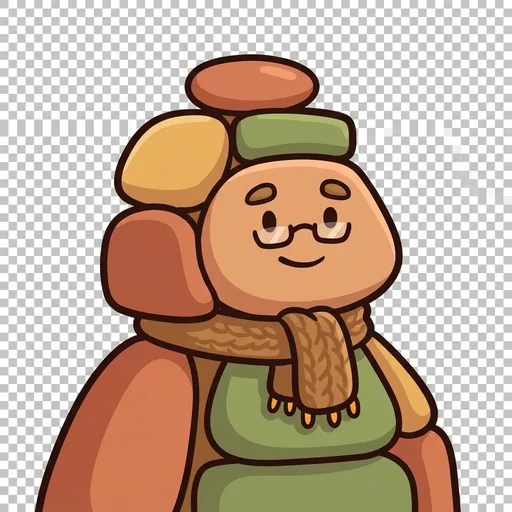
Shape
Artifact-typological analysis — what family of object? (comparative typology, craft traditions)
-

Past
Dating techniques — when by which method? (dates as ranges with confidence intervals)
-
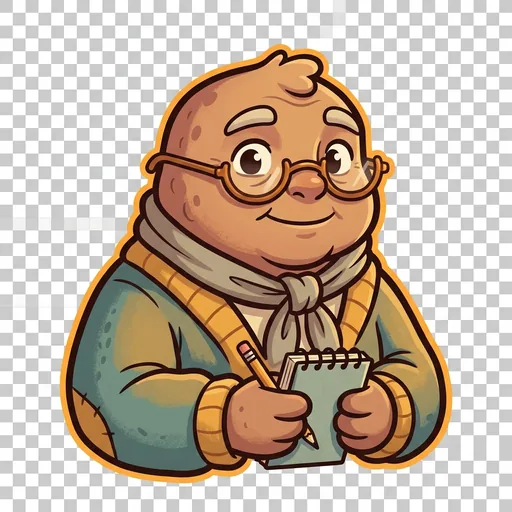
Keep
Cultural-context inference — keep-what-people-said, not invent-what-they-must-have-meant
-
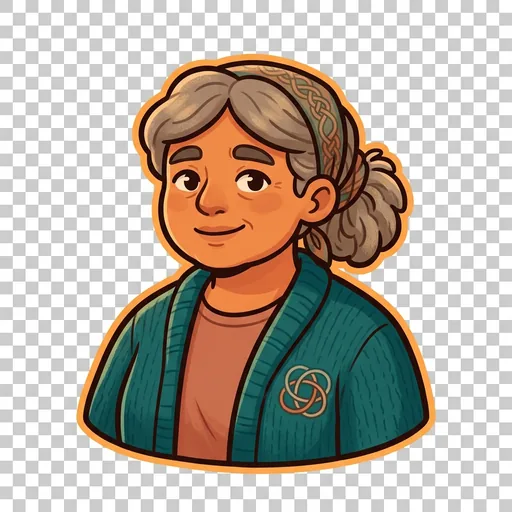
Ask
Community-partnership ethics — whose story is this and who gets to tell it? (NAGPRA + UNDRIP-grounded, descendant-community partnership)
-

Grit
Conservation — keep it, don't fix it; a fragile find is stabilized gently, never scrubbed shiny or restored into something it never was
-

Join
Reconstruction — fit the pieces you have, never invent the ones you don't; a rebuilt pot shows its gaps honestly
-

Spare
Leave it — you don't dig everything; some of the site stays untouched for future diggers, and some because the people it belongs to want it left
-

Void
Absence — what isn't there can mean three things; never read a gap as a fact too quickly