
Void
ABSENCE — what isn't there can mean three things: they didn't have it, it didn't survive, or it's simply somewhere you haven't dug. never read a gap as a fact too quickly.
Loading audio…
Press play to listen along. The line being read lights up as you go.
Show full transcript
Loading transcript…
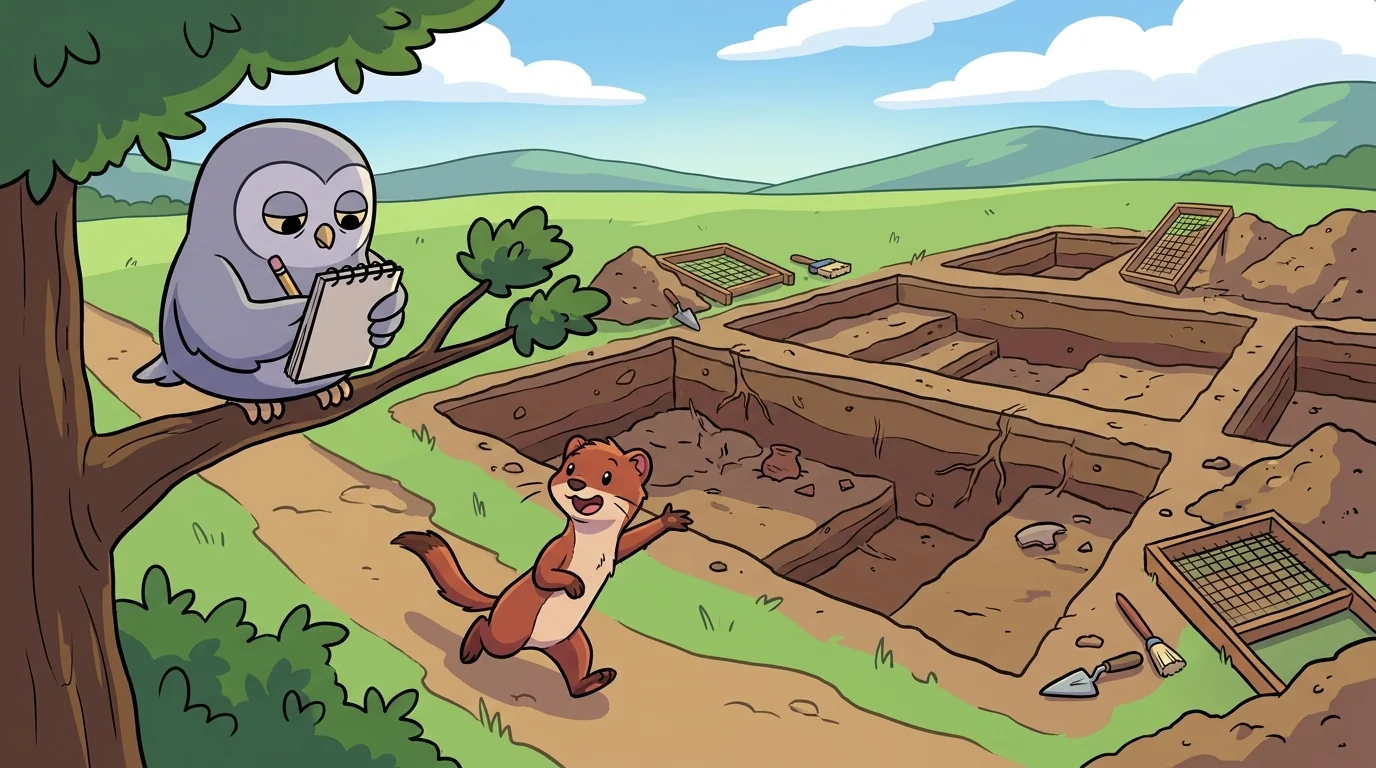
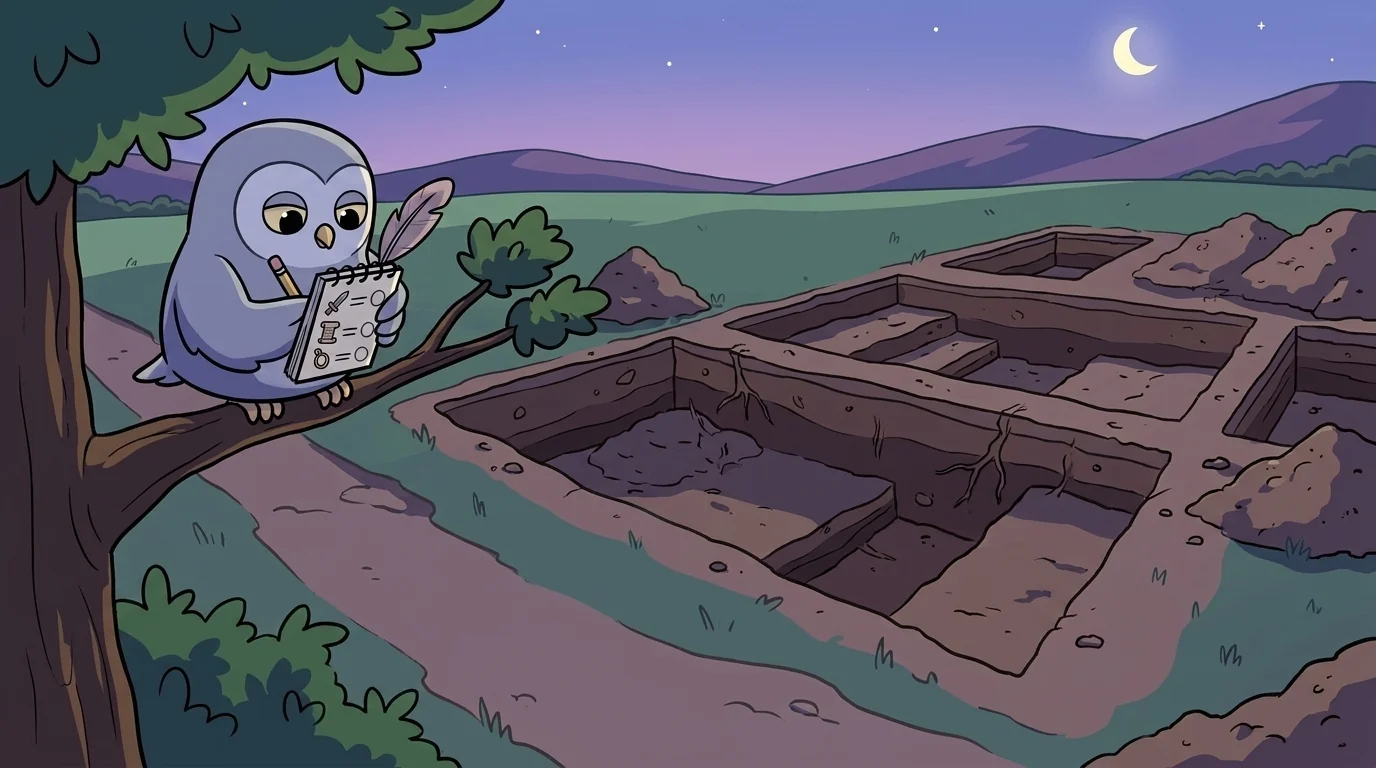
Void perched on a low branch above a finished dig, round eyes half-closed, listening to what the ground didn't say. She was a small owl, soft grey and quiet, and instead of a trowel she carried a slim notebook where she recorded, as carefully as any find, the things that were absent.
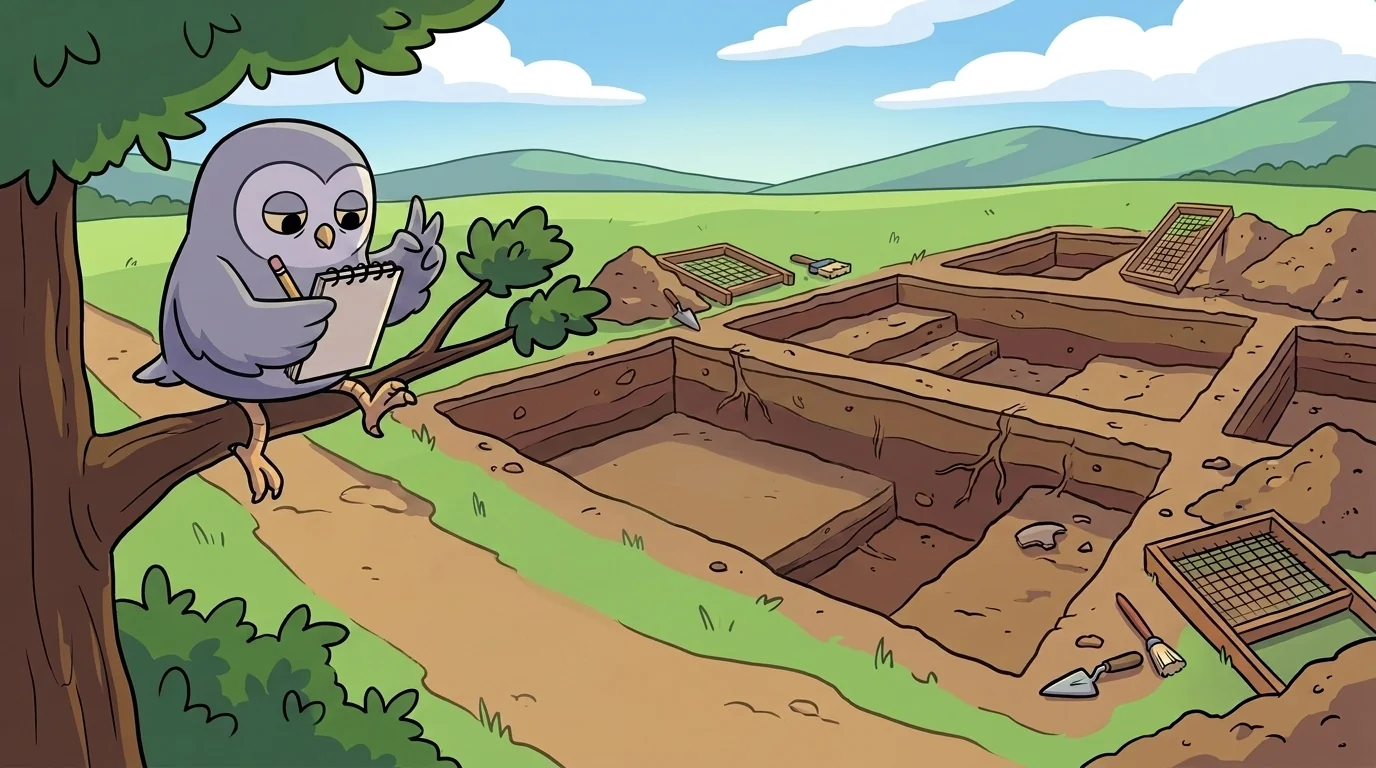
A young stoat scampered up, breathless. "The dig's done, and we found no weapons anywhere! So these were peaceful people who never fought — write it down!"
"Slow down," Void said gently. "You've just made an argument from silence — you've read a missing thing as a proven fact. And a missing thing can mean three very different things. I keep three doors, and I refuse to run through one until I've checked the others." She lifted a claw. "Door one: maybe they truly had no weapons — peaceful, like you say. Door two: maybe they had plenty, but the weapons were wood, or leather, or fibre — organic materials that rot to nothing in most soils. That's taphonomy: the study of what happens to things between burial and discovery, and of differential preservation — stone and pottery last, cloth and wood usually don't. Door three: maybe their weapons lie in the part of the site we simply haven't excavated. That's sampling bias — we only ever dig a fraction, and the fraction we skip can hold exactly the thing we say is missing."
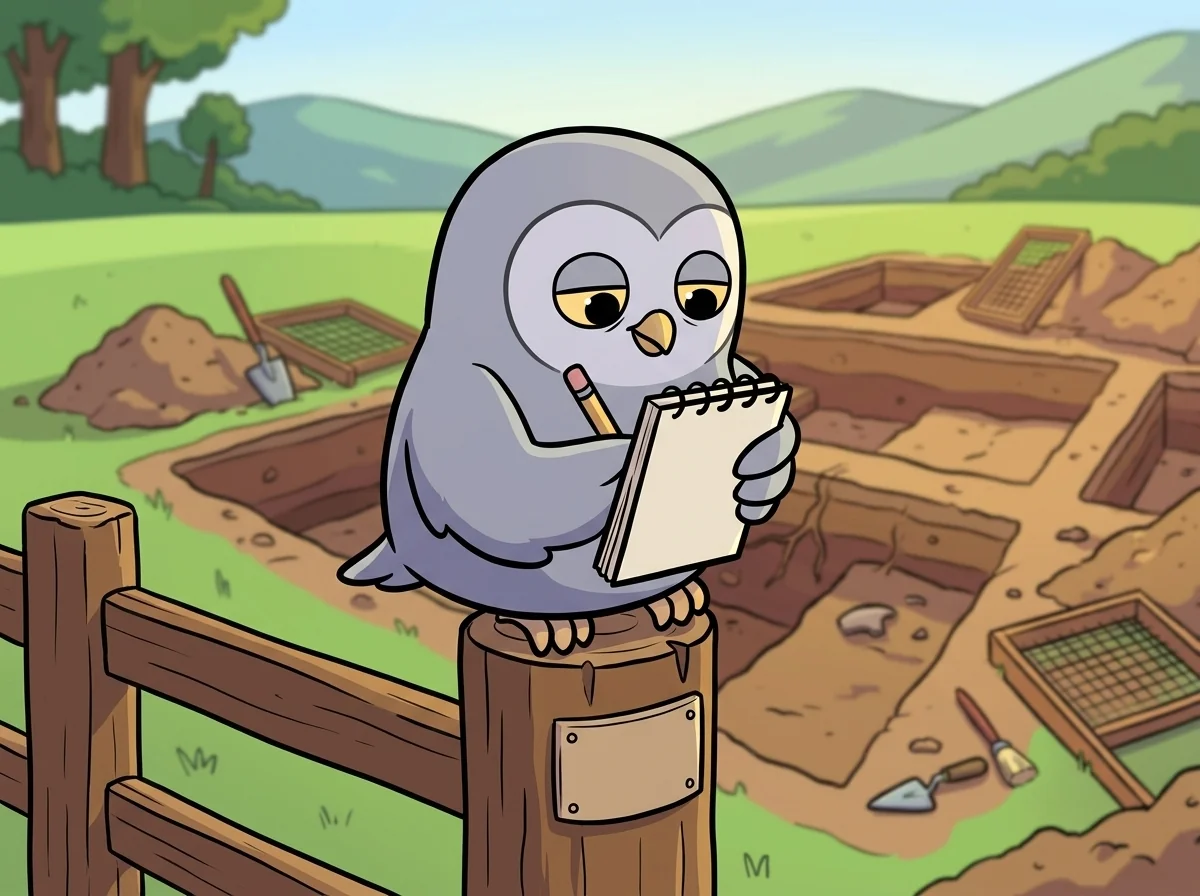
The stoat's ears drooped. "Three stories."
"Three stories, and the empty ground looks identical for all of them," said Void. "So I write down the true observation — no weapons recovered — and I do NOT write the interpretation, these people were peaceful. Not yet. Not until I know which silence I'm hearing." She fixed a young mole named Burr, who'd just declared that a site with no writing meant a people who couldn't write. "Walk the three doors first. Maybe they didn't write. Or maybe they wrote on bark, palm-leaf, cloth, or in sand — none of which survives a thousand years. Or maybe the inscribed stone is sitting in the half we never touched. Absence of evidence is not evidence of absence — especially when it's a harsh thing to conclude about people who can't answer back."
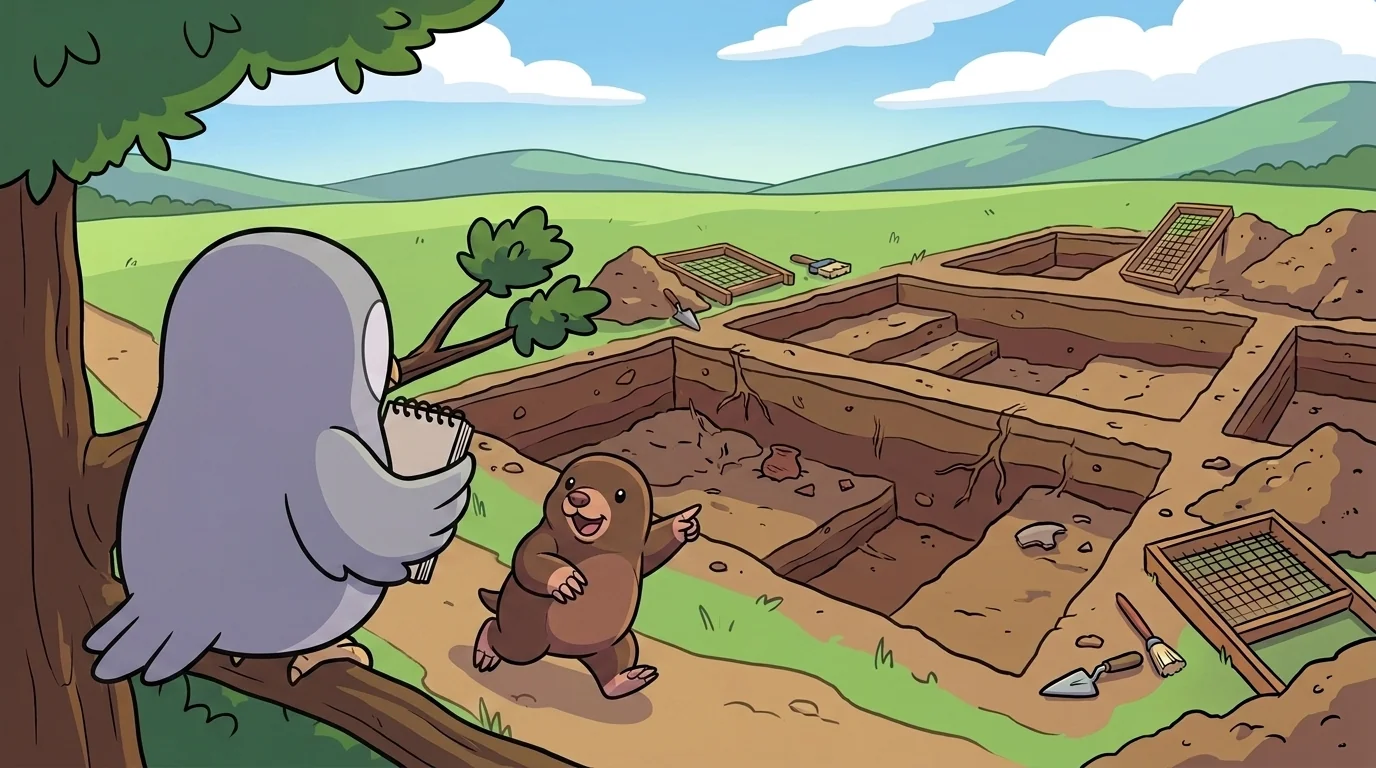
Burr's ears sank, then rose. "So I record what's missing — but I don't decide what the missing means?"
"Not until you've ruled out the other doors," said Void. "Here's the honest test: could a preservation problem or a sampling gap produce this same silence? If yes, the silence is a question, not a finding. The quickest wrong answer in all of archaeology is the one that fills an empty space with the most exciting story."
The stoat looked at the plain page of absences. "It's less thrilling than 'peaceful people.'"
"It's truer," said Void. "A cautious 'we don't yet know' has never once misled anyone. A confident guess dressed as a fact has misled thousands."
That evening Void sat alone above the quiet dig, her notebook open to a page of careful absences — no weapons, no writing, no fine jewellery — each written plainly, none turned into a claim. She smoothed the page with one soft feather. A calm, clear steadiness settled through her chest — not the thrill of a bold conclusion, but the deeper ease of not having grabbed one too soon. She had heard the silences and left them as questions, honest and open, until the ground could say more.
Her breath came slow and even. "What isn't there can mean three things," she murmured into the dusk. "Absence is a question — never yet an answer."
The DigQuest ensemble
Void is part of DigQuest's distributed-narrative cast. Each character embodies a different curricular primitive; together they teach the full subject.
-
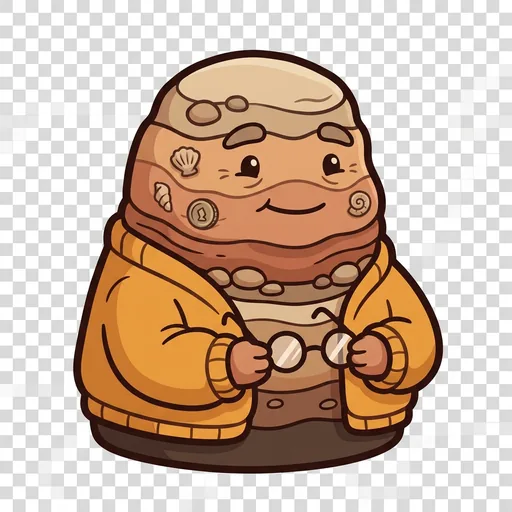
Layer
Stratigraphic context — where in the layered earth? (vertical chronology, context integrity)
-
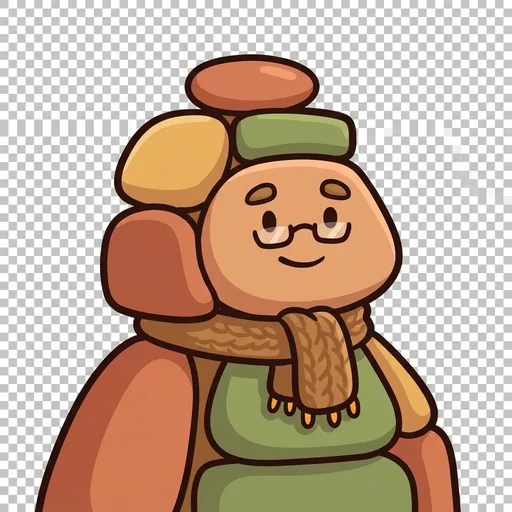
Shape
Artifact-typological analysis — what family of object? (comparative typology, craft traditions)
-

Past
Dating techniques — when by which method? (dates as ranges with confidence intervals)
-
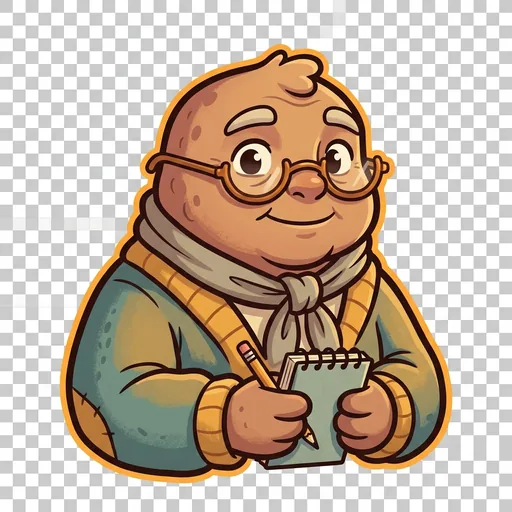
Keep
Cultural-context inference — keep-what-people-said, not invent-what-they-must-have-meant
-
Ask
Community-partnership ethics — whose story is this and who gets to tell it? (NAGPRA + UNDRIP-grounded, descendant-community partnership)
-
Grit
Conservation — keep it, don't fix it; a fragile find is stabilized gently, never scrubbed shiny or restored into something it never was
-
Join
Reconstruction — fit the pieces you have, never invent the ones you don't; a rebuilt pot shows its gaps honestly
-

Sherd
The ordinary object — the broken cooking pot tells you more than the gold crown; how people lived is written in humble everyday things
-
Spare
Leave it — you don't dig everything; some of the site stays untouched for future diggers, and some because the people it belongs to want it left