Stilt
A puppet in mid-jump can't balance itself
Loading audio…
Press play to listen along. The line being read lights up as you go.
Show full transcript
Loading transcript…
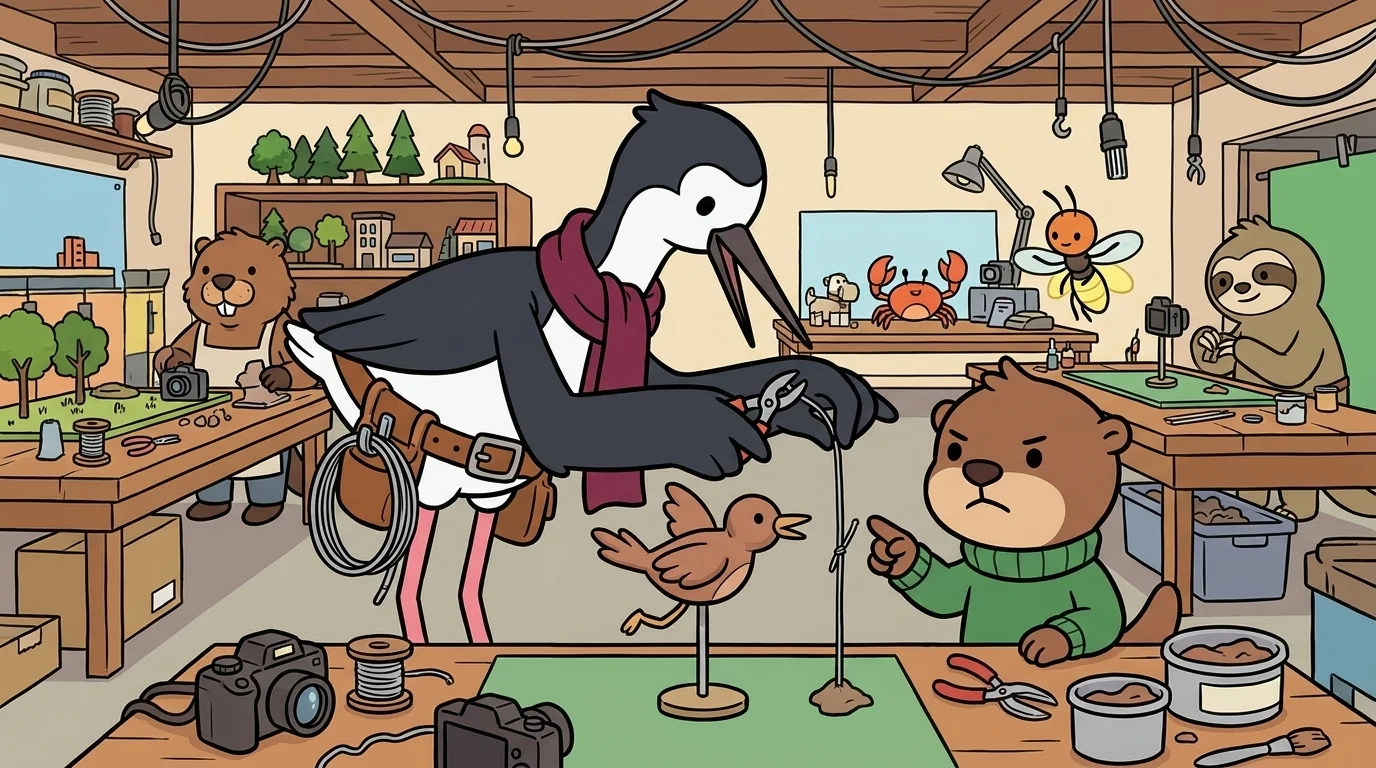
Stilt bent a thin wire behind a clay bird frozen in mid-leap, and the bird — which had no way to balance on its own, one foot off the ground, tipping — went perfectly steady. She was a slender black-and-white stilt-bird with long pink legs, in a wine-red scarf and a tool-belt of tiny clips and wires she wore every single day, a coil of fine wire always looped at her hip. She checked the bird from the camera's side: from there, the wire was hidden clean behind its body.
"There," Stilt said gently. "Held steady. And no one will ever see the hand that holds it."
A young otter frowned. "But it's got a wire holding it up. Isn't that cheating?"
"It's a bird in the middle of a jump," Stilt said. "It can't balance — one foot in the air, leaning forward, frozen. Nothing could hold that pose alone." She tapped the hidden wire. "So a support holds it. A little wire, a clip, a stand tucked behind it where the camera can't see. It stays rock-steady for every frame — and later, we quietly erase the support so it looks like the bird did it all by itself." She smoothed the scarf at her neck. "That's not cheating. Every stop-motion puppet gets held up. Needing to be held steady through the hard part isn't weakness — it's just how the jump gets made at all. The support does its quiet job, and then it disappears, and the leap is real."
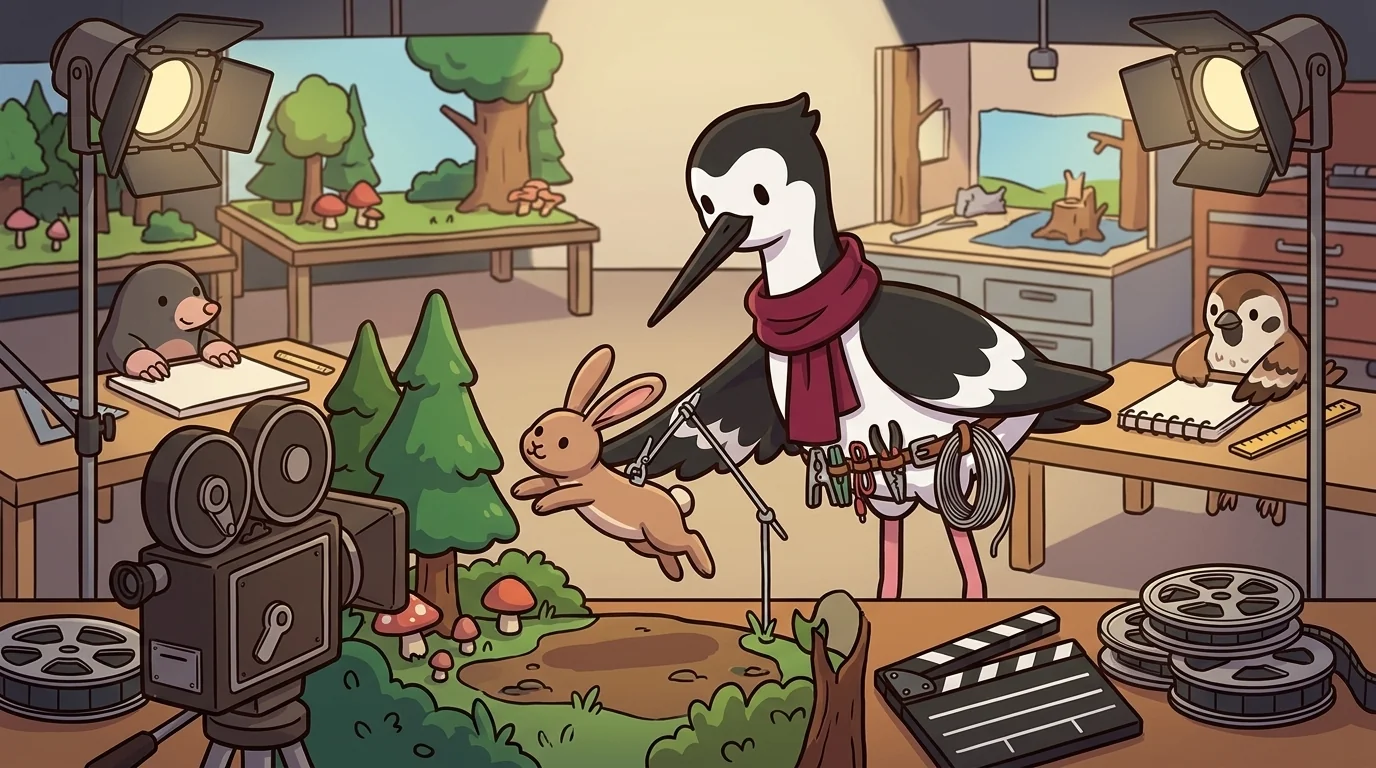
Stilt had learned about support the hard way, back when she was small.
Her first ambitious film had a clay rabbit doing a great soaring jump, and she'd been too proud to rig it — sure a good animator wouldn't need props holding things up. So she'd tried to balance the mid-air rabbit on its own, frame after frame, and it toppled, every single time — face-first into the set, over and over, until she was near tears. Her chest went tight and hot with the shame of it: she couldn't even make it stand.
Her older brother, who rigged everything, found her surrounded by fallen rabbits. He didn't tell her she was doing it wrong. He just picked up the rabbit, tucked a thin wire behind it, and it stood in mid-leap, perfectly steady. "You weren't failing, little one," he said. "You were trying to do a thing that nobody can do without a support. A jump doesn't balance itself." He showed her how to hide the wire behind the body, and how to gently erase it after. "There's no shame in a rig. The best animators in the world use them for every leap. Being held steady isn't the opposite of doing it yourself — it's how you do it." Stilt rigged her rabbit, and it soared, and the hot shame in her chest melted into a warm, steadied relief. Needing to be held, she found, was completely all right.
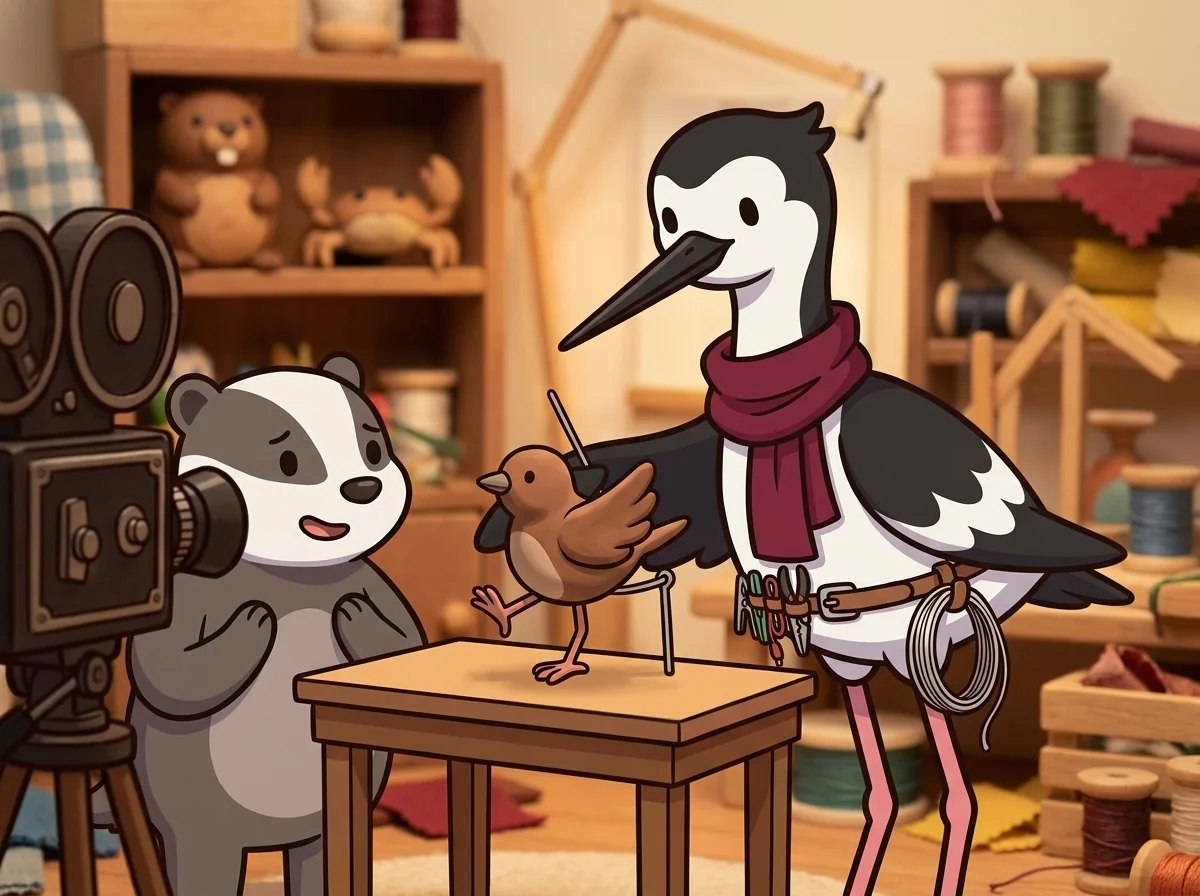
She came to FrameQuest the summer she turned twelve, wire looped at her hip. Reel, the stop-motion teacher, met her at a set of clay figures that kept toppling in their action poses.
"They fall the moment I let go," Reel said. "How do you hold a jump?"
Stilt looked, then tucked a fine wire behind the leaping figure, hidden from the camera. It stood steady. "A puppet in a big pose can't balance itself — so you rig it," she said. "A wire, a clip, a stand, tucked where the camera can't see, holding it rock-steady frame to frame. Then you erase the support afterward, so it looks like it did it alone." She smiled. "Every puppet gets held up. It's not cheating — it's the only way the hard poses get made."
Reel watched the steady leap, and something eased in her face. "You belong here," she said.
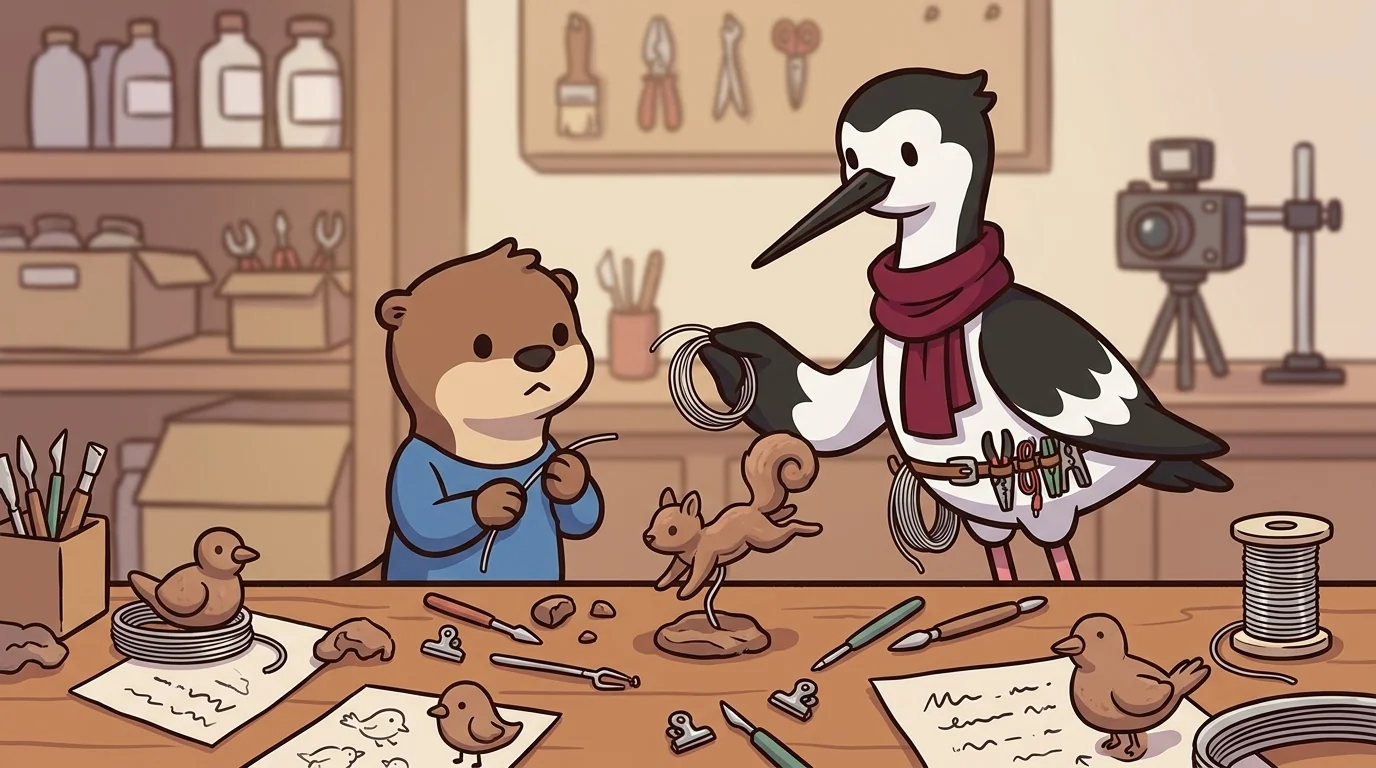
On her first teaching morning a boy named Fen was refusing to rig anything, insisting he should be able to balance his figures himself, growing more frustrated as they toppled. Stilt handed him a coil of wire.
"You're not supposed to balance a jump alone," she said gently. "Nobody can. That's what the support is for." She showed him the whole habit: tuck a hidden wire or stand behind the puppet where the camera can't see it, keep it rock-steady for every frame of the hard pose, and quietly erase the support afterward. Fen's pride made him resist at first; Stilt sat with him, patient. "Needing help to hold a pose isn't a flaw in you," she said. "It's built into how this works. The support does its quiet job and then vanishes — and the leap is every bit yours. Being held steady doesn't make it less your leap."
Fen tucked a wire behind his figure, watched it stand steady in a great soaring jump, and let out a breath. "It held," he said. "And it still looks like my jump."
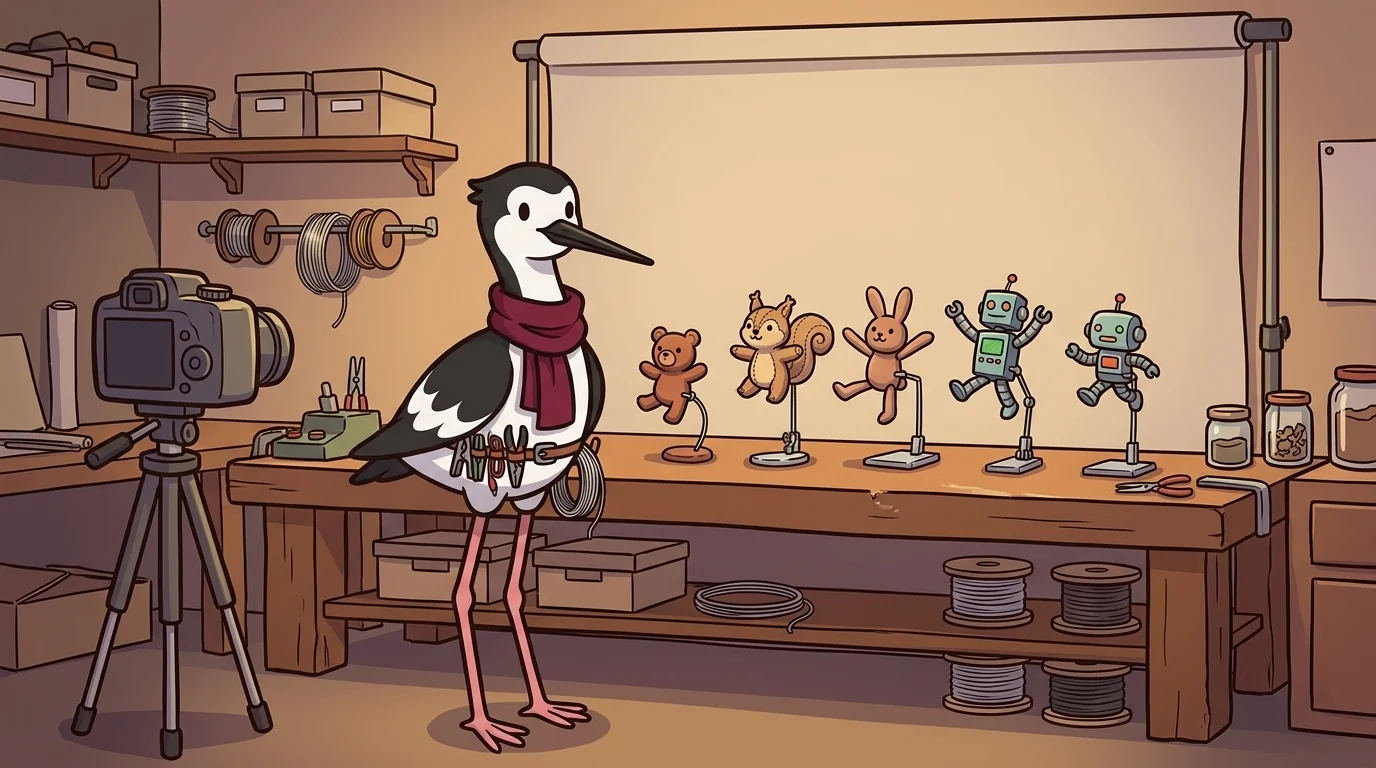
Later, after Fen had gone off to rig his own leaps, Stilt stood a whole row of mid-jump figures, each one steadied by a hidden wire, all of them poised and unfalling.
She thought about the toppling rabbits of her too-proud first film, and about the figures she'd steadied today — every impossible pose held rock-still by a quiet hidden hand. There was a warm, unashamed gladness in it, a relief like leaning into a support you'd been afraid to trust: the quiet joy of being held steady, of a hidden hand doing its job so a leap could exist at all, of learning that needing to be held was never a weakness. That unashamed gladness of the-support-that-holds-you was, to Stilt, the whole quiet joy of the hidden hand.
The FrameQuest ensemble
Stilt is one of the friends in FrameQuest. Each friend shows you one idea by how they act; meet them all and you have the whole subject.
-

Pane
Single-frame composition — 'One frame. Then the next.'
-

Tween
Frame-to-frame change / motion-between — 'Move a little. Then a little more.'
-

Beat
Story beat / sequence — 'First this. Then this. Then this.'
-

Beam
Emotion expression / character feeling — 'How do they FEEL? Show their face.'
-

Pass
Social story / sharing with others — 'My story. Your turn.'
-

Sustain
Timing / holds
-

Backdrop
Set / building the stable world
-

Lume
Lighting consistency
-

Dolly
Camera movement



