Dolly
The puppet isn't the only thing that can move
Loading audio…
Press play to listen along. The line being read lights up as you go.
Show full transcript
Loading transcript…

Dolly nudged the little camera itself sideways along a smooth wooden rail — not the puppet, the camera — by the smallest measured amount, then took the shot. She was a small sideways-stepping crab in a striped sailor's shirt and a tiny conductor's cap she wore every single day, a folding ruler tucked under one claw. On the set, the clay figure stood perfectly still. But as Dolly slid the camera a hair and shot, a hair and shot, the whole scene began, frame by frame, to glide.
"There," she said. "The puppet's not moving. The eye is."
A young otter blinked. "Wait — the figure's standing still, but it feels like it's moving?"
"It feels like the whole world is drifting past," Dolly said. "Because when the camera slides, everything you see slides with it. Slide the camera slowly toward the puppet, frame by frame, and it's like the story is leaning in close — a gentle push-in. Slide it across the scene and it's like your eye is taking a slow walk through the world." She measured the next tiny slide with her folding ruler. "Most of the time we move the puppet. But sometimes the most powerful move is to hold the puppet still and move the camera — move the eye, and the whole feeling changes, even when nothing in the scene has changed at all."

Dolly had learned about moving the eye the hard way, back when she was small.
Her first big film needed a dramatic close-up — the clay hero's face, growing bigger and bigger as the music swelled. So she'd tried to drag the camera in fast, grabbing it and shoving it closer between frames, as much as she could each time. When she watched it, the push-in didn't feel dramatic — it lurched, jumping in ugly jerks, close-far-close, a seasick stagger instead of a smooth glide. Her chest had gone tight and hot: she'd pictured something beautiful and made something that made you queasy.
Her grandfather, who'd built the smooth camera rail, watched it with her. He didn't say she'd rushed. He just said, "You moved the eye in big grabs. The eye likes to move evenly."
"I wanted it to feel powerful," Dolly said. "It just felt sick."
"Because it jumped," her grandfather said, and set the camera on its rail with a little ruler beside it. "Slide it the same tiny bit every frame — measure it, so each move matches the last. Then the eye glides instead of lurching." She reshot the push-in, moving the camera one measured hair per frame, and it drifted in slow and smooth and did swell with the music — and the tight, queasy feeling in her chest eased into a calm, gliding satisfaction. The gentlest, most even movement, she found, was the most powerful.

She came to FrameQuest the summer she turned twelve, folding ruler under one claw. Reel, the stop-motion teacher, met her at a set whose attempted camera-move lurched and jumped.
"They wanted a smooth push-in; it looks seasick," Reel said. "Why?"
Dolly checked, found the camera being shoved in uneven grabs, and set it on the rail with a ruler. She slid it one measured hair per frame. Now the push-in glided in smooth and slow. "The eye was being moved in big uneven jumps," she said. "So it lurched. The fix is small and even: slide the camera the exact same tiny amount every frame, measured, so each move matches the last. Move the eye gently and evenly, and the whole world glides."
Reel watched the smooth drift, and something eased in her face. "You belong here," she said.
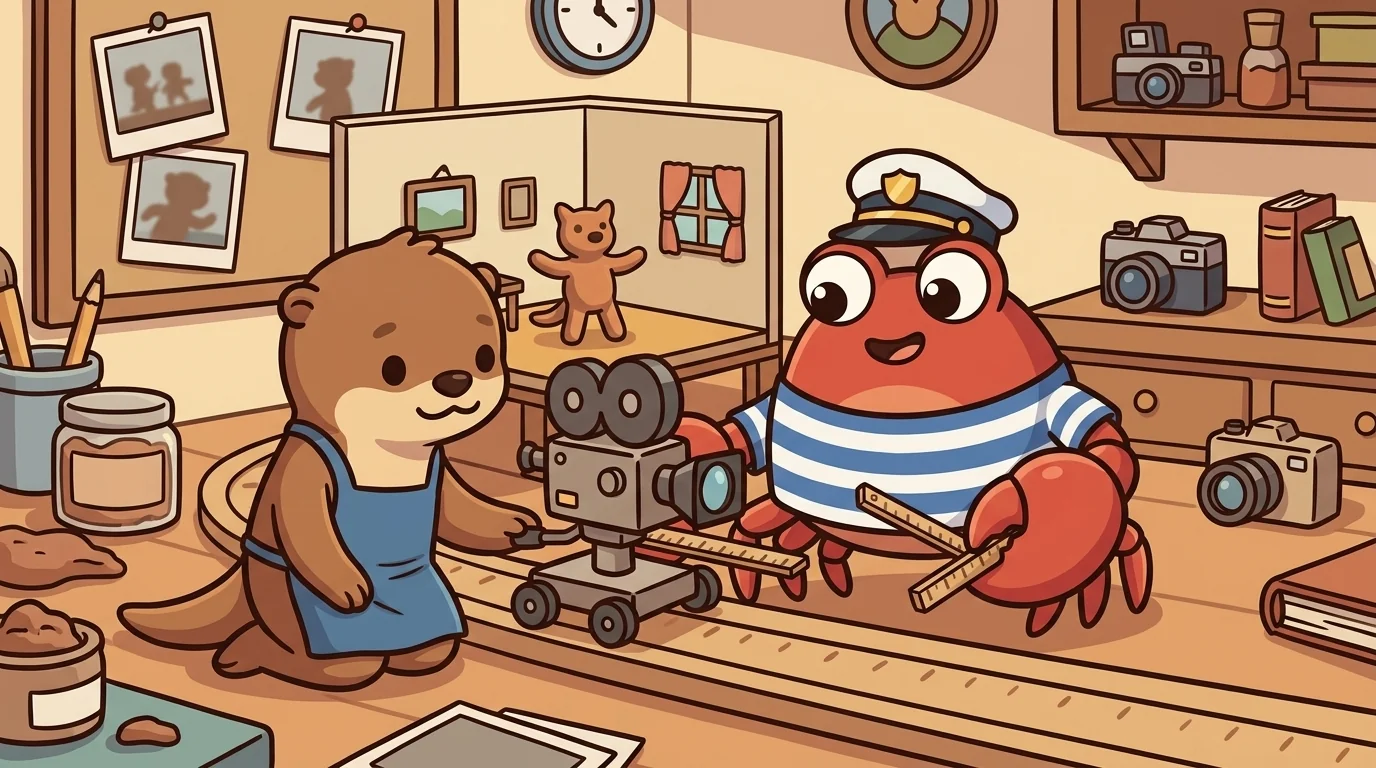
On her first teaching morning a boy named Cove was yanking the camera around trying to make exciting moves, producing only jerky, dizzying shots. Dolly handed him the little ruler.
"Gentler, and even," she said. "Same tiny slide, every frame — measure it." She showed him the whole idea: put the camera on a smooth rail, decide how far it should travel over the shot, divide that into equal tiny steps, and move it one measured step per frame so the glide is perfectly smooth. Cove's grabby moves kept lurching; Dolly patiently measured the steps with him. "Big, rushed moves make the eye seasick," she said. "You don't need to force it. The smoothest, most even move is the one that feels the most powerful. Slow and steady, a measured hair at a time — that's the whole secret."
Cove slid his camera one even step per frame and watched the world glide gently toward the hero's face. "It went smooth," he said, "and I moved it slower than ever."
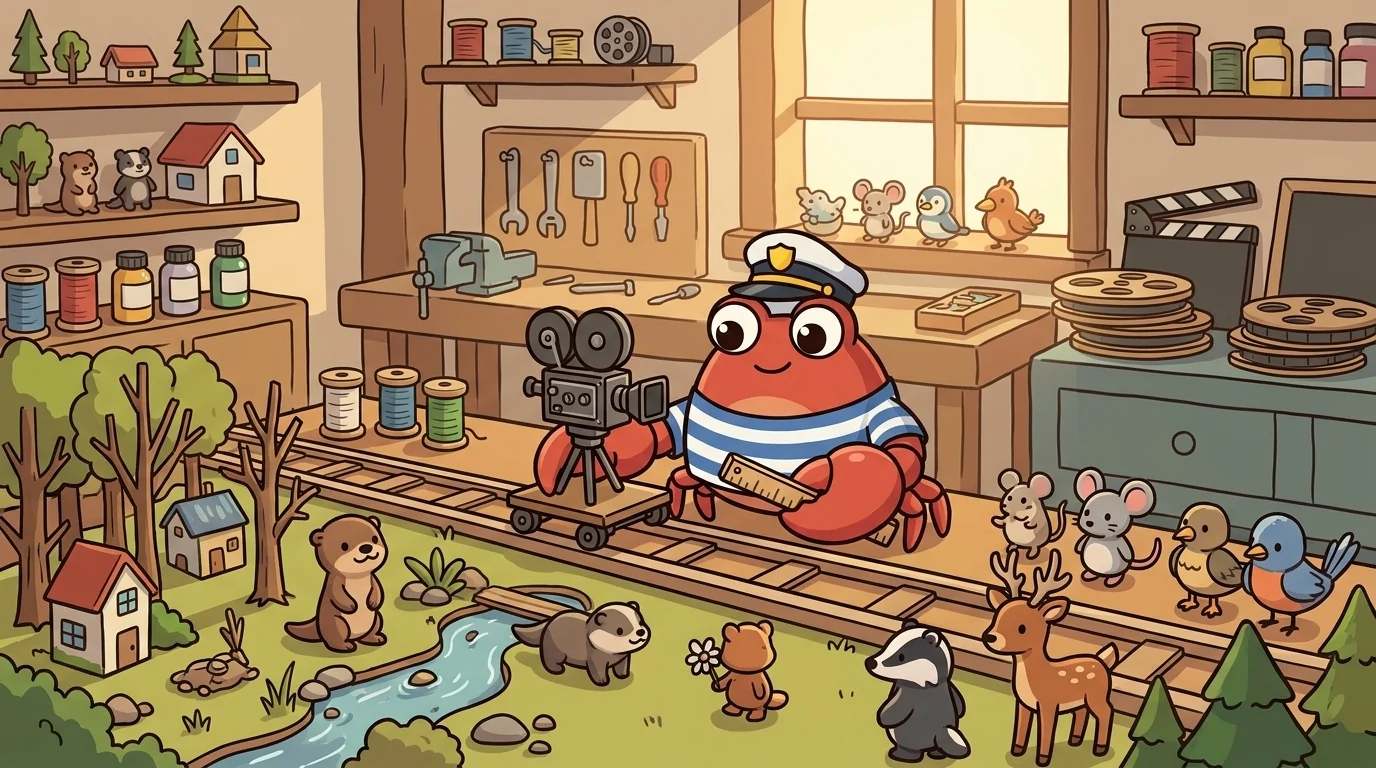
Later, after Cove had gone off to lay out his own measured camera moves, Dolly sat by the rail and slid the camera in one last long, even glide — the puppet perfectly still, the whole world drifting past, calm and smooth.
She thought about the lurching, seasick push-in of her first film, and about the moves she'd glided today — each one smooth and even because she'd measured every tiny step. There was a calm, gliding gladness in it, a smoothness like being carried gently forward: the quiet joy of the eye that moves evenly, of a view that drifts instead of lurching, of the gentlest movement turning out to be the strongest. That smooth, measured gladness of moving-the-eye-gently was, to Dolly, the whole quiet joy of the gliding view.
The FrameQuest ensemble
Dolly is one of the friends in FrameQuest. Each friend shows you one idea by how they act; meet them all and you have the whole subject.
-

Pane
Single-frame composition — 'One frame. Then the next.'
-

Tween
Frame-to-frame change / motion-between — 'Move a little. Then a little more.'
-

Beat
Story beat / sequence — 'First this. Then this. Then this.'
-

Beam
Emotion expression / character feeling — 'How do they FEEL? Show their face.'
-

Pass
Social story / sharing with others — 'My story. Your turn.'
-

Sustain
Timing / holds
-

Backdrop
Set / building the stable world
-
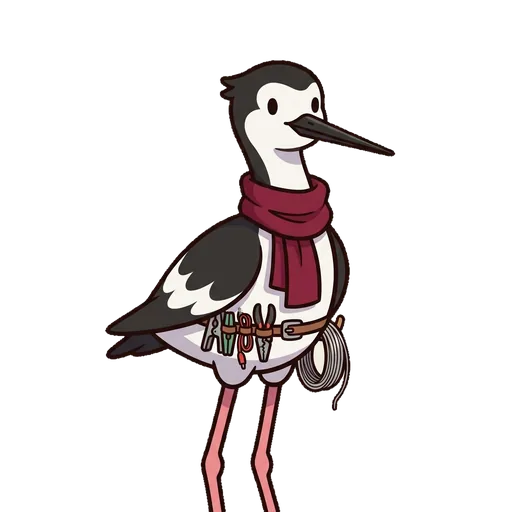
Stilt
Rigging / support
-

Lume
Lighting consistency