Vale the Valley-Folder
ABSOLUTE VALUE
A story read by Vale the Valley-Folder
Loading audio…
Press play to listen along. The line being read lights up as you go.
Show full transcript
Loading transcript…
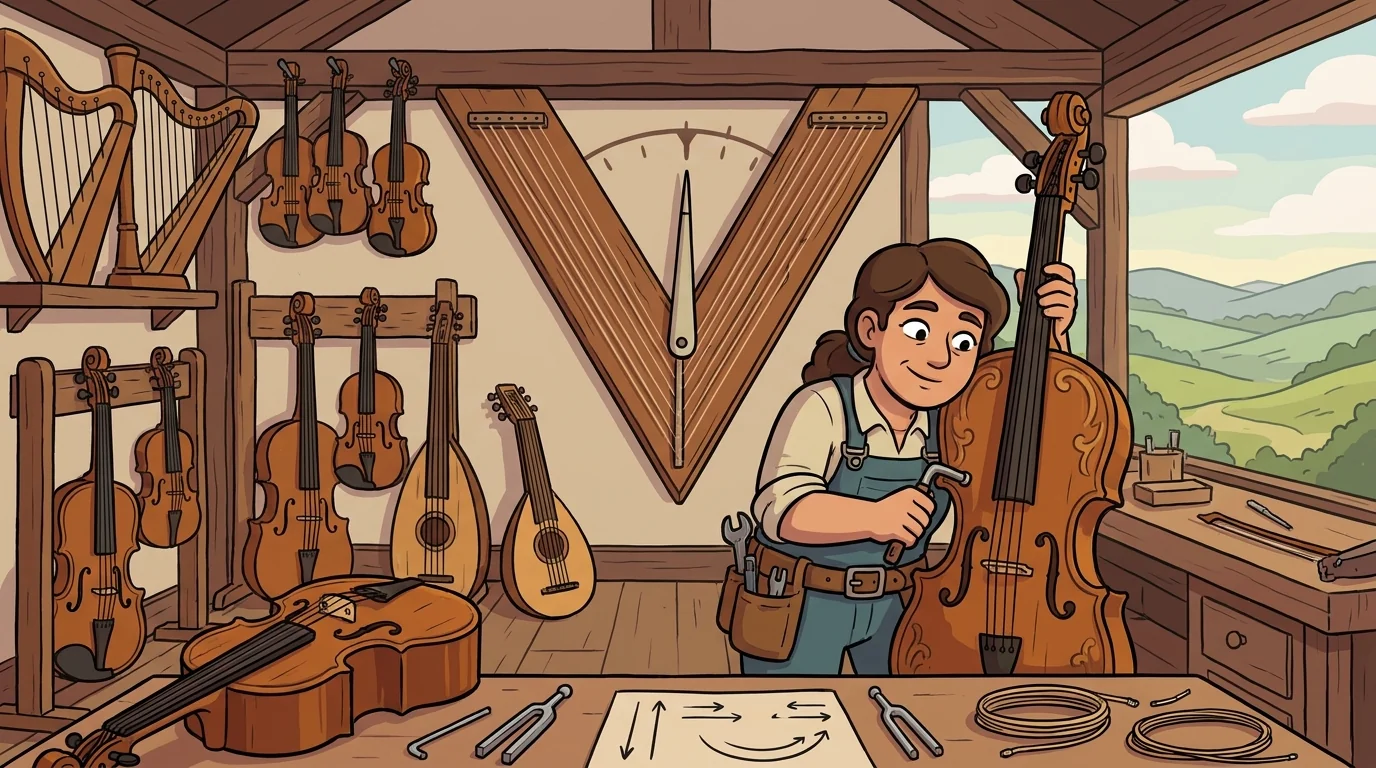
Vale was an instrument-tuner, and she spent her days measuring one thing above all others: how far a note was from where it should be.
A string could be sharp — tuned too high — or flat — tuned too low. To most people these felt like opposites, and in a way they were. But to Vale, whose only job was to bring the string back to true, they were the same problem wearing two faces. A note two steps too high and a note two steps too low were both, simply, two steps off. Same distance. Same amount of turning to fix. The direction of the error did not change the size of it.
"I don't tune by which way it's wrong," she would say, resting her ear against a soundbox. "I tune by how far. Sharp or flat — I only want to know the distance from true."
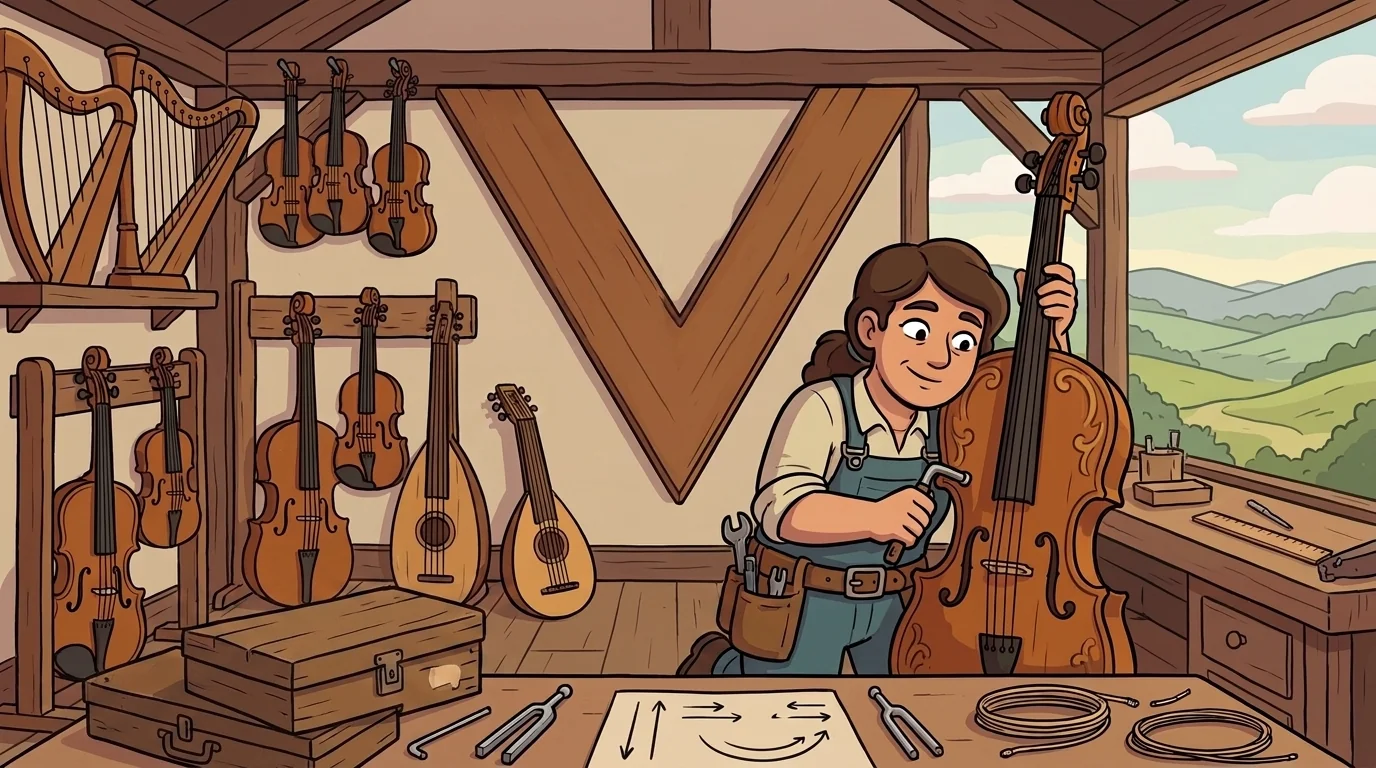
What Vale came to understand, tuning day after day, was that distance does not have a direction. Ten paces east of a tree and ten paces west of it are the same distance from the tree. A dropped stitch three rows back and a dropped stitch three rows forward are the same reach away. Whenever what mattered was how far, the which-way fell clean away, and a negative and its positive twin became one single size.
She drew it once, idly, on the plaster of her workshop wall: a line of the distances-from-true, the too-lows folded up to meet the too-highs — and the shape that fell out was a V, a little valley, dipping to nothing right at true and climbing away equally on both sides.
She had no idea this had a name in the world of numbers.
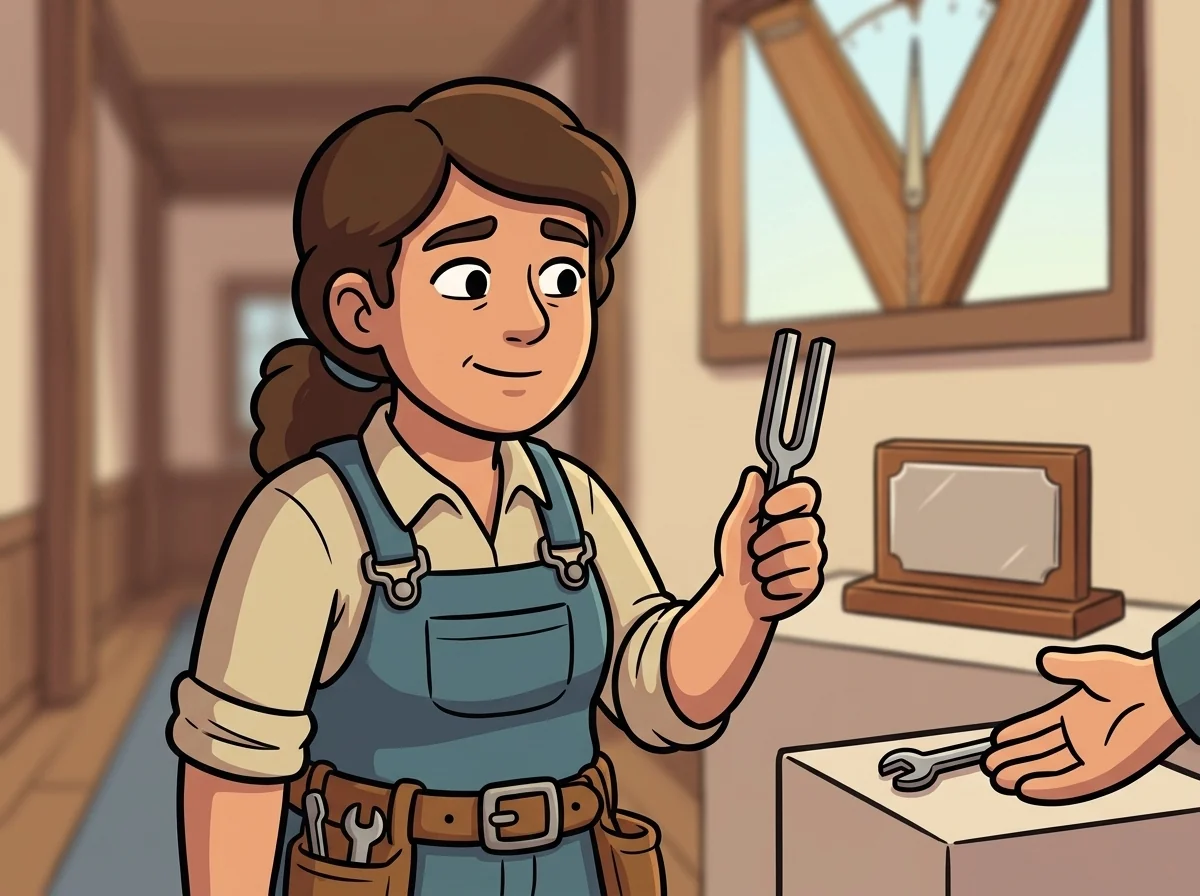
When she was older, the FunctionForge academy, which wanted someone who understood size without direction, sent for her. Vale set down her tuning fork and went.
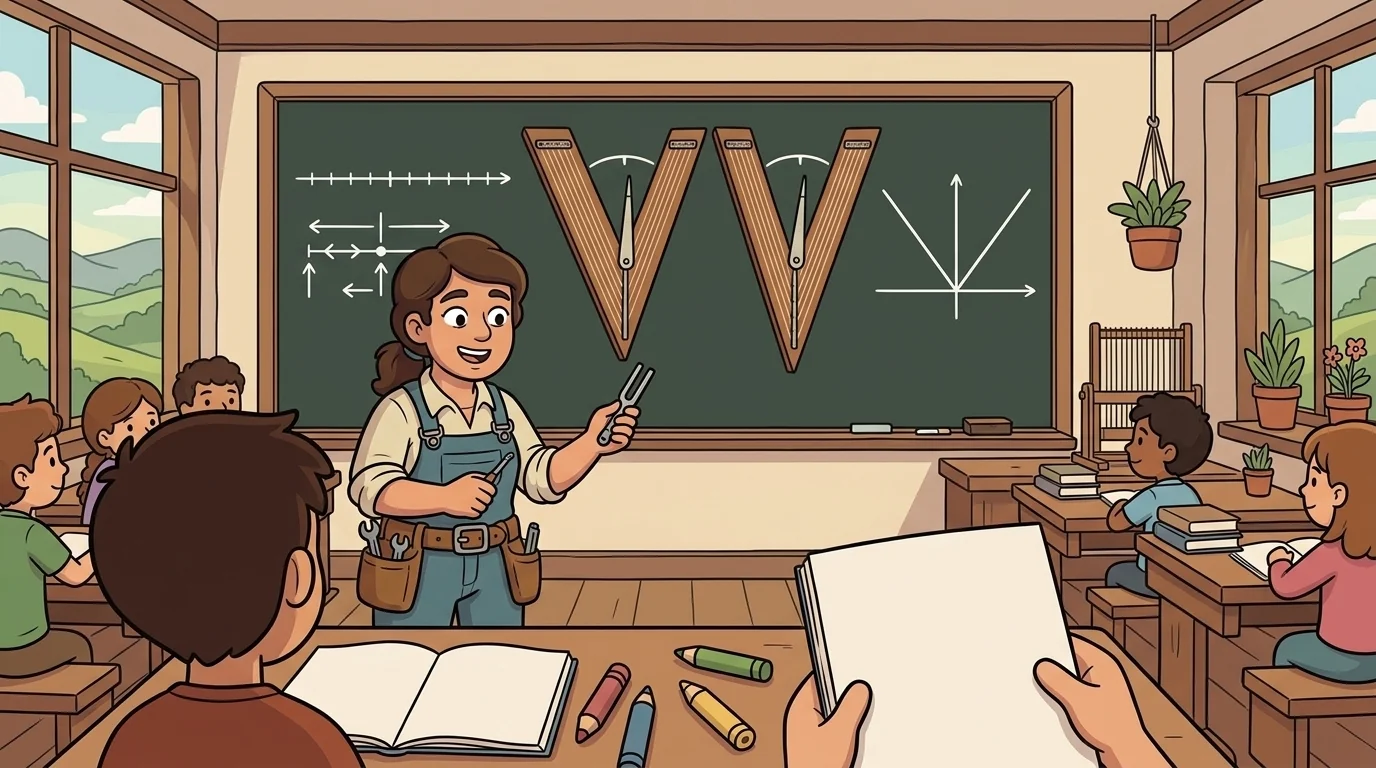
At the academy she taught the children the rule that folds a line into a valley.
"Absolute value," she said, "just means distance from zero — how far, never which way." She wrote it in its bars: |x|. "Take 4. Its distance from zero is 4, so |4| = 4. Now take −4. How far is it from zero? Also four — just on the other side. So |−4| = 4 as well. The minus falls away. What's left is the size."
"So the answer's never negative," said a boy.
"Never," said Vale. "A distance can't be less than nothing. Sharp four and flat four are both four off." She drew the graph. "And watch what that does to the shape. Send in the positives — they climb up to the right. Send in the negatives — but they can't go down, they can only measure how far, so they fold up to match. The line creases at zero and rises on both sides. A V. A valley, deepest at zero, climbing away equally on either hand."
She tapped the crease. "And if I want the distance from some other number — say, from three — I write |x − 3|. The valley just slides over and dips to nothing at three instead. Same fold. New home."
"So it measures how far you are from where you want to be," said a girl.
"Distance from true," said Vale, warmly. "Fold the too-lows up to meet the too-highs, and count only the size of the gap. That's the whole of it."
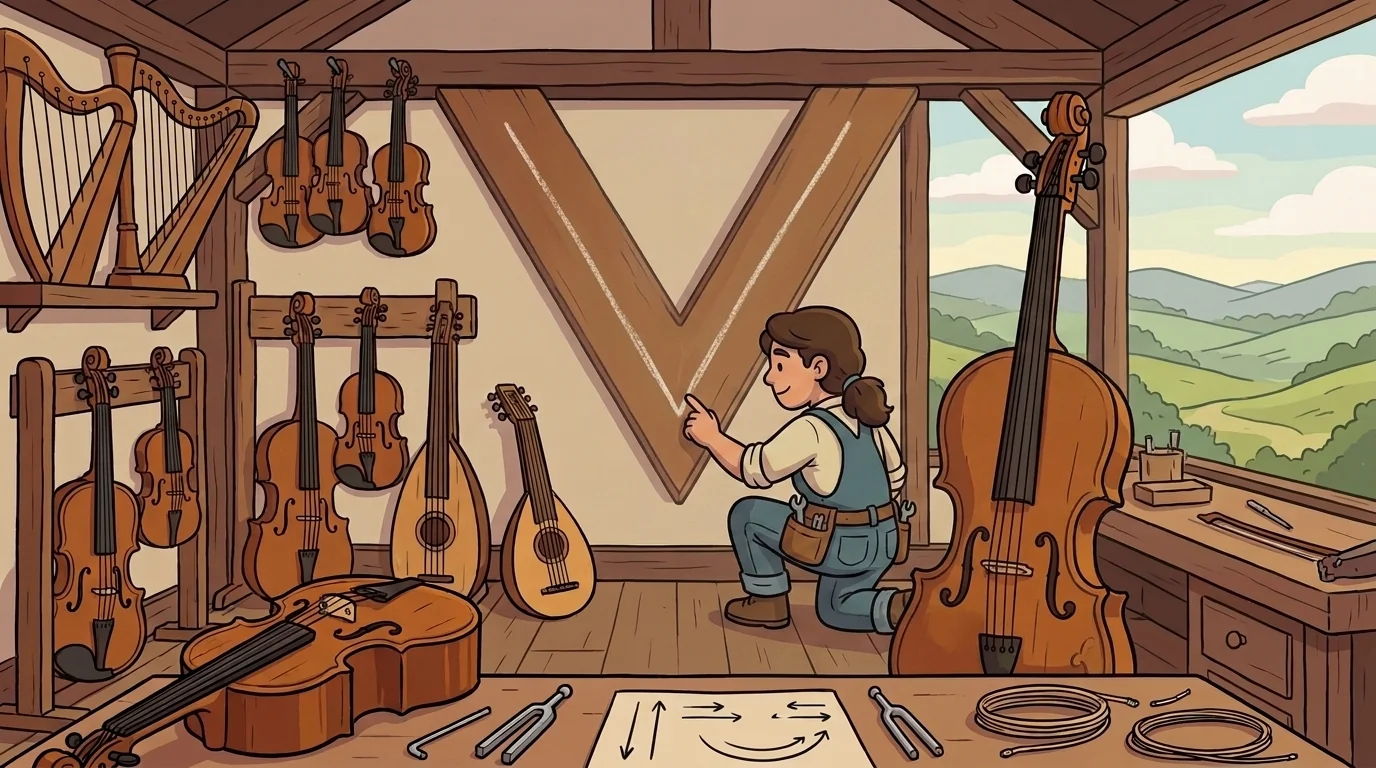
She still tunes instruments when the academy can spare her, and still cares only for the distance from true.
The thing Vale hopes the children carry is that a gap is a gap whichever side you fall on — that being too much and being too little can be exactly the same distance from where you meant to be, and that measuring the size of a miss, kindly, without minding its direction, is often the fairest way to count it.
"Don't ask which way you're wrong," she tells them. "Ask how far. Fold the line at zero, and read the distance. A valley, deepest where you're true."
When the hall empties, Vale runs a finger down the little V she has chalked in the corner, and feels the level, even-handed gladness she first felt bringing a string back to true: that there is a deep fairness in counting a gap by its size alone, and letting the direction of the miss fall gently away.
Hear it as an audio drama
A short play starring Vale the Valley-Folder, from FunctionForge. Different voices, same idea. Listen any time after you read.
Loading audio…
Read the drama script
- Narrator: From Spark and Anvil and FunctionForge — this is Vale The Valley-Folder, in chapter 1 of the FunctionForge cast.
- Narrator: This drama uses an AI-generated voice. Voiced via Gemini 2.5.
- Narrator: Vale was an instrument-tuner, and she spent her days measuring one thing above all others — how far a note was from where it should be.
- Vale The Valley-Folder: A string can be sharp, tuned too high, or flat, tuned too low. To most people these feel like opposites.
- Narrator: But to Vale, whose only job was to bring the string back to true, they were the same problem wearing two faces.
- Vale The Valley-Folder: A note two steps too high and a note two steps too low are both, simply, two steps off. Same distance. Same amount of turning to fix.
- Narrator: The direction of the error did not change the size of it.
- Vale The Valley-Folder: I do not tune by which way it is wrong. I tune by how far. Distance does not have a direction.
- Narrator: Ten paces east of a tree and ten paces west of it are the same distance from the tree.
- Vale The Valley-Folder: Whenever what matters is how far, the which-way falls clean away. A negative and its positive twin become one single size.
- Narrator: She drew it once on her workshop wall, the too-lows folded up to meet the too-highs.
- Vale The Valley-Folder: And the shape that fell out was a V — a little valley — dipping to nothing right at true, climbing away equally on both sides.
- Narrator: This, the world of numbers calls absolute value.
- Vale The Valley-Folder: Absolute value just means distance from zero — how far, never which way. The distance of four from zero is four. The distance of negative four is also four. The minus falls away. The answer is never negative, because a distance never is.
- Narrator: Size without direction, folding a line into a valley. That is absolute value. That is Vale, tuner of the distance from true.
- Narrator: You've been listening to a Spark and Anvil chapter, written by the Spark and Anvil writing team for ages 9 to 14.
- Narrator: Apps stay free forever.
- Narrator: Curriculum aligned to Common Core math.
- Narrator: Released under Creative Commons BY-NC-SA 4.0 for educational reuse. Visit Spark and Anvil for the full transcript.
The FunctionForge ensemble
Vale the Valley-Folder is one of the friends in FunctionForge. Each friend shows you one idea by how they act; meet them all and you have the whole subject.
-

Stride the Pattern-Walker
Linear functions (constant rate of change)
-

Echo the Sameness-Keeper
Constant functions (zero rate of change; output unchanged regardless of input)
-

Arc the Curve-Catcher
Quadratic functions (parabola — symmetric rate-of-change-changes)
-

Burst the Doubler
Exponential functions (constant *multiplicative* rate of change)
-

Pivot the Rule-Switcher
Piecewise functions (different rules for different input ranges)
-

Rewind the Step-Reverser
Inverse functions (undoing a rule step-by-step to recover the original input)
-

Roundel the Round-Returner
Periodic functions (a pattern that repeats at a fixed interval)
-
Sill the Threshold-Keeper
Domain and range (which inputs are allowed and which outputs can appear)
-
Weir the Chain-Linker
Composite functions (feeding one rule's output into the next)