
Drowse
DROWSE — the calendar is the garden's clock; some plants sleep to survive.
Listen along — Drowse
Loading audio…
Press play to listen along. The line being read lights up as you go.
Show full transcript
Loading transcript…
Chapter 6 — Drowse and the Wisdom of the Long Nap
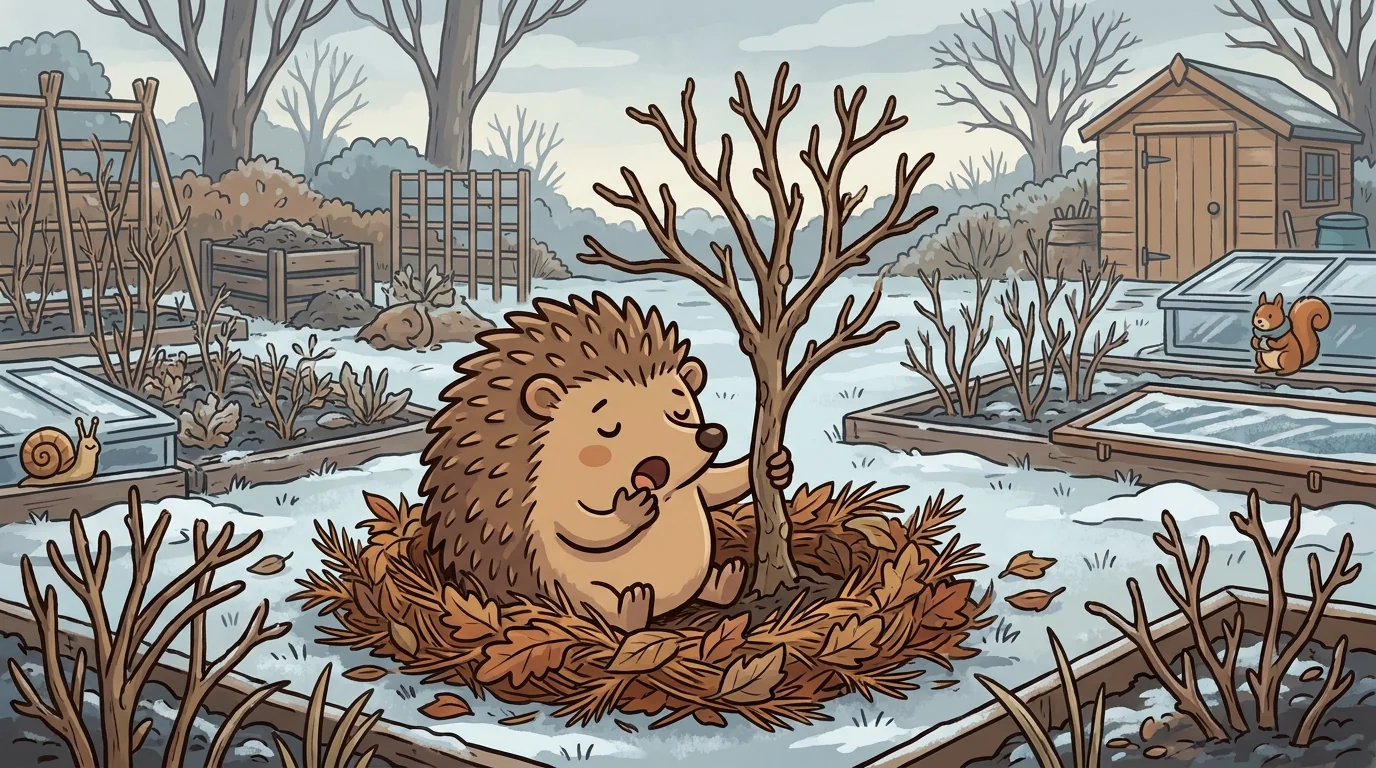
Drowse was curled in a nest of dry leaves beside a bare, twiggy little plant, and she was defending its nap. The older garden club had arrived half-alarmed — the plant looked dead, leafless and brown — and Drowse cracked one sleepy eye and shushed them. “It’s not dead,” she murmured. “It’s dormant. There’s a whole world of difference, and telling them apart is one of the most important things a gardener ever learns. Some plants sleep to survive — and the calendar is the clock that tells them when.”
She nodded at the bare twigs. “When the days shorten and the cold comes, a lot of plants don’t just endure winter — they prepare for it. This is dormancy. The plant pulls its resources down out of the leaves (that’s why they change colour and drop), seals its buds in tough little coats, slows everything almost to a stop, and waits. It looks like death from the outside. Inside, it’s a careful, deliberate rest — the plant spending as little as possible to get through the season when growing would only get it killed by frost. A dormant plant isn’t failing. It’s budgeting.”
A young squirrel named Nib, who understood about storing things for winter, tilted her head. “But how does it know when to wake up? Why not just wake at the first warm day?”
“Ah — that’s the cleverest part,” Drowse said, warming to it. “A single warm day in midwinter is a trap — bloom then and the next frost kills your flowers. So many plants don’t count warm days. They count cold ones. They need a long stretch of chill before they’ll allow themselves to wake — a requirement called vernalization. The cold isn’t the enemy the plant is surviving. It’s the signal the plant is waiting for. Only after enough winter has truly passed does the plant trust that spring is real and safe — and then it wakes. The garden’s clock isn’t warmth. It’s the whole turning year.”
Drowse had learned to trust the nap by nearly breaking it. “One spring,” she told them, “I found a dormant plant and was sure it was dead — bare, brittle, not a leaf on it. I dug it up to throw it out. And there in the roots were fat, living buds, just waiting. I’d almost thrown away a plant that was only sleeping.” She’d replanted it, ashamed, and it had leafed out gloriously six weeks later. The it-looks-dead-so-it-must-be-dead panic had settled, after that, into a patient reading of the season.
“So here’s the craft,” Drowse finished, curling back into her leaves beside the sleeping twigs. “Learn the difference between dormant and dead — scratch a stem and look for green underneath, feel the buds for life before you give up on a plant. Don’t force a sleeper awake with midwinter warmth or panic-watering; let it keep its budget. And respect the plants that need the cold — their hard season isn’t a punishment, it’s the very thing that lets them bloom. The calendar is the garden’s clock. Some plants sleep to survive, and the wise gardener lets them.”
The GrowForge ensemble
Drowse is part of GrowForge's distributed-narrative cast. Each character embodies a different curricular primitive; together they teach the full subject.
-

Tuck
Seed + planting — every seed knows what it wants; read-the-packet-then-the-soil
-

Drip
Water + irrigation literacy — water is the patient teacher; don't-drown-the-thirsty framing
-
Glow
Photosynthesis + plant biology — leaf-makes-lunch-from-light; cell-level wonder framing
-
Pot
Container + apartment gardening — windowsill-is-a-garden-too; nature-deficit + privilege gate anchor
-

Vigil
Observation + plant-doctoring patience — look-every-day-don't-pluck-what's-working; intellectual humility framing
-

Crumb
Compost & soil life — decomposition posture (the underground food loop: decay makes the meal; feed the soil, not just the plant)
-
Delve
Roots & uptake — underground-nutrient posture (a plant eats through its roots; the hidden half below does the feeding)
-
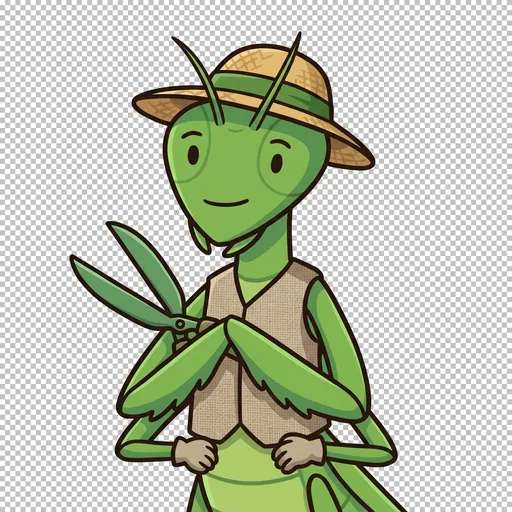
Shear
Pruning — redirect-the-growth posture (cutting the right stem sends the plant's energy where you want it to go)
-

Sip
Pollination — flower-to-fruit partnership posture (a flower becomes fruit only with a pollinator partner as the bridge)