Delve
DELVE — the plant's real work happens underground. roots reach for what they need.
Loading audio…
Press play to listen along. The line being read lights up as you go.
Show full transcript
Loading transcript…
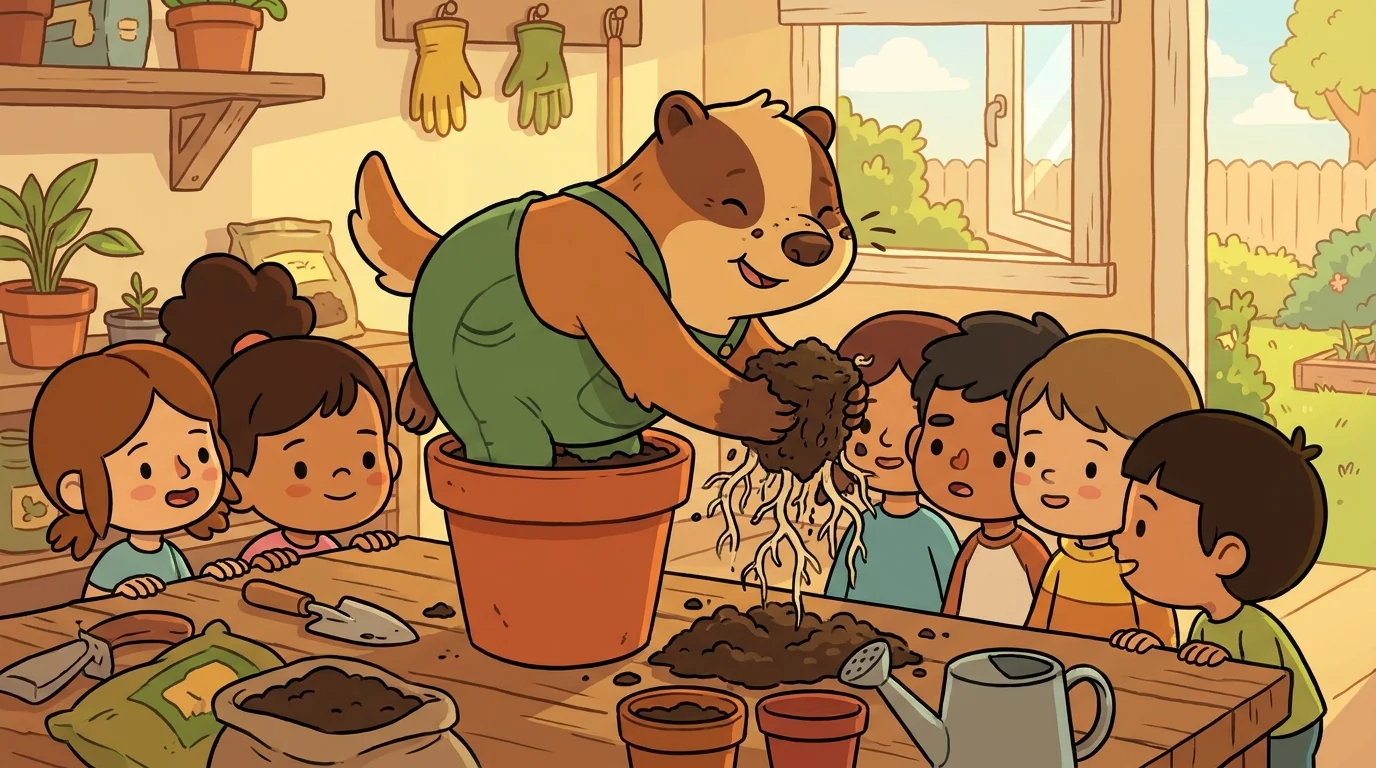
Delve was upside down in a flowerpot with only her back paws sticking out, and she was having the best afternoon of her week.
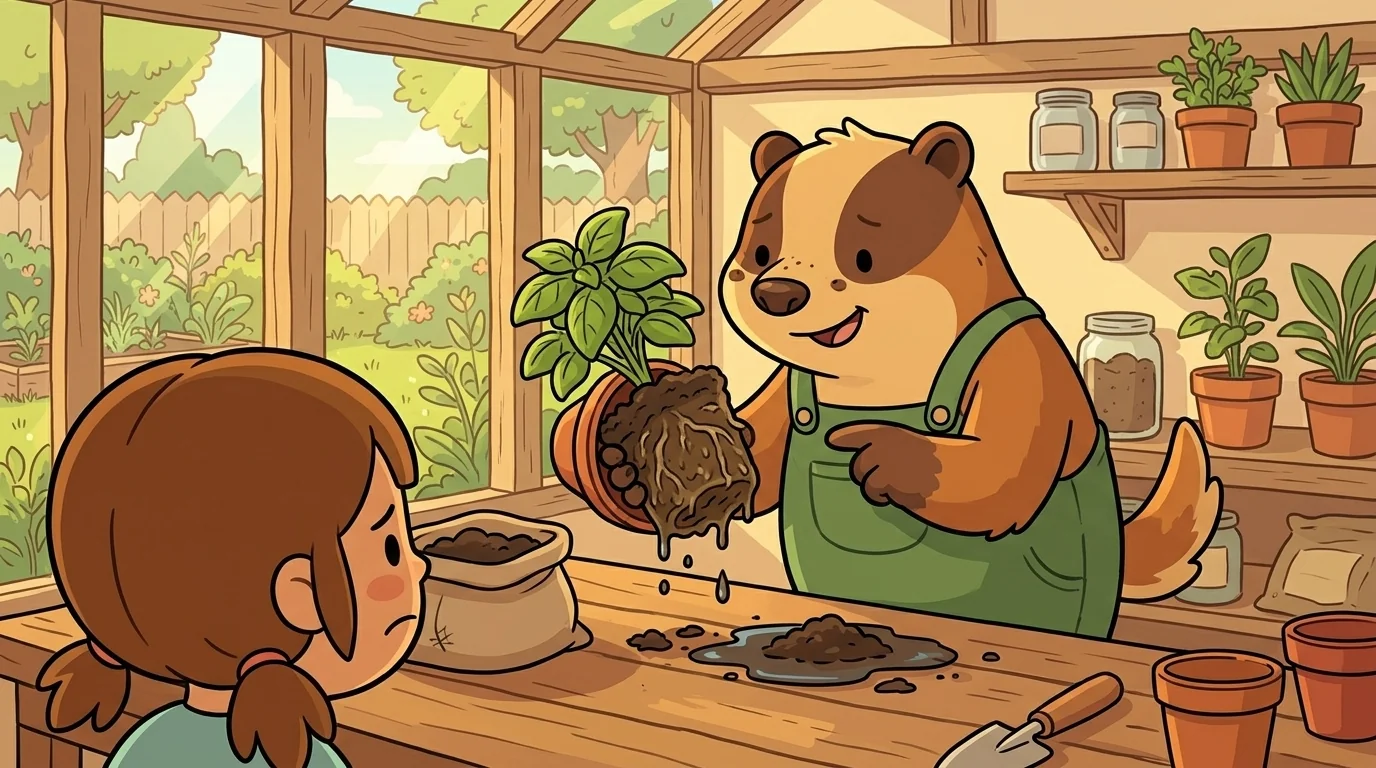
To the kids crowded around the workbench, the little tomato plant looked like nothing much — a stem, a few leaves, a lot of dirt. But Delve came backing out of the soil with a clump held gently in both paws, and there, threaded through it like the finest pale lace, were the roots. Dozens of them. Fat ones and hair-thin ones, all of them reaching.
"There," she said, blinking the dirt off her nose. "That's the plant. The part up top is just the part that shows off." She turned the clump so the afternoon light caught the tiny root hairs. "All of this is down here in the dark, drinking. Pulling up water. Grabbing the little bits of food the soil hands it. The leaves get all the credit, but the roots do the reaching."
A boy leaned in. "It's bigger than the plant."
"Usually is," said Delve, pleased. "Sometimes twice as big, all of it underground where nobody looks. A plant is like an iceberg with leaves. You see the little green tip. You never see the half that's actually holding it up and feeding it." She tucked the clump back into its pot, patting the soil closed like a blanket. "The garden's real business happens in the dark. I like it down there. It's where the deciding gets done."
The boy stared at the pot like it had a secret basement he'd never noticed.
Delve remembered the day she stopped trusting the top of things.
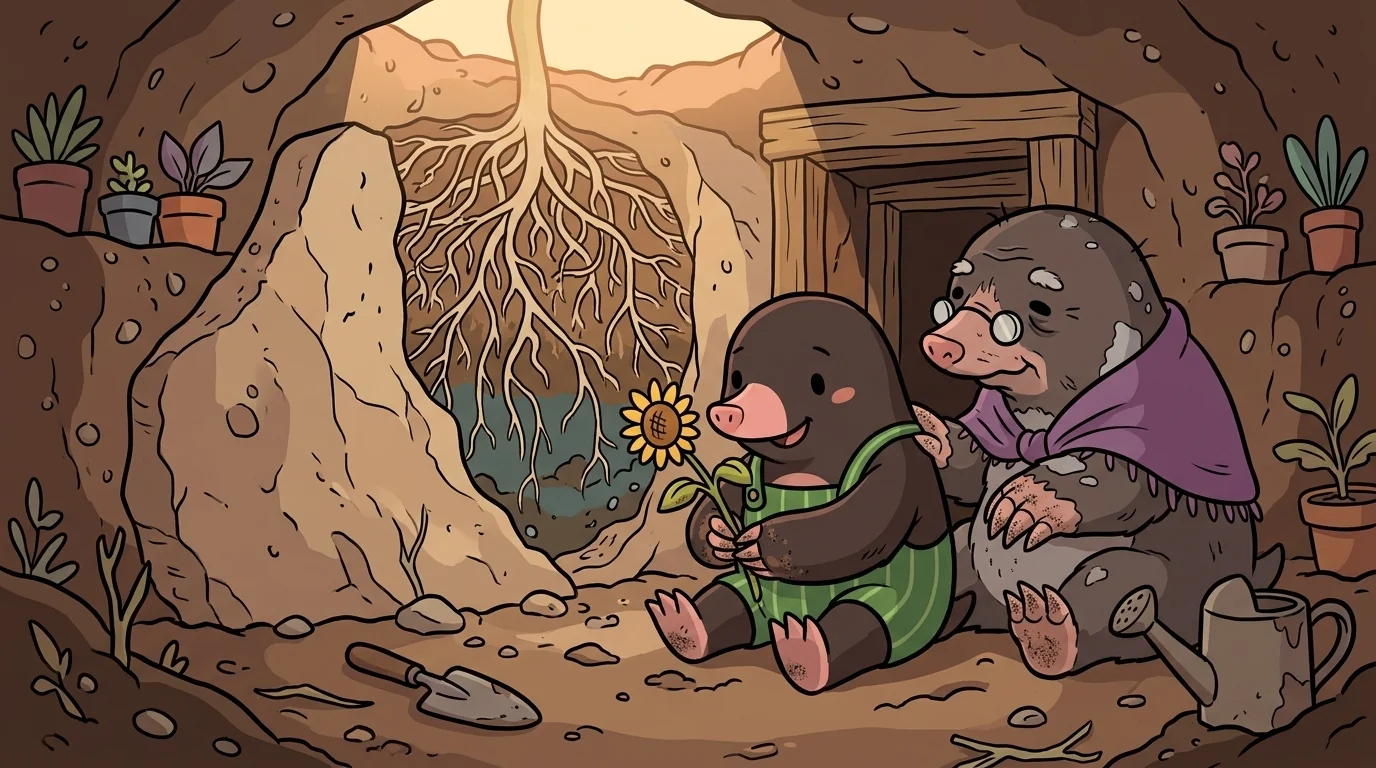
She'd been small, a young mole in a family of moles, and she'd found a sunflower she loved — tall, gold, leaning over her burrow like a friendly giant. Then one dry week it drooped. She'd panicked. She'd fussed at the leaves, propped up the stem, even sung to it, the way you do when you're small and desperate.
Her grandmother, an ancient mole with velvet on her paws worn thin from a lifetime of digging, had come and sat beside her without a word. Then she'd started to dig.
"You keep fixing the flower," Grandmother said, paws working. "But the flower isn't the problem. The flower is just the report."
A minute later she'd pulled up a fistful of soil, and Delve saw it — the roots, all curled and dry and desperate, packed against the bottom of hard-baked earth, unable to reach down to where the water still hid.
"It's not thirsty up there," Grandmother said. "It's thirsty down here. It's been trying to tell you the whole time, but you kept looking at its face instead of its feet."
They'd loosened the soil together. They'd dug a little channel so water could sink deep. And within days the sunflower lifted its heavy gold head again — fed at last from a place Delve had never once thought to look. The feeling that filled her then — the quiet, sure, of course, it was underneath the whole time feeling — was the feeling that turned her into a digger for life.
She came to Growforge at eleven, muddy to the elbows and unashamed of it.
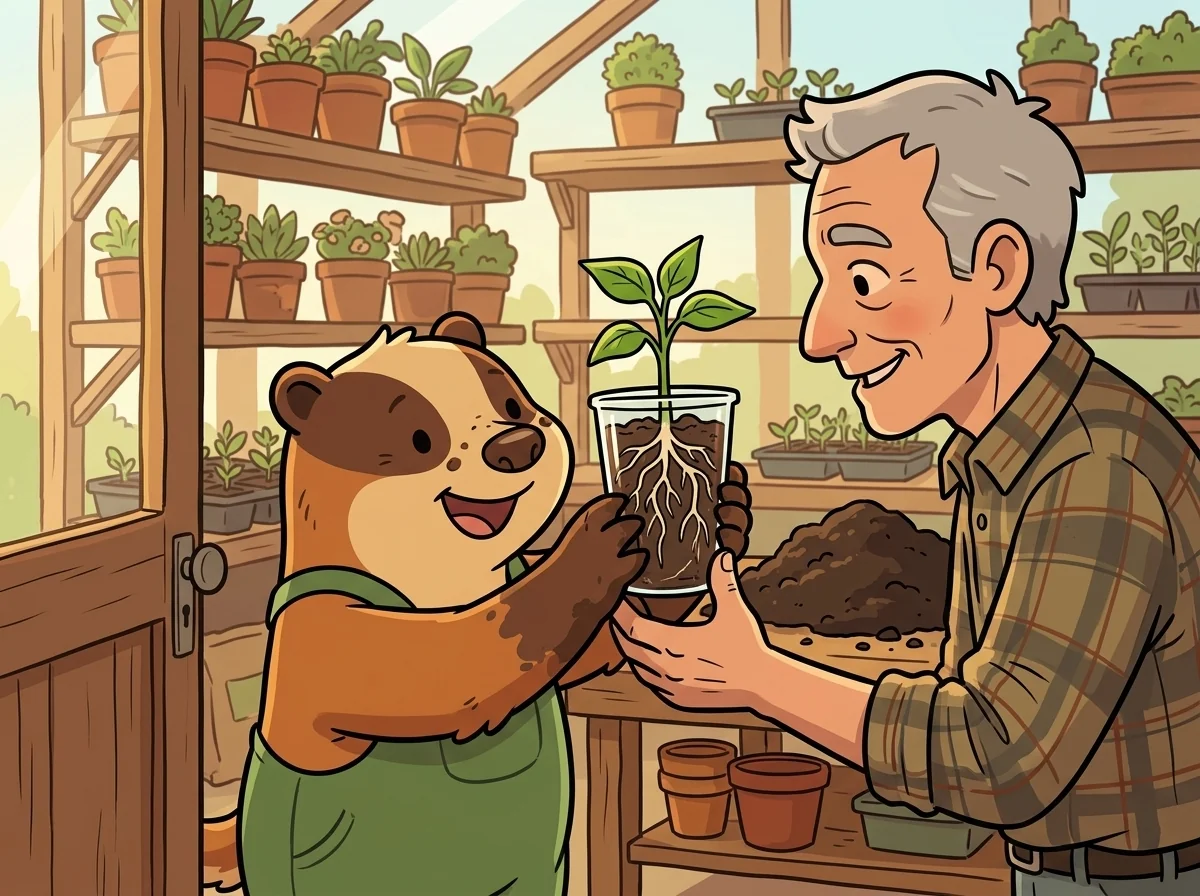
Sprig, the old mentor who ran the greenhouse, met her at the door. He didn't ask if she was good with plants. He handed her a healthy pepper seedling in a clear cup and asked, "What's the most important part of this plant?"
Most kids pointed at the leaves, or the little bud of a first flower. Delve turned the cup around so the sunlight lit the white roots pressed against the plastic.
"That," she said. "The part it can't grow without and you can barely see. Cut off half the leaves and it recovers. Cut off the roots and it's over by morning. Everything the top does, the bottom paid for first."
Sprig looked at the roots, then at her muddy paws, and smiled. "Most people meet a plant at eye level," he said. "You meet it at root level. You belong here."
Delve's corner of the greenhouse was the one nobody expected to need — until their plant did something the top couldn't explain.
A girl came in near closing, cross and near tears, holding a basil plant that had gone yellow and limp. "I did everything right," she said. "Sun. Water every single day. I never miss. And it's dying."
Delve knew that particular fury. She'd worn it over a sunflower once.
"Water every day," she repeated gently. "In what?"
"A pot with no holes. So the water stays in for it."
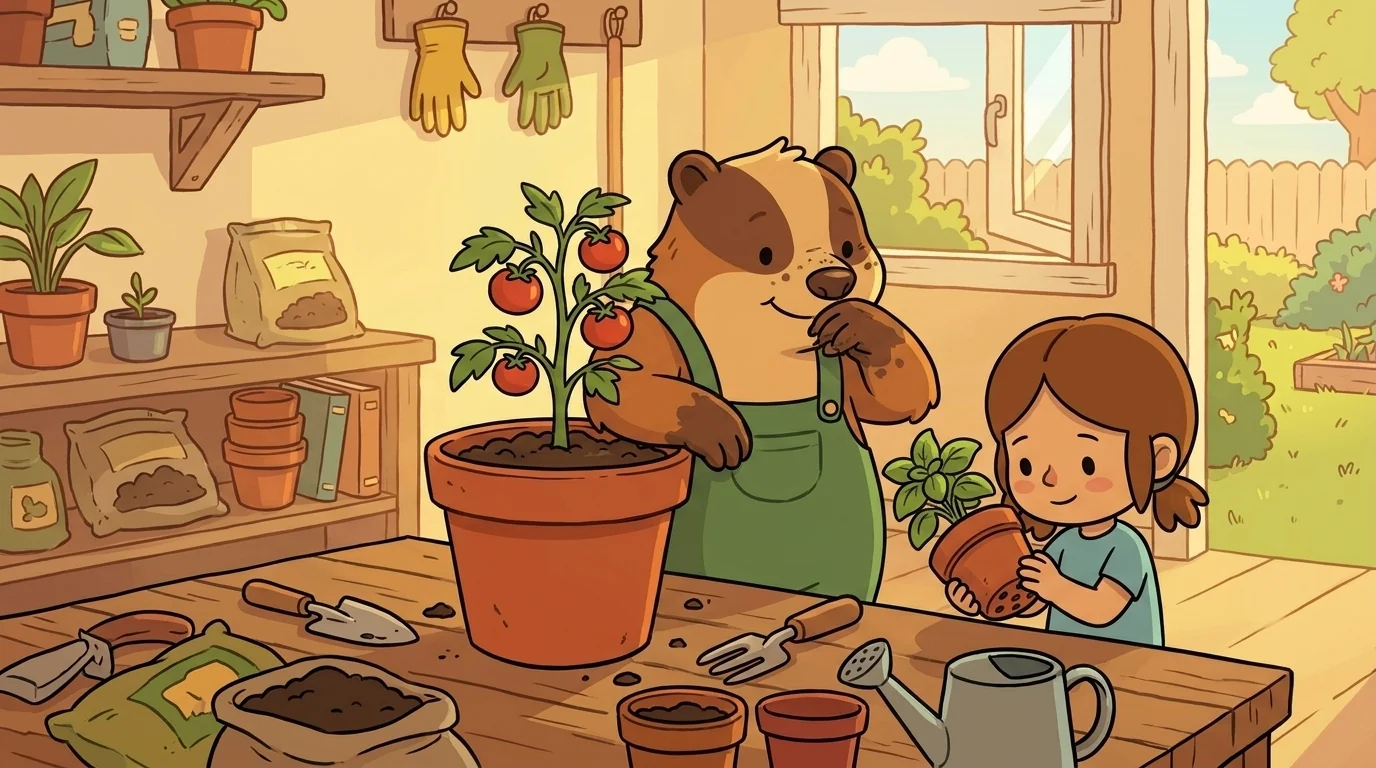
Delve nodded slowly, tipped the pot, and eased the plant out. The roots came up brown and slimy, sitting in a swamp of trapped water. "There it is," she said. "You've been kind to the wrong half. Roots don't just drink — they breathe. They need air in the soil, tiny pockets of it between the crumbs, so they can pull up water and take a breath in between. Drown them, and they can't breathe, and they rot. The leaves went yellow to send you a message. But the message was coming from down here."
The girl stared at the slimy roots. "So watering more..."
"...was the exact opposite of the fix. The top was shouting help. You heard thirsty, because that's what a droop usually means. But this droop meant I can't breathe." Delve fetched a pot with holes in the bottom, and fresh loose soil full of air pockets. "Same plant. New home where the roots can breathe. Now the water can leave when they've had enough. Watch — in a few days the yellow'll stop, and the new roots'll come in white and reaching."
The girl repotted it with both hands, careful of the roots now, like they were the part that mattered. Because they were.
She lingered after, one more question, quieter than the rest.
"How do you know?" she asked. "You can't even see them. How do you know what the roots need if they're always in the dark?"
Delve thought about her grandmother's worn velvet paws, and the sunflower reaching up once someone finally dug down.
"You stop asking the leaves and start asking the feet," she said. "The top always tells you something's wrong. It almost never tells you what. For that you have to go under. Feel the soil — is it soggy, is it hard, is it dust? Slide the plant out and look. White roots, reaching: good. Brown roots, sitting in water: drowning. Roots curled against a wall: hungry for room." She wiped a paw across her muddy nose and grinned. "The garden hides its answers in the dark on purpose, I think. Just to make sure somebody's willing to dig."
The girl held her basil close, already tilting it to check the drainage holes.
And Delve felt it settle in her chest — that low, warm, certain hum a digger gets when the hidden half is finally cared for right. The half nobody claps for. The half that holds the whole thing up. She'd spend her whole life down there in the reaching dark, and she wouldn't trade it for all the flowers in the sun.
The GrowForge ensemble
Delve is part of GrowForge's distributed-narrative cast. Each character embodies a different curricular primitive; together they teach the full subject.
-

Tuck
Seed + planting — every seed knows what it wants; read-the-packet-then-the-soil
-

Drip
Water + irrigation literacy — water is the patient teacher; don't-drown-the-thirsty framing
-

Glow
Photosynthesis + plant biology — leaf-makes-lunch-from-light; cell-level wonder framing
-
Pot
Container + apartment gardening — windowsill-is-a-garden-too; nature-deficit + privilege gate anchor
-

Vigil
Observation + plant-doctoring patience — look-every-day-don't-pluck-what's-working; intellectual humility framing
-
Crumb
Compost & soil life — decomposition posture (the underground food loop: decay makes the meal; feed the soil, not just the plant)
-

Drowse
Seasons & dormancy — right-timing posture (rest is not death; a plant's dormant nap is how it survives to grow again)
-
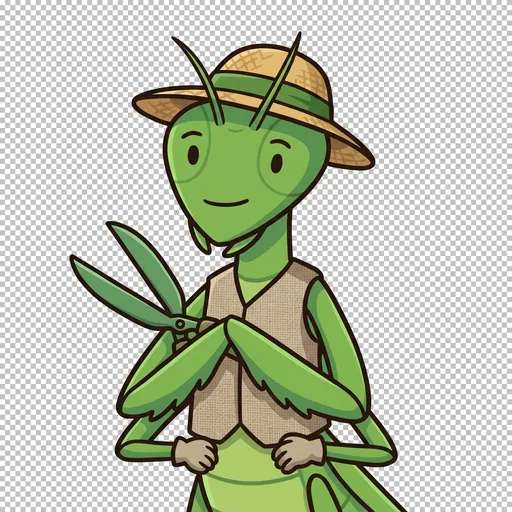
Shear
Pruning — redirect-the-growth posture (cutting the right stem sends the plant's energy where you want it to go)
-

Sip
Pollination — flower-to-fruit partnership posture (a flower becomes fruit only with a pollinator partner as the bridge)