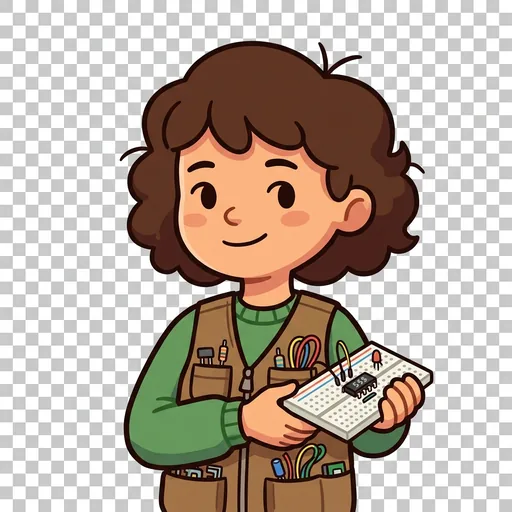
Crumb
CRUMB — yesterday's dead leaves are tomorrow's dinner. the soil is alive.
Loading audio…
Press play to listen along. The line being read lights up as you go.
Show full transcript
Loading transcript…
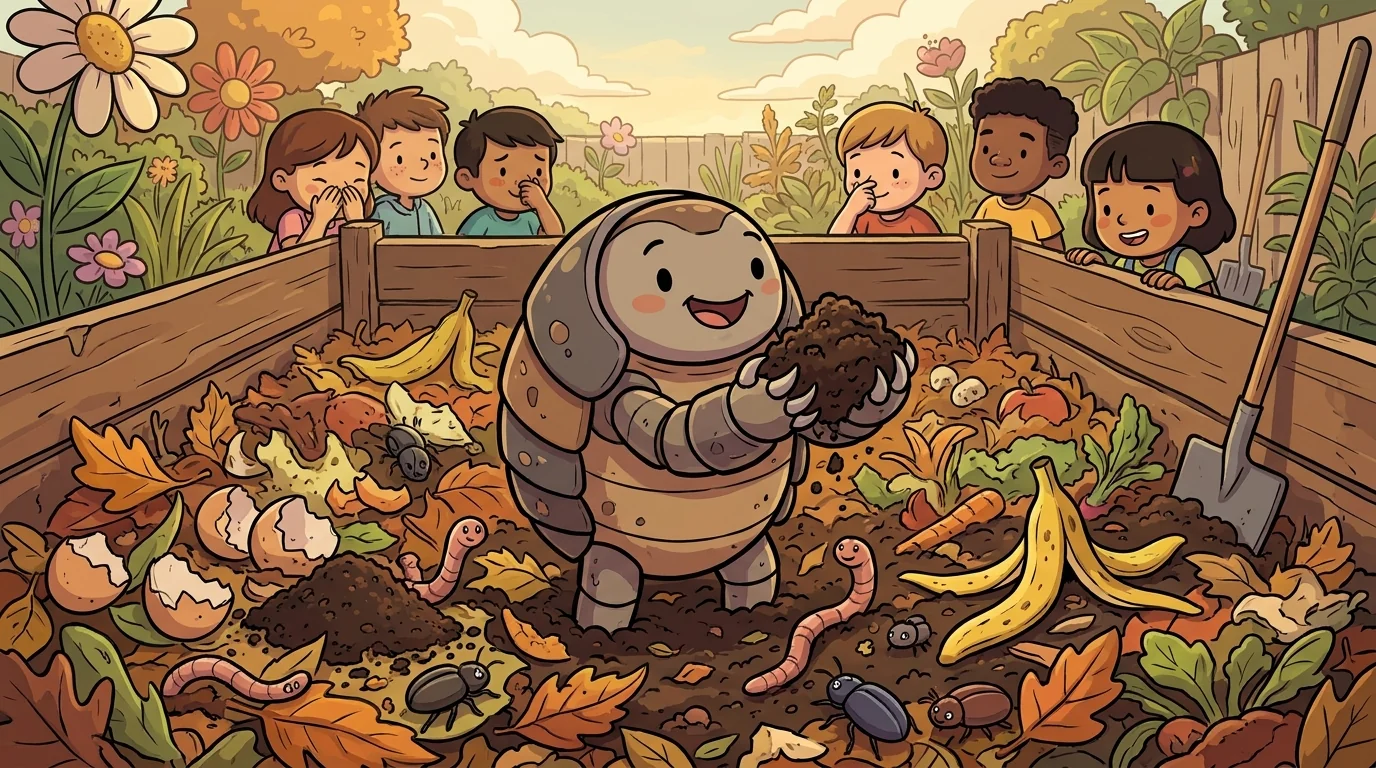
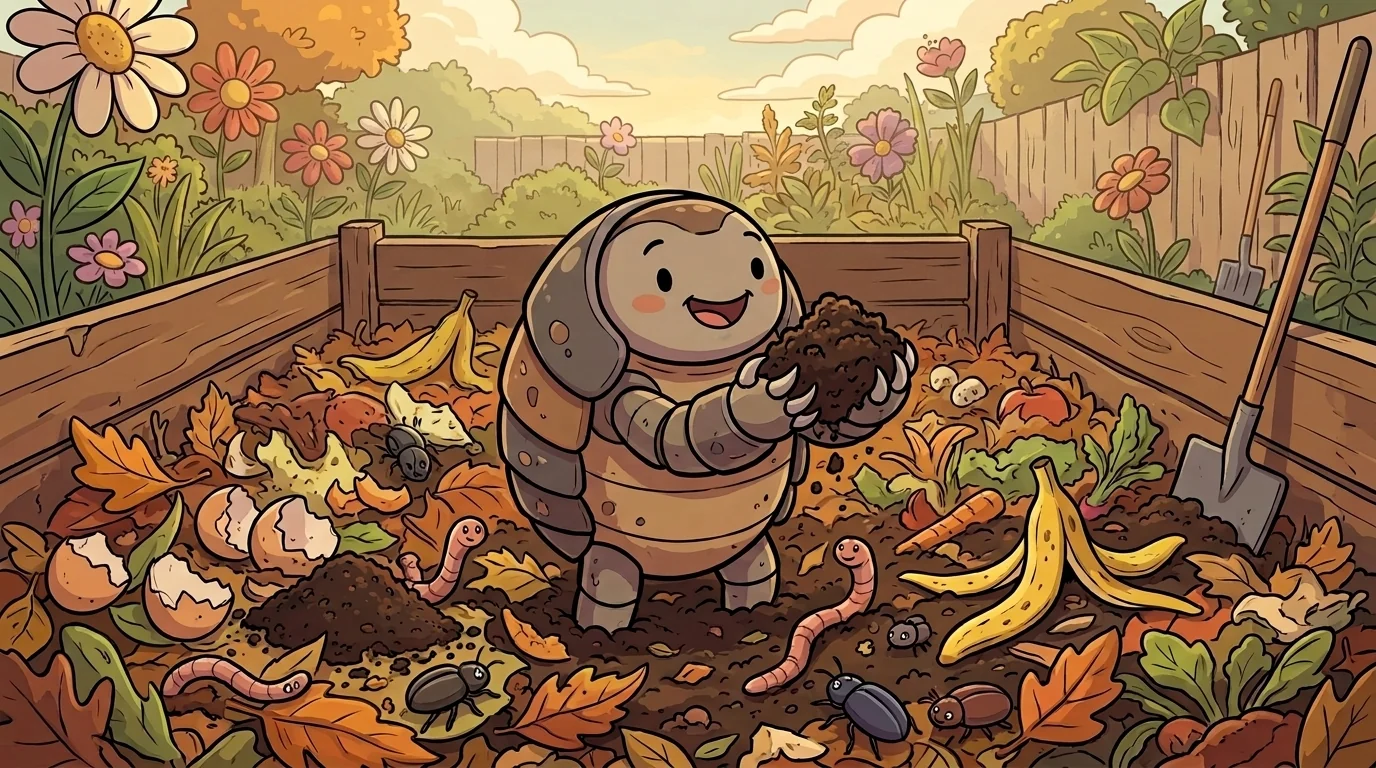
Crumb was standing knee-deep in a bin of rotting leaves and eggshells and coffee grounds, and she looked like she'd won something.
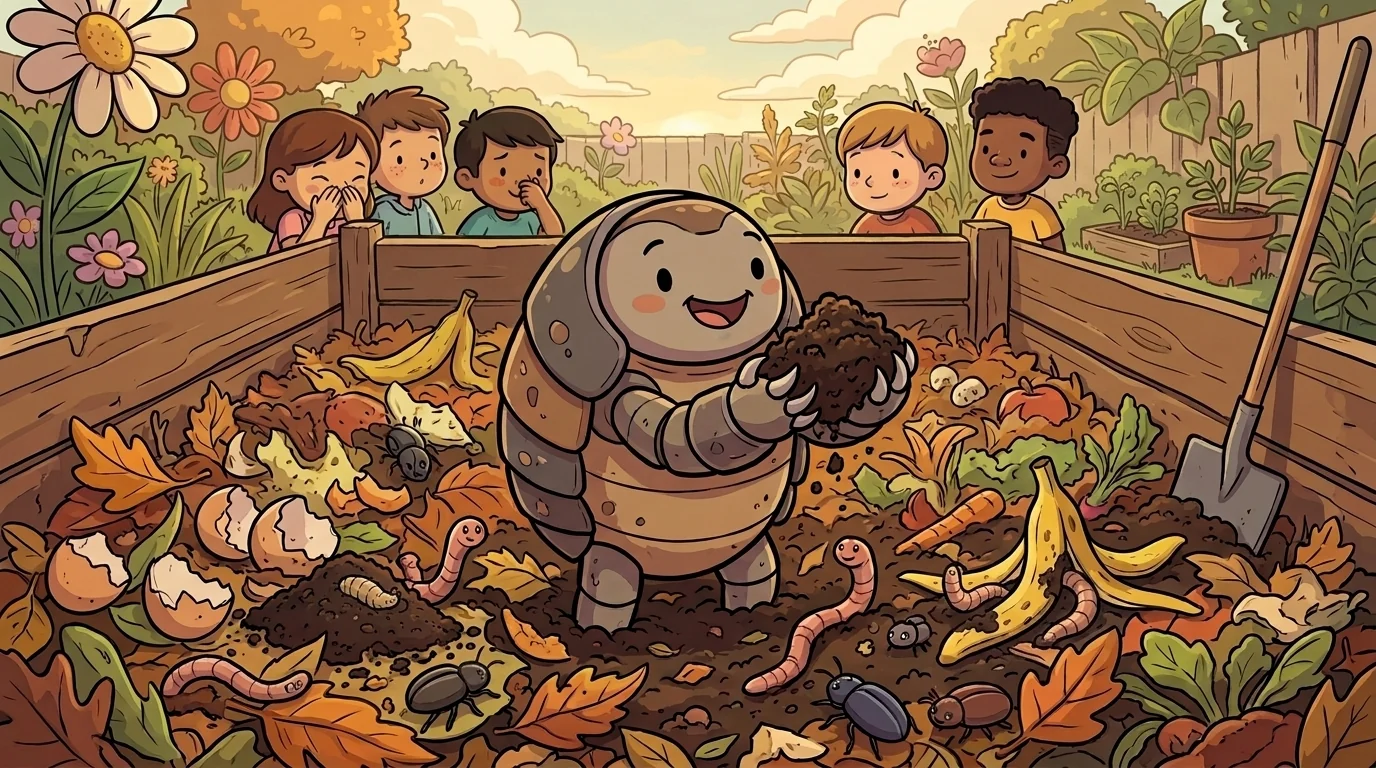
The kids peering over the edge of the compost bin were mostly holding their noses. It was dark in there, and warm, and busy — worms threading through, tiny bugs everywhere, a rich smell like a forest floor after rain. To them it was a garbage heap. To Crumb, small and round and armored like the roly-poly she was, it was a kitchen at full boil.
"Smell that?" she said, breathing it in on purpose. "That's not rot. That's cooking." She scooped up a handful of the dark, soft, crumbly stuff at the bottom and held it out. "Last month this was a banana peel and a pile of dead leaves. Now look. It's soil. Black gold. The best food in the whole garden — and it made itself out of stuff everybody threw away."
A girl wrinkled her nose. "But it was garbage."
"It was breakfast, later," Crumb corrected. "Nothing in a garden is really garbage. The leaf falls, the worms and the little ones and me — we take it apart, crumb by crumb, and turn it back into food the plants can drink through their roots. Dead thing goes in the top. Dinner comes out the bottom. The garden never wastes a single ending. It just keeps passing it on."
The girl looked at the black crumbly soil, and then, cautiously, sniffed it — and made the exact face of someone surprised to find something smells good.
Crumb remembered the autumn she stopped being sad about leaves falling.
She'd been small, curled under a maple, watching the leaves let go one by one and drift down, and it had made her ache. Everything green was going brown. Everything up was coming down. It felt like the whole world quietly giving up.
Her great-uncle, an old pill-bug with a shell gone gray and gentle, had trundled over and settled beside her in the leaf-fall. He didn't tell her not to be sad. He just picked up a crumbling brown leaf and turned it over.
"You're watching it die," he said. "I'm watching it get ready."
"Ready for what? It's finished."
"It's finished being a leaf." He'd tucked the brown leaf down into the soil at the maple's foot. "Now it starts being ground. By spring, this exact leaf'll be soft black soil, and the maple'll drink it back up through its roots, and pour it into a new leaf. It's not the end of the leaf, little crumb. It's the leaf going around again." He'd patted the earth over it. "The garden doesn't throw anything away. It just feeds tomorrow with yesterday."
Crumb had lain there a long time after that, in the drifting leaves, feeling the ache turn slowly into something else — a warm, round, oh, nothing here is really lost feeling. She started collecting fallen things after that. Making little heaps. Waiting to watch them turn into dinner. She never got tired of the magic trick where an ending became a beginning.
She came to Growforge at ten, smelling faintly of forest floor and completely at peace with it.
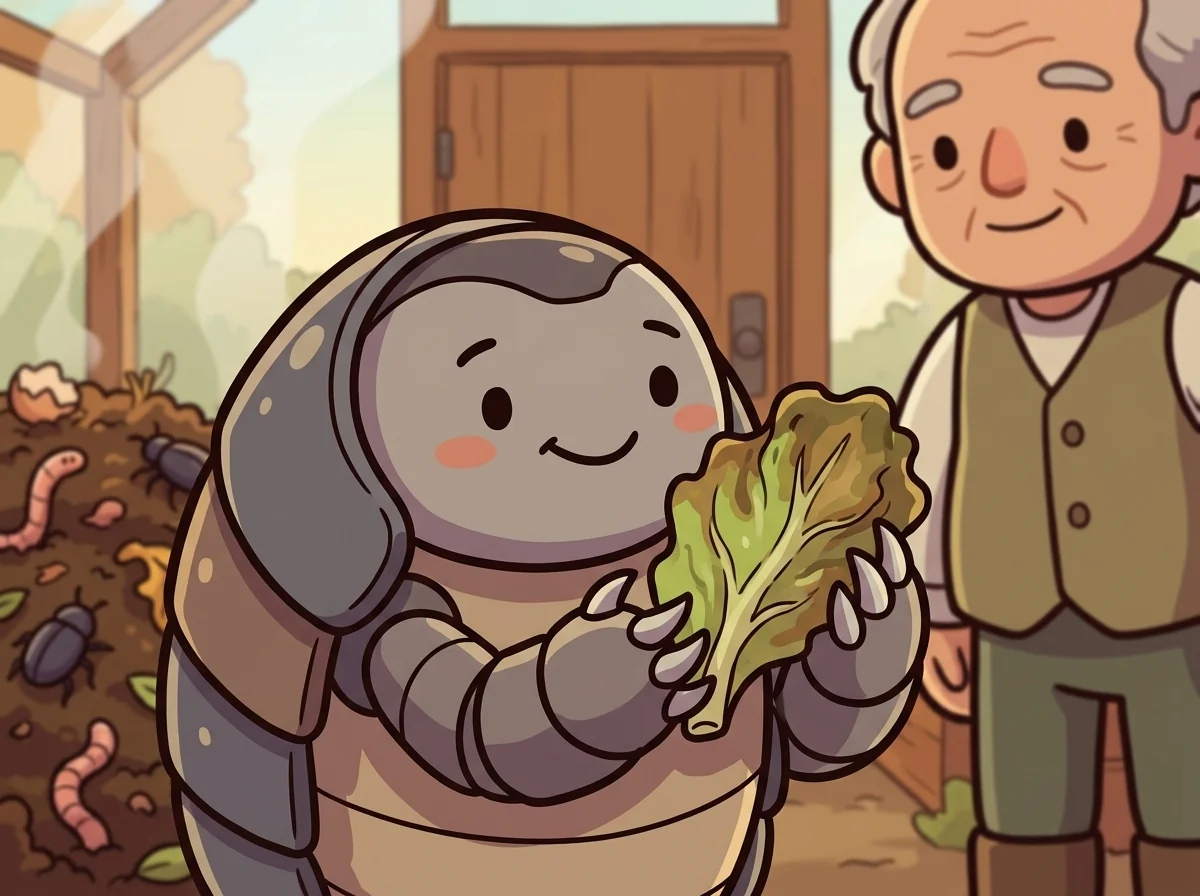
Sprig, the old mentor who ran the greenhouse, met her at the door. He didn't ask if she was squeamish. He handed her a wilted, browning lettuce leaf headed for the trash and asked, "What is this worth?"
Most kids said nothing — it was garbage. Crumb held it up like it was treasure.
"A meal," she said. "Not for us. For the next plant. Give it a few weeks in a warm dark bin with some worms and me, and this dead leaf becomes soil, and the soil becomes food, and the food becomes a brand-new leaf. It's worth everything. It's just not worth it yet."
Sprig went quiet. Then he smiled. "Most people meet the end of a thing and see trash," he said. "You meet it and see the next beginning. You belong here."
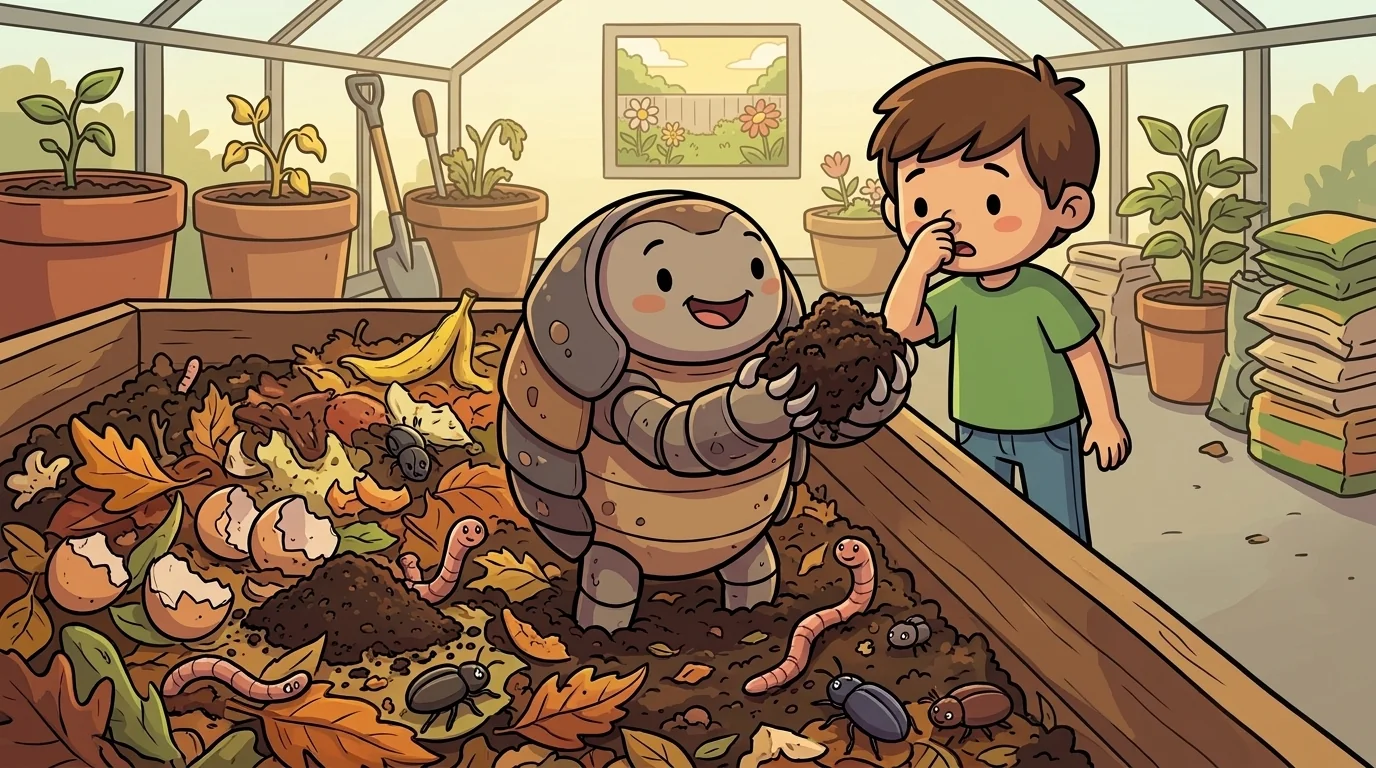
Crumb's corner of the greenhouse was the bin everyone avoided until their soil went tired and pale.
A boy dragged in a big pot one afternoon, frustrated. "This is my third try," he said. "Same pot, same seeds. First year, great. Now everything I plant comes up small and yellow and sad. I don't get it. Nothing changed."
Crumb dug two fingers into his pot's soil and rubbed it — dry, gray, dusty, packed like old flour. "Everything changed," she said. "You just couldn't see it. Soil isn't a thing, it's a meal, and this one's been eaten. Every plant you grew drank the food out of it. You kept planting in an empty plate."
"So I need... new soil?"
"You need to feed it. That's what I do." She led him to the compost bin, lifted the lid on the warm, busy, forest-floor smell. "See all this? Dead leaves, veggie scraps, worms taking it apart into black crumbs of food. Mix a few handfuls of finished compost into your tired pot, and you're not just filling it — you're setting the table again. The little ones down there turn last week's ends into next week's dinner." She pressed a fistful of the black gold into his hands. "Your soil didn't quit on you. It just got hungry too."
The boy stirred the dark compost into his pale pot, and even before he'd planted a thing, the soil went darker, softer, alive.
He came back at the end, one quieter question left in him.
"It's kind of gross, though," he admitted. "Rot. Worms. Dead stuff. Doesn't it bother you? Living in the garbage?"
Crumb thought about her great-uncle, and the brown maple leaf tucked into the soil, and the ache that had turned round and warm the day she understood.
"It's only garbage if you stop the story too early," she said. "Watch a leaf rot and stop there, and yeah — gross, sad, finished. But wait. Keep watching. The rot is just the middle. It's the part where yesterday gets turned into food for tomorrow, one crumb at a time, by a whole crowd of little workers nobody thanks." She patted her round armored shell, pleased. "I'm one of them. We're the reason nothing in a garden is ever really lost. The end of one thing is just the garden setting the table for the next. There's nothing gross about a feast."
The boy looked at his newly-fed pot, then back at the busy dark bin, and this time he leaned in to smell it on purpose.
And Crumb felt it roll warm through her round little body — that settled, sure, nothing here is wasted feeling she'd carried since a maple taught her leaves don't die, they just go around again. She'd spend her whole life turning endings into dinners. It was, she thought, the kindest job in the whole garden. Somebody had to make sure tomorrow got fed.
The GrowForge ensemble
Crumb is part of GrowForge's distributed-narrative cast. Each character embodies a different curricular primitive; together they teach the full subject.
-

Tuck
Seed + planting — every seed knows what it wants; read-the-packet-then-the-soil
-

Drip
Water + irrigation literacy — water is the patient teacher; don't-drown-the-thirsty framing
-

Glow
Photosynthesis + plant biology — leaf-makes-lunch-from-light; cell-level wonder framing
-
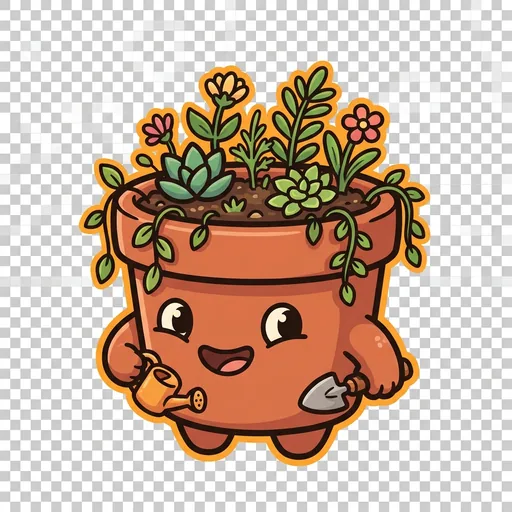
Pot
Container + apartment gardening — windowsill-is-a-garden-too; nature-deficit + privilege gate anchor
-

Vigil
Observation + plant-doctoring patience — look-every-day-don't-pluck-what's-working; intellectual humility framing
-
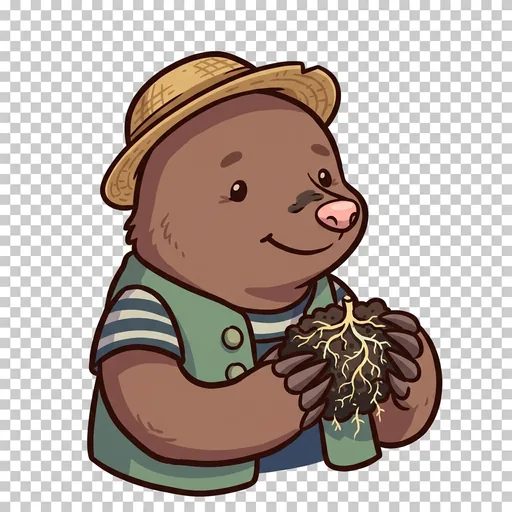
Delve
Roots & uptake — underground-nutrient posture (a plant eats through its roots; the hidden half below does the feeding)
-

Drowse
Seasons & dormancy — right-timing posture (rest is not death; a plant's dormant nap is how it survives to grow again)
-
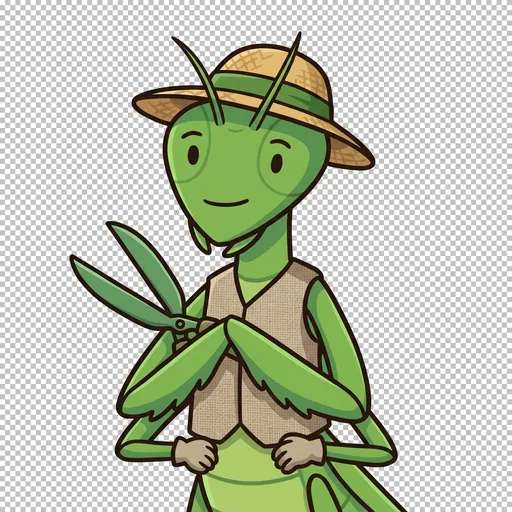
Shear
Pruning — redirect-the-growth posture (cutting the right stem sends the plant's energy where you want it to go)
-

Sip
Pollination — flower-to-fruit partnership posture (a flower becomes fruit only with a pollinator partner as the bridge)