
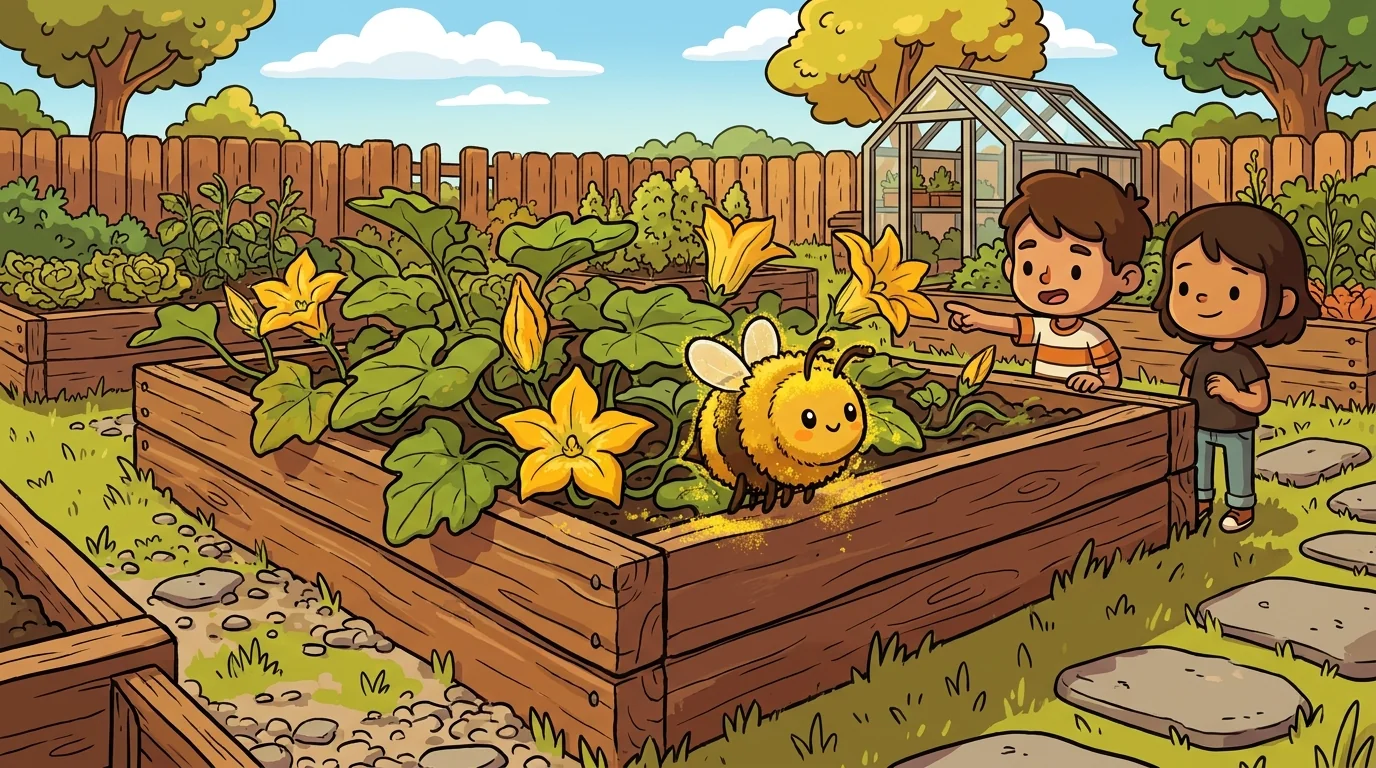
Sip
SIP — no visit, no fruit; the flower and the bee made a deal.
Listen along — Sip
Loading audio…
Press play to listen along. The line being read lights up as you go.
Show full transcript
Loading transcript…
Chapter 6 — Sip and the Deal That Makes the Fruit
Sip was hanging half-inside a squash blossom with only her fuzzy back legs showing, and she was humming with her mouth full. She backed out dusted head-to-toe in yellow, beamed at the older garden club, and got straight to her point. “Everyone thinks the flower is the end of the story — pretty, then it’s done. It’s not the end. It’s a deal being struck. No visit, no fruit. The flower and I made a bargain, and that bargain is where your squash comes from.”
She showed them her pollen-dusted back. “Here’s the trade. The flower makes sweet nectar and offers it up — that’s my payment. To reach it, I have to shove past the flower’s anthers, which slather me in this yellow dust: pollen. Then I fly to the next flower for more nectar, and some of that dust rubs off onto its stigma — the flower’s landing-pad. That transfer is pollination, and it’s the flower’s whole reason for the nectar. I get fed; the flower gets its pollen carried to another bloom. Neither of us is being generous. We each get exactly what we need — that’s called a mutualism, a deal where both sides win.”
A young beetle named Pip looked skeptical. “But why does the plant even need you? Can’t it just… make seeds by itself?”
“Some can — but most of your favourites can’t, not well,” Sip said. “A squash flower’s pollen has to get from one bloom to another, and a flower can’t walk. So it hires a courier — me, or a bee, a moth, a hummingbird — and pays in nectar. And here’s the part gardeners forget: the pollination is what makes the fruit. That little squash behind the flower only swells into food if the pollen arrived. No visit, no fruit — the flower just withers and drops. Every apple, every berry, every squash on your table is the paid-for result of some pollinator keeping their end of a deal.”
Sip had learned how load-bearing the deal was the year the couriers vanished. “One cold, wet spring,” she told them, “hardly any of us could fly — too cold to forage. The garden bloomed beautifully, flower after flower… and then almost nothing fruited. The blossoms opened, waited for a visit that never came, and fell. The gardener was baffled — ‘everything flowered!’ — but flowering isn’t fruiting. Without the visit, the deal was never struck.” The it’s-just-a-pretty-flower assumption had turned, that hungry year, into a deep respect for the couriers.
“So here’s the craft,” Sip finished, diving toward the next blossom. “Protect the deal-makers. Plant flowers that feed pollinators, not just ones that look nice; skip the sprays that poison your couriers; leave a little wild corner where we can live. If you want the fruit, you have to keep the bargain alive — because the flower and the bee made a deal a long time ago, and every meal that deal produces still runs on somebody making the visit. No visit, no fruit.”
The GrowForge ensemble
Sip is part of GrowForge's distributed-narrative cast. Each character embodies a different curricular primitive; together they teach the full subject.
-

Tuck
Seed + planting — every seed knows what it wants; read-the-packet-then-the-soil
-

Drip
Water + irrigation literacy — water is the patient teacher; don't-drown-the-thirsty framing
-
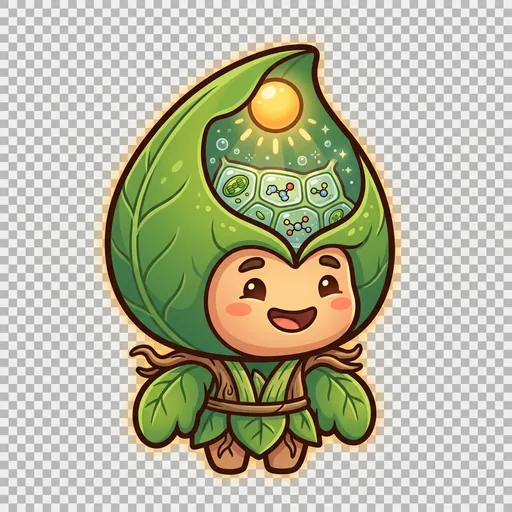
Glow
Photosynthesis + plant biology — leaf-makes-lunch-from-light; cell-level wonder framing
-
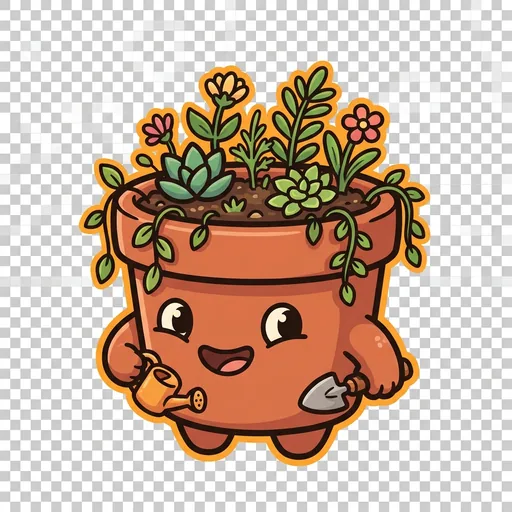
Pot
Container + apartment gardening — windowsill-is-a-garden-too; nature-deficit + privilege gate anchor
-

Vigil
Observation + plant-doctoring patience — look-every-day-don't-pluck-what's-working; intellectual humility framing
-
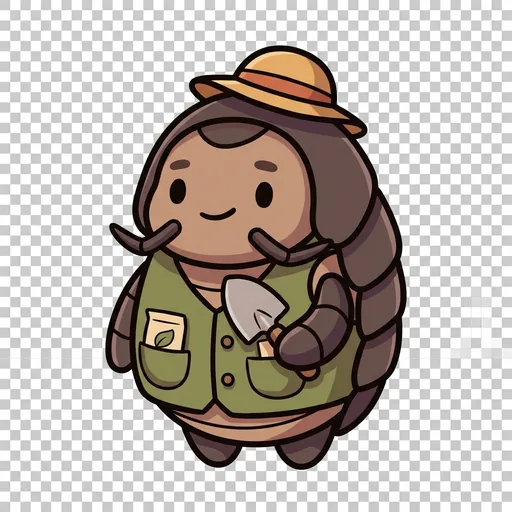
Crumb
Compost & soil life — decomposition posture (the underground food loop: decay makes the meal; feed the soil, not just the plant)
-
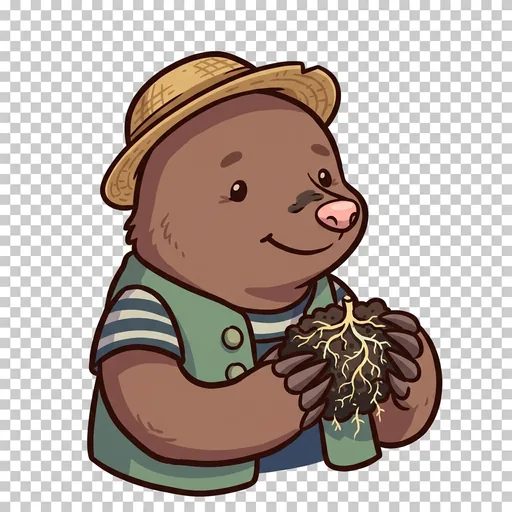
Delve
Roots & uptake — underground-nutrient posture (a plant eats through its roots; the hidden half below does the feeding)
-

Drowse
Seasons & dormancy — right-timing posture (rest is not death; a plant's dormant nap is how it survives to grow again)
-
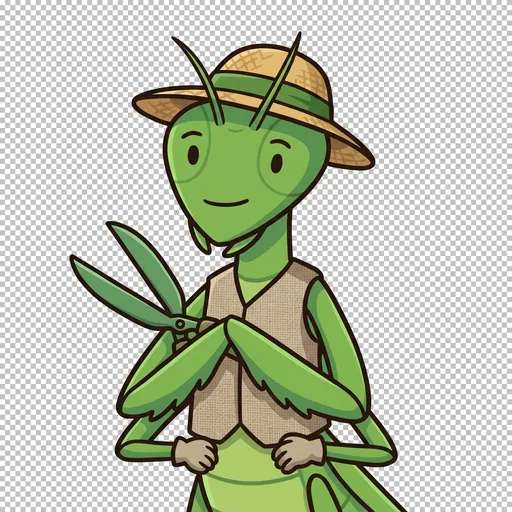
Shear
Pruning — redirect-the-growth posture (cutting the right stem sends the plant's energy where you want it to go)