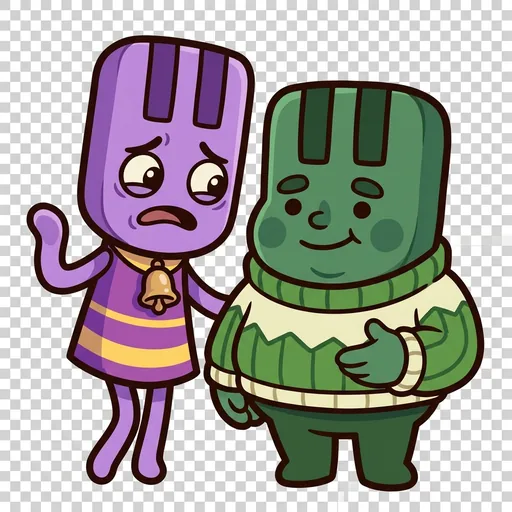
Land
The consonant arrival when tension releases
Loading audio…
Press play to listen along. The line being read lights up as you go.
Show full transcript
Loading transcript…
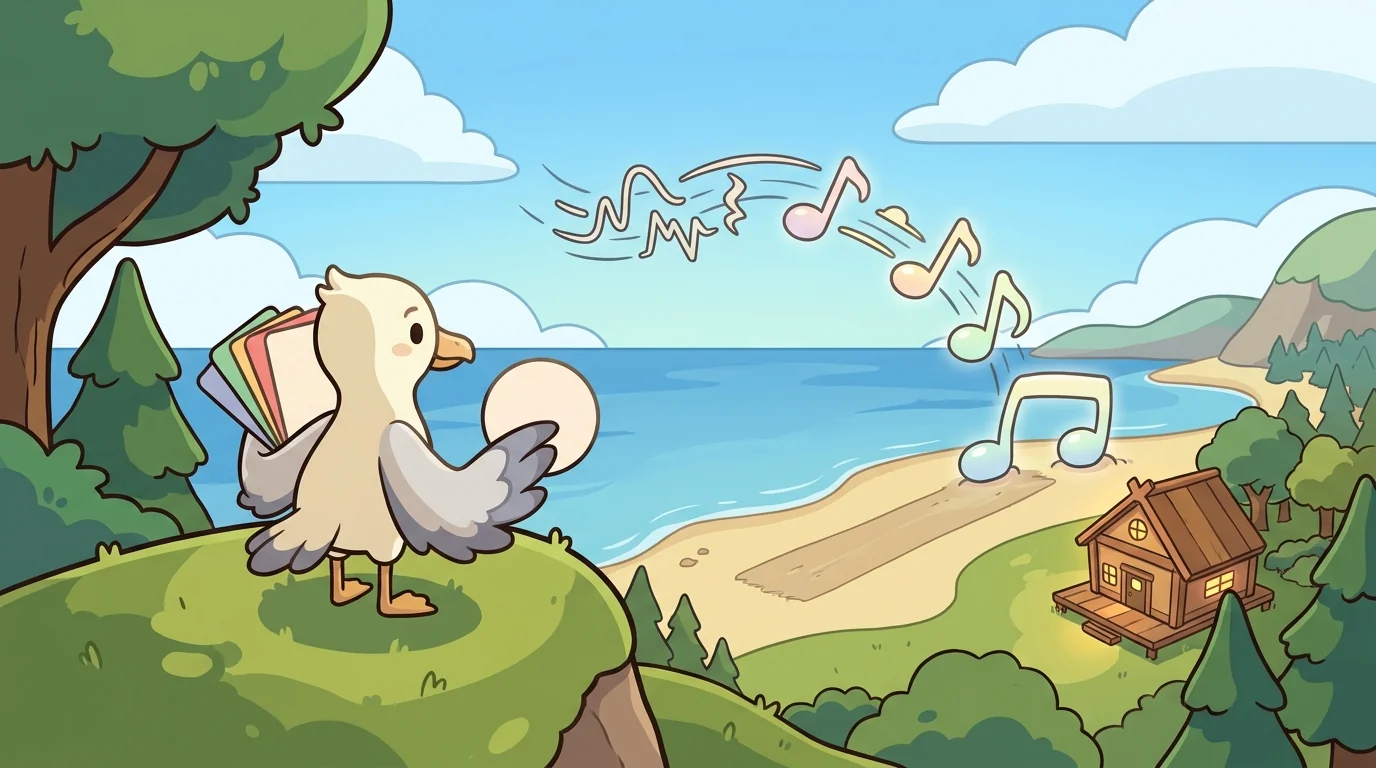
Land is a small albatross-tween — cream-colored with soft grey wingtips, long wings always ready for a landing — who carries a set of ending-cards and a special listener card.
Land is patient about landings. "Music's ending is like coming home," he says. "The smooth arrival is when tension lets go." That's his whole craft: resolution — how a piece of music finds its landing place. It's more than the last chord: every musical phrase has a cadence, a moment where the music arrives and releases its tension, and different cadences feel different — an authentic cadence (V→I) lands strong and finished; a plagal (IV→I) lands gentle, like an "Amen"; a deceptive (V→vi) surprises you; a half-cadence (…→V) pauses, unfinished, asking for more.
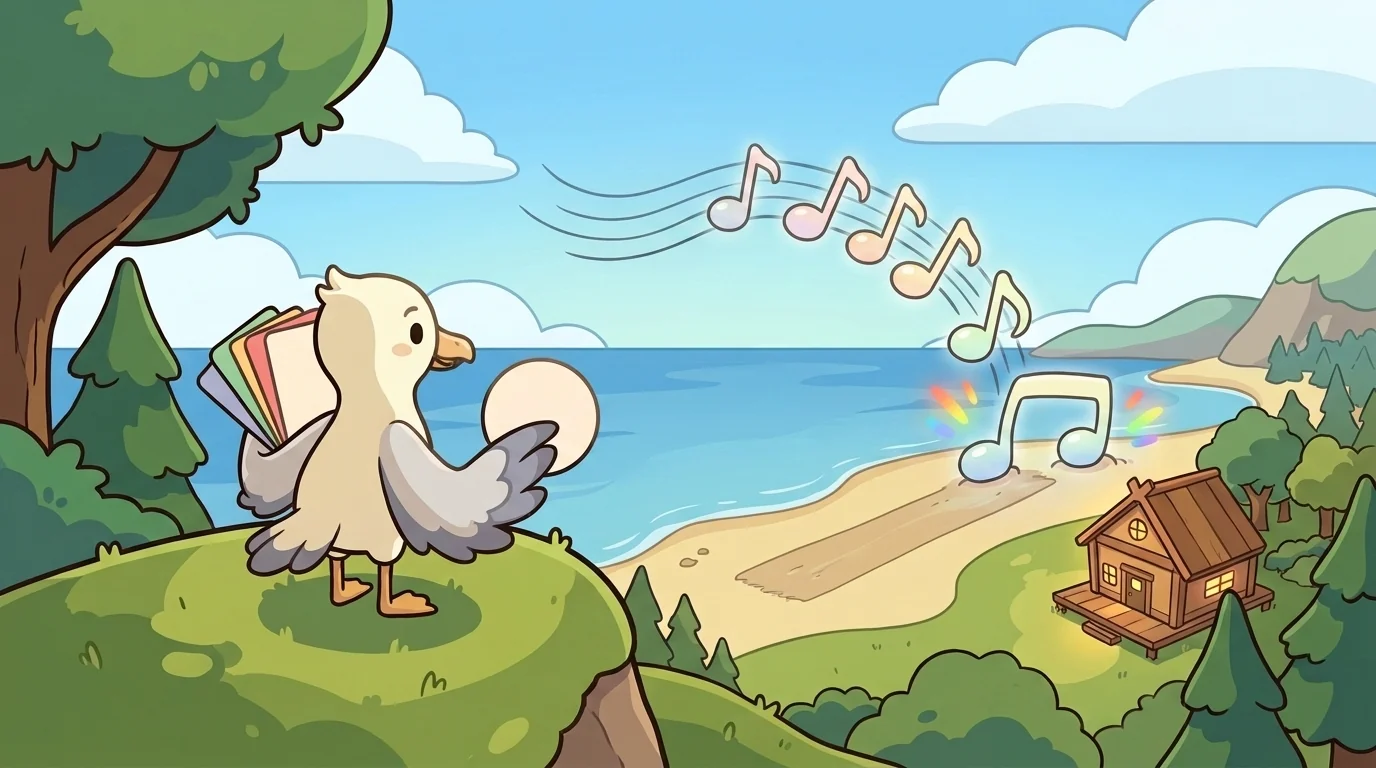
The secret Land most wants you to hear is that an ending has to be earned.
"Just playing the 'home' chord isn't an ending," he says. "The ending is the letting-go of tension you built first — and if there's no tension, there's nothing to release, so the home chord feels like nothing at all." That's why the four cadences give four different feelings: each one is a different way of releasing what came before. "You don't just stop a phrase," Land says. "You choose how to land it."
So the craft is a choice: want it finished? Authentic. Gentle? Plagal. Surprising? Deceptive. Asking for more? Half. "You build the landing," he says.
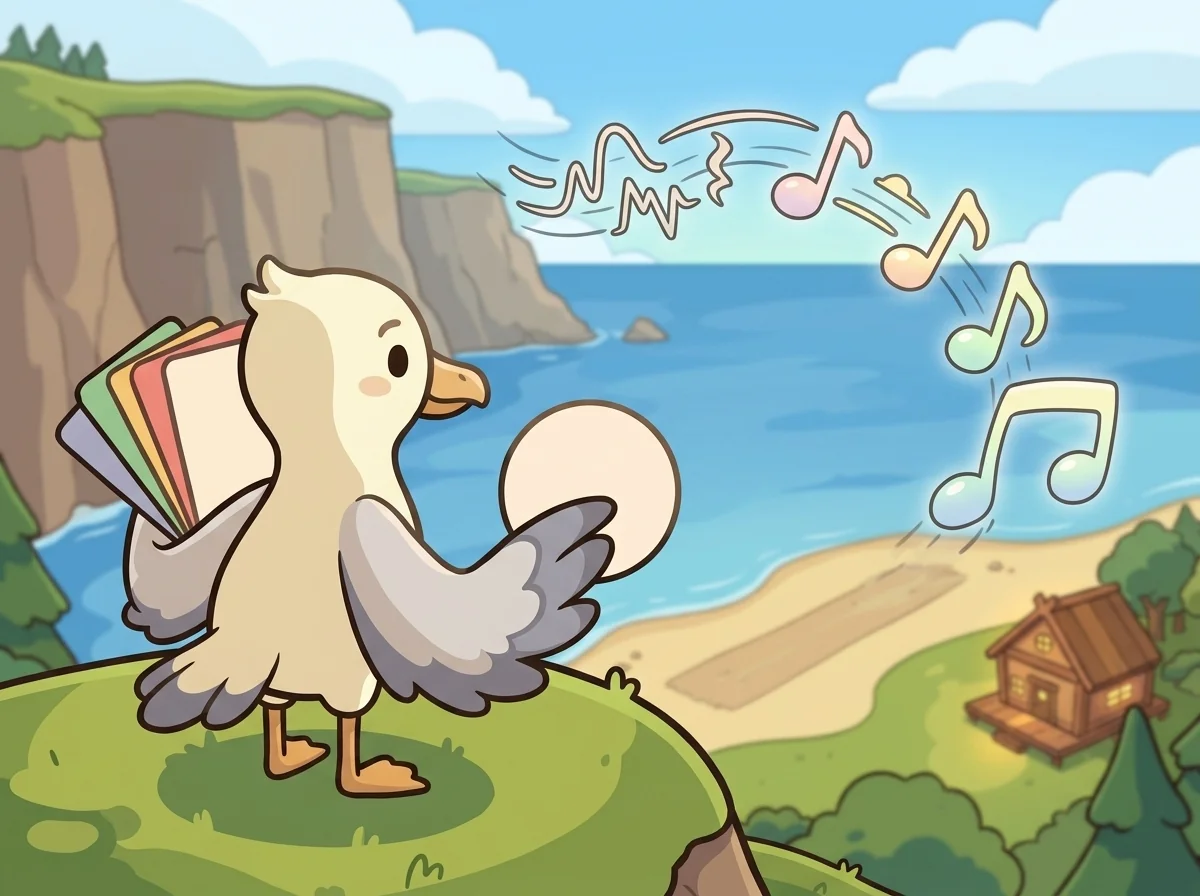
Land grew up near the tall coastal cliffs, where his family were the village's long-flight landers — albatrosses who soared for weeks over the waves.
Their lesson: "A long flight needs a good landing — and the landing feels right because of the long flight before it." The journey's end mattered as much as the journey. When Land was twelve he walked to HarmonyForge, and Refrain, his mentor, asked, "What is resolution?" "The smooth arrival when tension lets go," Land said. "A cadence is like coming home." Refrain smiled. "You are appointed."
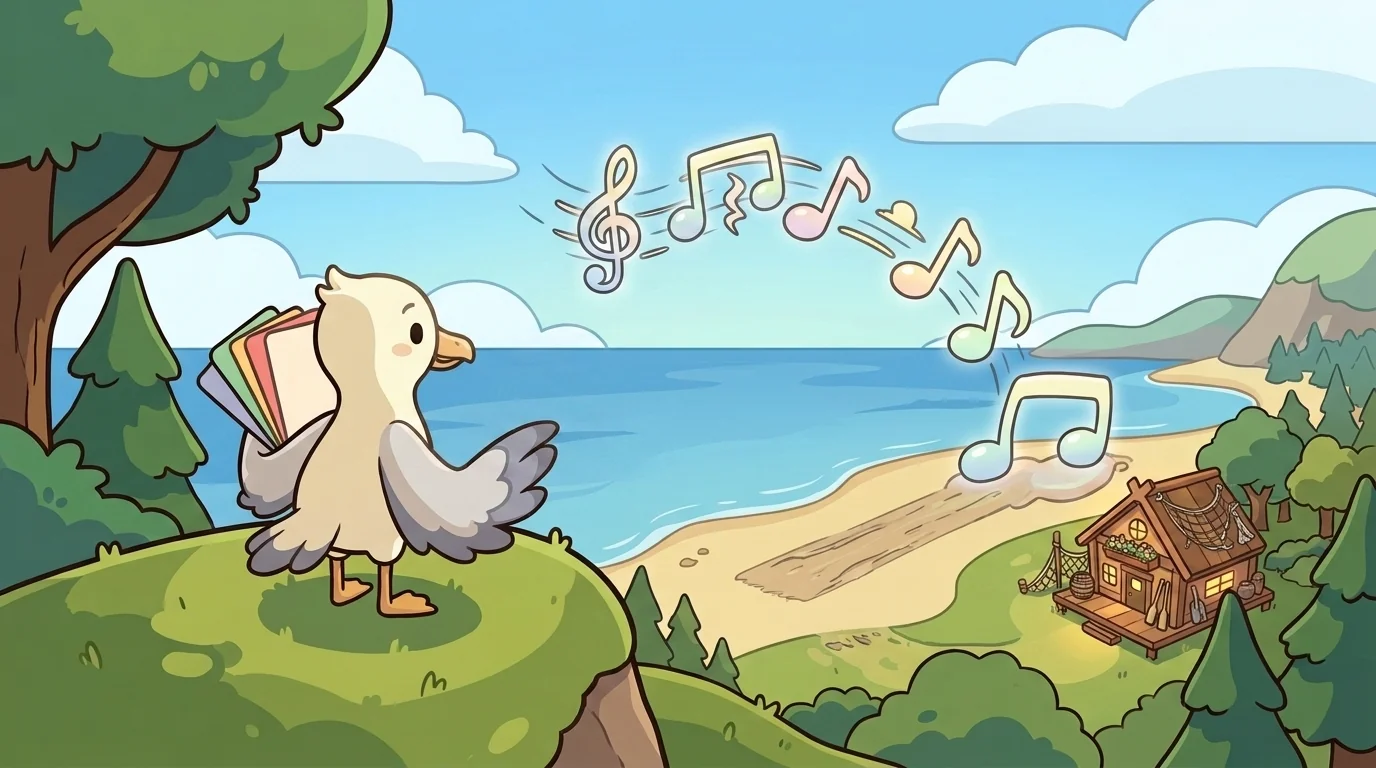
In his workshop, Land ran the four landings on a small keyboard, card by card. Authentic first — V (G) to I (C) — strong and final: "That really feels like home." Then plagal — IV (F) to I (C) — soft and peaceful: "A gentle arrival, like an 'Amen.'" Then deceptive — V (G) to vi (Am) — and everyone's ears perked up: "Wait — that's not home! A surprised arrival." Then a half-cadence — I (C) to V (G) — left hanging in the air: "It paused there, asking for more music." He fanned the cards. "Four cadences, four ways to land — and each one only works because of the tension you set up before it. Earn the resolution, then choose which arrival you want."
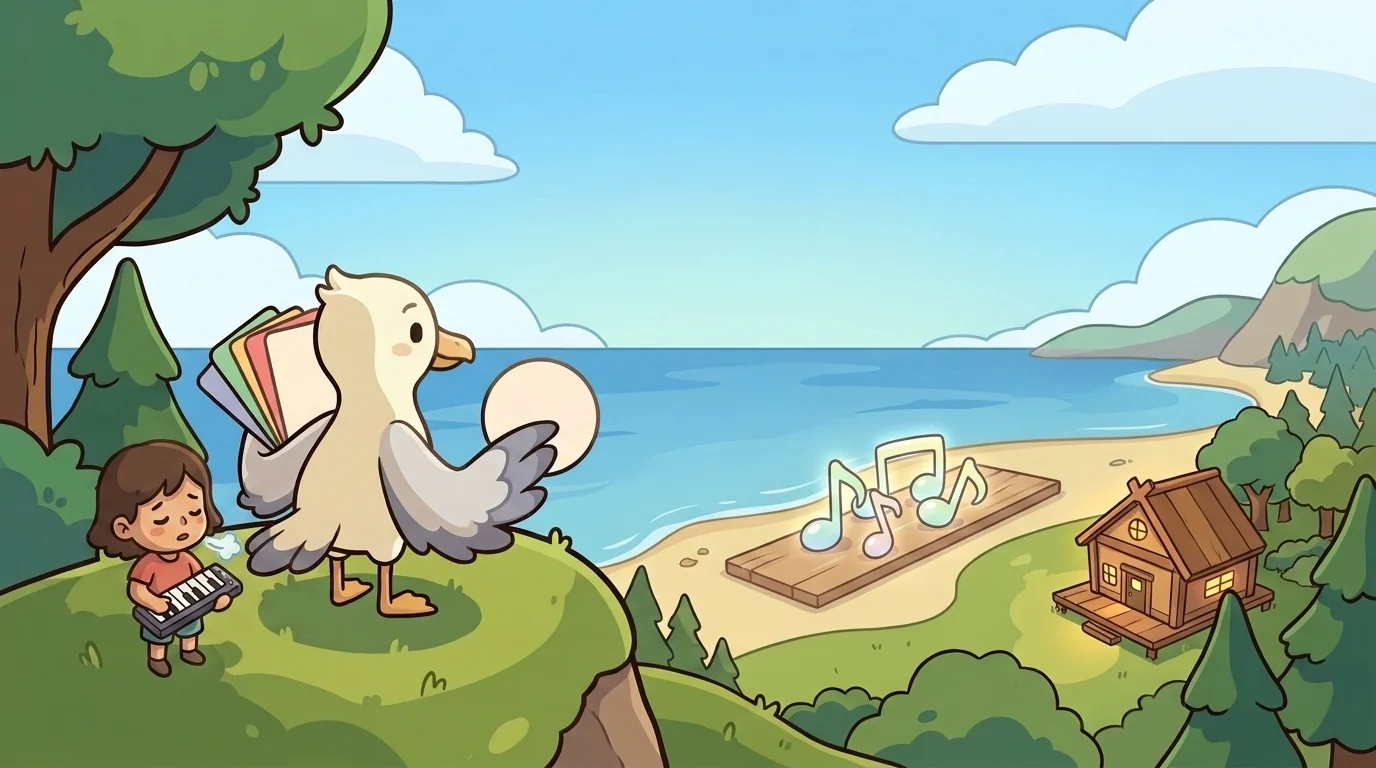
"So the ending is the part I get to design, too," a student said slowly, "not just where the song stops."
"The landing is the whole craft," Land said. And the student played a phrase, built the tension, and let it fall home on an authentic cadence — and felt it in their body: the small, deep ease of arrival, chest loosening, shoulders dropping, the settled home-again calm of a long trip finally over. That eased, shoulders-down, home-again feeling — the body's own way of saying we made it, we're home — was, to Land, exactly what a resolution is for: not just a place the music stops, but a place it, and you, get to rest.
Hear it as an audio drama
A short play starring Land, from HarmonyForge. Different voices, same idea. Listen any time after you read.
Loading audio…
Read the drama script
- Narrator: From Spark and Anvil and HarmonyForge — this is Land, in chapter 1 of the HarmonyForge cast.
- Narrator: This drama uses an AI-generated voice. Voiced via Gemini 2.5.
- Narrator: Land is a chunky albatross-tween with long wings. He carries cadence-cards, and moves with a deep, patient calm.
- Narrator: His harmony-vest is muted. His wings seem ready for a multi-week glide, ending in a perfect, earned landing.
- Narrator: Land makes musical landings visible. He knows that every phrase has a cadence, a moment where tension finds its release.
- Land: An authentic cadence, the V to I gesture, feels like a strong, conclusive arrival. You are definitely home.
- Land: But a deceptive cadence is a surprise. You thought you were arriving home, but ended up somewhere unexpected.
- Narrator: Land grew up on coastal cliffs. His family were the village’s long-flight landers, masters of the earned arrival.
- Land: They taught me one simple truth: The landing earns its place by the tension of the long flight.
- Narrator: He walked to HarmonyForge at twelve, where the wise mentor Refrain looked at him with keen eyes and asked one question.
- Refrain: Tell me, young lander, what is resolution? And why does it matter to the music?
- Land: It is the consonant arrival when tension releases. Cadence is the home-coming, the feeling of a journey earned.
- Refrain: Your understanding is sound. You are appointed to teach this craft.
- Narrator: Earn the resolution. Architect the landing. That's what makes Land, Land.
- Narrator: You've been listening to a Spark and Anvil chapter, written by the Spark and Anvil writing team for ages 9 to 14.
- Narrator: Apps stay free forever.
- Narrator: Curriculum aligned to National Core Arts Standards music.
- Narrator: Released under Creative Commons BY-NC-SA 4.0 for educational reuse. Visit Spark and Anvil for the full transcript.
The HarmonyForge ensemble
Land is one of the friends in HarmonyForge. Each friend shows you one idea by how they act; meet them all and you have the whole subject.
-
Triad
Chord-stacking — three tones in vertical alignment (root + third + fifth = the foundation of harmony)
-
Lean
Voice-leading — smooth stepwise motion between chord tones (the smallest possible movements between consecutive chords)
-
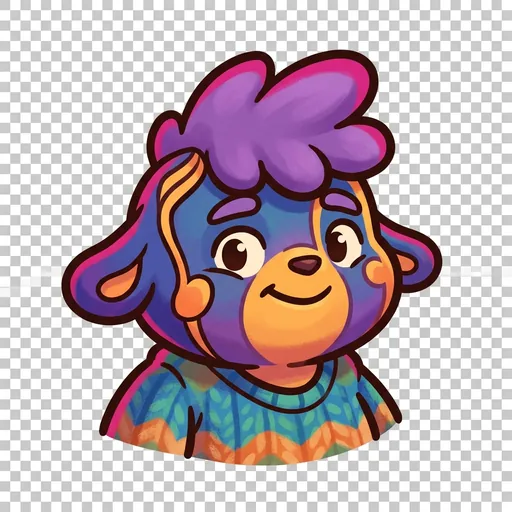
Pull
Tension — dissonant intervals (the leading-tone, the suspended 4th, the diminished chord) that *want* to resolve
-

Shift
Modulation — changing keys mid-piece (the moment a song *moves to a different room* harmonically)
-
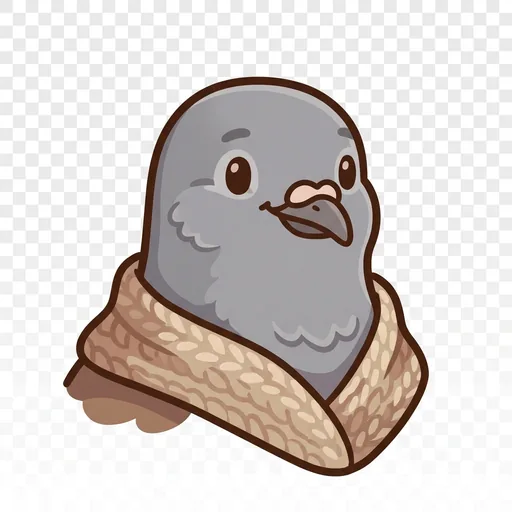
Ache
Seventh chords — a dove whose coo adds a fourth voice on top; a sweet, unfinished ache that leans the chord forward
-

Octave
Octave — a seal who sings the same note a whole floor up; eight steps from a note back to its own echo
-

Rill
Arpeggio — an otter who un-stacks a chord into a walk; the same tower played one stone at a time, flowing
-

Tumble
Chord inversion — a red panda who re-stacks the same three notes; a different one on the bottom changes the chord's face
-
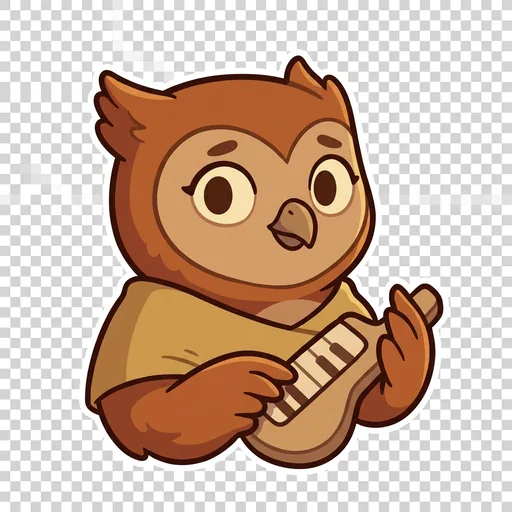
Umber
Major/minor third — an owl who lowers the middle tone one step; that note decides if a chord sounds bright or dark