Ajar
Leave every door ajar
Loading audio…
Press play to listen along. The line being read lights up as you go.
Show full transcript
Loading transcript…
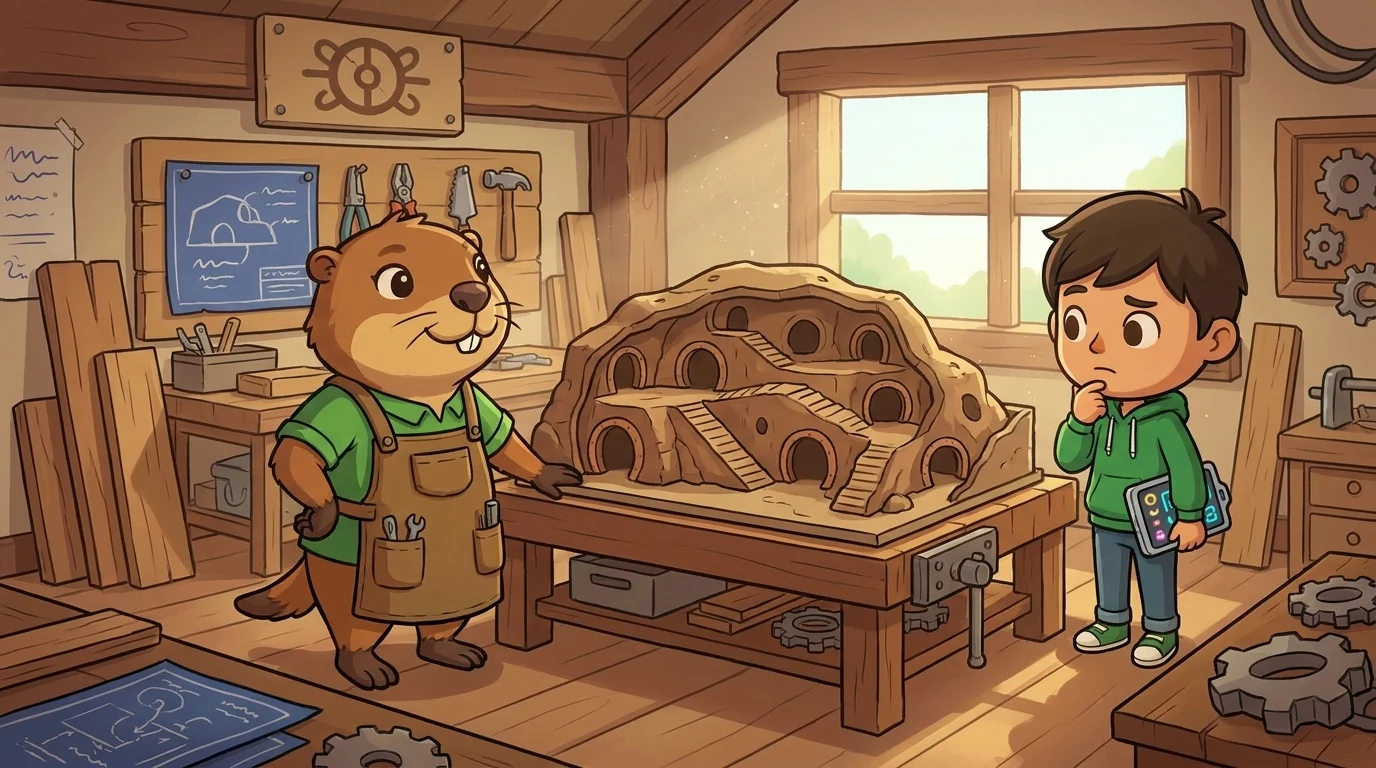
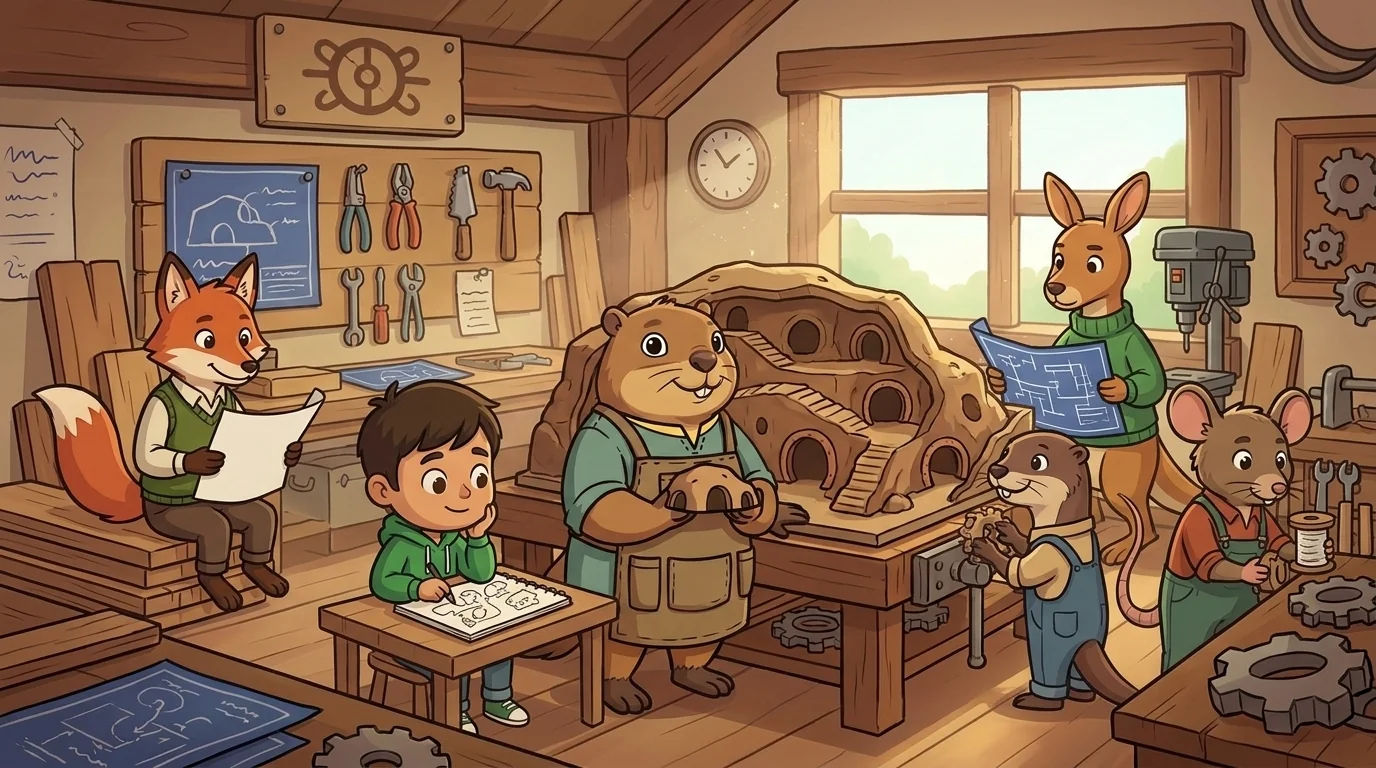
In the LevelForge workshop, a prairie dog stood proudly beside a model of her burrow — which had, Rue noticed, an unusual number of entrances.
"Why so many doors?" he asked. He'd made a game he was proud of, fast and twitchy and hard, and he was here to show it off.
"Because you never know who's coming, or how they move," Ajar said, patting her many-doored burrow. "Some folks come from the north, some from the south. Some can dig, some can't. Some are quick, some are slow. So — lots of doors. Every way in that I can make, I make. The more doors, the more neighbors who get to come inside." She looked at his game. "Show me yours. How many doors does it have?"
Rue ran it for her — lightning-fast, needing split-second taps, tiny targets, one exact way to win. Ajar watched, then asked a question that stopped him cold. "What happens to the player whose hands don't move that fast? Or who can't see those tiny targets? Or who needs a second longer to think?"
"...They can't play it," Rue admitted. "But it's a hard game. That's the point."
"Hard is fine," Ajar said warmly. "Locked isn't. There's a difference between a game that's challenging and a game that's shut — that quietly turns people away at the door before they even get to try. You built one door, exactly your size. Everyone shaped a little differently than you just... doesn't get in." She tilted her head. "And here's the kind part: you could open more doors without making it any less hard for the folks who love the hard version. That's the whole trick."
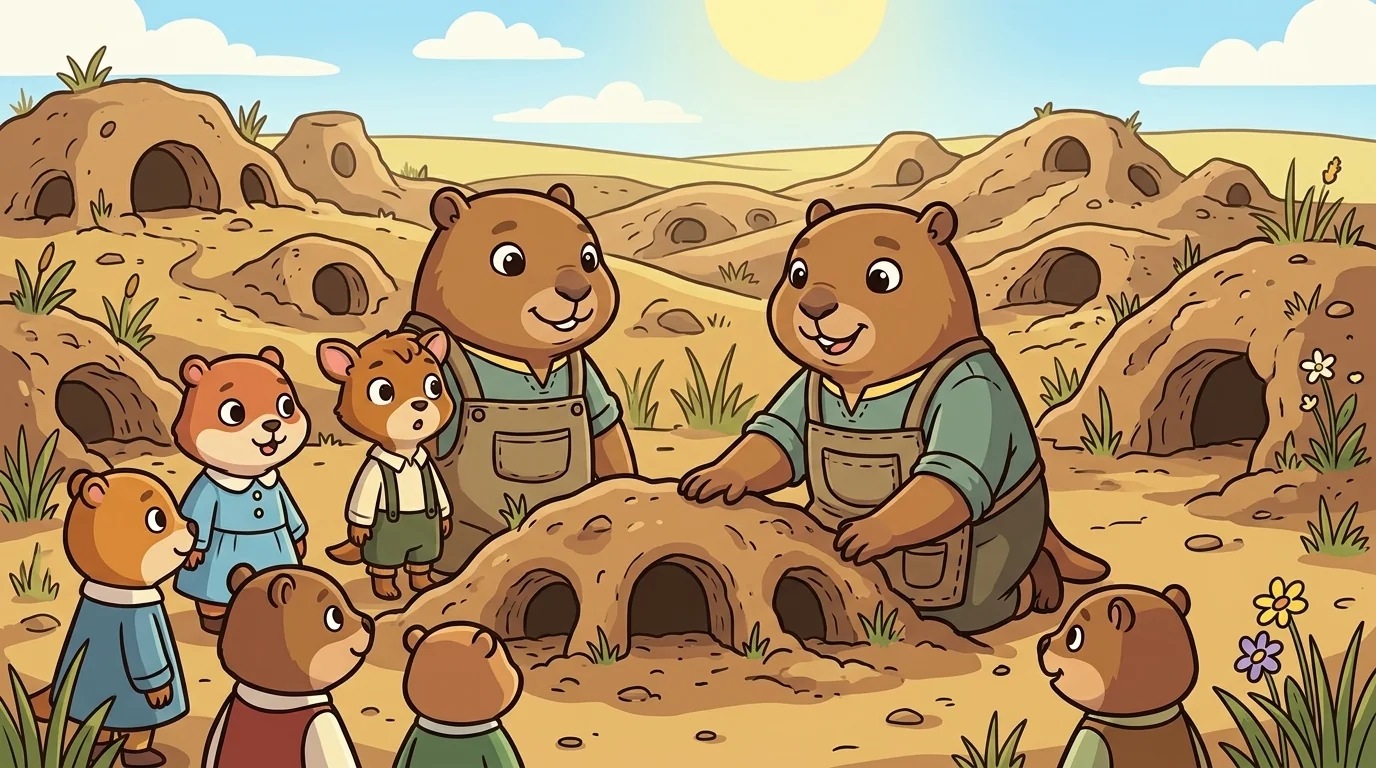
Ajar grew up in a vast prairie-dog town, a warren of a thousand burrows, where the first rule of building was: never make a home with only one way in.
"One door is a trap," her grandmother taught, patting the earth. "One door means the day something blocks it, someone's shut out, or shut in. So we dig many — high ones and low ones, wide ones and small ones — because our town is full of every kind of digger, and a town worth living in has a door for each of them." Little Ajar once asked if all those extra doors were a lot of work. "Some," her grandmother said. "And every one of them is a neighbor who gets to come home. That's not extra. That's the point of a door."
Ajar carried it. And when she saw games — clever, wonderful games — that had only one narrow way to play, built to exactly one kind of player's hands and eyes and speed, she felt the same ache she'd have felt at a burrow with a single door. "They made something great," she'd say, "and then locked it so only people shaped like them could get in. And the saddest part is they never even meant to. They just built one door and forgot the rest of us exist."
She scurried to LevelForge at twelve, because a place that studied games ought to understand who was getting left at the door.
Pixel, the old mentor who ran the workshops, met her at the door — a fitting place — and asked just one thing. "Who is a game for?"
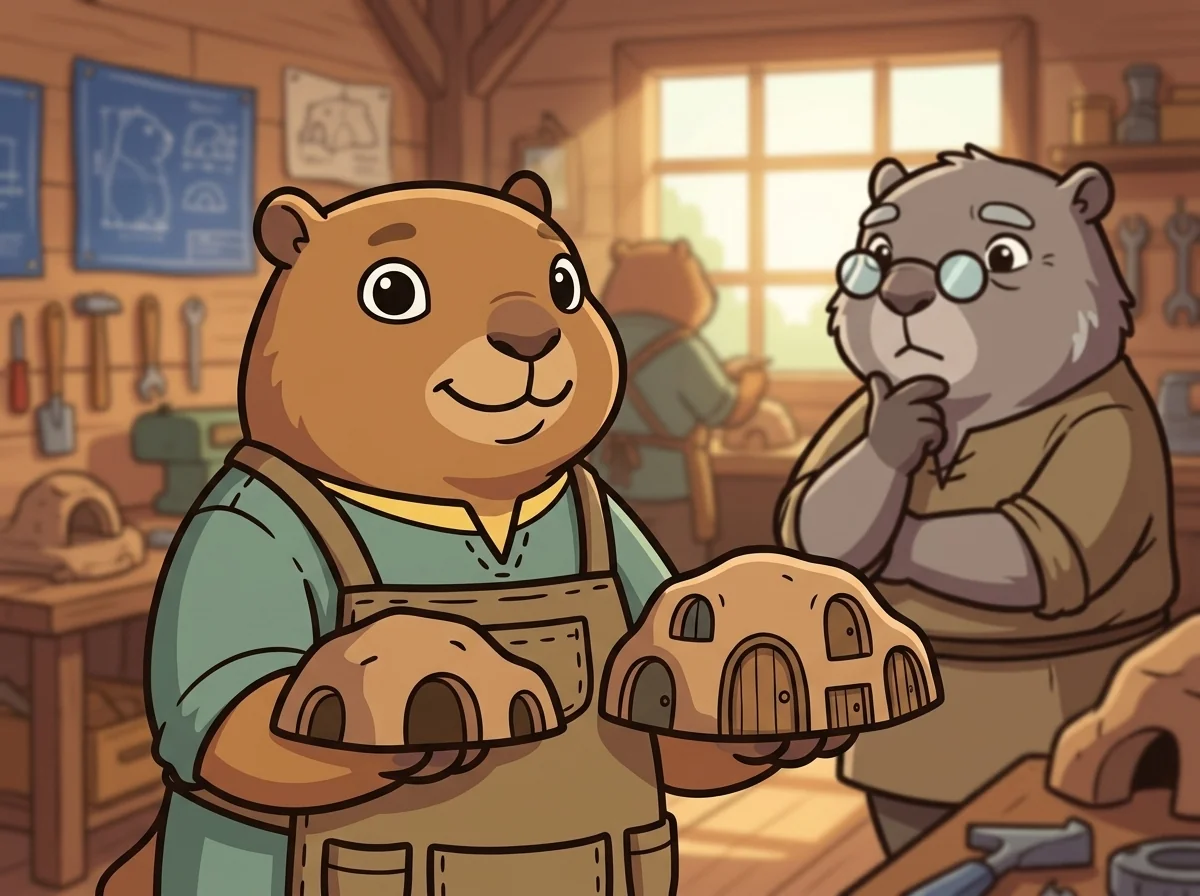
Ajar didn't answer with a definition. She set down a model burrow with a single tight entrance, then one with a dozen doors of all shapes and heights.
"This one's for whoever happens to fit that one door," she said, pointing at the first. "This one's for everyone who wants to come in." She looked up. "A game's not really finished when it's fun. It's finished when you've asked, who did I accidentally lock out — and can I open a door for them without spoiling it for anyone? Almost always, you can."
Pixel studied the two burrows. "You belong here," she said.
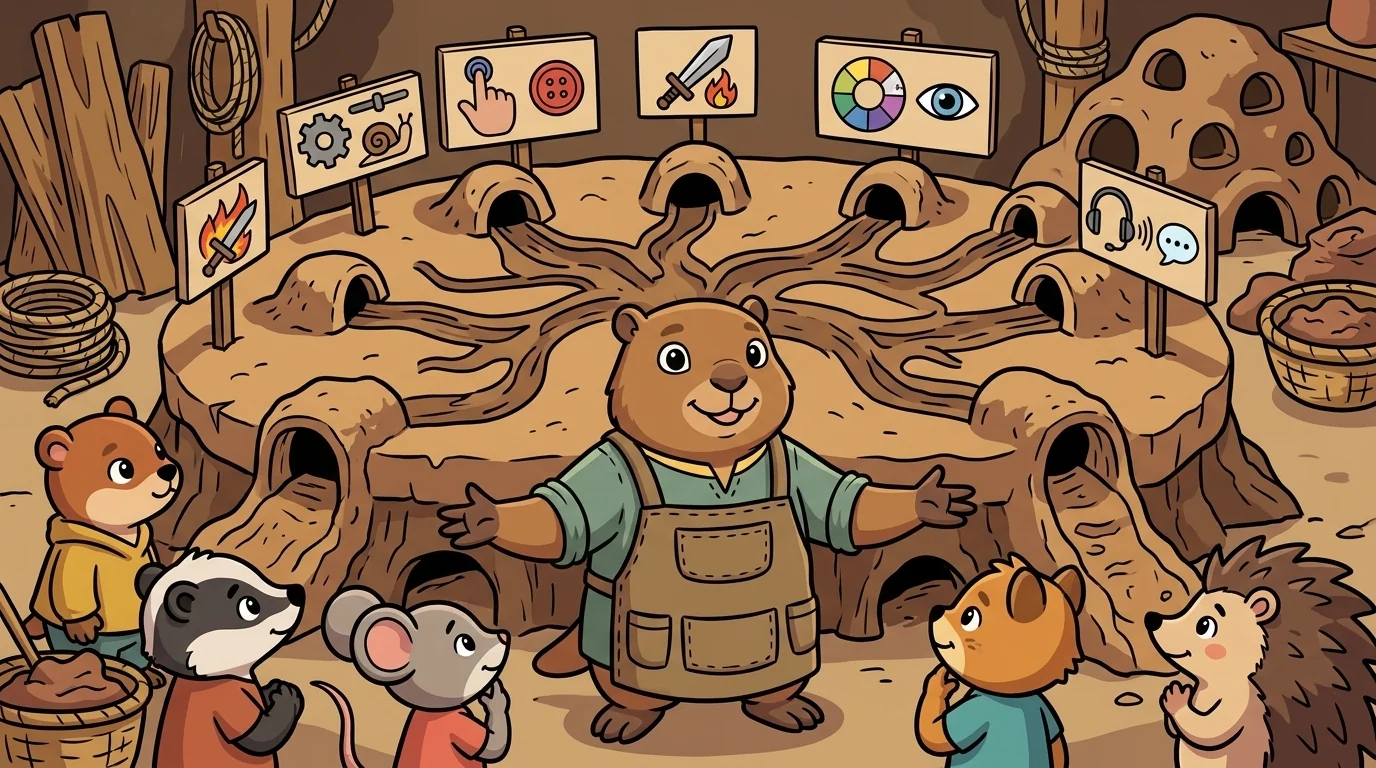
Ajar's workshop filled with kids who'd built one-door games without meaning to.
Rue came back with his twitchy speed-game. "Okay," he said, half-defensive, half-curious. "How do I open more doors without making it babyish for the people who like it fast and brutal?"
"That's exactly the right question," Ajar said, delighted. "And the answer is: you add doors, you don't move the walls." She laid out the tools like tunnels branching off a burrow. "A speed slider, so folks who need a beat more time can slow it for themselves — while the speedrunners leave it fast. Bigger targets as an option, remappable buttons so different hands can reach them, a colorblind mode so the reds and greens aren't the only signal, subtitles and clear icons so sound isn't the only cue. Every one of those is a new door — and not one of them changes the game for the player who wants it hard and fast, because those doors are choices, not walls moved." She patted her burrow. "Hard stays available. It just stops being the only way in."
Rue looked at his single-door game and saw, suddenly, all the players he'd been turning away without knowing it. "So making it welcoming," he said slowly, "isn't the same as making it easy."
"Not even a little," Ajar said. "You can keep every ounce of the challenge for whoever wants it — and still leave doors open for whoever's shaped differently. Welcoming and hard live together just fine. It's only locked that has to go."
Later, when the workshop had cleared, Rue lingered, sketching new options onto his design.
"It's kind of embarrassing," he said. "I thought a great game was one perfect version. I never thought about who couldn't get in."
Ajar sat up on her haunches, kind. "Most people don't, at first — you build the door your own size because that's the size you know. The generous move is just to remember other sizes exist, and dig for them." She tapped his new sketches. "And here's what nobody tells you: the doors you open for the folks who need them almost always make the game nicer for everyone. Bigger clear targets, remappable controls, a subtitle option — the tired player, the noisy-room player, the just-learning player all slip through those doors too. Opening up for the few tends to warm the place for the many." She smiled. "A game with lots of doors isn't a weaker game. It's a game that decided, on purpose, that more people get to come play. And that's about the kindest thing you can build."
Rue looked at the many-doored burrow, and at his own game slowly growing more entrances, and felt the shut-out ache he'd been ignoring turn into something better.
Ajar patted her burrow's many doors. She didn't say the last part aloud, but she felt it, warm and open in her chest: the best door is the one you left ajar for the neighbor you hadn't met yet.
The LevelForge ensemble
Ajar is one of the friends in LevelForge. Each friend shows you one idea by how they act; meet them all and you have the whole subject.
-
Carve
Level architecture — where-does-the-eye-go-first spatial-flow + sight-line + landmark craft
-
Coax
Player psychology — invite-don't-trap; warm-host posture; player chooses forward
-

Bounce
Juice + feedback — tiny-celebrations; squash-stretch-shake-thunk; juice as empathy
-
Probe
Playtesting + iteration — what-they-DID-not-SAID listening-discipline; playtester-over-designer-taste
-

Ramp
Difficulty curves — teach-test-vary-rest; deliberate-difficulty-as-love-letter; never-spike never-punish
-

Verve
The core loop / the fun verb
-

Crux
Meaningful choice / interesting decisions
-
Earn
Honest reward / progression without manipulation
-
Rebound
Kind failure / forgiving losing