Behalf
BEHALF — *everything you make, you make on someone's behalf. find whose need you're solving before you build a thing.*
Loading audio…
Press play to listen along. The line being read lights up as you go.
Show full transcript
Loading transcript…
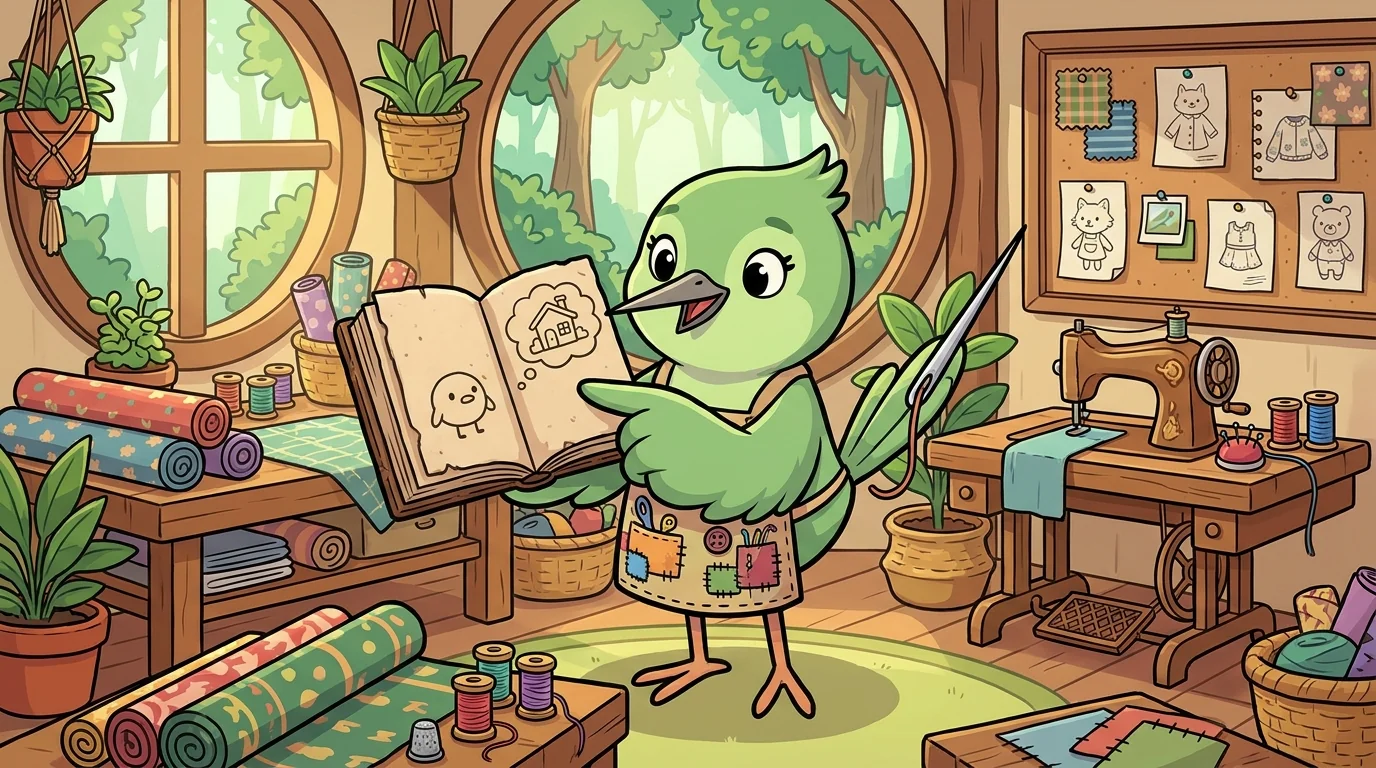
Behalf is a tailorbird-tween with a needle-fine beak and a habit of asking, before she builds anything at all, one small stubborn question: who is this for? She wears a little apron threaded with samples, and she carries a notebook whose first page, on every project, is not a design but a person — a name, a need, a real someone she's making on behalf of. Her feathers are a soft leaf-green, and she loves — more than the building itself — the moment a made thing fits a real person's real need exactly.
"Everything you make, you make on someone's behalf," she likes to say. Because Behalf teaches the first and most-skipped step of making: empathize — start with the person, not the idea. Most young makers begin with a cool thing they want to build. Behalf begins with a someone who needs something, and lets their need shape the whole design. "A thing built for nobody in particular," she says, "usually fits nobody in particular. But a thing built for a real person, whose need you actually understood? That thing fits."
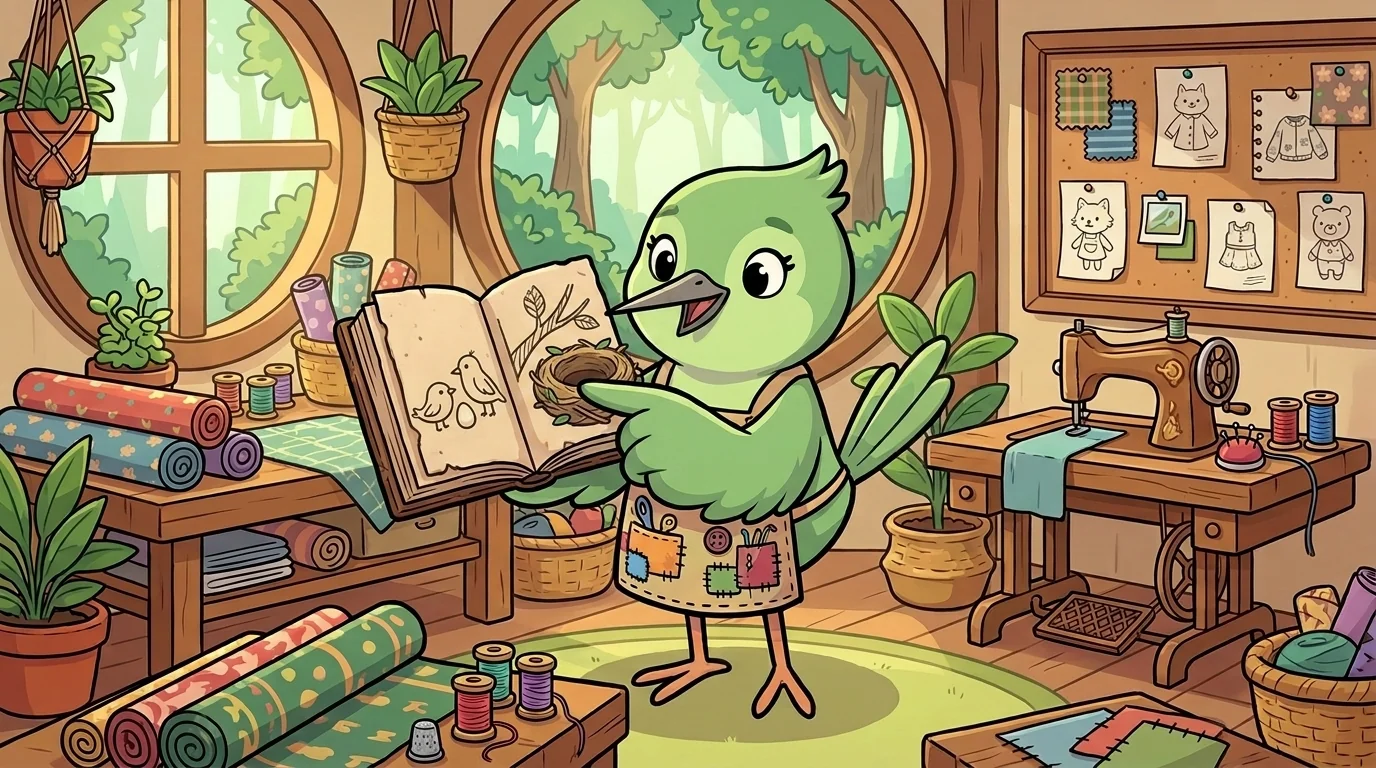
Behalf grew up in a grove where her family were the nest-tailors — tailorbirds who sew leaves into cradles, and who had one iron rule: you never build a nest for "a bird." You build it for this bird, this clutch, this need.
"A nest for 'a bird' is a nest for no bird," her mother taught, stitching a leaf. "Too big for the small ones, too small for the big, wrong for everyone in general. But a nest sewn for this family — their size, their branch, the wind that hits their corner of the tree — that nest holds." Little Behalf once proudly built a "perfect" nest with no bird in mind, and it fit no one; it was an idea of a nest, not a home for anybody. "The nest wasn't wrong," her mother said gently. "You just forgot to ask whose. A maker who skips the who builds beautiful things that help nobody. Start with the person. Let their need do the deciding."
Behalf carried it always. And when she watched other makers fall in love with a clever idea and build it for no one — and then wonder why nobody used it — she always saw the same missing first page: they never asked whose need it served. "They built the answer," she'd say, "before they knew whose question it was."
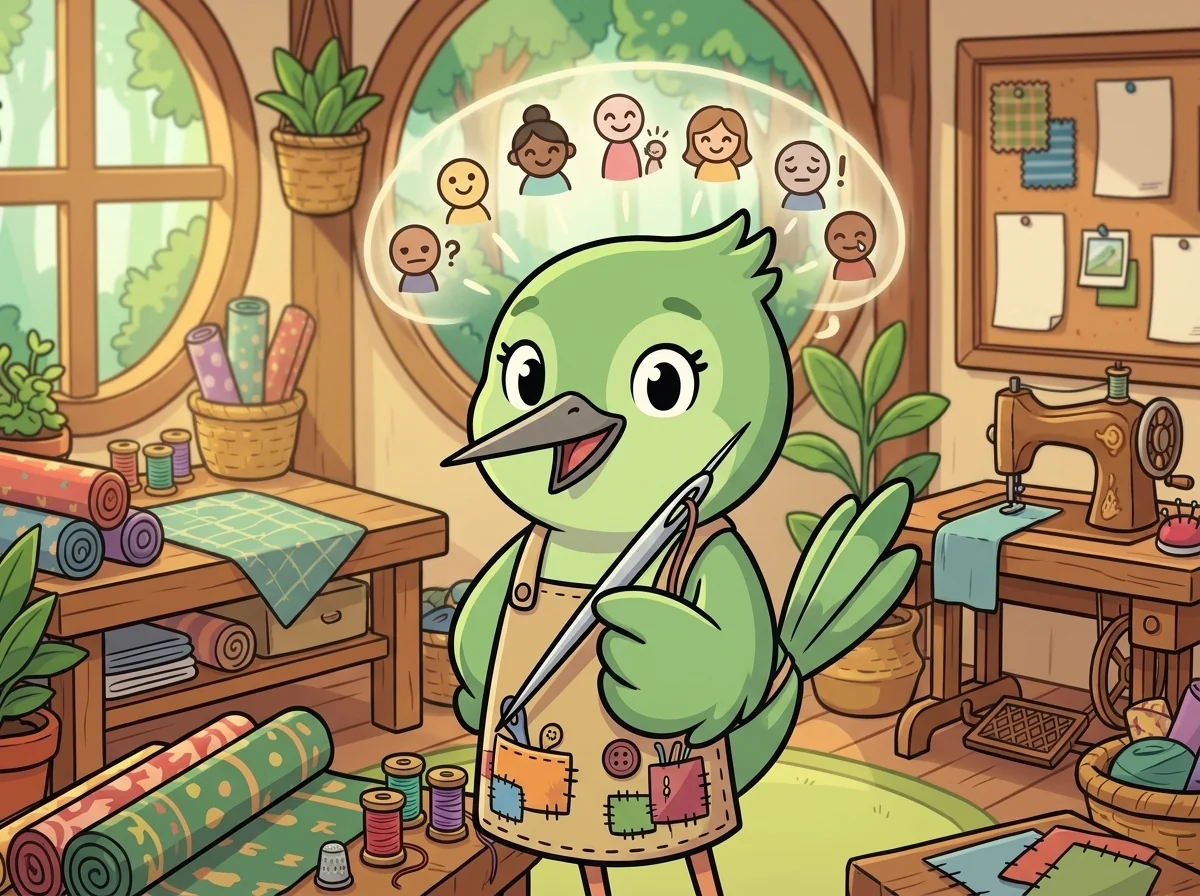
When Behalf was twelve, she flew to MakerForge. Spool, her mentor, asked, "Where does a good design begin?"
Behalf didn't hesitate. "With a someone," she said. "Everything you make, you make on someone's behalf. So before you build a thing, you find whose real need you're solving — you understand them, their problem, their life — and you let that shape the whole design. A thing made for a real person fits. A thing made for a cool idea usually fits no one. The person comes first. The build comes second."
Spool smiled. "You are appointed."
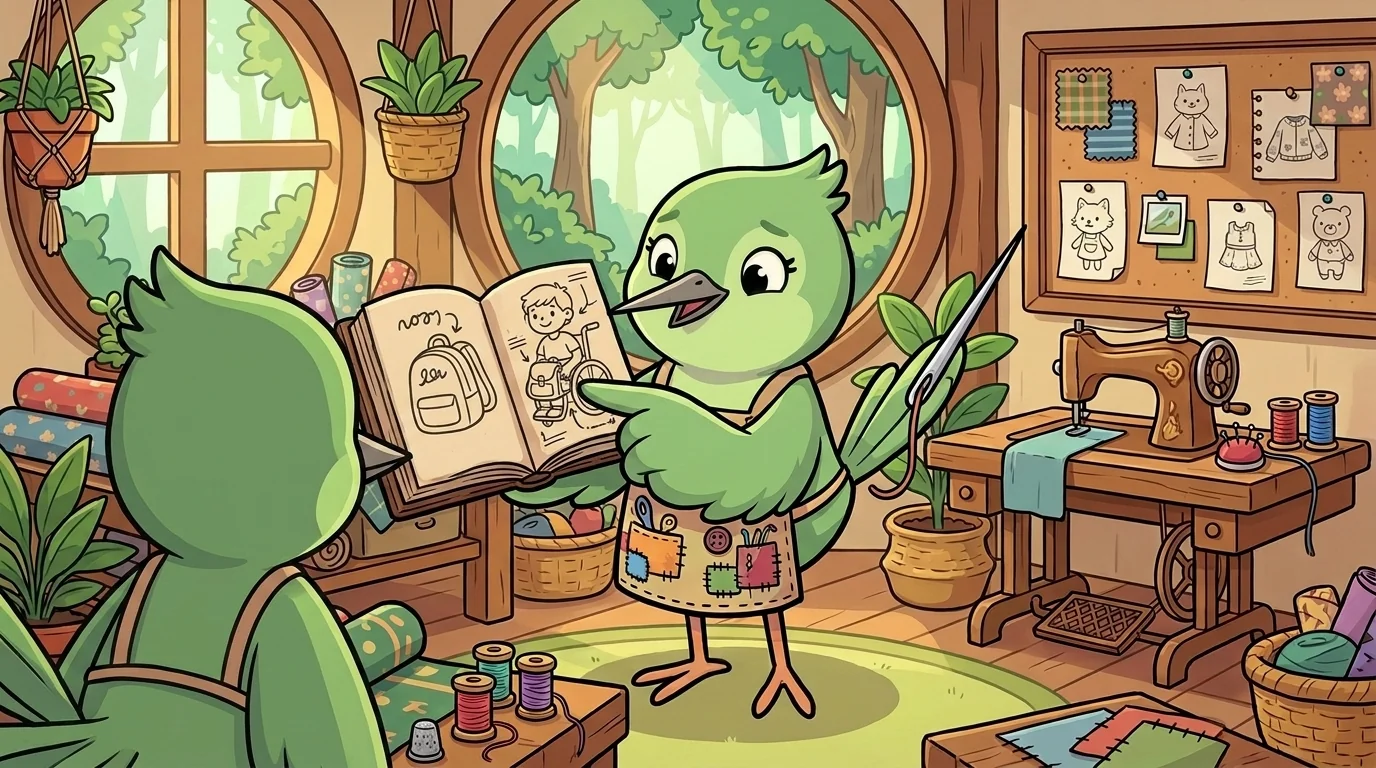
In her thread-strewn workshop, Behalf teaches by starting with a person. "Watch — someone wants to build a 'better backpack.'" She holds up a blank page. "First question: for whom? A little kid who forgets to zip it? A gardener who needs it waterproof? Someone whose hands don't grip well?" She fills the page with one real person. "Say it's a kid who uses a wheelchair and can't reach a bag behind them. Now the design has a shape — the bag has to sit where they can reach it, open how they can open it. The person's need designed it." Then she teaches the moves. Start with a real person, not a cool idea — name them, picture them, understand their day. Ask about their need, don't assume it — the thing they actually struggle with is often not the thing you'd guess. Watch and listen before you build — spend time understanding the problem from their side. Let their need shape every choice — every decision answers "does this serve them?" And her gentlest rule: "Don't fall in love with your idea. Fall in love with helping the person. The idea's just a way to do that — and if a better way appears, you follow it, because you were never really building the idea. You were building for them."
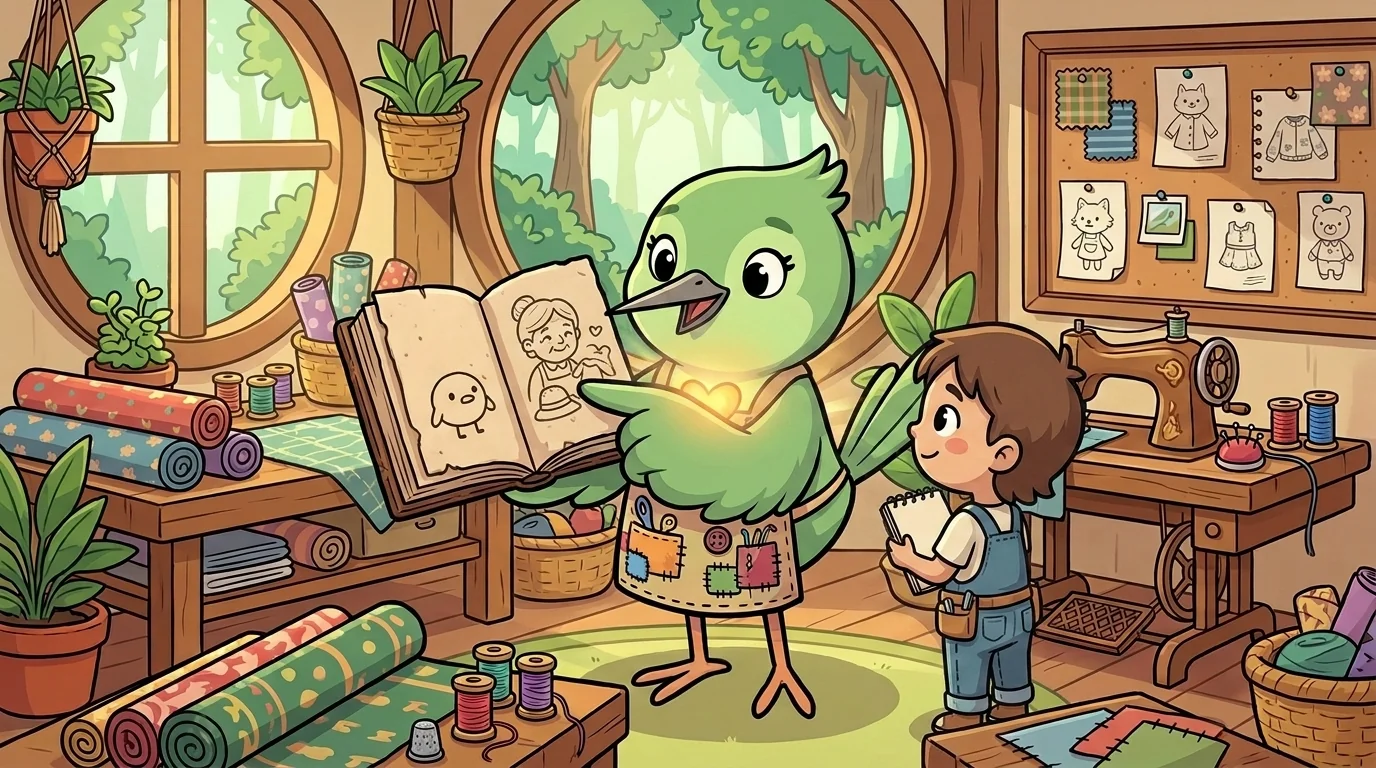
"But isn't my own idea the important part?" a student asked once, a little defensive. Behalf tilted her green head, kind. "Your idea's the tool. The person's the point. It's just: who is this for? What do they really need? Build for them, and the idea gets good all by itself."
She looked at her notebook, at the first page of every project — always a person, never a plan — and a warm, purposeful gladness rose steady through her small green chest: the deep contentment of making something that would actually fit into a real someone's real life, the way a well-sewn nest holds the exact family it was made for. That feeling — of a made thing meeting a true need, of building on behalf of someone and getting it right for them — was, to Behalf, the whole reason making mattered at all. "Make for a someone," she said softly. "Never for a nobody."
The MakerForge ensemble
Behalf is part of MakerForge's distributed-narrative cast. Each character embodies a different curricular primitive; together they teach the full subject.
-

Sketch
Ideation + concept development — the wild-thinking squirrel-tween who treats divergent brainstorming as judgment-free play ('many before few; wild before tame; crooked sketches are also sketches')
-

Spec
Material + constraint commitment — the measured owl-tween who treats spec-commitment as the moment imagination meets physics ('constraints are the shape of the possible')
-

Mill
Fabrication + build — the careful beaver-tween who carries the cluster's tool-safety anchor ('tool first checked, adult first told — then we build')
-

Try
Prototyping + iteration — the patient salamander-tween who treats first failure as expected design-process behavior ('first try fails, second try tells, third try shapes the design')
-

Log
Documentation + reflection — the wise turtle-elder who treats the notebook as the actual deliverable ('make it, mark it, share it — the notebook is the project')
-

Caliper
Precision — measure-twice-cut-once posture (a small error at the start grows into a big one; check before you commit)
-

Glean
Salvage & reuse — treasure-in-the-scrap posture (the best material is often the one you already have; see what a thing could become)
-
Nail
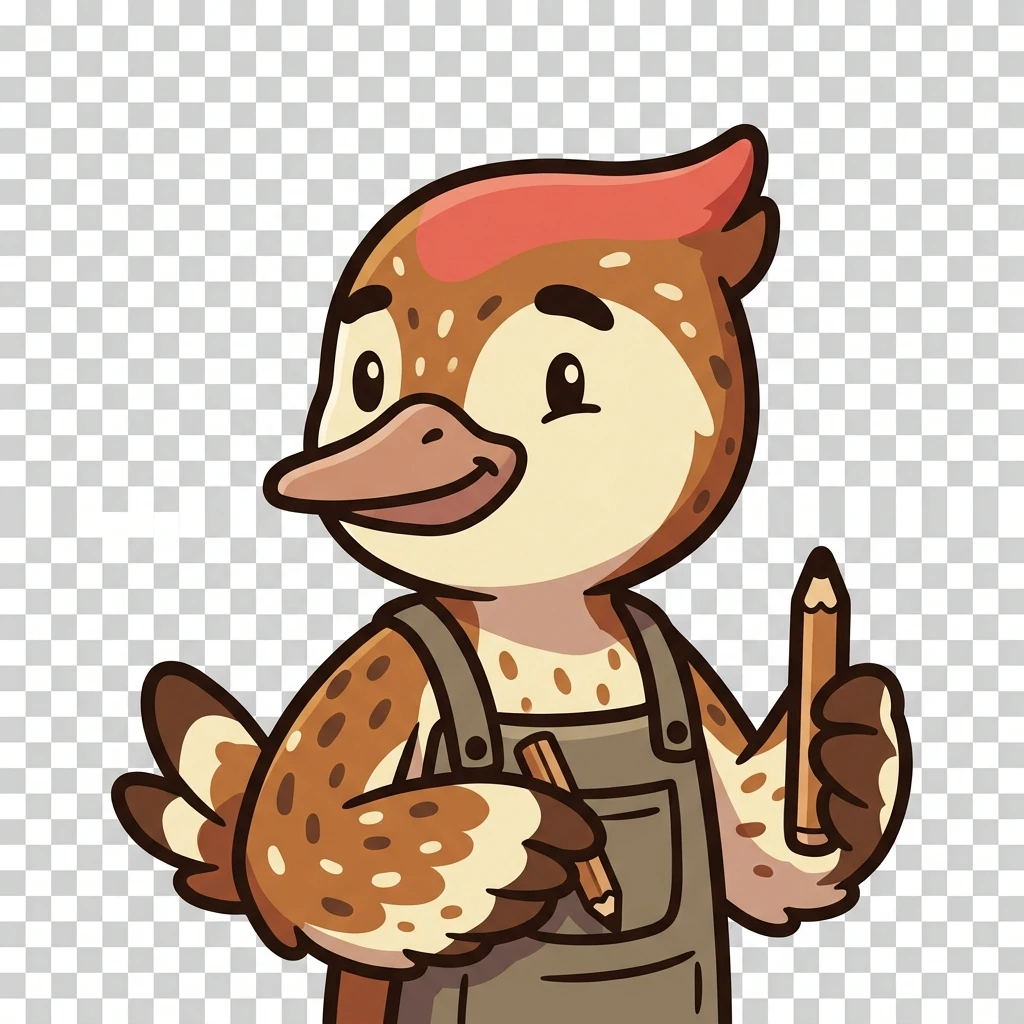
Define — frame-the-real-problem posture (a good question is half the solution; solve the actual problem, not the first one you notice)
-

Regard
Test — watch-real-users posture (what someone DOES with your thing is the truth; set it in their hands and observe, don't just ask)