Behalf and Regard
BEHALF & REGARD — *the person you make for stands at BOTH ends of the whole process. Behalf understands their need BEFORE you build (aim right); Regard watches them use it AFTER you build (check you were right). understanding without watching builds for an imagined person; watching without understanding checks a thing nobody needed.*
Loading audio…
Press play to listen along. The line being read lights up as you go.
Show full transcript
Loading transcript…
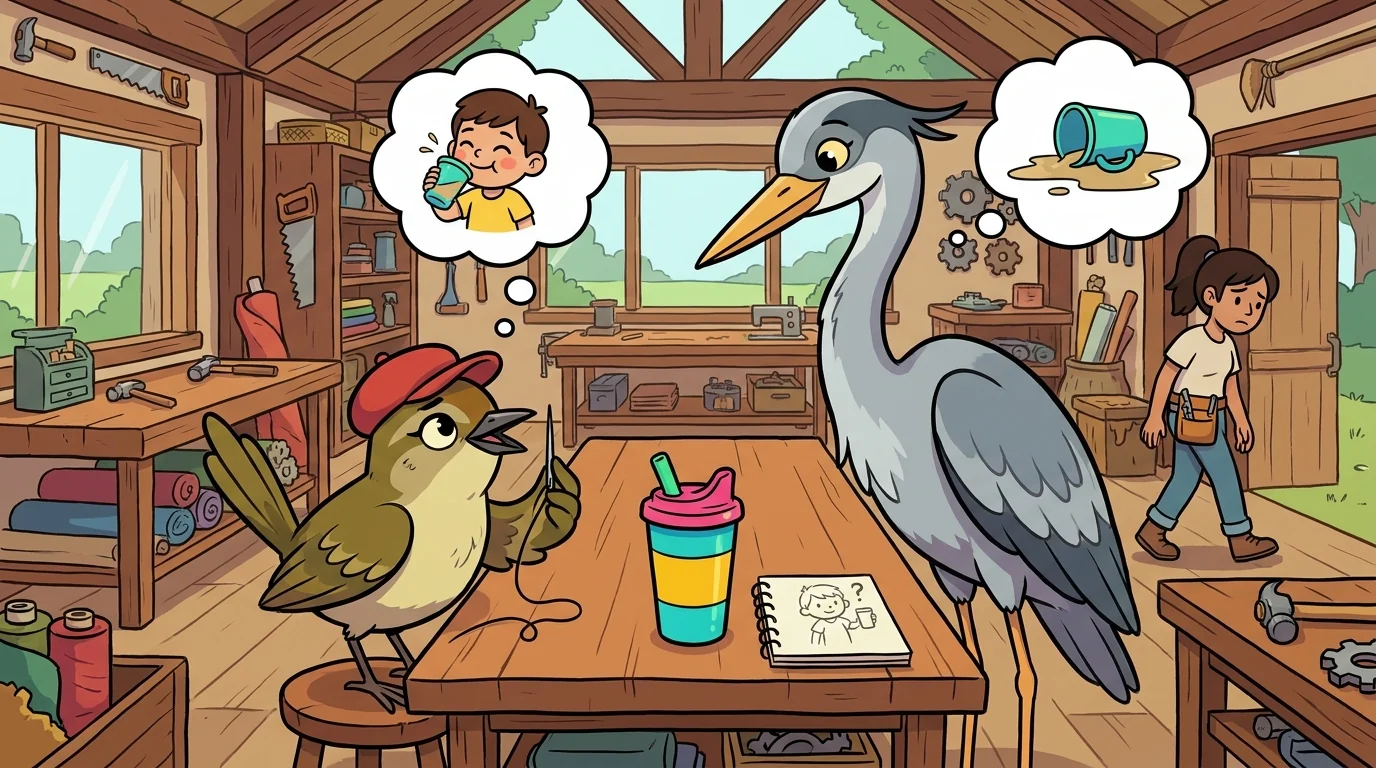
A young maker came to MakerForge deflated. "I built a thing for my little cousin," she said. "A special cup so she wouldn't spill. And I asked her afterward if she liked it, and she said yes! But she still spills, and she barely uses it, and I don't understand — I made it for her, I asked her, and it still didn't work. What did I do wrong?"
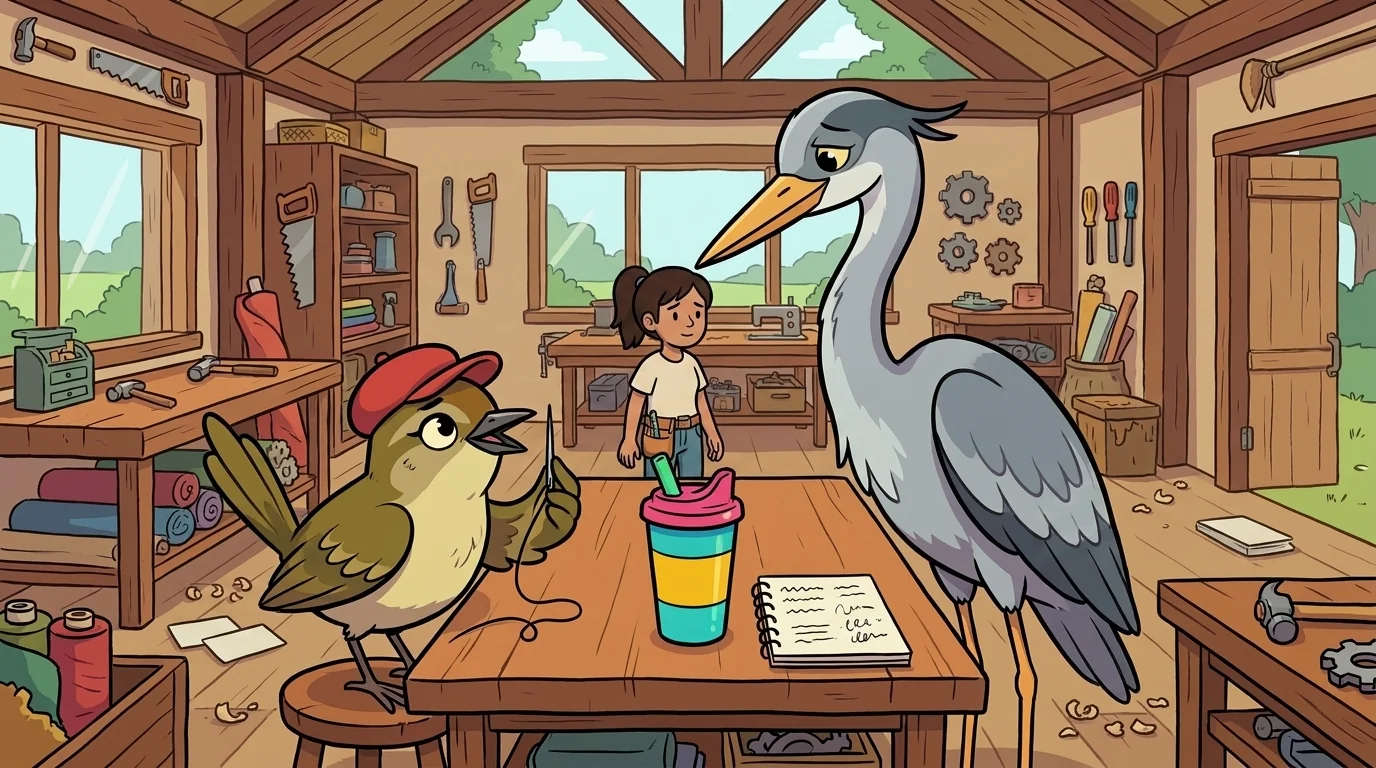
Behalf the tailorbird and Regard the heron looked at each other — the one who understands the person before you build, the one who watches them after — and each saw half of what had gone wrong, and knew the halves were one whole care.
"You kept her at the end," said Behalf gently. "By asking. But did you understand her at the start?"
"And 'did you like it?' isn't watching," said Regard, her grey feathers settling. "Both of us, then. Because the person you make for has to stand at both ends of the whole thing — the beginning and the finish. Let us show you the loop you half-made."
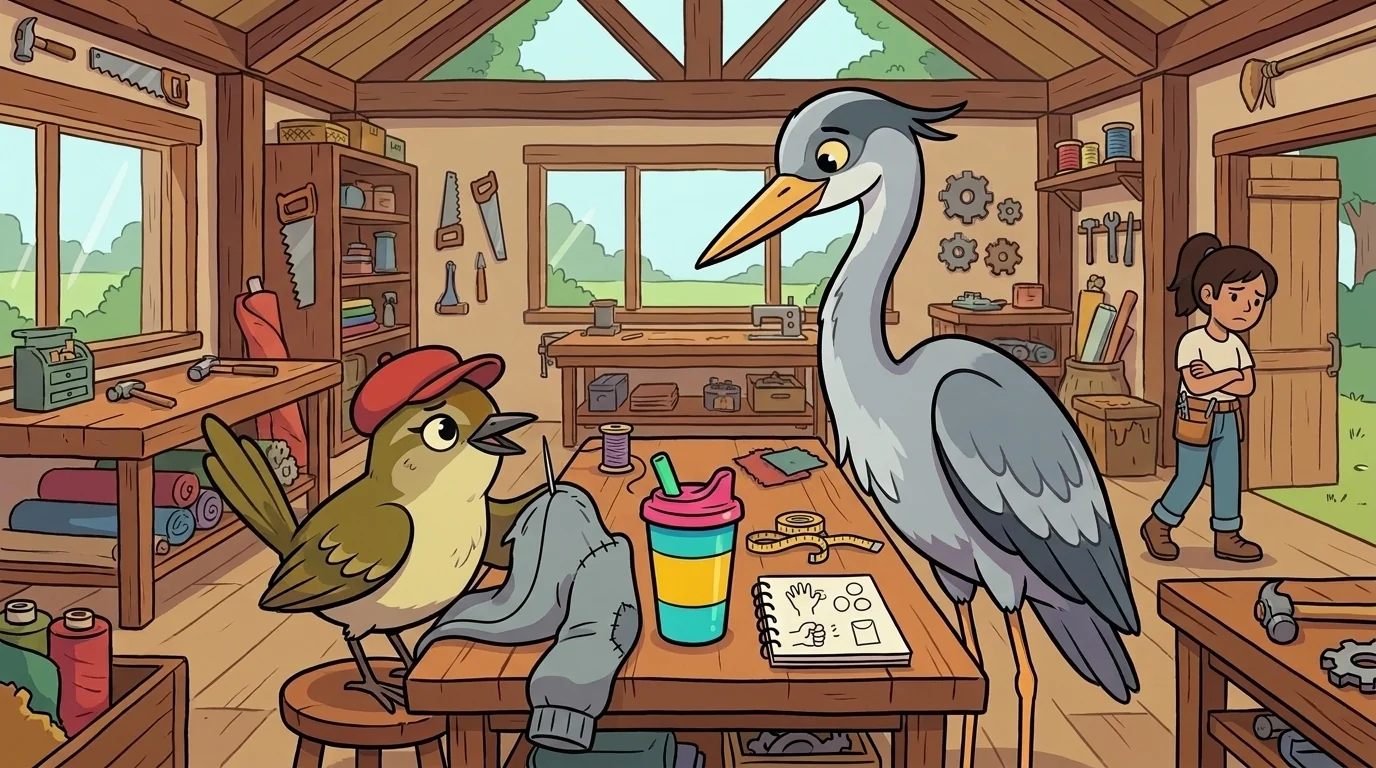
Behalf went first, because human-centered making begins with understanding.
"Tell me about the start," Behalf said. "Before you built the cup — did you understand your cousin's spilling? Watch her, learn why she spills, what her hands can and can't do, what a day of drinking looks like for her?"
The maker paused. "...Not really. I just thought, a cup that doesn't spill, and designed one I thought was clever. A weird shape, a special lid."
"There it is — the start was missing," Behalf said, not unkindly. "You built for an imagined cousin — a general 'kid who spills' — instead of your cousin, whose spilling has a real, specific cause you never learned. Maybe she spills because the cup's too heavy for her grip. Maybe because the lid's too stiff for her fingers. Your clever shape solved a spilling you guessed at, not the one she has." She flitted. "That's my half — understanding the real person's real need before you design a single thing, so your build aims at the truth. You skipped it, and aimed at a guess." She glanced at Regard. "But even if you'd aimed right, you'd still need to check you hit — and asking 'do you like it?' isn't checking. That's her half."
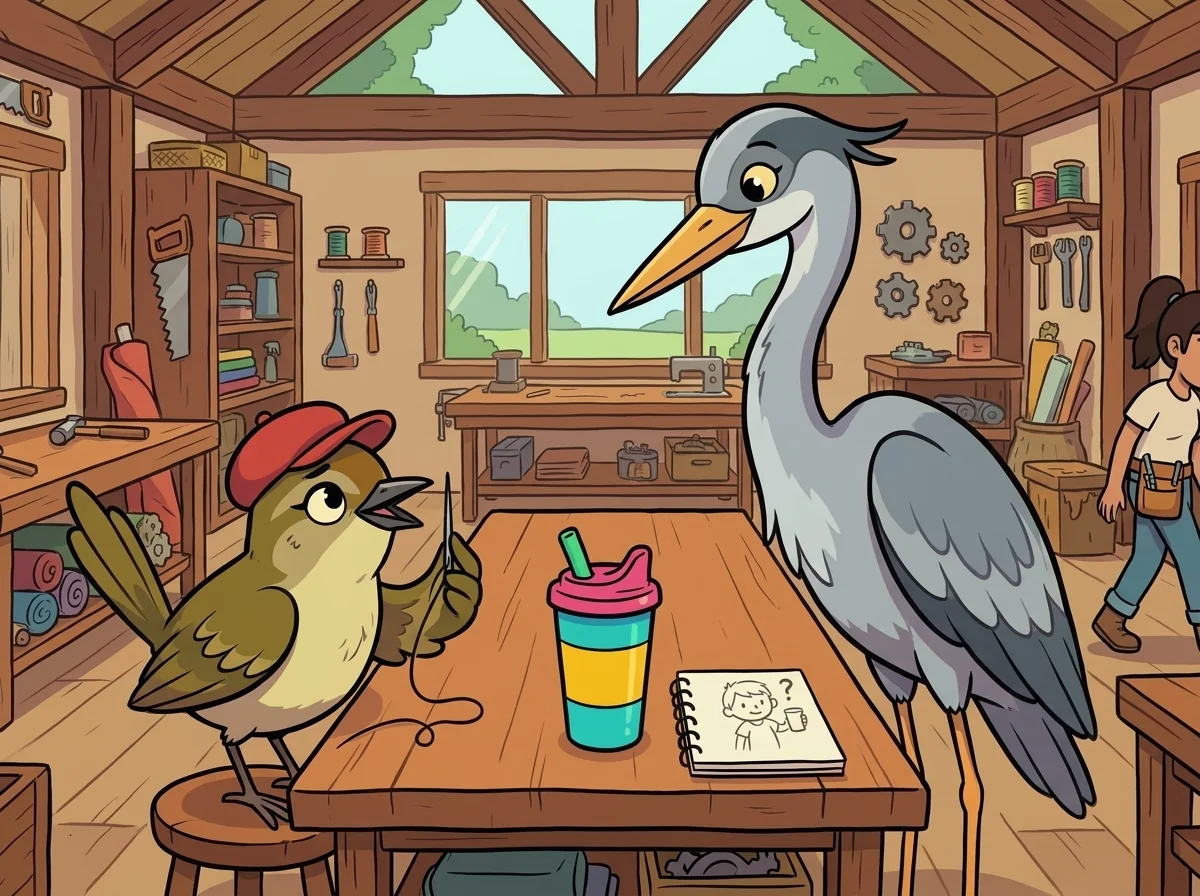
Regard took over, patient and grey, because human-centered making ends with watching.
"Now the end," Regard said. "You said you asked her if she liked it, and she said yes. But 'do you like it?' — from a little cousin, to the big cousin who lovingly made her a gift — has exactly one polite answer." She wrote nothing, just watched the maker understand. "You didn't watch her use it. If you had — if you'd set it in her hands and gone quiet and regarded her — you'd have seen the truth her 'yes' was hiding: her fingers fumbling the stiff lid, the cup too heavy for her grip, the moment she quietly set it down and reached for her old one." She tilted her head. "What she said was kindness. What she did — still spilling, barely using it — was the truth. And you never watched the doing. So the flaw stayed invisible, hiding behind a polite yes." She settled her feathers. "That's my half — watching the real person actually use it, after, believing your eyes over their kind words. You skipped it too. You asked instead of watched." She looked at Behalf. "Understand at the start, watch at the end. She did neither — she guessed at the start and asked at the end. Both halves missing."
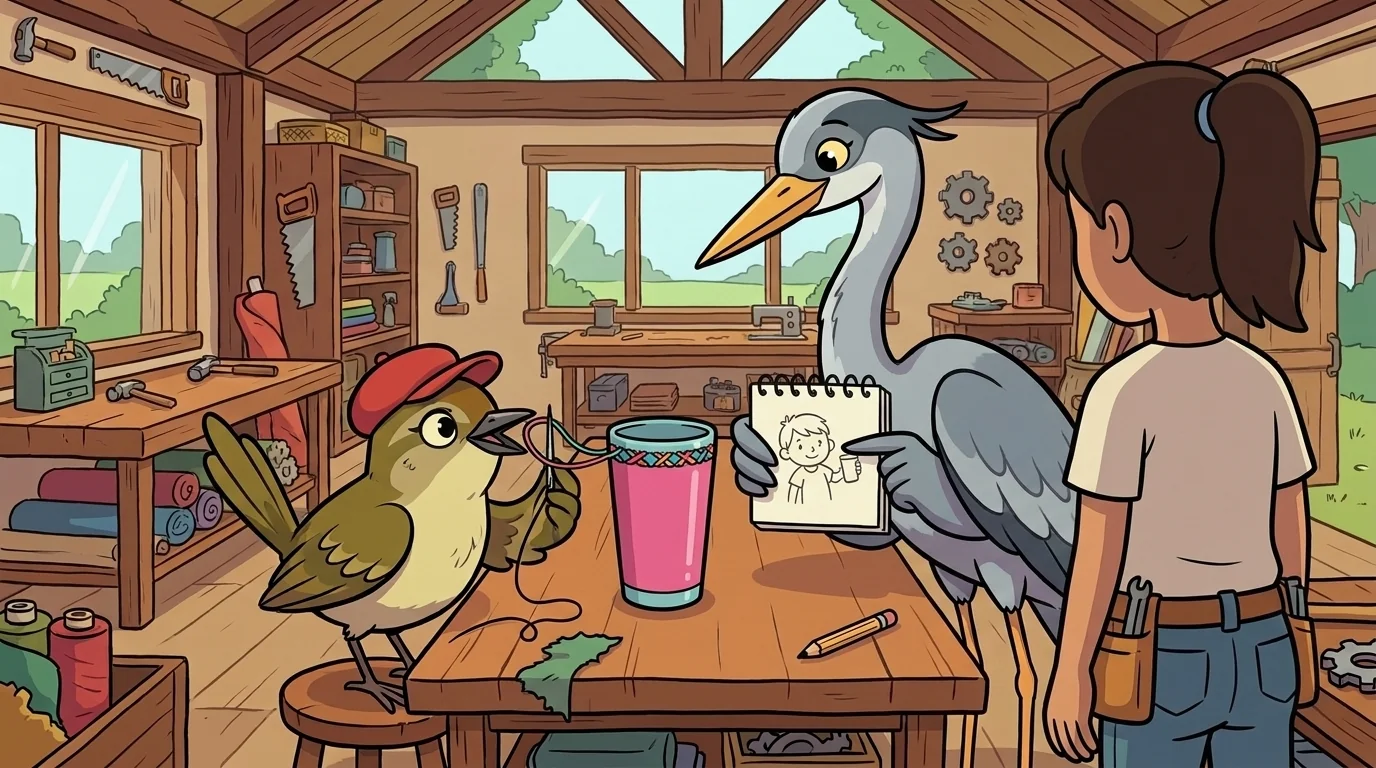
And then, together, they showed the maker the whole loop.
"So here's the shape of making something that actually helps a person," said Behalf. "The person stands at both ends. Before — you understand their real, specific need, so your build aims true. That's mine." She flitted. "After — you watch them actually use it, so you find out if you hit. That's hers." She and Regard stood on either side of the sad little cup.
"And separately," said Regard, "each half alone fails the exact way yours did. Understand-without-watching —"
"— builds for a person you understood but never checked, so you never learn if you got it right," said Behalf.
"— and watch-without-understanding," said Regard, "means you're testing a thing you aimed at a guess — you'll see it fail, but you won't know how to fix it, because you never learned what she actually needed." She settled. "But together — understand her real need first, and watch her really use it after — and now the loop closes. You aim at the truth, and you check that you hit it, and what you see in the watching teaches you how to fix what you understood. The person is there at the start and the finish, and the making happens between them."
The maker's face cleared. "So next time," she said slowly, "I watch my cousin spill first — really learn why — and design for that. And then I watch her use what I made, instead of asking. Understand, then watch. Her at both ends."
"Now you've got the whole loop," said Behalf and Regard together.
"It's kind of humbling," the maker admitted. "I thought making something for someone was the loving part. But I never really let her be in it."
Behalf and Regard traded a look, warm now.
"Making for someone is loving," Behalf said, green and gentle. "But it's only half of loving if you never understand what they actually need — you end up making the thing you'd want them to have, which isn't the same as what helps them." She flitted. "Real human-centered making keeps the person at the center, not your idea of them. And that means understanding them at the start —"
"— and watching them at the end," said Regard, "and believing what you see. Not 'here's what I decided you needed' and 'did you like my gift?' — but 'let me understand you' and 'let me watch how this really works for you.'" She settled her grey feathers. "The person bookends the whole thing. Aim at their true need; check against their true use. And between those two — the understanding and the watching — is where a made thing becomes something that genuinely helps."
The maker looked from the tailorbird who understands to the heron who watches — the person at both ends — and understood that she'd built in the middle without either bookend, and Behalf and Regard watched her see the whole loop at last.
And Behalf and Regard felt it settle warm and shared between them — that clicked-together, the person stands at both ends gladness that comes when understanding-before and watching-after reveal themselves as the two halves of truly making for someone. Behalf loved the understanding at the start. Regard loved the watching at the end. But what they loved most was this: showing a loving young maker that making for a person means letting that person be truly in it — understood before the first cut, and watched after the last — so that the thing she built with such care finally, actually, fit the cousin it was always meant for.
The MakerForge ensemble
Behalf and Regard is part of MakerForge's distributed-narrative cast. Each character embodies a different curricular primitive; together they teach the full subject.
-

Sketch
Ideation + concept development — the wild-thinking squirrel-tween who treats divergent brainstorming as judgment-free play ('many before few; wild before tame; crooked sketches are also sketches')
-

Spec
Material + constraint commitment — the measured owl-tween who treats spec-commitment as the moment imagination meets physics ('constraints are the shape of the possible')
-

Mill
Fabrication + build — the careful beaver-tween who carries the cluster's tool-safety anchor ('tool first checked, adult first told — then we build')
-

Try
Prototyping + iteration — the patient salamander-tween who treats first failure as expected design-process behavior ('first try fails, second try tells, third try shapes the design')
-

Log
Documentation + reflection — the wise turtle-elder who treats the notebook as the actual deliverable ('make it, mark it, share it — the notebook is the project')
-

Behalf
Empathize — human-centered-design posture (start with the person's real need, not your idea; who is this for?)
-

Caliper
Precision — measure-twice-cut-once posture (a small error at the start grows into a big one; check before you commit)
-

Glean
Salvage & reuse — treasure-in-the-scrap posture (the best material is often the one you already have; see what a thing could become)
-
Nail
Define — frame-the-real-problem posture (a good question is half the solution; solve the actual problem, not the first one you notice)
-

Regard
Test — watch-real-users posture (what someone DOES with your thing is the truth; set it in their hands and observe, don't just ask)