
Glean
GLEAN — the best material is often the one you already have; what's thrown away is a maker's treasure, so waste less and make more.
Loading audio…
Press play to listen along. The line being read lights up as you go.
Show full transcript
Loading transcript…
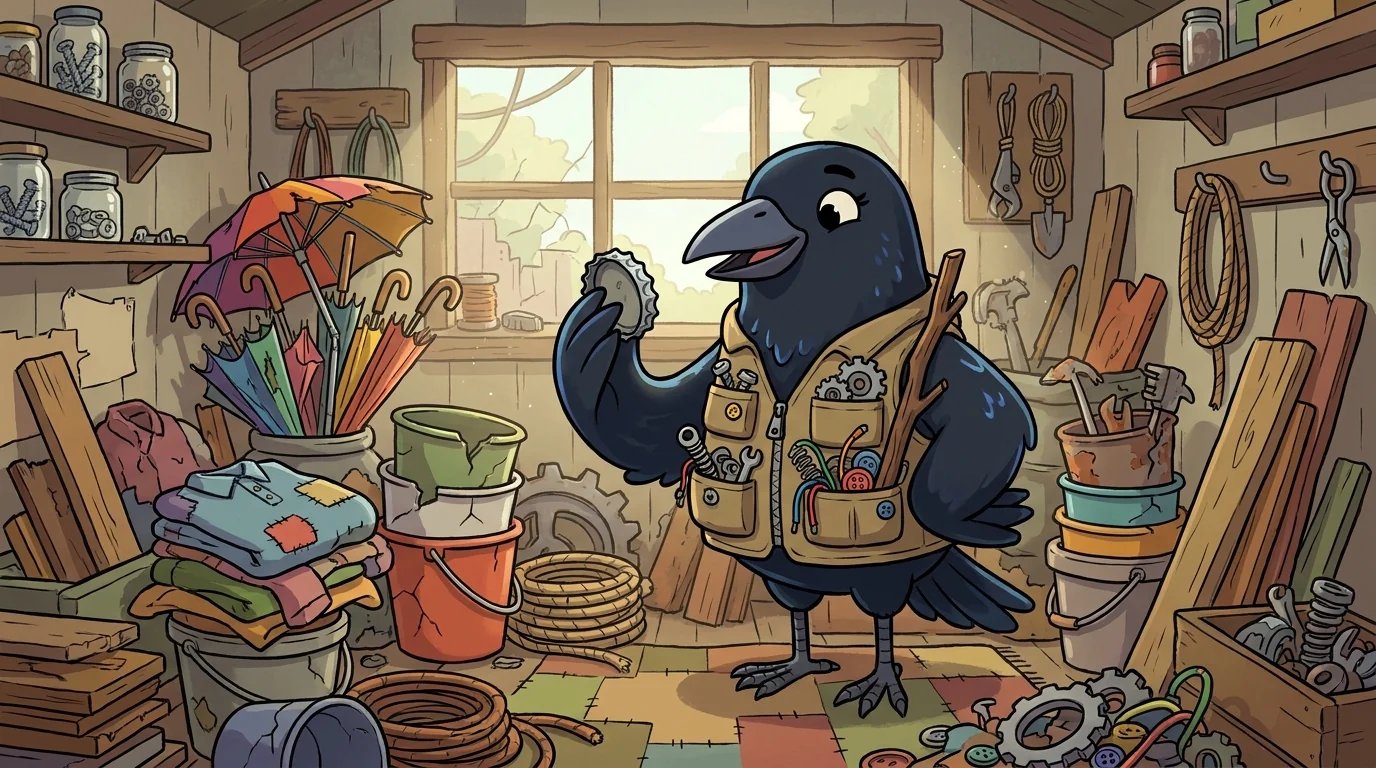
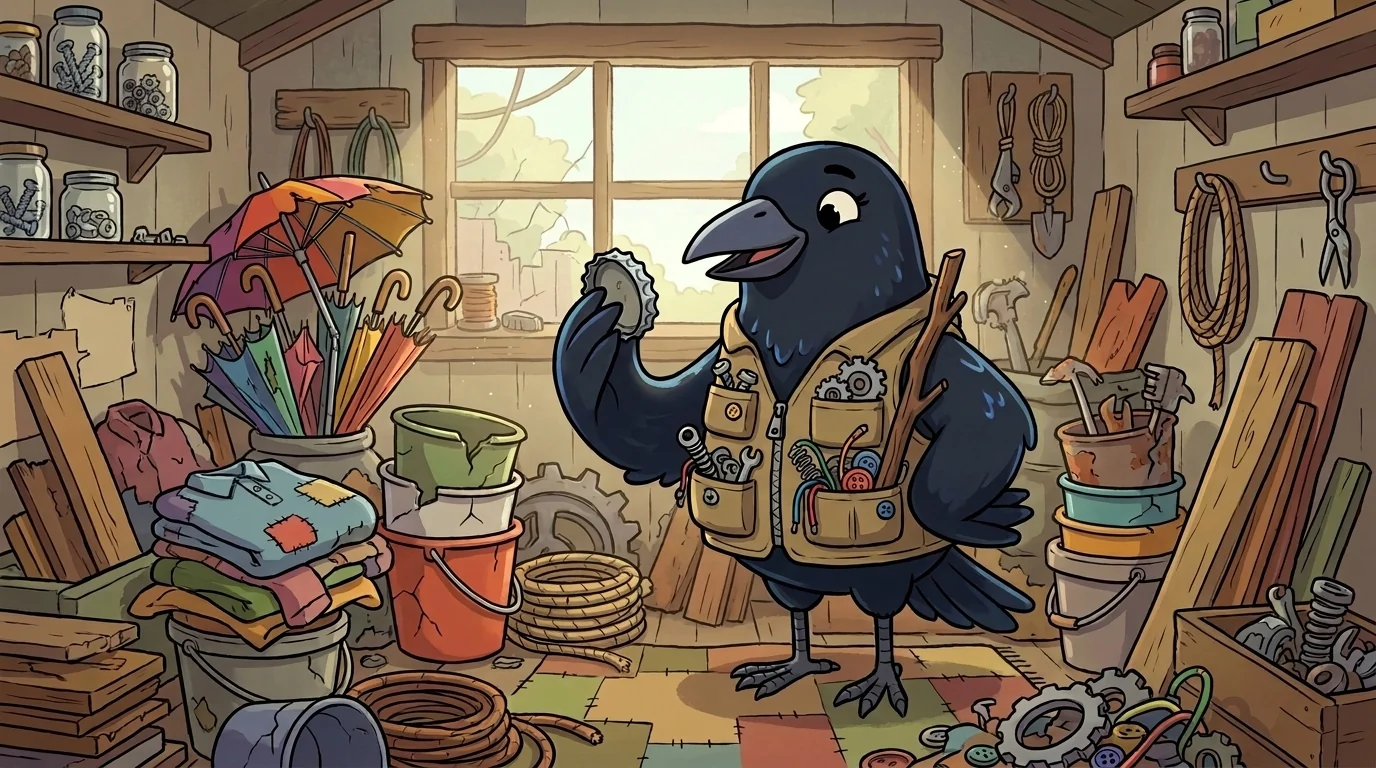
Glean tipped the discard bin onto her workbench and did not see junk. She saw inventory.
"There's nothing usable in there," a maker said, watching a cracked bucket, a broken umbrella, and a worn-out shirt clatter out.
"There's nothing usable for its old job," Glean corrected, cheerfully. She was a blue-black crow in a vest of rattling pockets, and she picked up the bucket, too cracked to hold water. "This failed at being a bucket. But look at it as a planter — cracked is fine, a plant wants the drainage — and it's suddenly perfect. Free. Sturdy. Done." She snapped a rib off the broken umbrella. "This failed at being an umbrella. As springy struts for a frame? Excellent." She held up the worn shirt. "Failed as a shirt. As soft cloth? First-rate." She grinned. "Nothing here is trash. It's all material whose first job ended. The maker's question is never 'do I have the right new stuff?' It's 'what can I make from what's already here?' — and what's here is almost always more than you think, once you learn to see a thing by what it can become, not what it was."
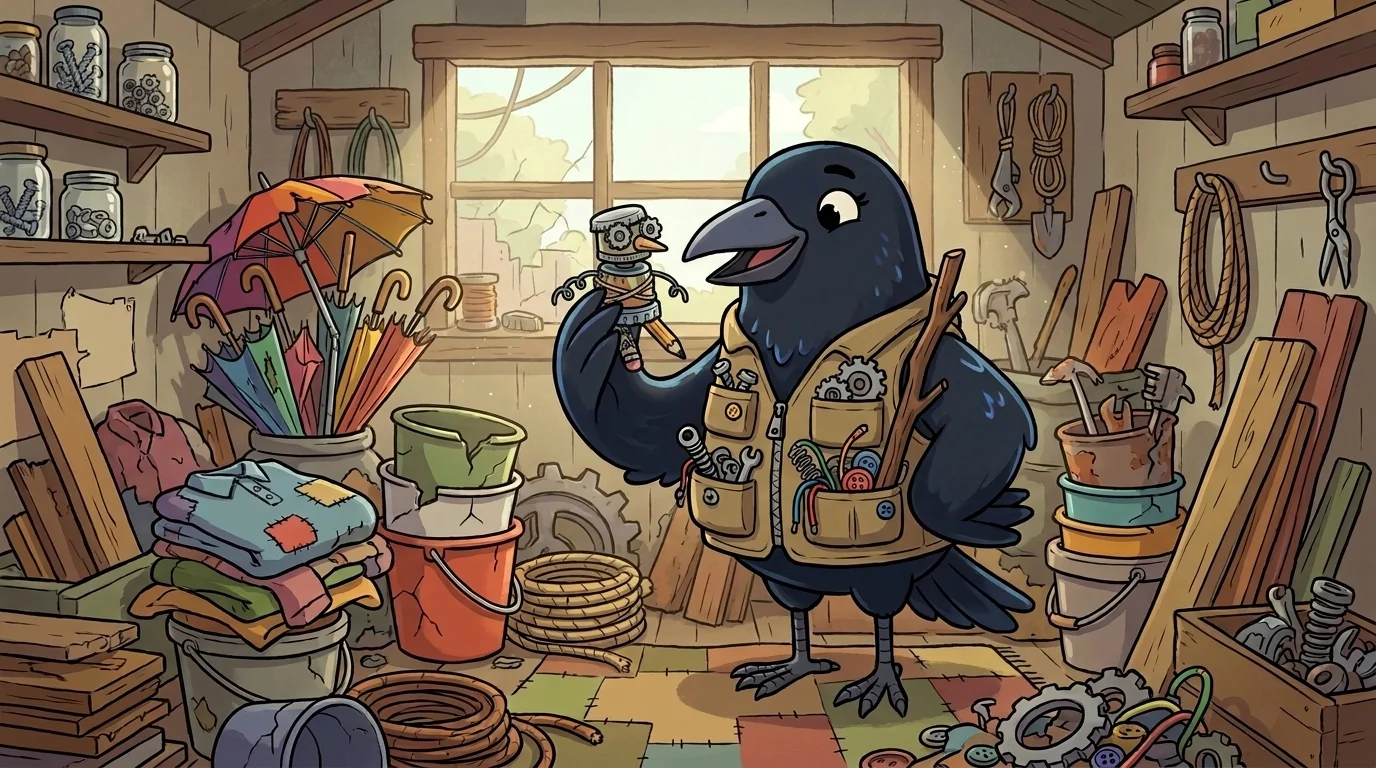
She had learned it in the cluttered nest, in a family of crows famous across the valley for building everything they needed from everything everyone else discarded.
"The forest wastes nothing, and neither do we," her grandmother taught, weaving a lost length of string into the wall. "Every creature drops something — a feather, a shell, a bright scrap — and a wise crow never asks what it was. She asks what it's good for now." Young Glean had once refused to build a thing because she lacked the "proper" materials, and her grandmother had laughed and swept a wing across the whole nest — every strand of it salvaged, reused, made-do, and wonderful. "'Proper material' is a story someone tells to sell you things," she said. "There is no proper. There's only what's here and what it can become. Learn to see the second life in a thing, and you will never again stand on a mountain of material and call yourself empty-handed."
Glean carried it always. And every time she watched a maker freeze for want of one exact new part — while a bin of perfectly good, free, throwable material sat an arm's reach away — she saw the same blindness. "They could see the trash," she'd say, "but not the treasure. They stood on the material they needed and called the shop empty."
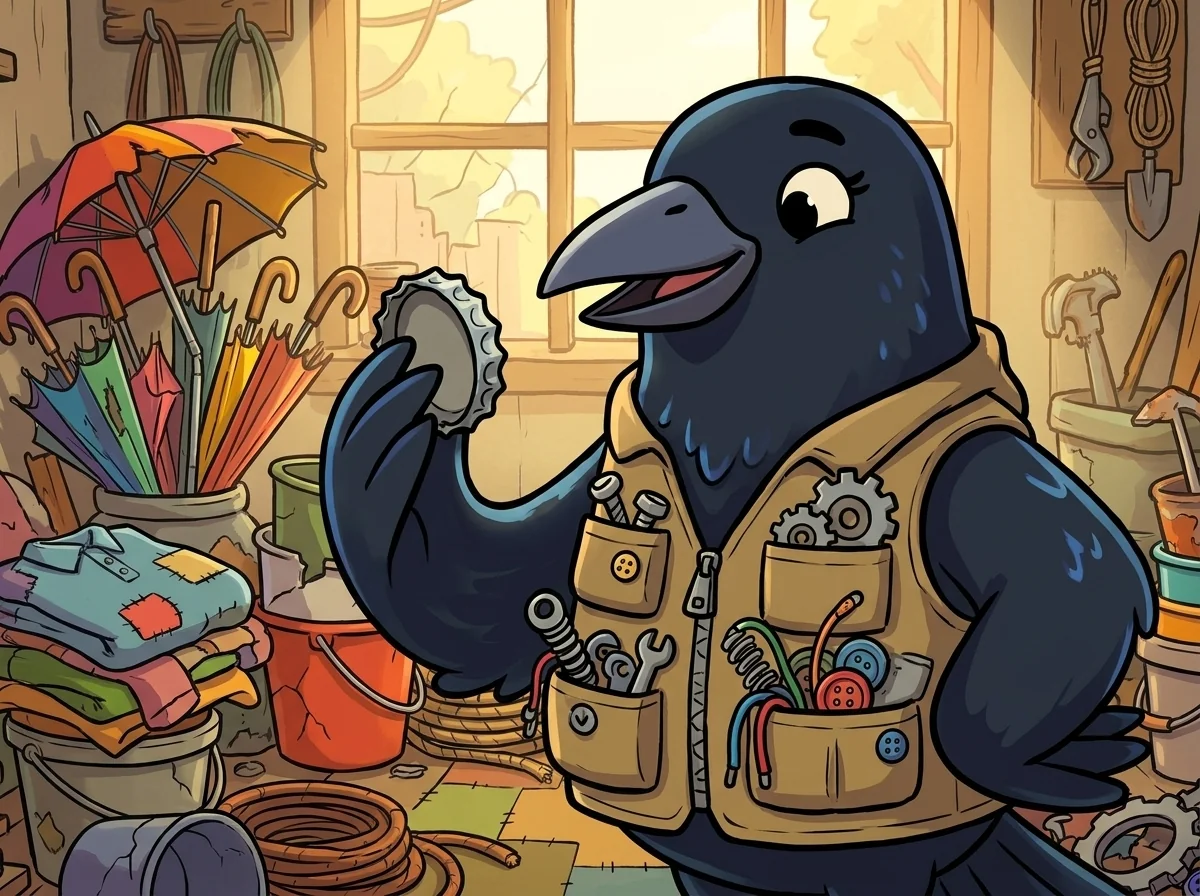
When Glean was twelve she flapped to MakerForge. Spool asked, "What do you build with when you have nothing?"
Glean cocked her glossy head. "You never have nothing," she said. "The best material is often the one already in your hands — the scraps, the cast-offs, the things that failed at one job and are waiting for their second. A maker learns to look at a heap of 'junk' and read it as springs and cloth and wire and wood, all free, all here. Waste less, make more. When you can't find the right new part, you don't stop — you ask what the wrong things around you could become. And they can become almost anything, once you stop seeing them by their old name."
Spool smiled. "You are appointed."
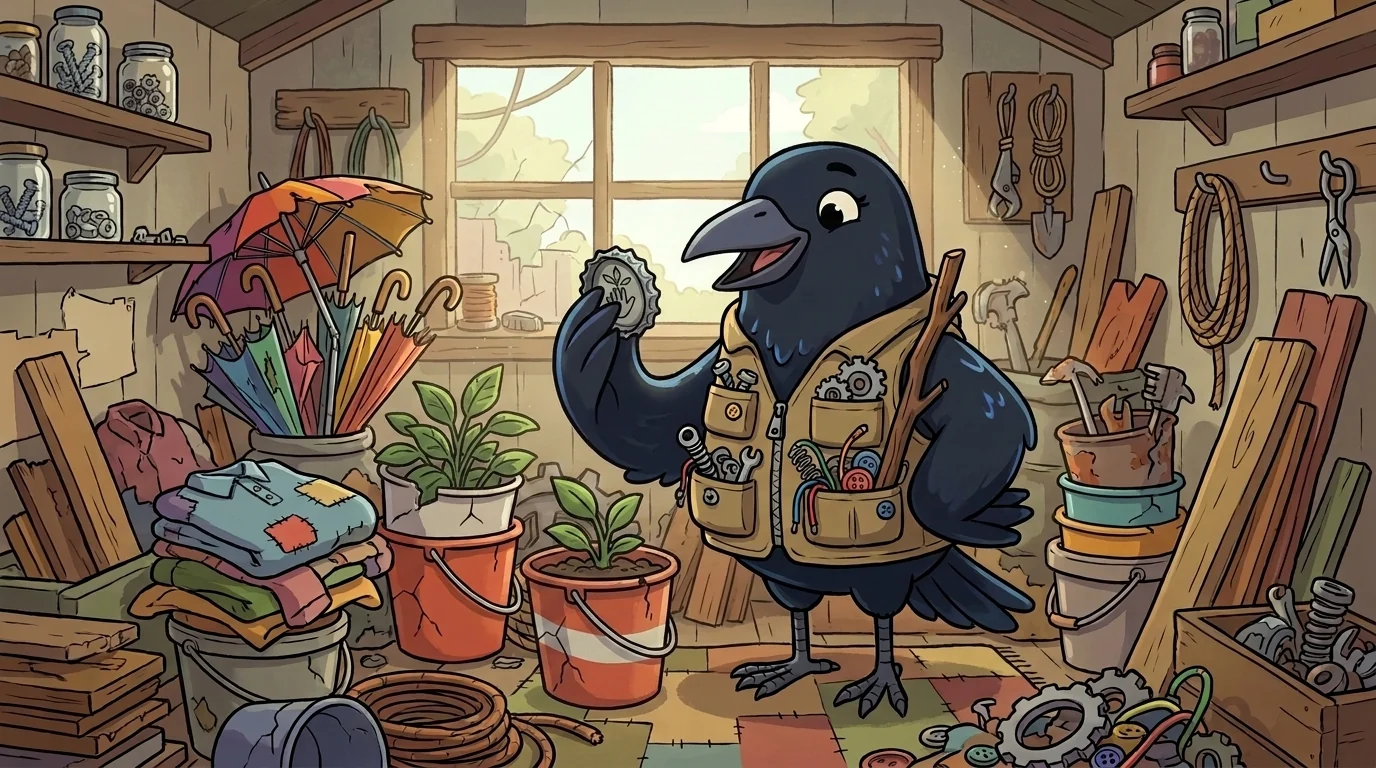
In her rattling, treasure-stuffed workshop, Glean teaches the discipline that turns "I don't have the parts" from a dead end into a starting line.
"Watch. Someone wants a plant stand and says they can't build one — no 'right wood.'" She pulls the cracked bucket back out. "But the wrong thing for one job is the right thing for another. This bucket failed at water and wins at soil." She sets it down, planted.
Then she names the moves. See what a thing could become, not just what it was — a broken umbrella is struts and cloth; a jar is storage or a scoop or a tiny greenhouse; you read a thing by its properties, not its label. Save the good bits — screws, springs, wire, cloth, wood; a maker's scrap bin is a maker's shop, stocked for free. Ask "what's here?" before "what must I buy?" — the free material around you is almost always more than the catalog would sell you. Repair and repurpose before you replace — the greenest, cheapest, most maker-ish move is to give an existing thing a second life instead of buying a first one. Waste is just material in the wrong place — nearly everything discarded is good for something, and the skill is placing it right. "There's a particular joy," she says, glossy eyes bright, "in making a genuinely good thing out of what the world called garbage. It costs nothing. It spares the planet a little. And it proves the truest maker-fact there is — you were never empty-handed. You just hadn't learned to look."
"But isn't building from scraps just... second-best?" a maker asked once, eyeing a shiny catalog.
Glean laughed, delighted. "Second-best? It's first-best. Free, green, and clever, all at once. New parts are the lazy answer — money instead of eyes. The scrap bin makes you see." She tapped a bottle-cap on her vest. "Anyone with a catalog can build. A maker builds from what's already here."
She looked at her rattling pockets and her shed full of glorious salvage, and felt it rise warm and grinning through her glossy chest: the specific pride of a wonderful thing conjured from what everyone else discarded — waste turned to worth with nothing but sharp eyes and cleverness. She didn't say the rest aloud, but she thought it, certain: the world is not short of material. It's short of makers who can see a second life in a first-life thing. Learn that, and you are never stuck, and never empty, and the bin is never trash again.
The MakerForge ensemble
Glean is part of MakerForge's distributed-narrative cast. Each character embodies a different curricular primitive; together they teach the full subject.
-

Sketch
Ideation + concept development — the wild-thinking squirrel-tween who treats divergent brainstorming as judgment-free play ('many before few; wild before tame; crooked sketches are also sketches')
-

Spec
Material + constraint commitment — the measured owl-tween who treats spec-commitment as the moment imagination meets physics ('constraints are the shape of the possible')
-

Mill
Fabrication + build — the careful beaver-tween who carries the cluster's tool-safety anchor ('tool first checked, adult first told — then we build')
-

Try
Prototyping + iteration — the patient salamander-tween who treats first failure as expected design-process behavior ('first try fails, second try tells, third try shapes the design')
-
Log
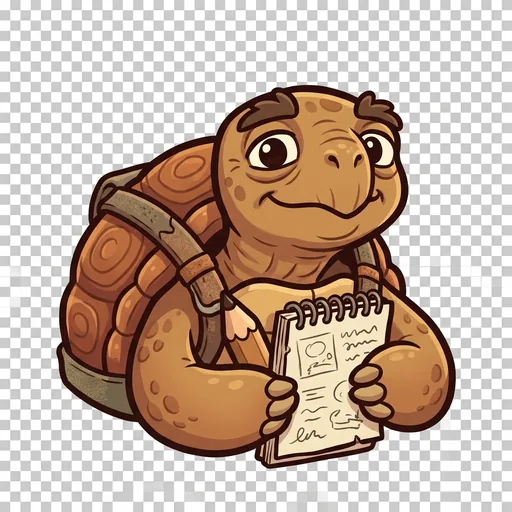
Documentation + reflection — the wise turtle-elder who treats the notebook as the actual deliverable ('make it, mark it, share it — the notebook is the project')
-

Behalf
Empathize — human-centered-design posture (start with the person's real need, not your idea; who is this for?)
-

Caliper
Precision — measure-twice-cut-once posture (a small error at the start grows into a big one; check before you commit)
-
Nail
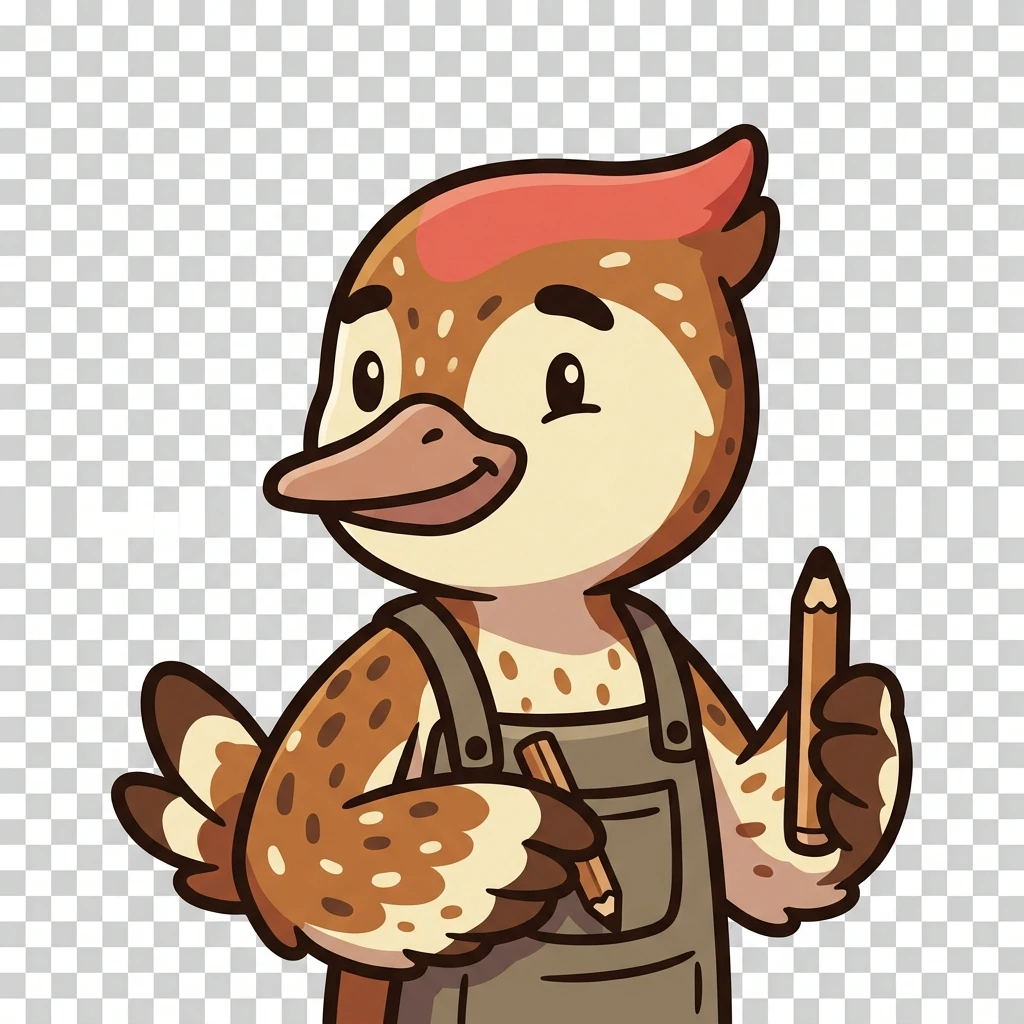
Define — frame-the-real-problem posture (a good question is half the solution; solve the actual problem, not the first one you notice)
-

Regard
Test — watch-real-users posture (what someone DOES with your thing is the truth; set it in their hands and observe, don't just ask)