Nail and Caliper
NAIL & CALIPER — *precision matters at two scales at once. Nail gets the PROBLEM exact (the right question); Caliper gets the NUMBERS exact (the right cut). a perfectly-measured build of the wrong thing wastes the precision; a sloppy build of the right thing wastes the insight. get both exactly right.*
Loading audio…
Press play to listen along. The line being read lights up as you go.
Show full transcript
Loading transcript…

A young maker came to MakerForge frustrated in a way she couldn't quite name. "I built a shelf," she said, "and I measured every single cut twice — Caliper would be proud, every piece was perfect to the hair. It went together beautifully. And it's... useless. It's the wrong size for the wall, the shelves are spaced wrong for my books, it doesn't actually solve my storage problem at all. But it's so precisely built. How can something be so exact and so wrong at the same time?"
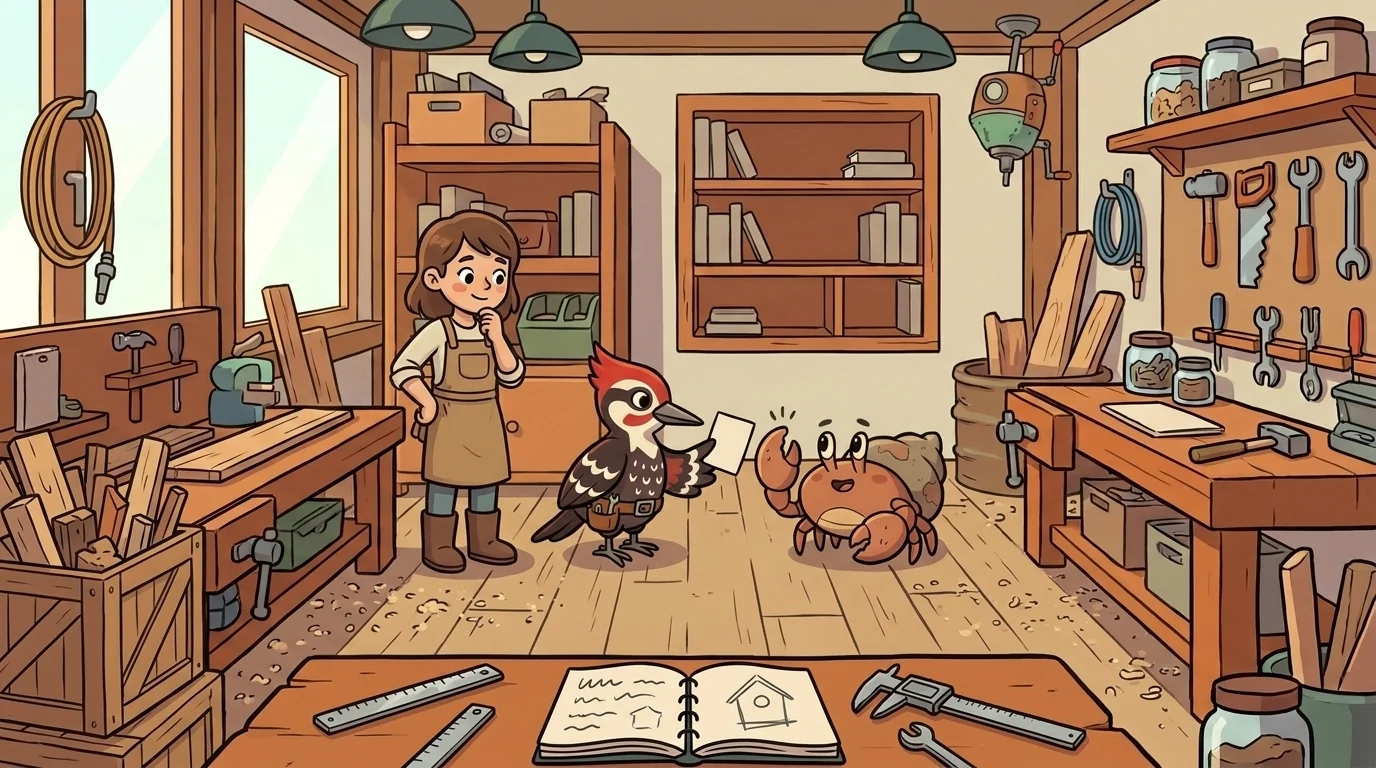
Nail the woodpecker and Caliper the crab looked at each other — the one who gets the problem exact, the one who gets the numbers exact — and both nodded slowly, because the maker had discovered that there are two kinds of precision, and she'd mastered only one.
"You were exact about the cuts," said Caliper, clicking her pincers. "That was my half, and you nailed it."
"But you were sloppy about the problem," said Nail, tapping her card. "Which was mine. Precision at two scales, this job. Let us show you the one you missed."

Nail went first, because the precision of the problem comes before the precision of the cut.
"Before you measured a single board," Nail said, "did you nail the real problem? Precisely? Not 'I want a shelf' — but what, exactly, do I need to store, where, spaced how, on which wall?"
The maker paused. "...No. I just thought shelf, and started building a nice-looking one. I never pinned down what it actually had to do."
"There's the first scale of precision, and you skipped it," Nail said, not unkindly. "You were exact about every cut — and vague about the whole point. So you built a beautifully-precise answer to a fuzzy question, and a precise answer to a fuzzy question is still... the wrong shelf." She tapped her card, What is the REAL problem? "My kind of precision comes first — getting the problem exactly right: these books, this many, this wall, this height. If you'd nailed that to the hair the way you nailed your cuts to the hair, the shelf would fit your life, not just fit together." She glanced at Caliper. "You brought her precision — the cuts — to a build my precision never aimed. That's why it's exact and useless at once."

Caliper took over, clicking, because the precision of the cut is what makes the right problem into a real thing.
"Now — don't hear this wrong," Caliper said. "My precision still matters just as much. Say you'd done Nail's part perfectly — nailed the exact problem, the exact books, the exact wall. Then you still have to build it precisely, or it fails the other way." She measured the air with her pincers. "Imagine you'd aimed perfectly — right problem, right size — but then measured each cut once, hopeful and fast, a hair off each time. The shelf would be aimed right and built wrong: warped, wobbly, shelves that sag, pieces that don't meet. The right answer, ruined in the making." She clicked. "So my precision — measure twice, cut once, catch the small error before it grows — is also necessary. A perfectly-aimed build, made sloppily, fails just as surely as a perfectly-made build, aimed wrong." She looked at Nail. "You had my half and not hers. But the other maker who has her half and not mine fails too — a great answer, badly cut."

And then, together, they showed the maker the two scales of getting it right.
"So precision lives at two scales," said Nail, "and you need both." She held up her card. "The problem — exact. The right question, pinned to the hair: what does this actually need to do? That's mine."
"The numbers — exact," said Caliper, clicking her pincers. "The right cut, measured to the hair: does each piece fit? That's mine." They stood on either side of the precisely-useless shelf.
"And separately," said Nail, "each precision alone leaves you with a different kind of failure. My exact problem, built sloppily —"
"— gives you the right shelf, warped and wobbly and falling apart," said Caliper.
"— and your exact cuts, aimed at a fuzzy problem —"
"— give you a flawless, beautiful shelf that solves nothing, which is exactly what you built," said Nail. "One is a good answer ruined in the making. The other is a perfect making of the wrong answer. Both waste something precious." She tapped her card. "But together — nail the problem and measure the cuts, exact at both scales — and now you get a shelf that's both the right thing and well-made. Precise where it counts, twice: in the aiming and in the building."
The maker looked at her flawless, useless shelf, and finally understood. "So my mistake wasn't being careless," she said slowly. "I was incredibly careful — about the wrong scale. I nailed the cuts and never nailed the problem. I needed to be exact twice."
"Now you've got it," said Nail and Caliper together.
"It's a little humbling," the maker admitted. "I was so proud of my precise cuts. And precision at the wrong scale is almost worse than no precision — because it looks like I did everything right."
Nail and Caliper traded a look, warm now.
"That's the sneaky thing about precision," Caliper said, clicking. "A beautifully-made wrong thing fools you. It's so exact, so well-built, that you're sure you did it right — and you did, at my scale. You just never checked whether Nail's scale was aimed anywhere useful."
"And the reverse fools people too," Nail said, tapping. "A brilliantly-defined problem makes folks so proud of their thinking that they get careless in the building, and their perfect answer sags and wobbles into uselessness." She met the maker's eye. "So the whole discipline is: be exact at both ends. Nail the real problem to the hair — what must this truly do? — and then measure every cut to the hair — does each piece truly fit? Skip either, and all your care at the other scale is wasted." She smiled. "Get the question exactly right and the cut exactly right, and only then does careful work turn into a thing that's both true and well-made."
The maker looked from the woodpecker who nails the problem to the crab who measures the cut — precision at two scales — and understood that being careful had never been enough; she had to be careful about the right things, twice, and Nail and Caliper watched her see both scales at last.
And Nail and Caliper felt it settle satisfied and shared between them — that clicked-together, exact at both scales gladness that comes when the precision of the question and the precision of the cut reveal themselves as two necessary halves of getting something right. Nail loved the exact problem. Caliper loved the exact cut. But what they loved most was this: showing a careful young maker that all her care could be aimed at the wrong scale — that a flawless build of the wrong thing, or a sloppy build of the right thing, both waste something precious — and that only being exact twice, in the aiming and in the making, turns real care into a thing that is both true and well-made.
The MakerForge ensemble
Nail and Caliper is part of MakerForge's distributed-narrative cast. Each character embodies a different curricular primitive; together they teach the full subject.
-

Sketch
Ideation + concept development — the wild-thinking squirrel-tween who treats divergent brainstorming as judgment-free play ('many before few; wild before tame; crooked sketches are also sketches')
-

Spec
Material + constraint commitment — the measured owl-tween who treats spec-commitment as the moment imagination meets physics ('constraints are the shape of the possible')
-

Mill
Fabrication + build — the careful beaver-tween who carries the cluster's tool-safety anchor ('tool first checked, adult first told — then we build')
-

Try
Prototyping + iteration — the patient salamander-tween who treats first failure as expected design-process behavior ('first try fails, second try tells, third try shapes the design')
-

Log
Documentation + reflection — the wise turtle-elder who treats the notebook as the actual deliverable ('make it, mark it, share it — the notebook is the project')
-

Behalf
Empathize — human-centered-design posture (start with the person's real need, not your idea; who is this for?)
-

Caliper
Precision — measure-twice-cut-once posture (a small error at the start grows into a big one; check before you commit)
-

Glean
Salvage & reuse — treasure-in-the-scrap posture (the best material is often the one you already have; see what a thing could become)
-
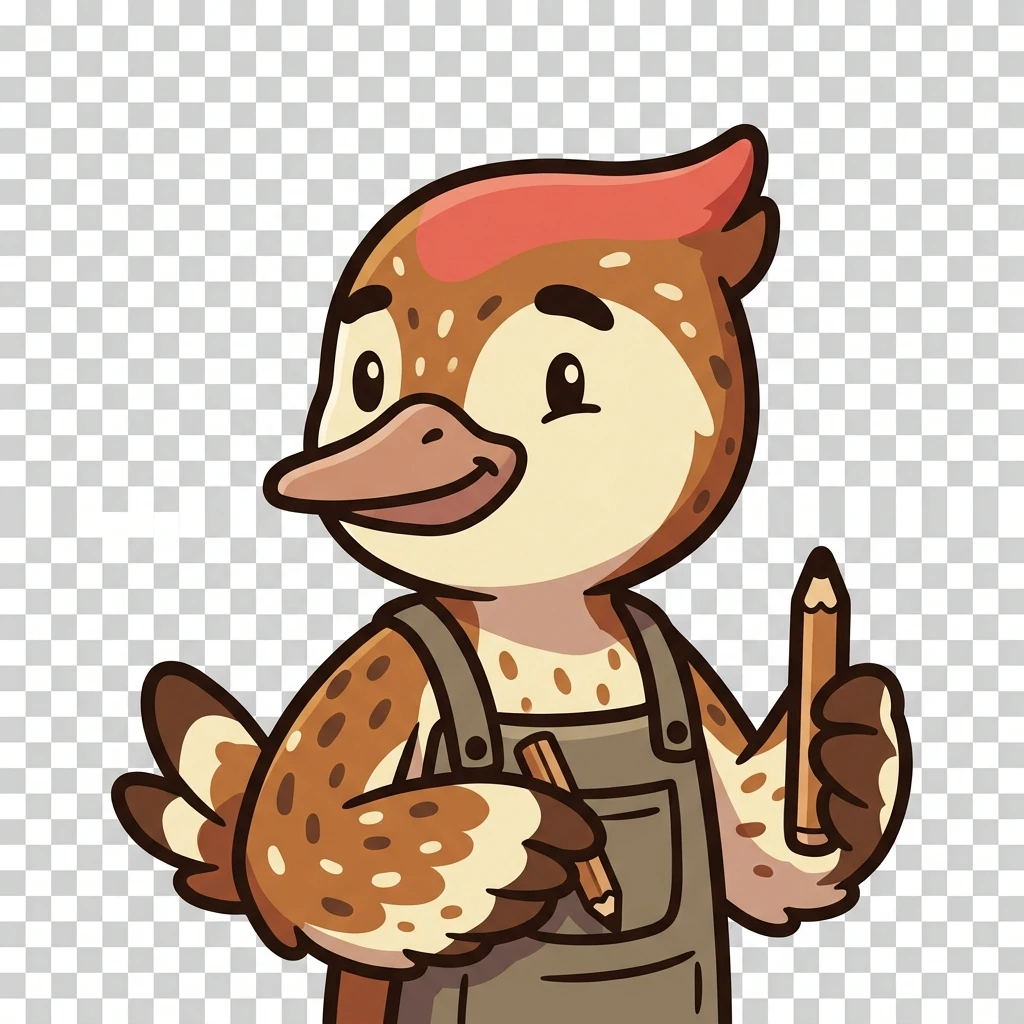
Nail
Define — frame-the-real-problem posture (a good question is half the solution; solve the actual problem, not the first one you notice)
-

Regard
Test — watch-real-users posture (what someone DOES with your thing is the truth; set it in their hands and observe, don't just ask)