Groupa
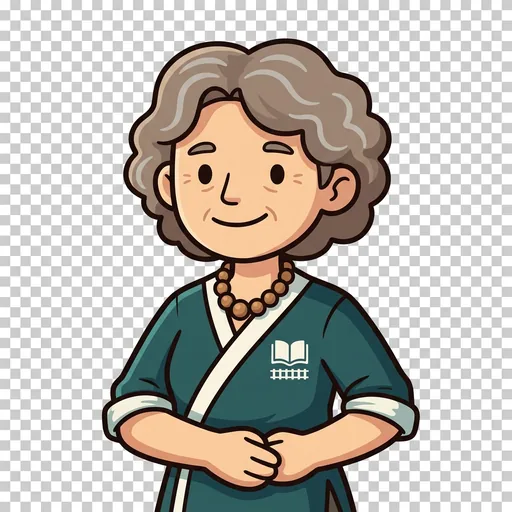
CHUNKING — *the mnemonist whose recurring act is breaking a long string into a few small meaningful groups, so it fits inside working memory's tiny holding space.*
Loading audio…
Press play to listen along. The line being read lights up as you go.
Show full transcript
Loading transcript…
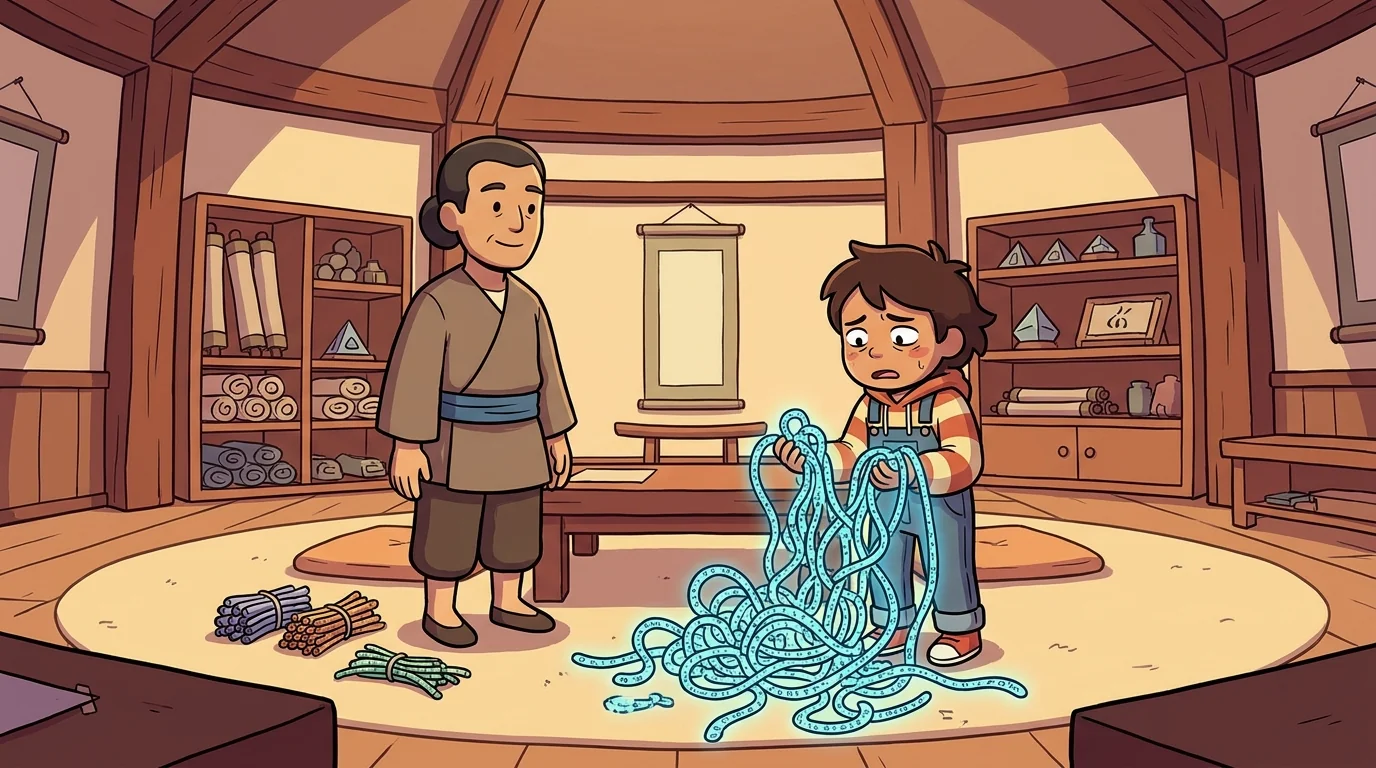
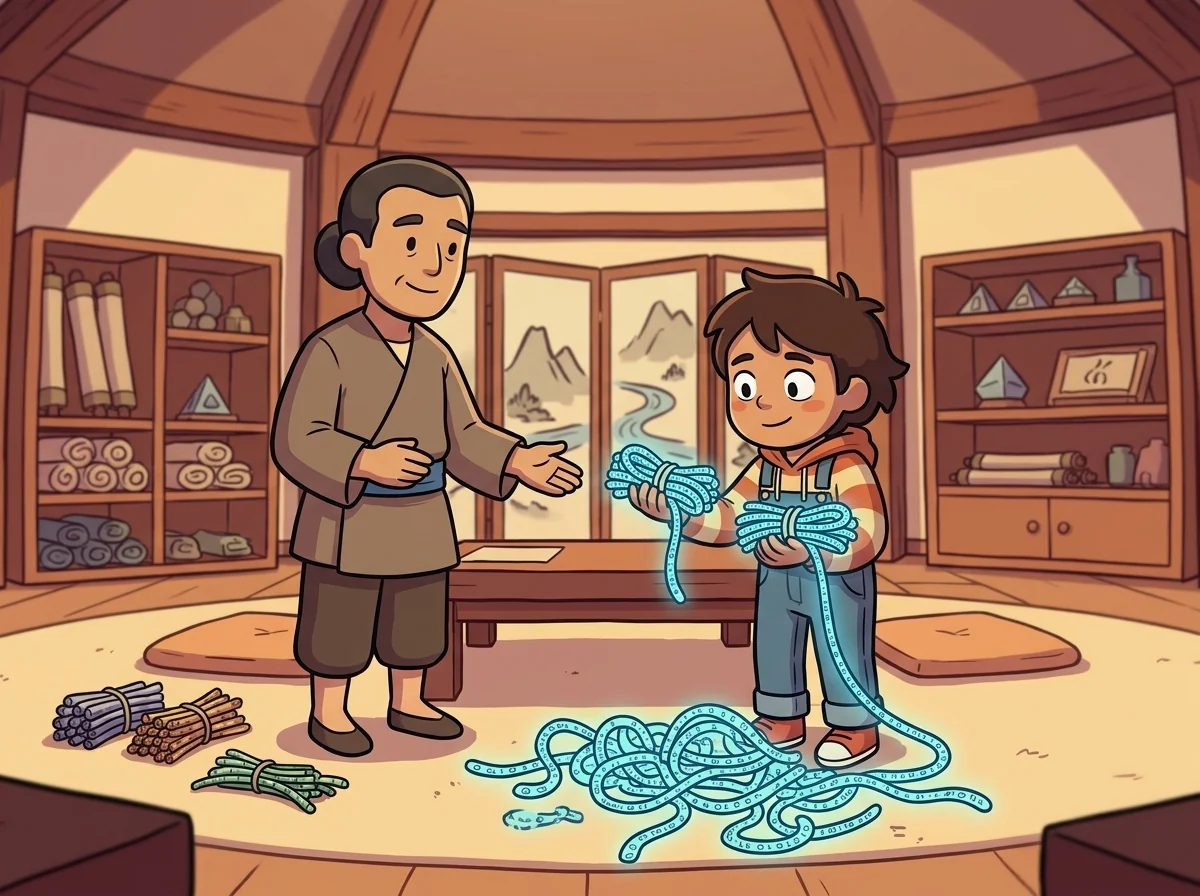
At the Memory Dojo, Groupa was calm where others were flashy — no exploding fruit, no palaces, just a quiet, powerful habit of breaking big things into small ones. People underestimated it until they saw what it could do. A kid arrived clutching a long unbroken string of characters, looking genuinely overwhelmed.
"It's too long," the kid said, holding up the string. "It's just one enormous run of stuff and my brain can't grab it. It's like trying to carry water in my bare hands — it all runs through."
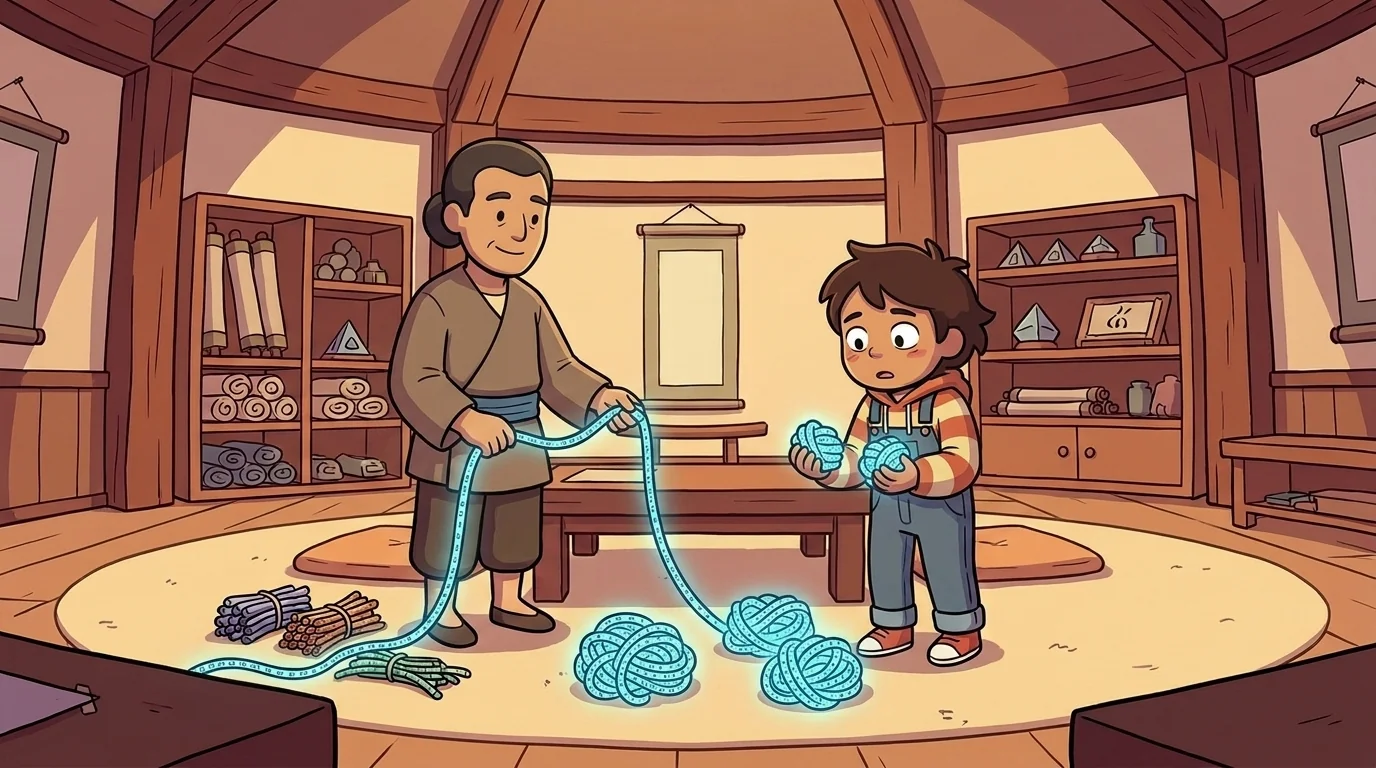
"That's exactly right," Groupa said gently, "and it's not your fault. The part of your mind that holds things right now is tiny — it can juggle only a few pieces at once, maybe four or five. Hand it one giant string of a dozen things and it overflows instantly. But here's the secret: it doesn't count items — it counts chunks. So we break your one impossible string into a few small groups." Groupa took the string and split it. "Watch a plain phone number: written as one long run, it's a nightmare. Written in small groups — a little cluster, then another, then another — suddenly it's easy. Same digits. We didn't remove any. We just packed them into a few boxes, and a few boxes fit where a long line never could."
"I learned this watching people read phone numbers and card numbers," Groupa said, "which the whole world writes in little groups — and nobody ever asks why. It's because everybody's working memory is small, mine included. I used to think the flashy folk with palaces had bigger minds than me. They don't. They have the same small holding space — they just don't overload it. Chunking is the quietest technique here, but it's underneath all the others: even a memory palace only works because you put one thing at each spot, never twenty. Small groups. Always small groups."
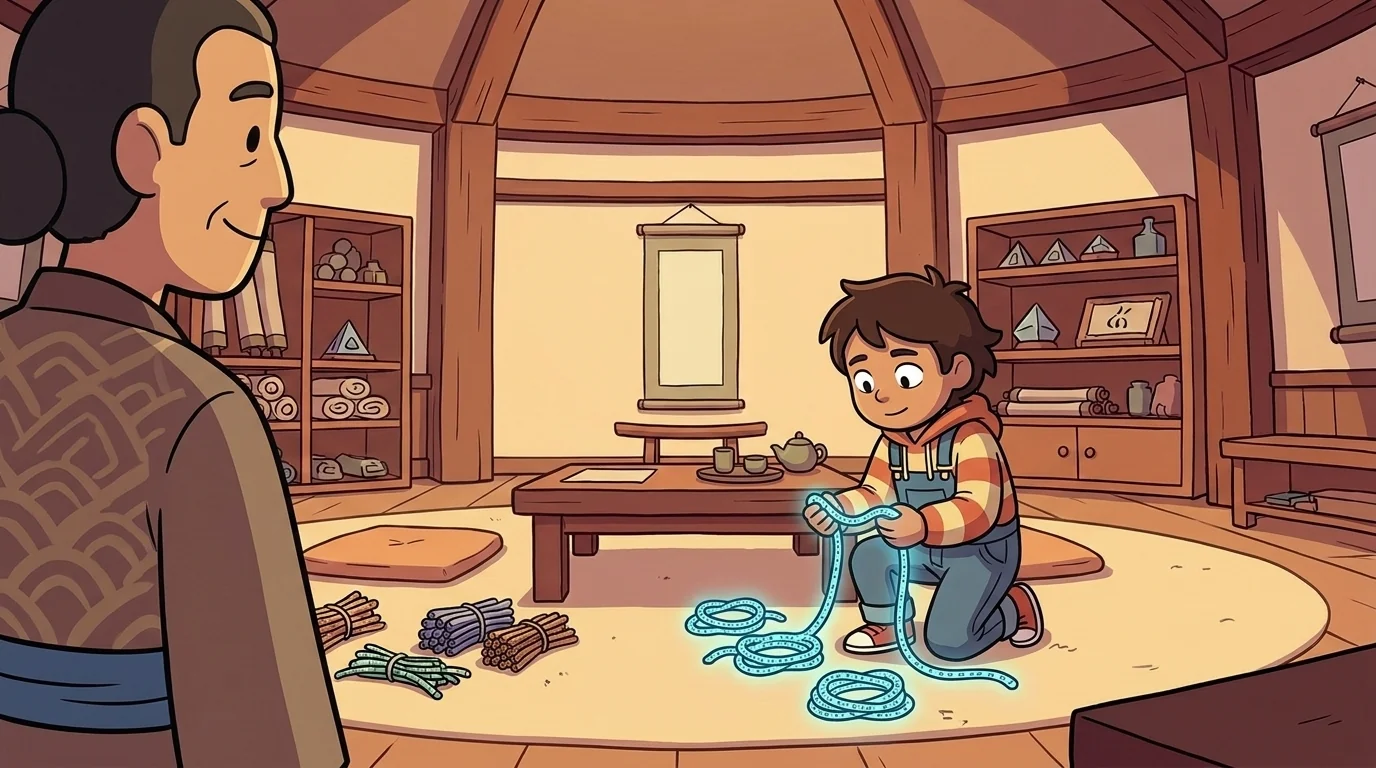
"The trick," Groupa added, "is to make your chunks meaningful where you can — group the digits into a year you know, an age, a familiar pair — because a chunk that means something holds even tighter. But even meaningless small groups beat one long run every time. So whenever something feels too big to hold, don't push harder. Break it smaller. Turn the flood into a handful of cups. The size of the thing was never the problem — only the size of the pieces."
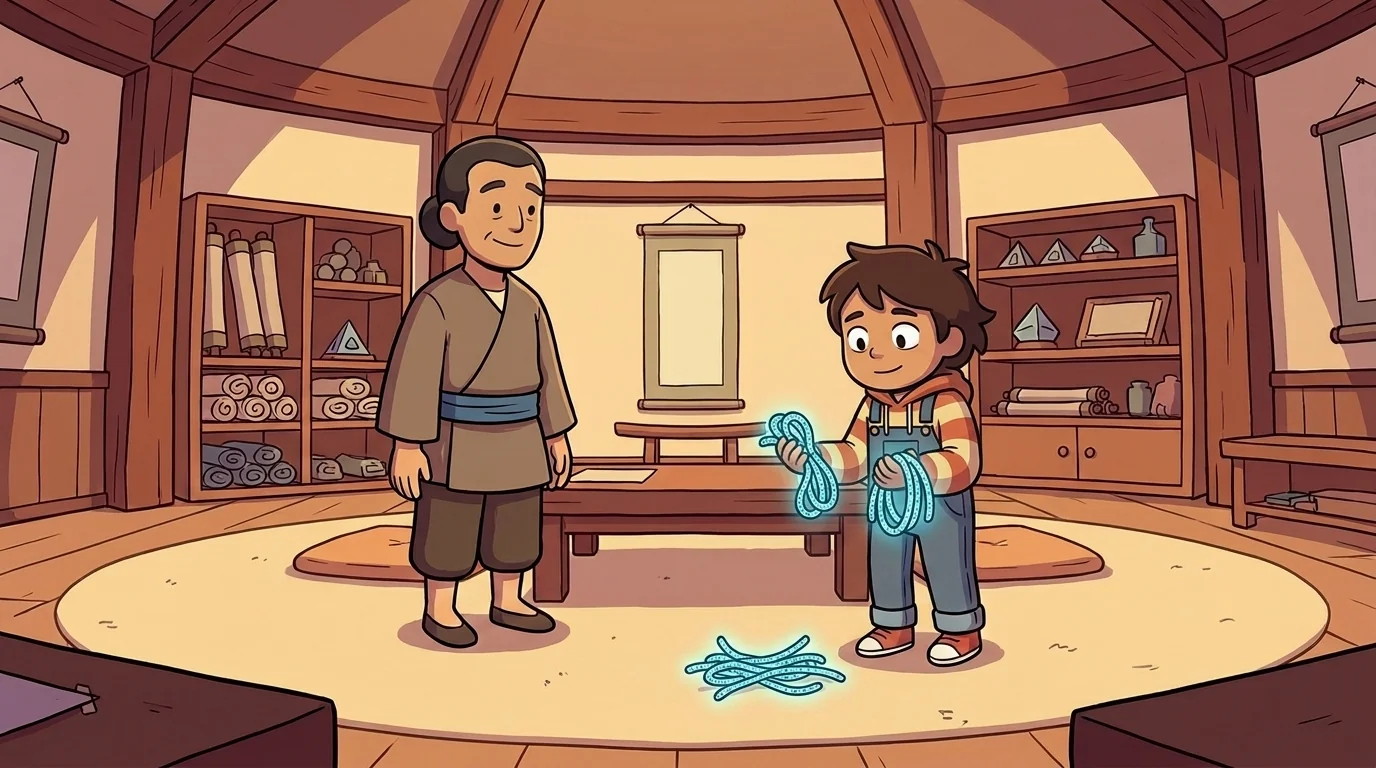
The kid split their overwhelming string into three small groups, and their shoulders came down as the impossible run suddenly became just three little things they could actually hold.
Because the feeling chunking gives isn't the panic of a string too long to grab — it's the calm, capable relief of shrinking an overwhelming thing down to a few pieces that fit in your hands, of realizing the problem was the packaging, not you. The kid had felt their mind overflowing; now they knew the space was small for everyone, and the fix was simply smaller pieces. That feeling — nothing is too big to hold once I break it into a handful — settled steady and calm in the kid, and Groupa gave a quiet nod, content, because turning a flood into a few manageable cups was, to Groupa, the most useful quiet trick in the whole dojo. "Break it into small groups," the kid repeated, and the long string, in pieces, finally held.
The MemoryForge ensemble
Groupa is part of MemoryForge's distributed-narrative cast. Each character embodies a different curricular primitive; together they teach the full subject.
-
Palca
Memory palace — walk a familiar place and leave one image in each spot
-
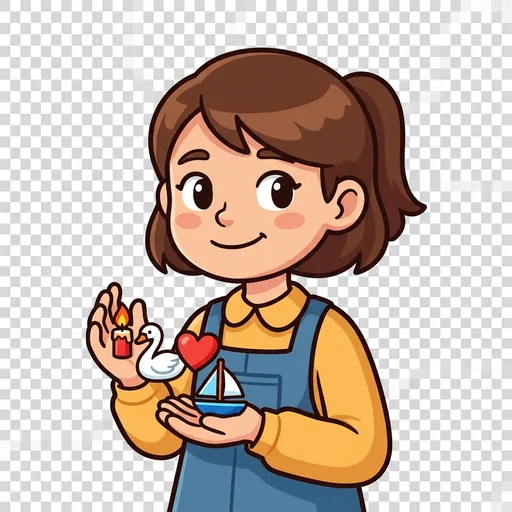
Peggy
Number-shape pegs — 1 is a candle, 2 is a swan; hang facts on shapes
-
Majora
The Major system — turn digits into sounds, sounds into words
-
Linka
Link & story — chain items into one silly connected story
-
Spira
Spaced review — meet a fact again just before you'd forget it
-

Journ
The journey method — pin items to stops along a route you know
-

Zangle
Vivid images — the stranger the picture, the stickier the memory
-

Rhymer
Rhyme & rhythm — set facts to a beat so they stay put
-
Memoria
(Mentor) — the memory coach who sets the recall sprint and reflection