
Ology
-ology = THE STUDY OF — from Greek 'logos' (word/reason); the true suffix is -logy, joined by a linking -o-, and it must be distinguished from its cousin -logue (a spoken/written piece)
Loading audio…
Press play to listen along. The line being read lights up as you go.
Show full transcript
Loading transcript…
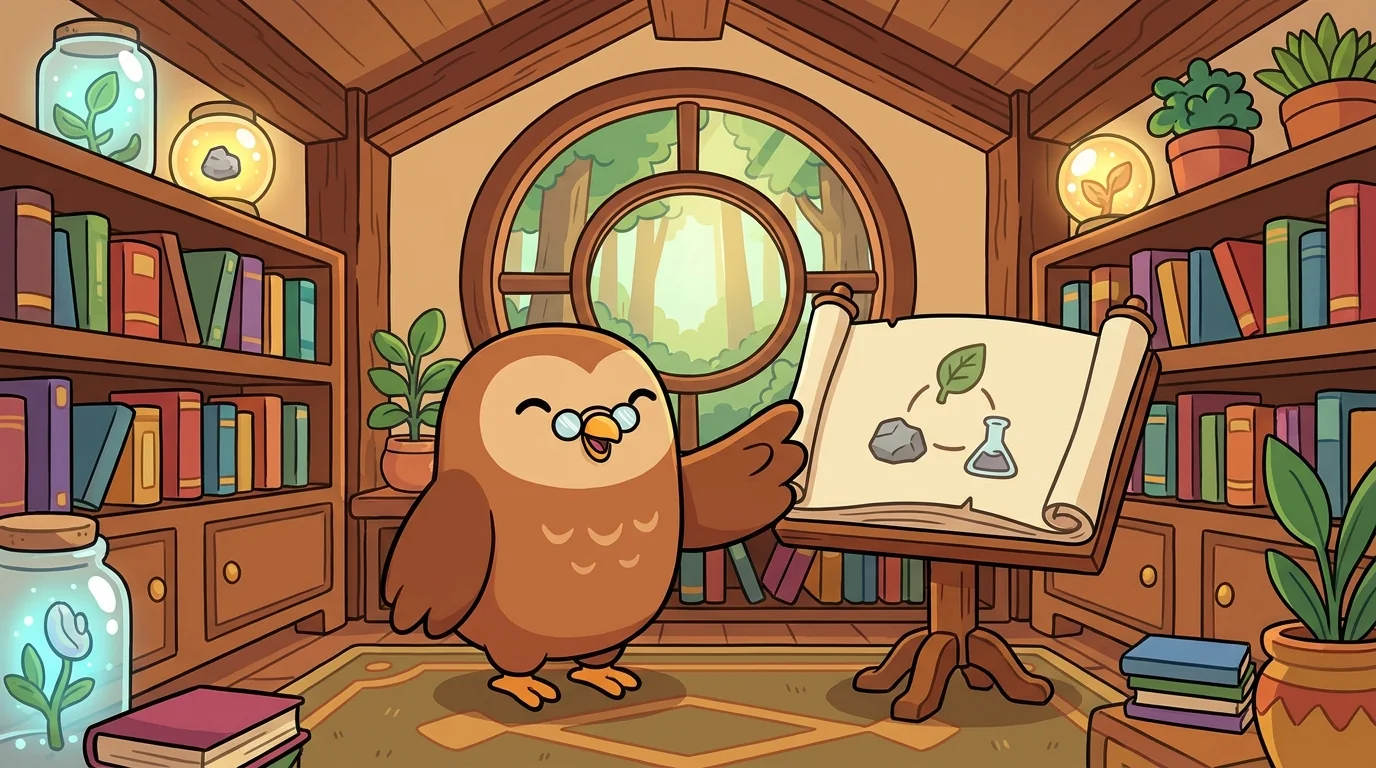
Ology, the joyful spectacled ending, had named more sciences than any creature in the Codex. Its job sounded grand and was gloriously simple: attach Ology to a root, and the word became the study of that thing — a whole field of knowledge, named in a breath.
"I mean the study of, the science of," Ology said, polishing its spectacles. "On Bio's root, life, I make biology — the study of life. On a root for earth, geology — the study of the earth. On a root for animals, zoology. On a root for myths, mythology." It beamed. "Every science on the shelf, I helped name. But there's a small secret in the middle of my words that Advanced readers should know — and it's hiding in plain sight."
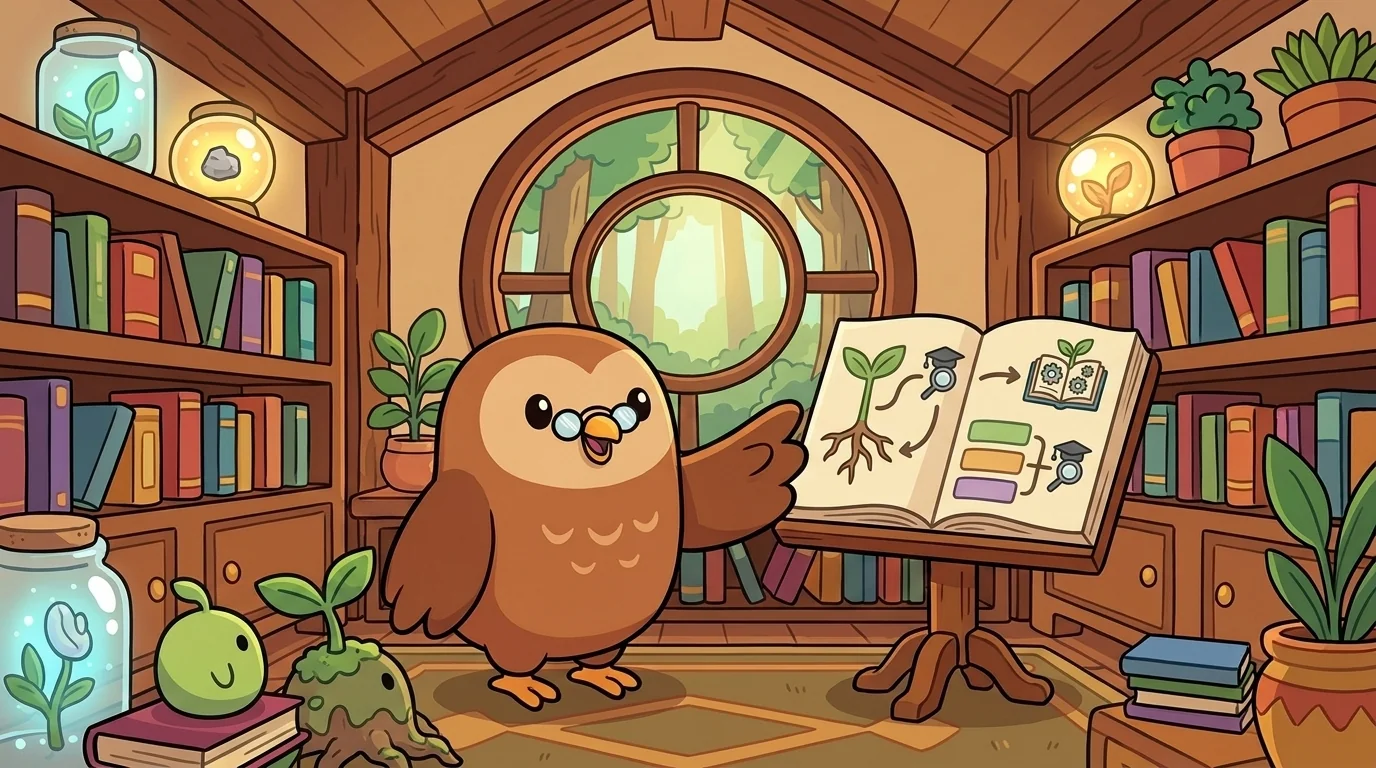
"Look closely," Ology said. "Bi-o-logy. Ge-o-logy. Zo-o-logy. See that little o sitting between the root and me? People call me -ology, but honestly, my part is just -logy — from the Greek logos, meaning word or reason or study. That extra o isn't mine and isn't the root's. It's a linking vowel — a tiny connector Greek slips in to make two parts join smoothly, the way a hyphen helps two train cars couple." Ology's eyes sparkled behind its spectacles. "It carries no meaning of its own. It's grammatical grease. That's why the true ending is -logy, and -ology is just -logy wearing the linking o it almost always travels with. A morpheme can have a helper that means nothing — and knowing that keeps you from thinking the o is part of the idea."
The young creatures were amazed. They had always thought the whole -ology was the meaning. Really, the meaning was -logy = study, and the o was just a friendly connector.
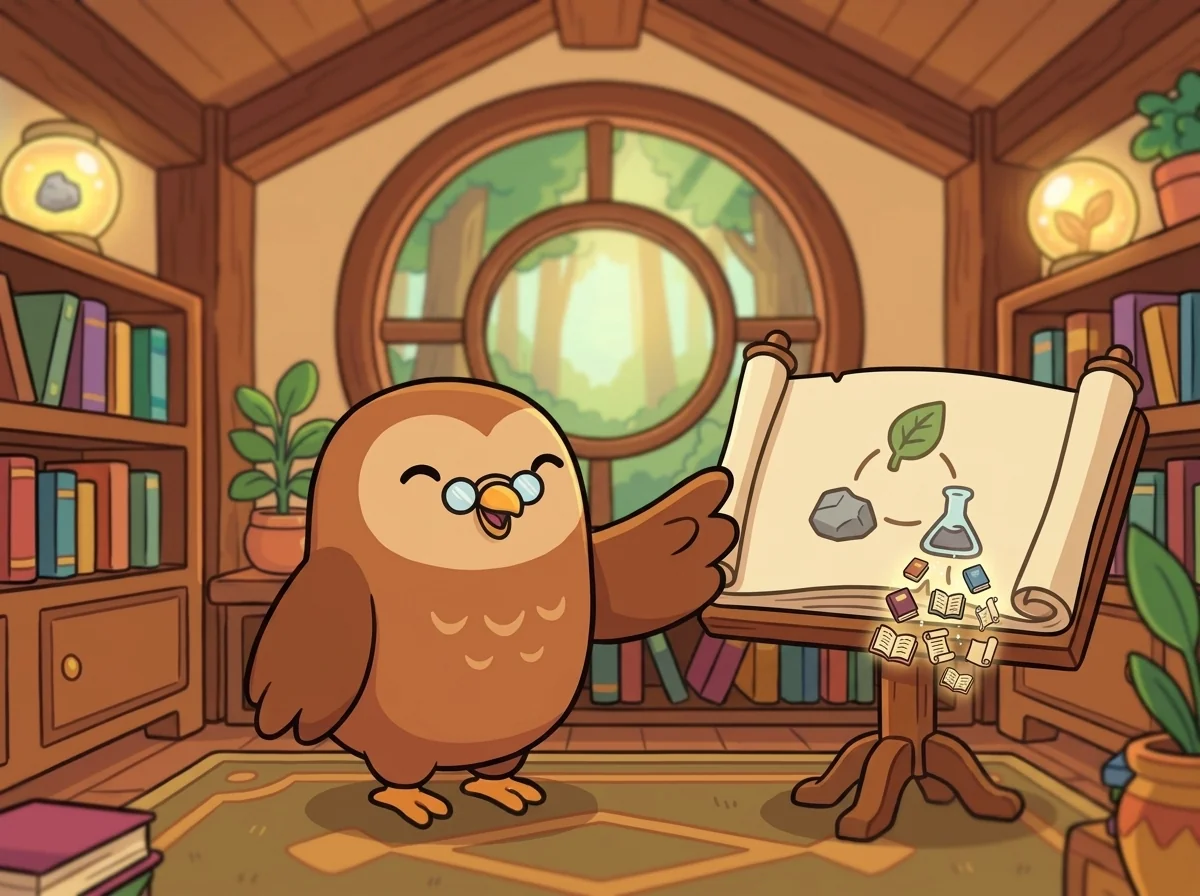
Then Ology taught its close cousin, the one that trips readers who don't look carefully.
"My root logos had children," Ology said. "I'm -logy — the study of. But my cousin -logue means a spoken or written piece. A dialogue is words between two people. A monologue is words by one. A catalogue is a written list. An epilogue is the words after the story ends." Ology adjusted its spectacles. "Same ancient root — logos, word — but -logy makes a field of study and -logue makes a piece of speech or writing. Read the exact ending: biology is a science; a dialogue is a conversation. One root, two harvests. Never assume; read to the last letter."
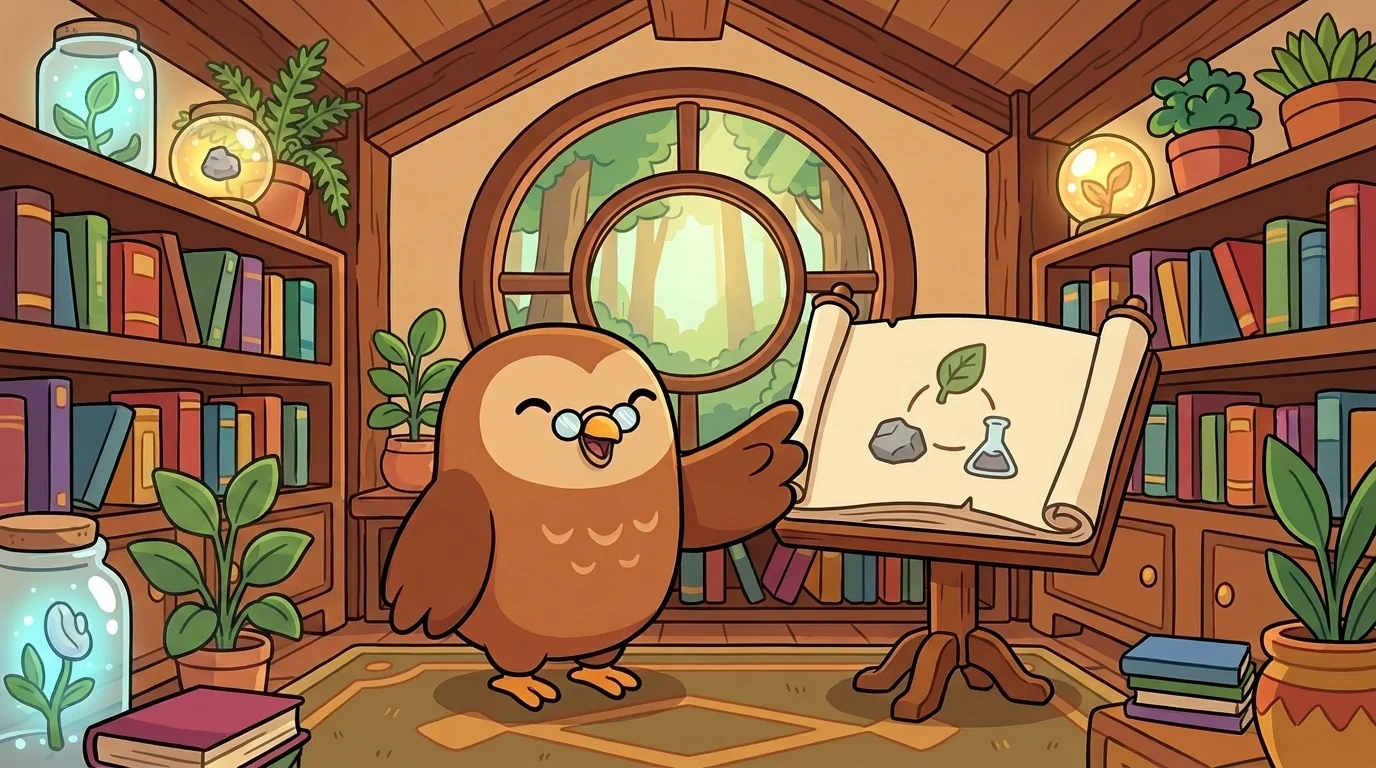
Ology saved the best for last, because it was the tenth and final creature, and it wanted the young ones to see the whole cast at once.
"Here is why I love being an ending," it said warmly. "I am nothing without a root. -logy alone is not a word. But give me Radix's root, and I name a science. Give me Bio's life and I make biology; give me a root for sound and I make phonology, the study of speech-sounds; pair me with Morph's root and you get morphology — the study of word-forms, which is this entire book you're living in." The whole cast leaned in, delighted. "That's the secret of morphemes. Alone, each of us is a fragment. Together, we build every long word in the language. Radix finds the root. Morph shows the coat. Chrono, Aqua, Bio, Tele carry meanings in. Phage, Phobia, Scope, and I tell you the job. None of us is the whole word. All of us, combined, are."
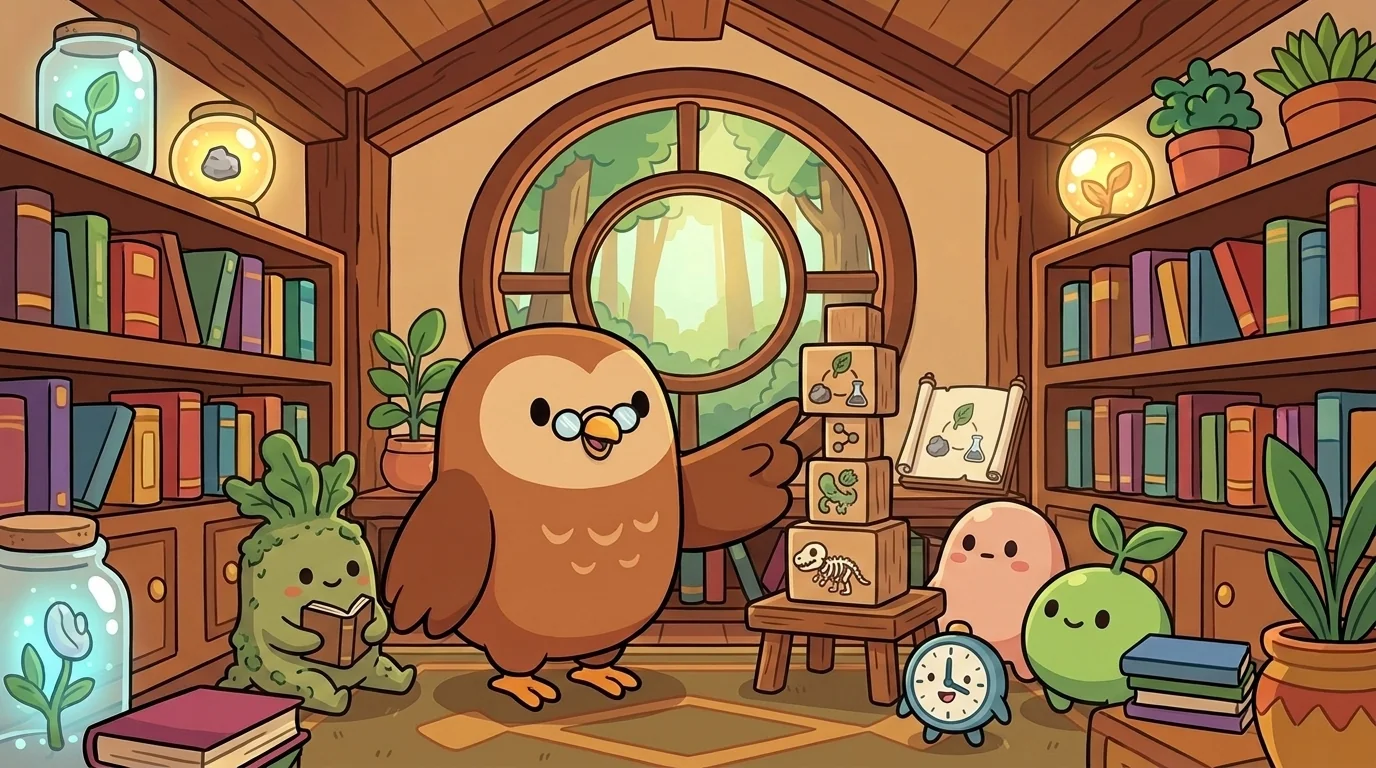
The test came with the word etymology, which a young creature met in the very dictionary the cast lived inside.
"-ology on the end — with the linking o — so it's the study of something," the creature said. "And the root etymon means the true, original form of a word." The creature looked up, understanding blooming. "So etymology is — the study of where words truly come from. It's the study of... you. Of all of you."
"You read the word for our own science," Ology said, spectacles shining. "'-ology' means the study of — with a linking o that means nothing, from the root -logy that means everything. Attach me and any topic becomes a field. And when you put the whole cast together, you can crack any long word in the language — because that is all a long word ever was: a root, wearing coats, doing jobs, built by parts that are mightier together than alone."
The MorphQuest ensemble
Ology is part of MorphQuest's distributed-narrative cast. Each character embodies a different curricular primitive; together they teach the full subject.
-

Radix
Root (radix) — every long word is built around a small root that carries its core meaning; find the root and the word tells you what it means
-

Morph
Shape / change (morph) — the shapeshifter; a morpheme changes a word's form and the job it does
-

Chrono
Time (chrono) — the time-morpheme; fuse it in and a word becomes about time
-

Phage
Eat (-phage) — the devouring suffix that turns a word into an eater of something
-

Aqua
Water (aqua / hydro) — every water-word carries this morpheme
-

Bio
Life (bio) — the life-morpheme that makes a word about living things
-

Tele
Far / distant (tele) — stretches a word's reach across a distance
-

Scope
See / look / examine (-scope) — the seeing suffix, an instrument for looking
-

Phobia
Fear / strong dislike (-phobia) — the fear suffix, gentle and never distressing