Tele
tele = FAR/DISTANT
Loading audio…
Press play to listen along. The line being read lights up as you go.
Show full transcript
Loading transcript…
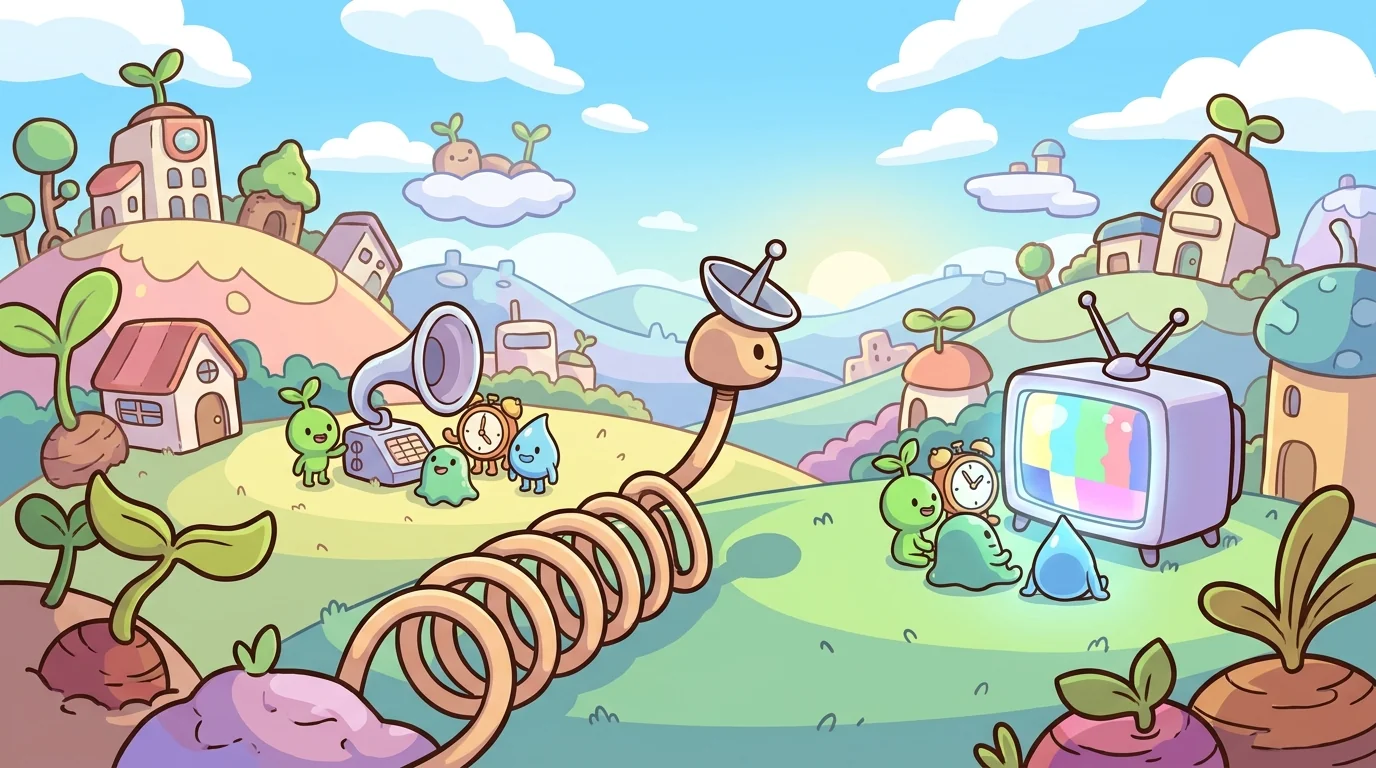
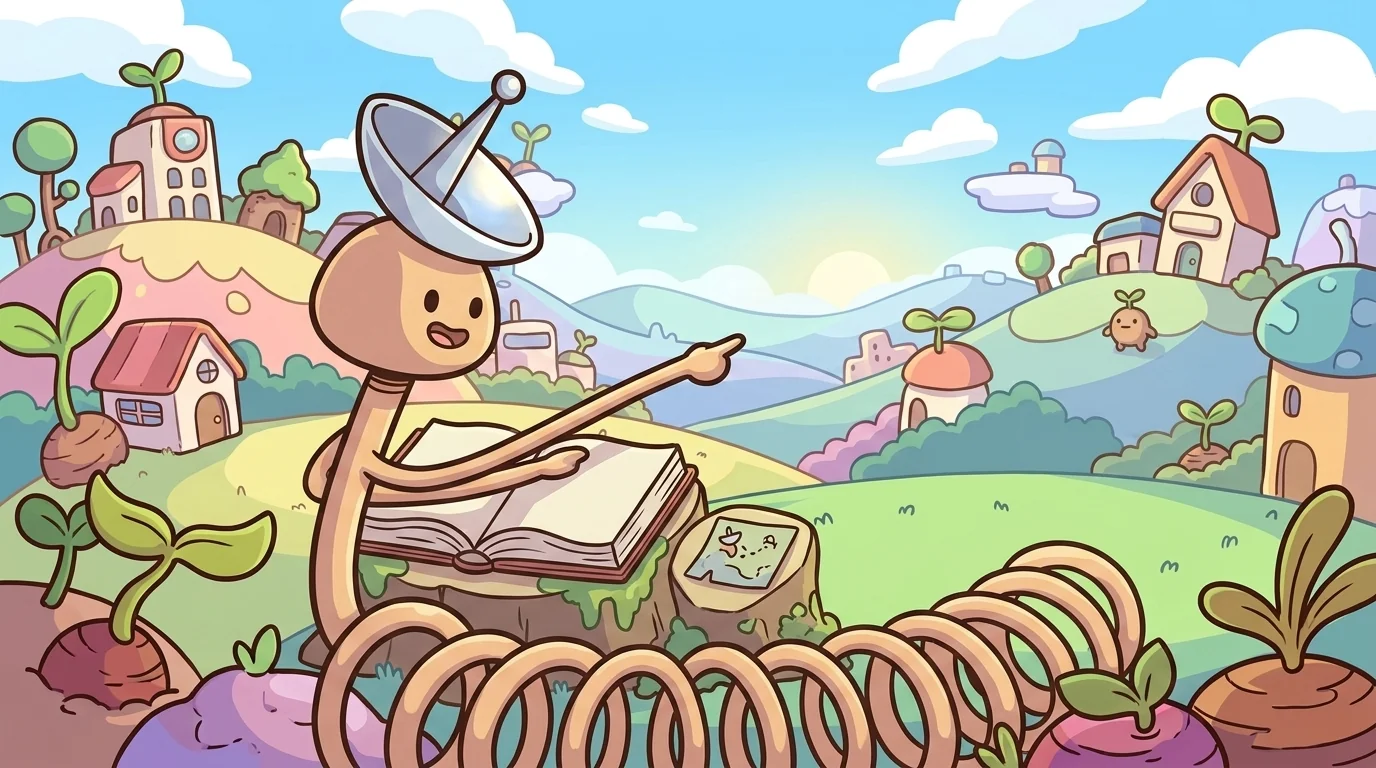
Tele was a long, stretchy creature always craning toward the horizon, and it carried one clear idea: far. Distance. Reaching across a gap. Whatever Tele joined, that word became about reaching something far away.
The young creatures used telephones and watched television every day without ever noticing Tele was hiding in both.
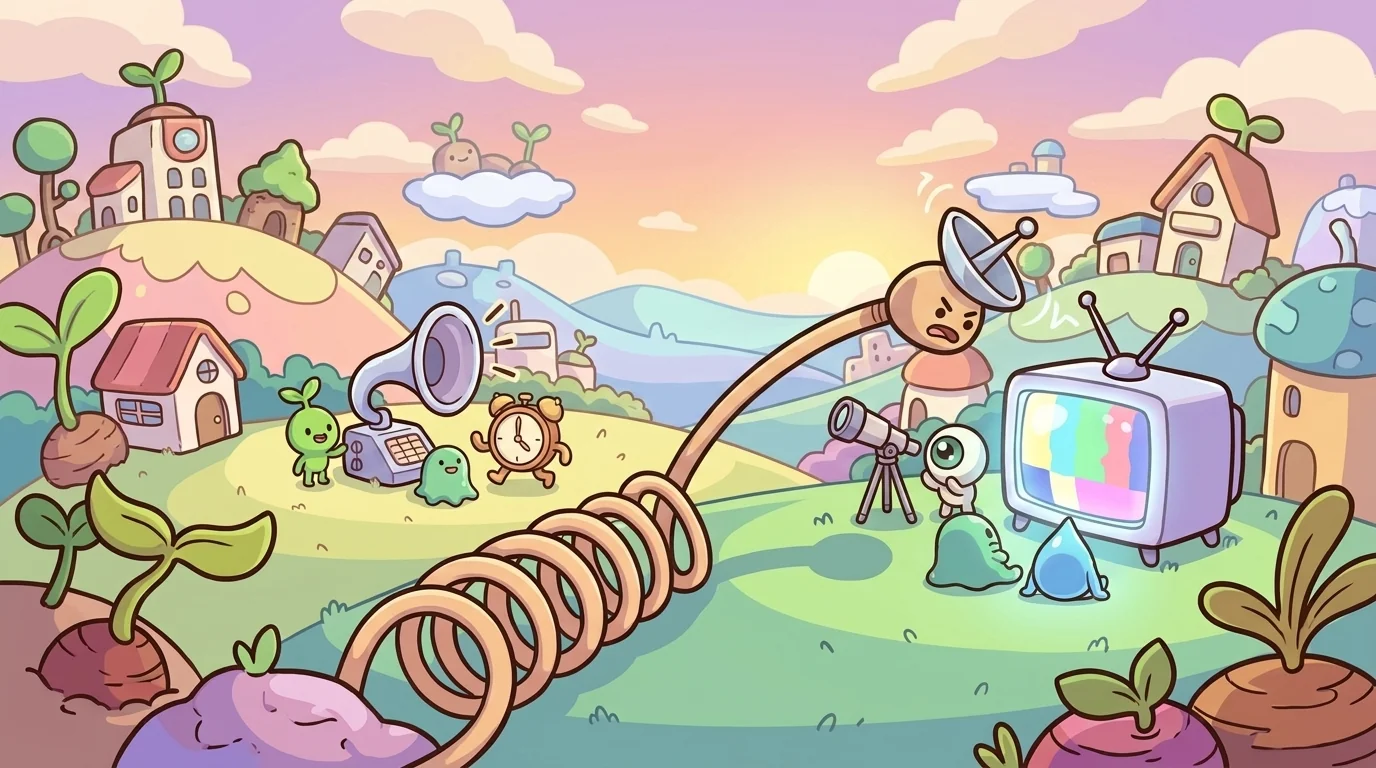
"I mean far," Tele said, stretching itself thin to demonstrate. "Across a distance. That's what I carry."
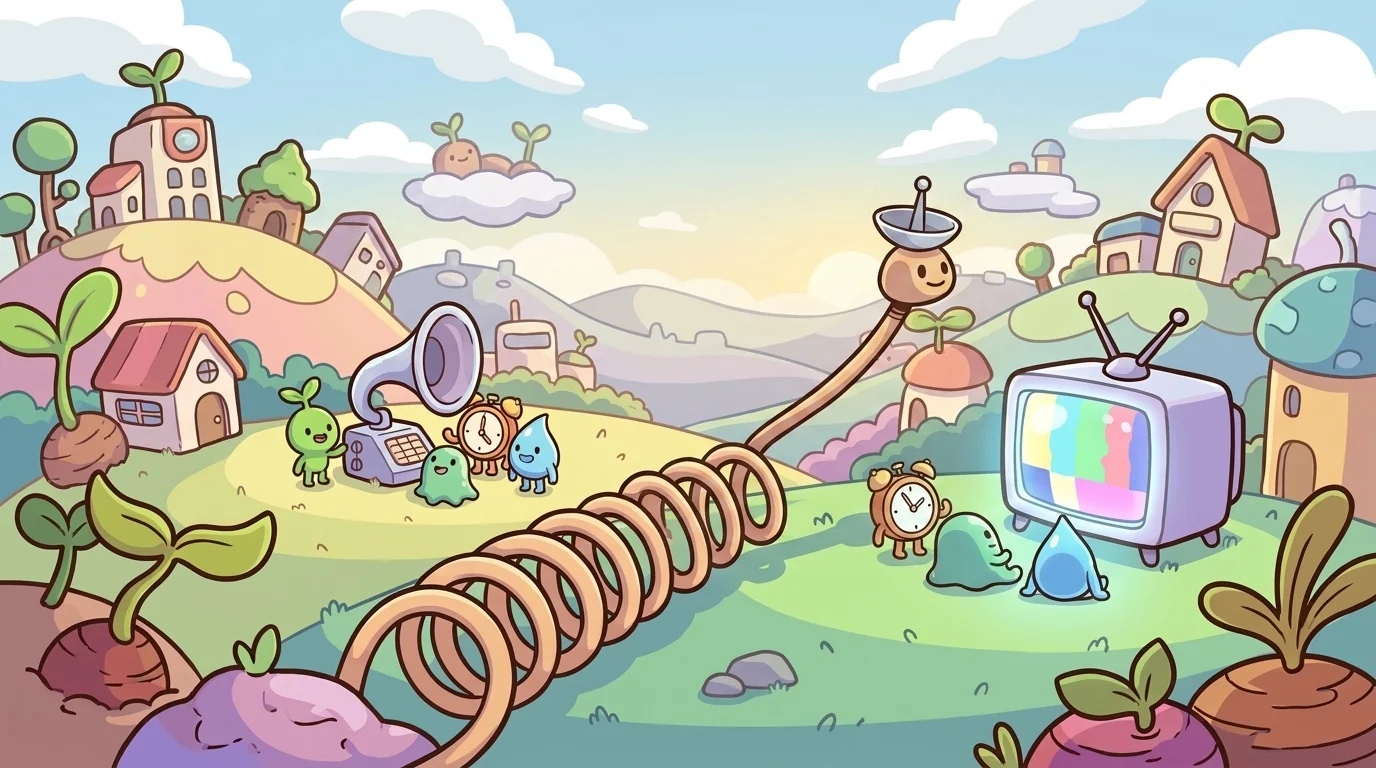
It reached into word after word. Joined to a root meaning sound/voice, it made telephone — hearing a voice from far away. Joined to a root meaning sight, it made television — seeing from far away. Joined to a root meaning look/see, it made telescope — a tool to see far things. Joined to a root about carrying/place, it made teleport — moving across a distance in a blink.
Four everyday marvels — and every one was secretly about reaching far.
"Once you spot me," Tele said, "you understand a whole shelf of gadgets you use without thinking. They're all about crossing distance. And here's the fun part: pair me with Radix's root and you can predict a new invention's name. A far-writer? A far-mover? You'd know roughly what it did before anyone told you."
The creatures started spotting Tele in words they'd used a hundred times, and each time felt a little click of recognition: oh — that's about far.
Tele made an honest note. "Two clues are better than one," it said. "I give you far. The root gives you far-what? Alone, either of us is a guess. Together, we're almost a certainty. Always read both pieces before you decide." Combine the clues.
The test came with the unfamiliar word telepathy.
"Tele — far," a young creature reasoned, "and the other part is about feeling or sensing. So... sensing across a distance? Feeling something far away?" Exactly the idea — an unfamiliar word cracked by two clues pointing the same way.
"How did you guess a word like that?" the others asked.
"Tele was in front," the creature said, stretching a hand toward the horizon. "'tele' means far. It stretches a word across a distance — so the moment I saw it, I knew the word reached somewhere far, and the root told me far-what."
Hear it as an audio drama
A short play starring Tele, from MorphQuest. Different voices, same idea. Listen any time after you read.
Loading audio…
Read the drama script
- Narrator: From Spark and Anvil and Morphquest — this is Tele, in chapter 1 of the Morphquest cast.
- Narrator: This drama uses an AI-generated voice. Voiced via Gemini 2.5.
- Narrator: Tele is a long, stretchy creature always craning toward the horizon, and it carries one clear idea: far — distance, reaching across a gap.
- Narrator: A young learner named Pip used a telephone and watched television every day without ever noticing Tele was hiding in both.
- Pip: I use these gadgets all the time, but I never realized the same little part was inside their names.
- Tele: I mean far — across a distance — and I have hidden in your machines for a very long time. Joined to a part meaning voice, I make "telephone," a voice from far away. Joined to a part meaning sight, I make "television," seeing from far away.
- Tele: And I keep stretching to name new machines. "Telecommute" means working from far away, and "telehealth" means a doctor visit from far away. My meaning never changed — I just reached farther.
- Pip: So a part doesn't retire when technology changes. It stretches to name the new thing.
- Tele: Exactly. Give me a root about any activity, and I can build a do-it-from-far word for a machine that does not exist yet. That is the power of a productive prefix.
- Tele: But watch for my sneaky look-alike. There is a part spelled almost the same, "teleo," that means goal or end, not far. In "teleology" it means the study of purposes, nothing to do with distance.
- Tele: So "tele" means far, but "teleo" means goal. Same look, different roots — the only safe test is the meaning of the whole word.
- Narrator: Tele always reminded learners that two clues are stronger than one.
- Tele: I give you far, and the root gives you far-what. Alone, either of us is a guess. Together, we are nearly a certainty, so always read both pieces before you decide.
- Narrator: When Pip met the space word "telemetry," Pip trusted two clues pointing the same way.
- Pip: "Tele" means far and "metry" means measuring, so telemetry must be measuring a spacecraft's instruments from far away.
- Tele: You read a space word with two clues pointing the same direction. "Tele" means far — it stretches a word across a distance, from an old telephone all the way to a probe past the planets.
- Narrator: You've been listening to a Spark and Anvil chapter, written by the Spark and Anvil writing team for ages 9 to 14.
- Narrator: Apps stay free forever.
- Narrator: Curriculum aligned to Common Core and Next Generation Science Standards.
- Narrator: Released under Creative Commons BY-NC-SA 4.0 for educational reuse. Visit Spark and Anvil for the full transcript.
The MorphQuest ensemble
Tele is one of the friends in MorphQuest. Each friend shows you one idea by how they act; meet them all and you have the whole subject.
-

Radix
Root (radix) — every long word is built around a small root that carries its core meaning; find the root and the word tells you what it means
-

Morph
Shape / change (morph) — the shapeshifter; a morpheme changes a word's form and the job it does
-

Chrono
Time (chrono) — the time-morpheme; fuse it in and a word becomes about time
-

Phage
Eat (-phage) — the devouring suffix that turns a word into an eater of something
-

Aqua
Water (aqua / hydro) — every water-word carries this morpheme
-

Bio
Life (bio) — the life-morpheme that makes a word about living things
-

Scope
See / look / examine (-scope) — the seeing suffix, an instrument for looking
-

Phobia
Fear / strong dislike (-phobia) — the fear suffix, gentle and never distressing
-

Ology
The study of (-ology) — turns any topic into a field of study (the scholar)