Aqua
aqua/hydro = WATER — the morpheme "aqua" (Latin) and "hydro" (Greek) both carry WATER, so two different-looking parts can mean the same thing
Loading audio…
Press play to listen along. The line being read lights up as you go.
Show full transcript
Loading transcript…
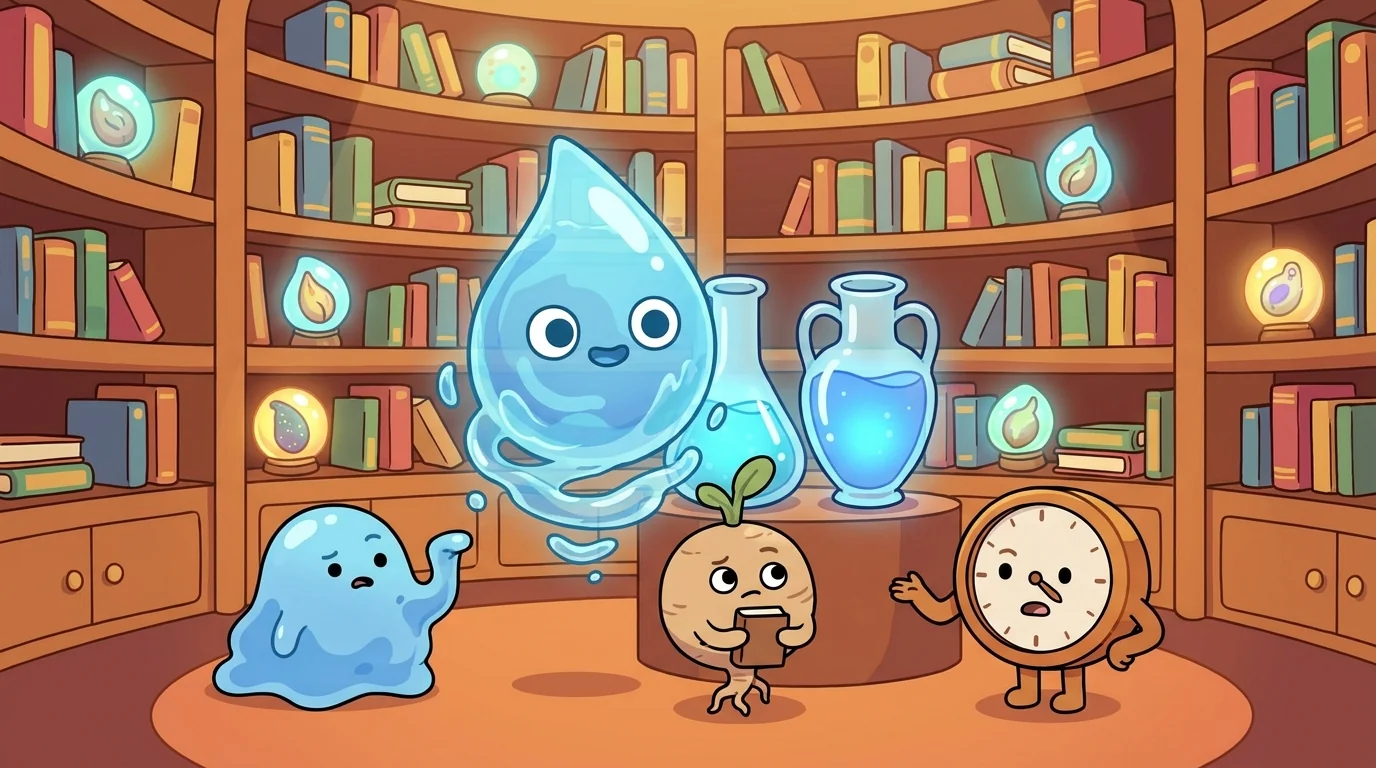
Aqua was a cool, rippling creature the colour of a clear pool, and it carried one steady meaning: water. But Aqua had a twin secret that surprised every young creature in the Codex — it went by two names.
At first the creatures were confused. Some water-words had "aqua" in them; others had "hydro." They assumed those were unrelated.
"They're not," Aqua said with a smile like a ripple. "Aqua is my name from one old language — Latin. Hydro is my name from another — Greek. Different spellings, different sounds... but I carry the exact same thing into a word: water."
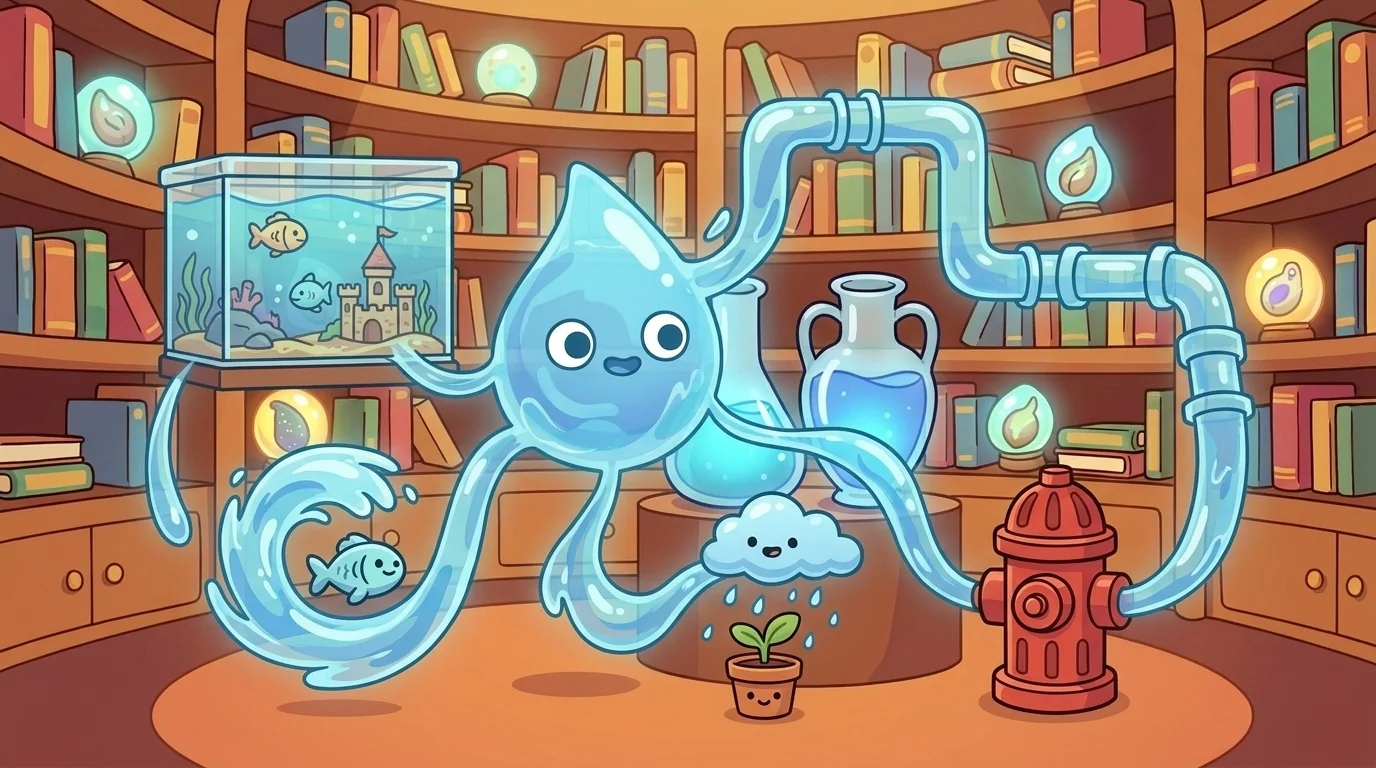
To prove it, Aqua flowed through word after word. As aqua, it made aquarium (a water-tank), aquatic (living in water), aqueduct (a water-carrier). Then it slid into its other coat, hydro, and made hydrant (a water-tap), hydrate (to add water), dehydrate (to take water out).
Six different words. One meaning underneath all of them: water.
"This is a gift and a small trap," Aqua explained. "The gift: if you learn both my names, you double the words you can crack. See 'aqua' — water. See 'hydro' — also water. The trap: don't expect a meaning to always wear the same spelling. The same idea can come from different old languages and look totally different on the surface."
The creatures started collecting Aqua's two faces. Every time they met "aqua" or "hydro," they knew, instantly, the word had something to do with water — even a long, science-y word they'd never seen.
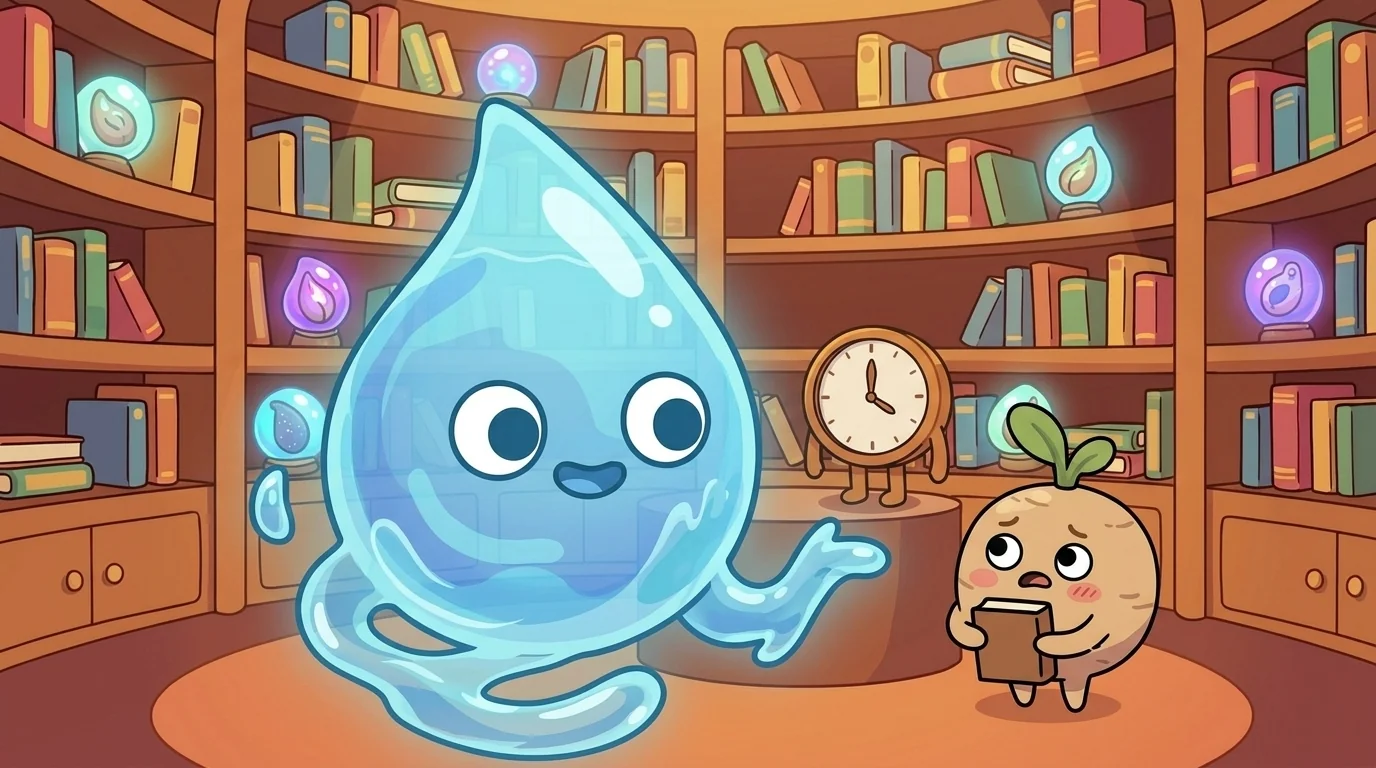
Aqua made one honest correction. A young creature saw "hydro" and shouted "water!" — but the word was about anger (an unrelated look-alike part). Aqua rippled gently. "Check that it's really me and not a look-alike. Most 'hydro' words are mine — but read the whole word to be sure. A clue is a strong hint, not a guarantee." Confirm, don't assume.
The test came with a long science word: hydroelectric. The creatures had never seen it.
But they weren't stuck. "Hydro — that's you, Aqua, so it's about water. And the rest is about electricity. So... making electricity from water?" Exactly right. A word cracked cold, because they knew water had two names.
"How'd you know 'hydro' meant water?" a creature asked.
"Because 'aqua' AND 'hydro' both mean water," Aqua said, flowing on. "Two different-looking parts, one meaning. Learn both my names, and twice as many words open up for you."
The MorphQuest ensemble
Aqua is part of MorphQuest's distributed-narrative cast. Each character embodies a different curricular primitive; together they teach the full subject.
-

Radix
Root (radix) — every long word is built around a small root that carries its core meaning; find the root and the word tells you what it means
-

Morph
Shape / change (morph) — the shapeshifter; a morpheme changes a word's form and the job it does
-

Chrono
Time (chrono) — the time-morpheme; fuse it in and a word becomes about time
-

Phage
Eat (-phage) — the devouring suffix that turns a word into an eater of something
-

Bio
Life (bio) — the life-morpheme that makes a word about living things
-

Tele
Far / distant (tele) — stretches a word's reach across a distance
-

Scope
See / look / examine (-scope) — the seeing suffix, an instrument for looking
-

Phobia
Fear / strong dislike (-phobia) — the fear suffix, gentle and never distressing
-

Ology
The study of (-ology) — turns any topic into a field of study (the scholar)