
Attest
ATTRIBUTION — *every claim carries a "who said it." named beats nameless — and an honest reason for a missing name beats a hidden one.*
Loading audio…
Press play to listen along. The line being read lights up as you go.
Show full transcript
Loading transcript…
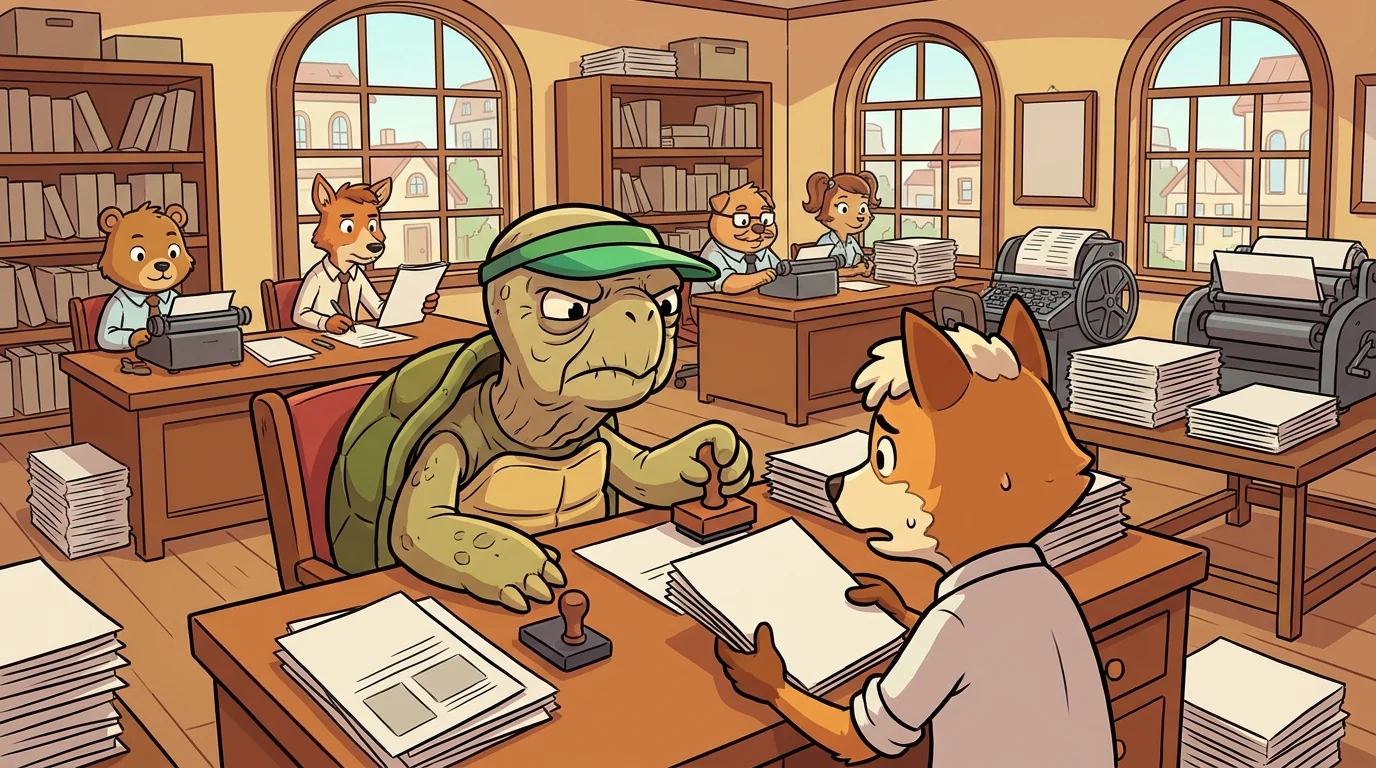
The newsroom had a sentence it loved, and Attest was the one who made it earn its place.
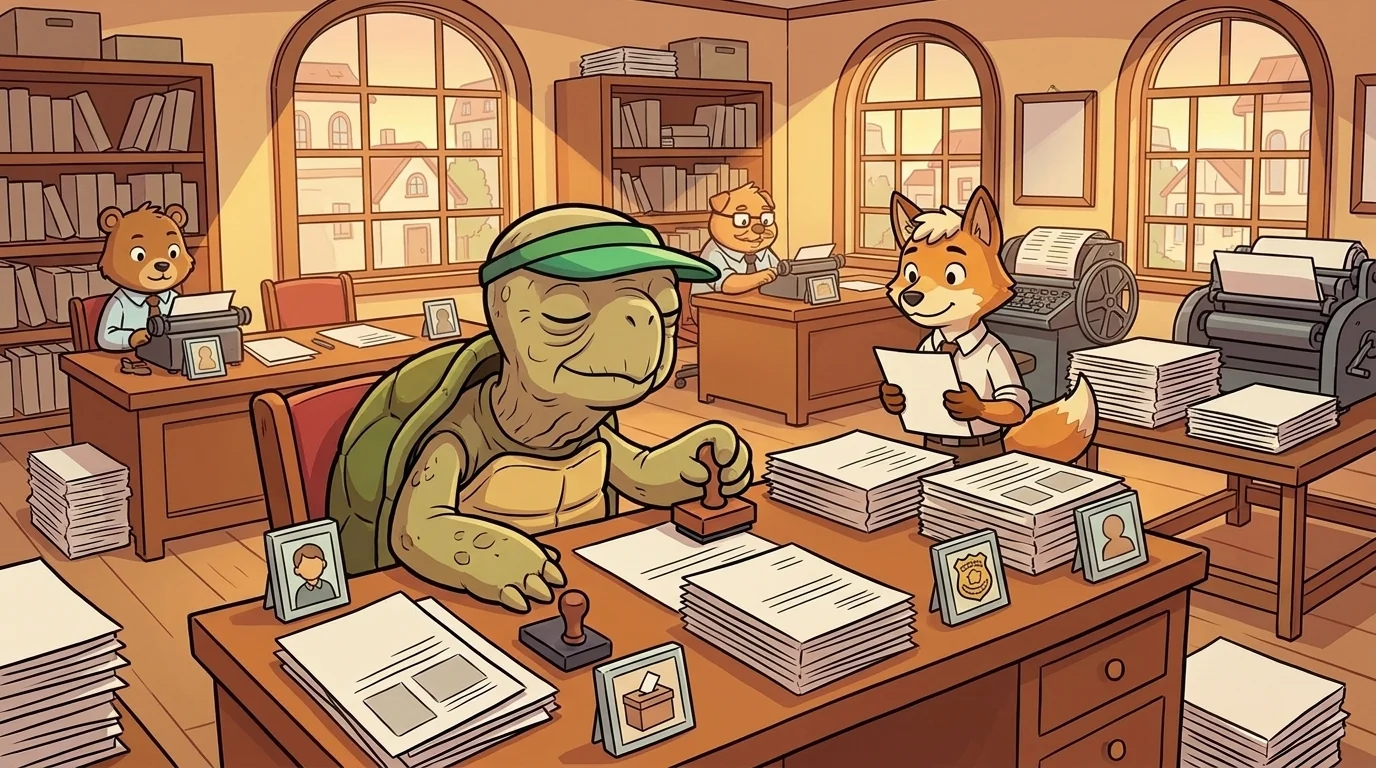
He was an old tortoise in a green eyeshade, unhurried in the way of animals who have watched a great many exciting claims turn out to be nothing. On the desk in front of him a reporter had set a line practically vibrating with drama: Sources say the festival has been cancelled. Attest read it twice, then set down a heavy rubber stamp that bore a single word — WHO? — and let the silence do some of the work.
"Which sources?" he said.
"You know. Sources. People close to it."
"I don't know," Attest said. "And that is the whole trouble. Neither will the reader." He turned the sentence to face the reporter, as if a claim could be examined from the front like a coin. "There are three kinds of voice behind any statement, and a good newsroom can tell them apart in its sleep. There is on the record — a named person who will stand behind their words. There is anonymous with a reason — a name we withhold on purpose, because naming them would put them in danger, and we tell the reader exactly that. And there is this." He tapped the offending line. "'Sources say.' A name withheld for no reason we can defend. That is not a source. That is a rumor that has borrowed a suit."
The reporter frowned. "But it might be true."
"It might," Attest agreed, entirely unbothered. "And 'might be true' is precisely the swamp I refuse to print from." He stamped the vague clause — WHO? — a soft, final thump. "Bring me the festival organizer, and I will trust the cancellation. Bring me an honest reason the name must stay hidden, and I will weigh it. But do not bring me a shadow and ask me to introduce it to a hundred thousand readers as though it were a person."
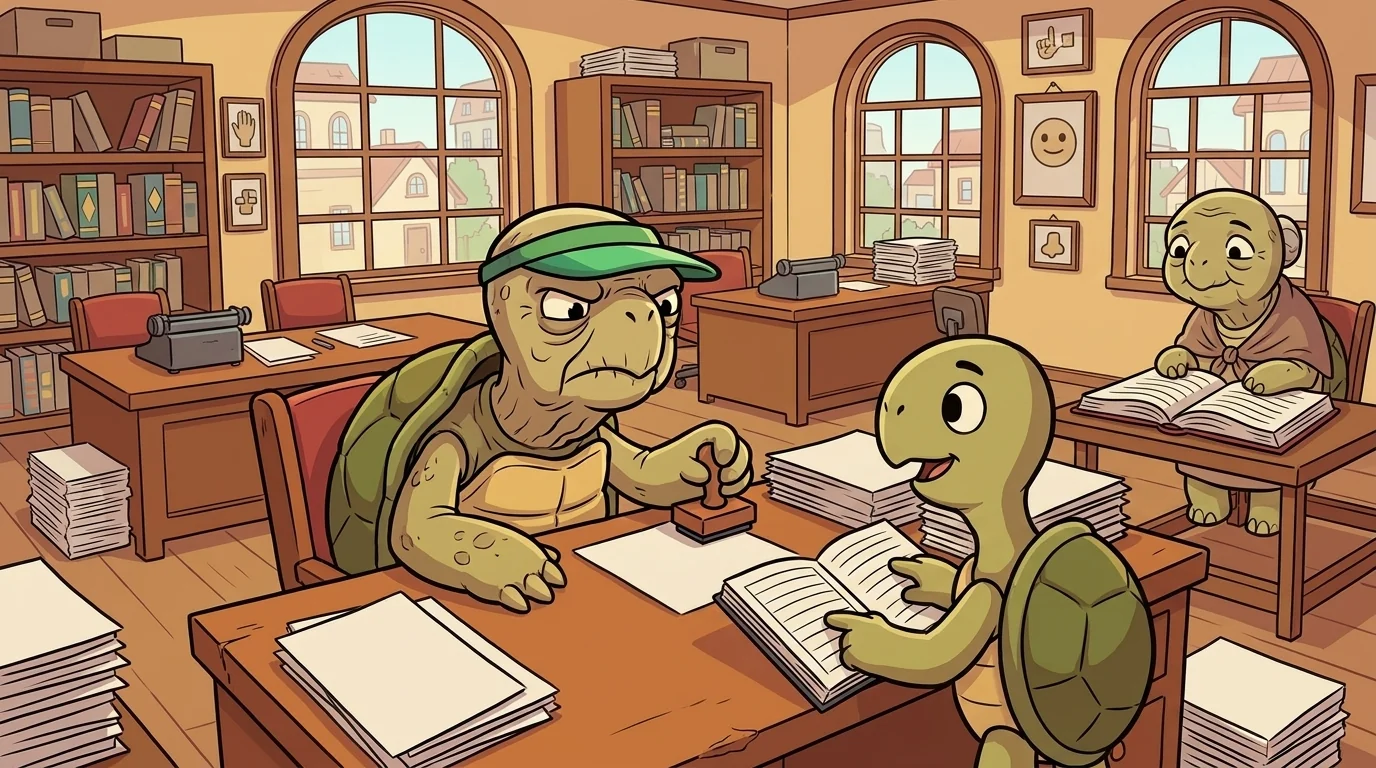
Attest had learned the weight of a name young, in a family of tortoises who kept a small town's sworn record of who-said-what.
His grandmother worked the witness ledger, and she had a saying she pressed into him until it became a reflex rather than a rule: A claim without a name is a stone thrown from behind a wall. Anyone, she taught him, can say a thing. The real question is whether they will put their name beside it — because a name is a kind of promise. It means: I will still be standing here if this turns out to be wrong. No name means no such promise, and the absence of the promise, she insisted, told you something all by itself.
Once, when he was small, young Attest copied a delicious piece of gossip into the ledger and, beside it, wrote everyone knows it. His grandmother drew a single calm line through the entry.
"'Everyone' is no one," she said. "Point at a face."
He couldn't. He tried — the miller, maybe? or was it the miller's neighbor? — and every time he reached for the source it moved, the way a reflection moves when you lean toward the water.
"Then it does not go in the book," she said, and she was not scolding, only exact. "Not because it is false. Because we cannot tell — and 'we cannot tell' is a different sentence from 'it is true,' though a lazy ear hears them as the same." She'd tapped the ledger's clean margin. "The whole reason people trust this book is that every line in it can be walked back to a mouth that owns it. The day we let one shadow in, every line goes gray."
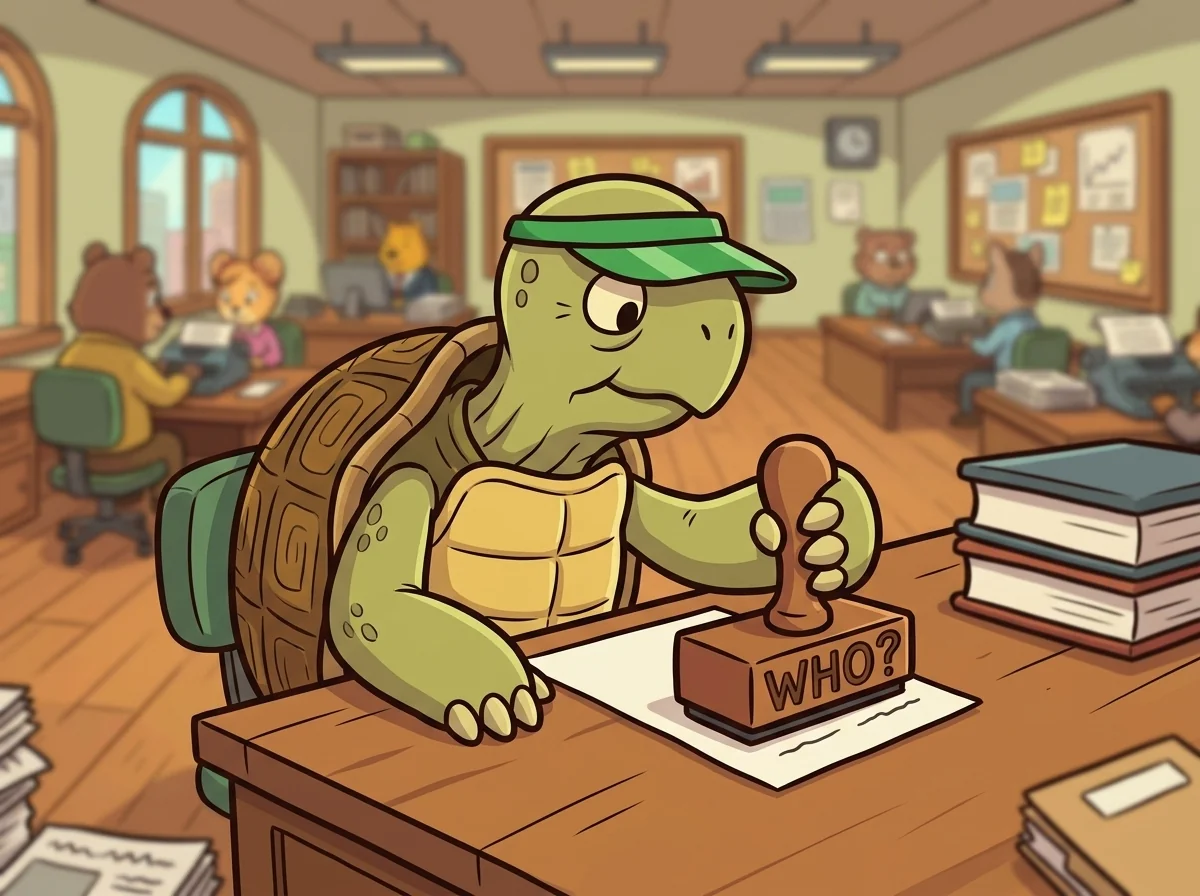
He carried his grandmother's ledger-sense into the NewsForge newsroom the way other newcomers carried ambition.
Scoop, the seasoned editor who met every arrival at the door, looked down at the small tortoise over a stack of galleys and asked the question he asked everyone. "What is attribution?"
Attest did not recite a definition. He laid three slips of paper on the desk instead. The first read: Dr. Okafor, the city water engineer, said the pipes are safe. The second: A worker who asked not to be named — because speaking out could cost them their job — said the pipes are failing. The third read only: Sources say the pipes are failing.
He touched the first. "This one I can hand to a reader whole. There is a name, a role, a person who will answer for it." He touched the second. "This one I can also print — but only if I tell the reader why the name is missing, so they can judge the silence for themselves. The reason is part of the truth." Then he touched the third, and his voice did not rise; it simply cooled. "This one I cannot print at all. There is no name and no reason for its absence — only the sound of authority, borrowed. It asks the reader to trust a promise nobody has made."
Scoop read the three slips for a long moment. Then he set down his pencil. "Half this building thinks 'sources say' is a shortcut," he said. "You're the one who knows it's a hole in the floor. You belong here."
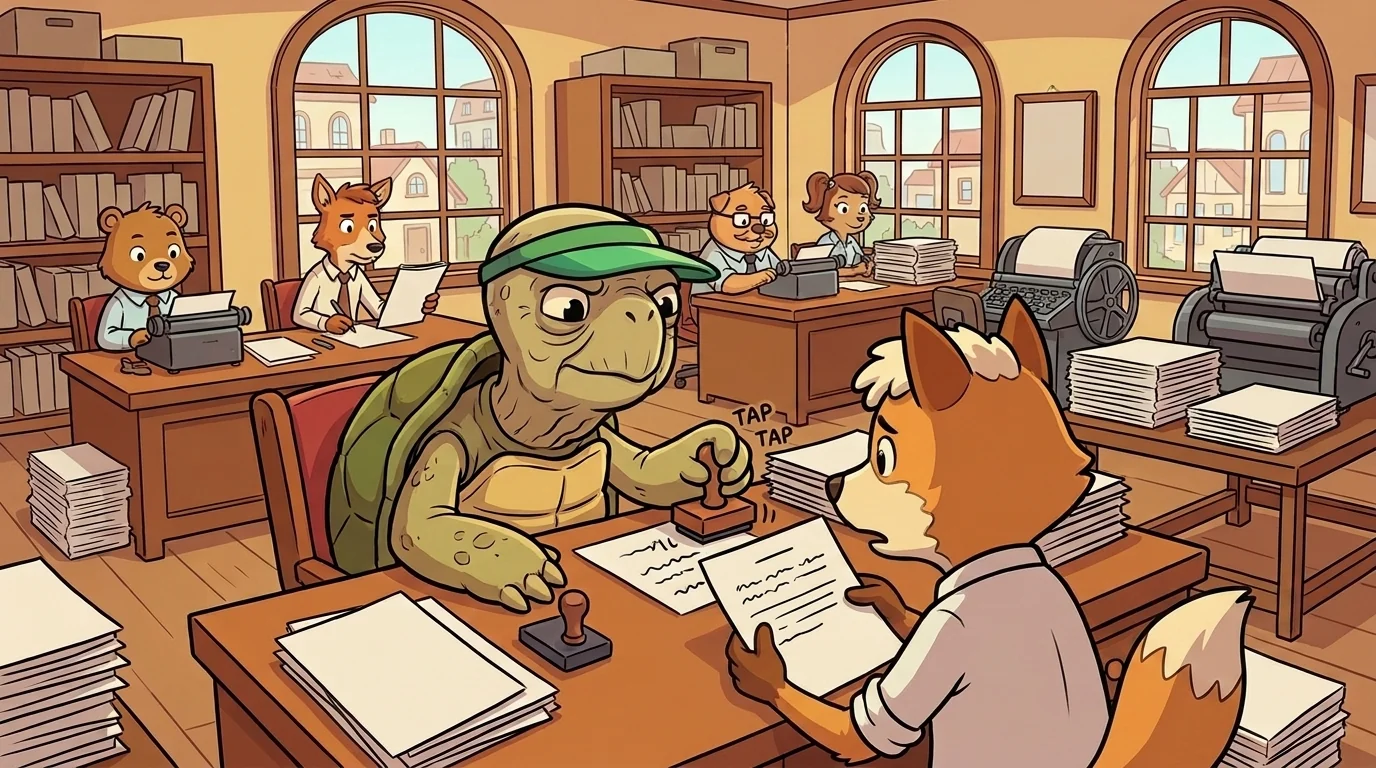
Attest's corner filled, over the seasons, with reporters who arrived stuck on exactly that hole.
A young writer dropped onto the stool across from him, defensive before she'd even sat. "I have a real story," she said. "The new stadium is over budget. But my only source won't let me use her name — she works in the finance office and she'd be fired. So do I just kill it? Is that your rule? No name, no story?"
"That is not my rule," Attest said mildly, "and it is a good thing you asked, because it is the question that separates a rumor-monger from a reporter." He drew a fresh slip toward him. "Anonymity is not the crime. Unexamined anonymity is. So we do the work the phrase 'sources say' is designed to skip." He began to write as he spoke. "One: does she have a reason — a real cost to being named? You've just told me she does. Two: can you corroborate — find a document, a budget line, a second person, so the reader isn't leaning on her word alone? Three: will you tell the reader plainly that the name is withheld, and why?" He looked up. "Do those three, and you may protect her name honestly. Skip them, and you are simply hiding — and hoping no one asks what you're hiding behind."
The writer read the slip. "So the difference between protecting a source and hiding behind one," she said slowly, "is whether I did the work — or just used the word 'sources' to look like I did."
"That is the entire difference," Attest said. "And the reader can't see which you did — so you have to be the kind of newsroom that does it even when no one is watching. Especially then."
Later, when the presses had quieted and the lamps burned low, the writer came back with a smaller, softer question.
"When you demand a name like that," she said, "every single time — don't you worry you'll strangle the story? That the careful version, all hedged and sourced, just... reads slower and colder than the bold one that says 'sources say' and moves?"
Attest thought about his grandmother's ledger, and the gossip that had slid away from him like a reflection, and the gray that spreads through a record the moment one shadow is let in.
"The bold version moves faster," he admitted. "For about a day. Until the claim is challenged, and there's no name to stand behind it, and the whole story falls through the hole in its own floor — and takes a little of the reader's trust down with it." He rested a wrinkled paw on her slip. "The sourced version is slower to build and impossible to knock down. When someone comes shouting that you got it wrong, you don't scramble. You simply turn the page around and show them the name, the reason, the second document. You have nothing to hide, because you spent the extra hour making sure of it."
The writer turned her carefully-sourced draft over in her hands, and Attest watched the anxious set of her shoulders loosen — the fear that being rigorous meant being dull letting go of her, replaced by something steadier. She had been braced, he realized, for rigor to feel like a cage. It felt, instead, like a floor she could stand on. She set the draft down the way you set down something you've decided to trust, and for the first time all evening she looked less like a reporter hoping her story would survive scrutiny and more like one who already knew it would.
The NewsForge ensemble
Attest is part of NewsForge's distributed-narrative cast. Each character embodies a different curricular primitive; together they teach the full subject.
-

Source
Source-quality evaluation — who would KNOW this best? who has a stake? source-card-comparison the routine
-

Tilt
Bias-and-perspective detection — every story has a frame; name the frame, then read; structural NOT partisan
-

Frame
Headline-and-framing craft — a headline is a SUMMARY not a HOOK; counter-clickbait
-

Verify
Verification + lateral-reading discipline — SIFT (Stop, Investigate, Find, Trace); open four tabs, never one
-

Serve
Community-information-needs framing — what does my reader NEED to know to DO something? agency-foregrounding; counter-doomscroll
-

Deed
Primary source — go to the original document, not a summary of a summary
-

Errata
Corrections — a story is living; when the facts change, the record is fixed
-

Uncrop
Framing — an image or chart is cropped; ask what sits outside the frame
-

Widen
Context — one number means little without comparison; widen the view