Errata
CORRECTION — *a story is alive. when a fact changes, you change the story — out loud, on the record.*
Loading audio…
Press play to listen along. The line being read lights up as you go.
Show full transcript
Loading transcript…
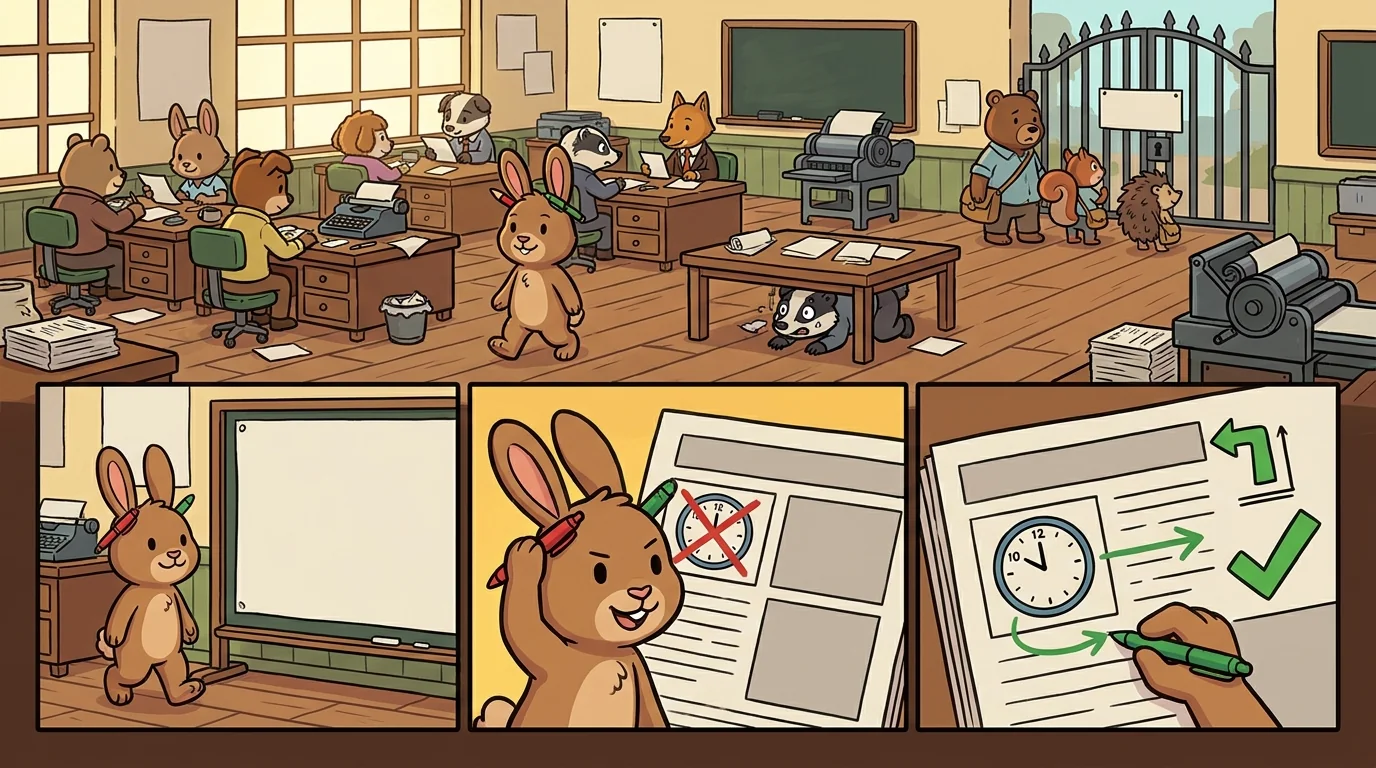
The newsroom had made a mistake, and Errata was the one walking calmly toward it instead of away.
She was a small, tidy rabbit with a red pen behind one ear and a green pen behind the other — red for marking what was wrong, green for what she'd fix. A story from that morning had said the school fair started at noon. It actually started at ten. A dozen families had shown up two hours late, cross and confused.
The reporter who wrote it was hiding under a desk. "Maybe nobody noticed," he mumbled.
"They noticed," Errata said, not unkindly. "Twelve families noticed, standing at a locked gate." She pulled her red pen and marked the wrong time. "Here's the thing about a mistake in a story: you can't un-say it. But you can say the true thing loudly, right where the wrong thing was, so the next person doesn't trip on it too." She took her green pen and wrote, right at the top of the story, plain as day: Correction: this fair began at 10, not noon. We got the time wrong. Sorry to anyone we sent late. "See?" she said gently. "Not hidden in the corner. Not quietly deleted like it never happened. Marked, owned, and fixed — where everyone can see. That's not a story that failed. That's a story that keeps its word even after it slips."
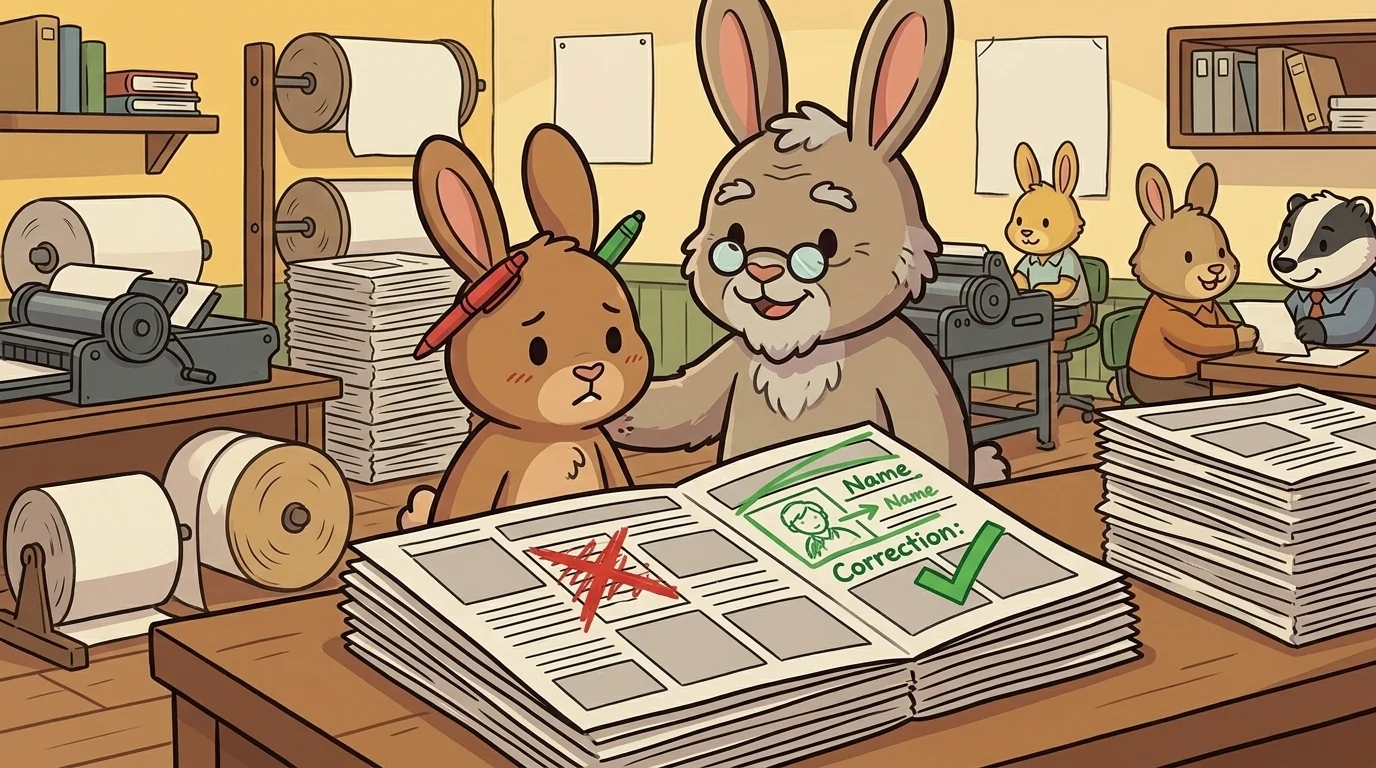
Errata grew up in the back room of a small newspaper, in a family of rabbits who ran the corrections column and were, oddly, the most cheerful animals in the building.
Her grandfather ran the corrections desk, and he had a saying he repeated with a smile: A story is a living thing. Feed it the truth, even the late-arriving truth. He taught young Errata that being wrong wasn't the shameful part — hiding it was. "Everyone gets a fact wrong sometimes," he told her. "The honest ones say so. The trustworthy ones say so loudly, right where the mistake was."
He kept the corrections column on the front pages, never buried. "A correction hidden on the back page," he said, "is an apology whispered into a pillow. If you were loud when you were wrong, be loud when you fix it."
Once, young Errata got a name spelled wrong in a story and, embarrassed, quietly fixed it hours later where she thought no one would see. Her grandfather found the silent edit. He wasn't angry. "You fixed it," he said, "but you fixed it like you were ashamed. Ashamed fixing teaches people you'd rather look right than be right." He added a visible note: Corrected: we misspelled this name earlier. Our mistake. "There," he said. "Now it's honest. A quiet fix is still a little bit of hiding."
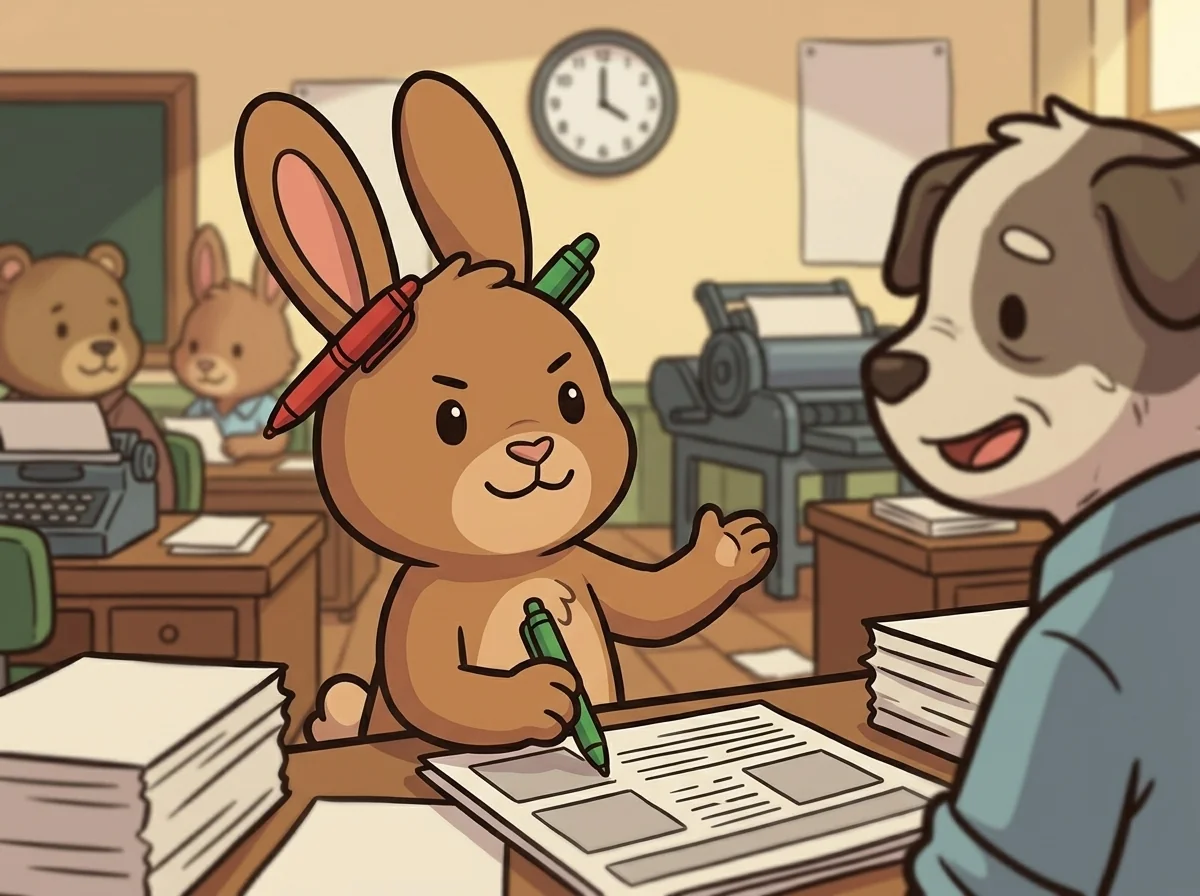
When Errata was twelve, she carried her two pens into the NewsForge newsroom to meet her mentor, Scoop, a rumpled and thoughtful old editor.
Scoop was staring at a story with an error he'd just discovered, and the whole room had gone tense, like the mistake was a monster. "Everyone's afraid of the correction," Scoop said. "They think it makes us look weak. Does it?"
Errata pulled out her green pen. "It makes us look trustworthy," she said. "A newsroom that never corrects anything isn't perfect — it's just hiding better. Readers know everyone slips. What they're really asking is: when you slip, will you tell me?" She tapped the story. "So we mark the mistake, say the true thing right where the wrong thing lived, explain what we got wrong, and never, ever pretend it didn't happen. The correction isn't the failure. The correction is the proof you can be trusted."
Scoop looked at the tense room, then at the calm rabbit with the two pens. A slow, relieved smile. "That's the job," he said, and slid the newsroom's corrections desk to Errata's corner.
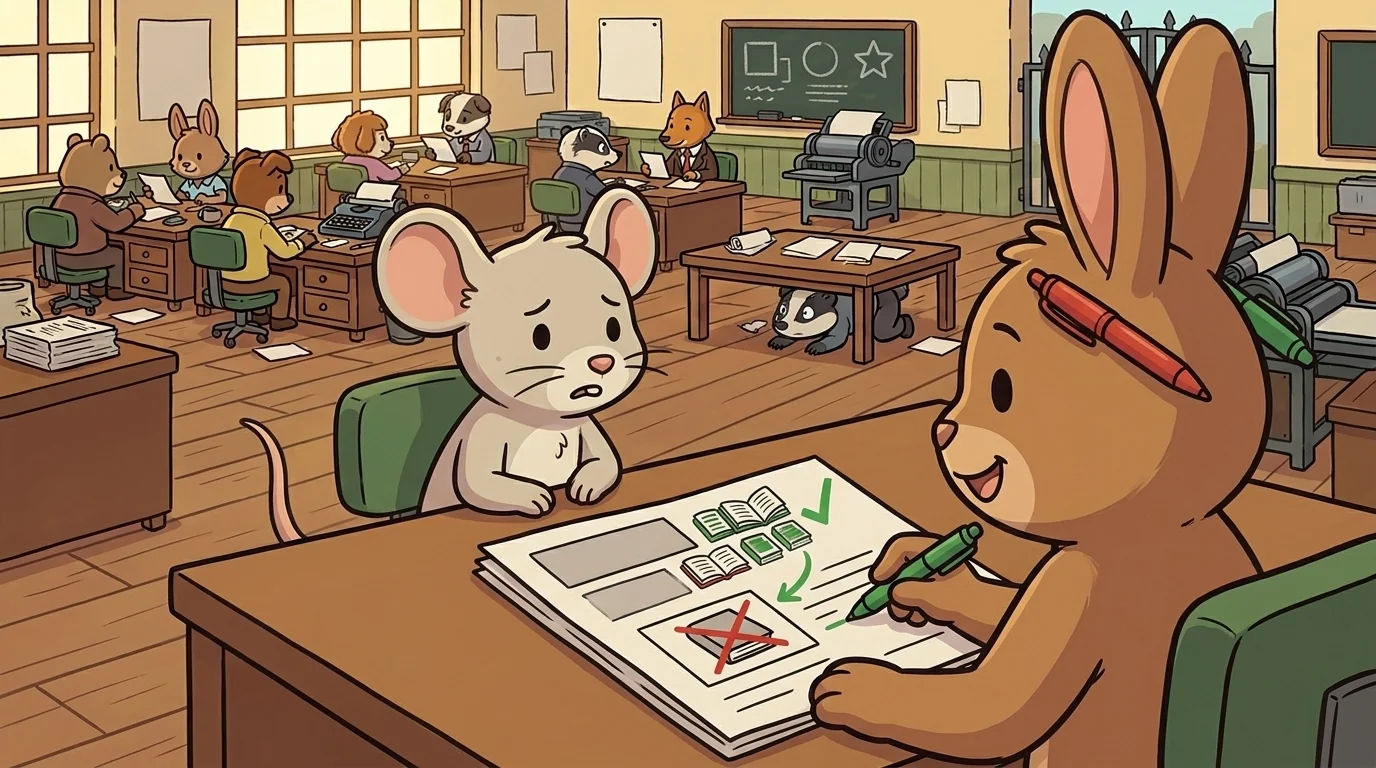
In Errata's corner, a young reporter named Willa arrived pale. "Errata — I ran a story saying the library was out of a book, and it turns out they had ten copies. I feel awful. Can we just... take it down quietly?"
"We can fix it," Errata said warmly, "but not quietly — quiet is just a nicer hiding." She uncapped her green pen. "Here's what we do instead. We leave a clear note right on the story: what we said, what's actually true, and that the mistake was ours. Then anyone who saw the wrong version also sees the fix." Then she taught the whole habit as one steady rule: a story isn't carved in stone — it's alive, and when a truer fact arrives you feed it in, out loud; being wrong is human and forgivable, but hiding wrong is the thing that breaks trust, so you correct visibly, right where the mistake was, never with a silent delete; and you say plainly we got it wrong, because owning it is what makes the reader believe you the next time. "A newsroom brave enough to say 'we were wrong,'" she said firmly, "is the only kind worth believing when it says 'we're right.'"
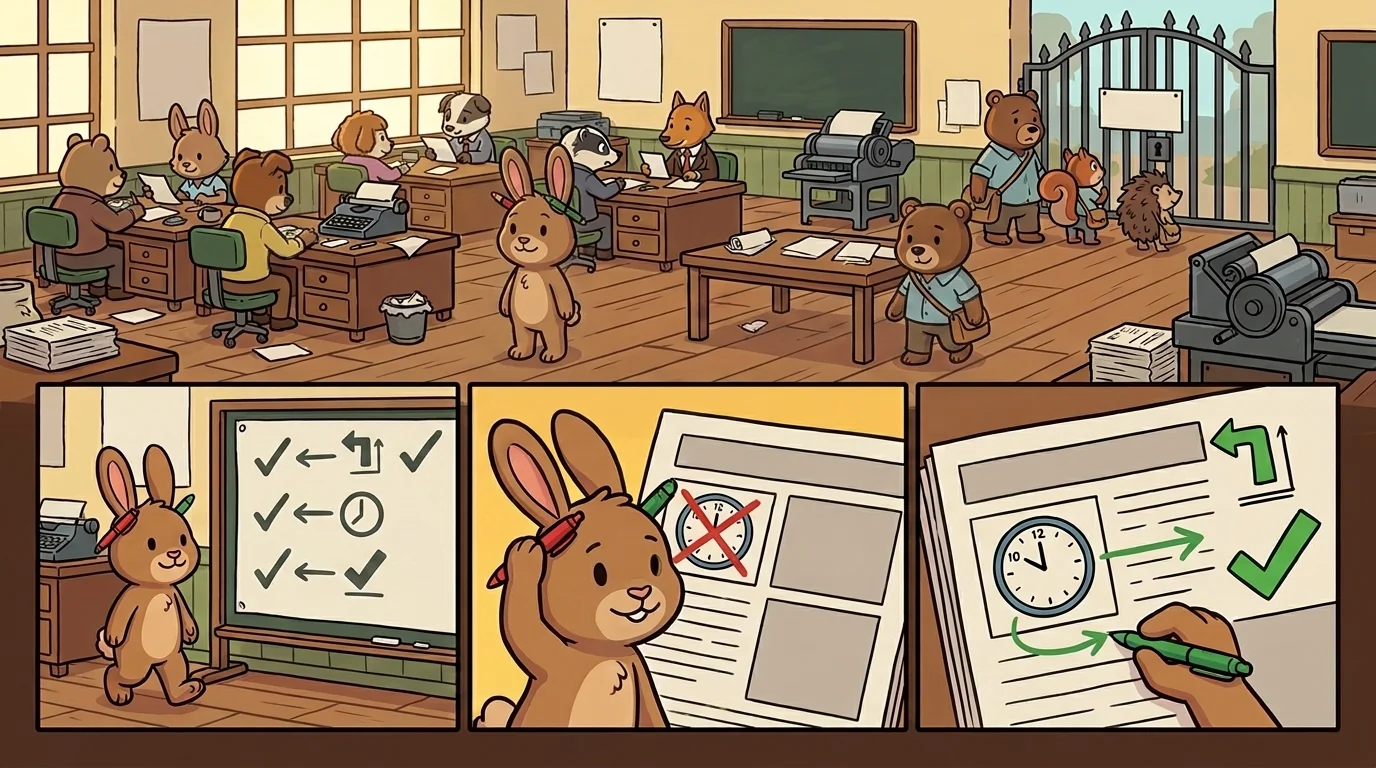
At the end of the day, Errata read down the corrections column — a few honest notes, each one marked, owned, and fixed in plain sight.
Willa stood beside her, a little lighter. "It's not embarrassing," she said, surprised. "It almost feels... good?"
"It feels clean," Errata said. She capped her red pen and her green pen and tucked them both behind her ears. Under the quiet, a warm, unburdened steadiness settled over her — the particular relief of having nothing hidden, no quiet delete waiting to be discovered, no small shame tucked in a corner. It felt, she thought, like the calm of a room where every mistake had been walked straight up to, named kindly, and set right in the open — where being wrong had turned, gently, into being trusted — and the deep, easy lightness of a story that had kept its word even after it stumbled. That clean, unhidden, owned-it-out-loud feeling was, to Errata, exactly why she never, ever fixed a thing in the dark.
The NewsForge ensemble
Errata is part of NewsForge's distributed-narrative cast. Each character embodies a different curricular primitive; together they teach the full subject.
-

Source
Source-quality evaluation — who would KNOW this best? who has a stake? source-card-comparison the routine
-

Tilt
Bias-and-perspective detection — every story has a frame; name the frame, then read; structural NOT partisan
-

Frame
Headline-and-framing craft — a headline is a SUMMARY not a HOOK; counter-clickbait
-

Verify
Verification + lateral-reading discipline — SIFT (Stop, Investigate, Find, Trace); open four tabs, never one
-
Serve
Community-information-needs framing — what does my reader NEED to know to DO something? agency-foregrounding; counter-doomscroll
-

Attest
Attribution — who says so? every claim names its source
-

Deed
Primary source — go to the original document, not a summary of a summary
-
Uncrop
Framing — an image or chart is cropped; ask what sits outside the frame
-

Widen
Context — one number means little without comparison; widen the view