
Errata
CORRECTION — *a story is alive. when a fact changes, you change the story — out loud, on the record — where the mistake was, not hidden in a corner.*
Loading audio…
Press play to listen along. The line being read lights up as you go.
Show full transcript
Loading transcript…
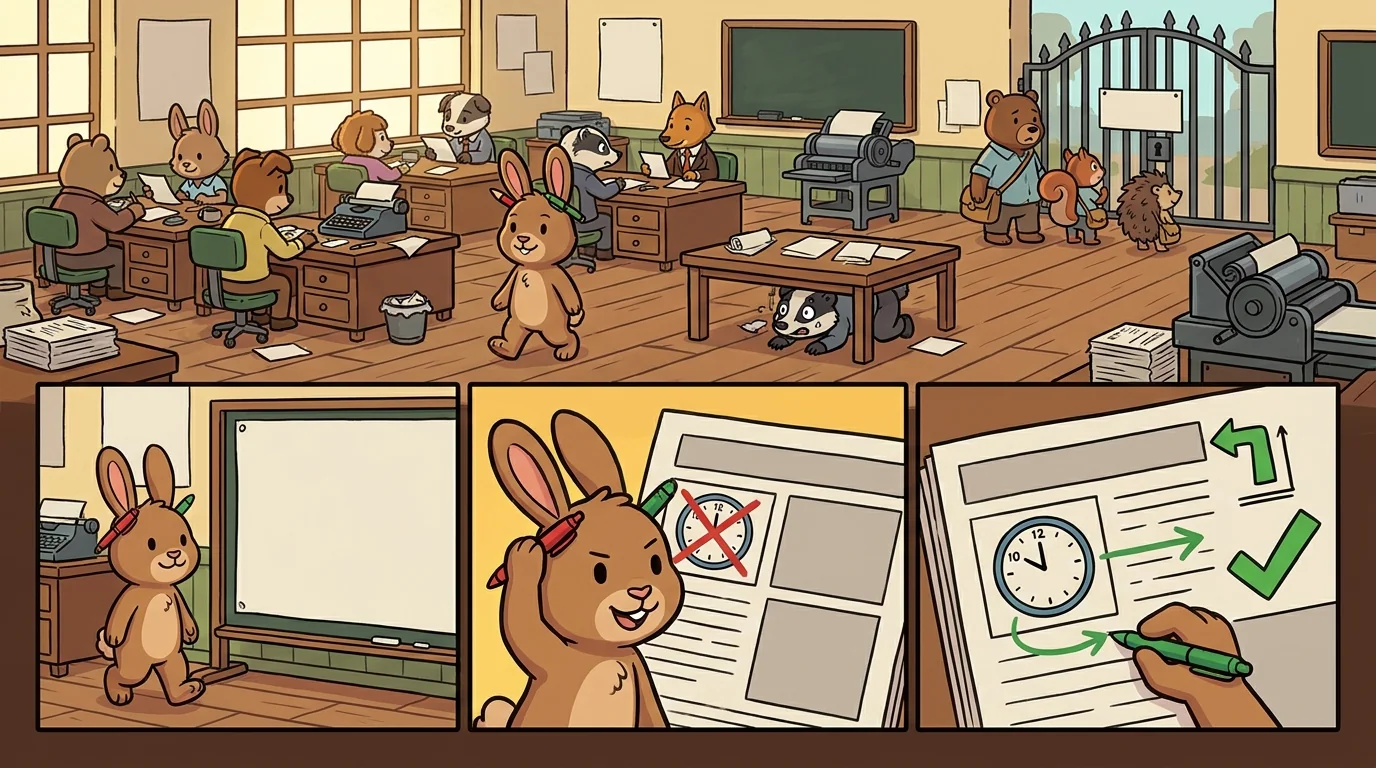
The newsroom had made a mistake, and Errata was the only one walking toward it instead of away.
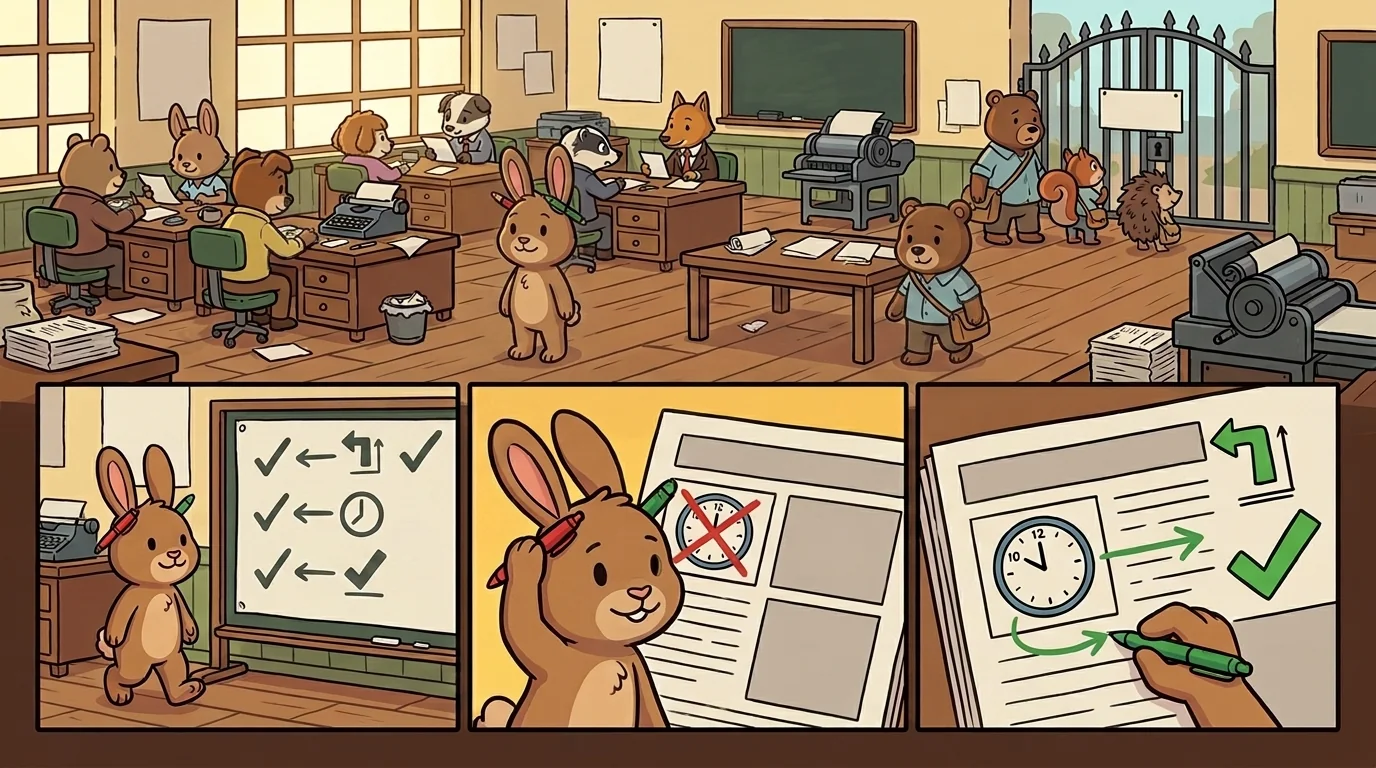
She was a small, brisk rabbit with a red pen behind one ear and a green pen behind the other — red for marking what was wrong, green for setting it right. A story that morning had announced the school fair would open at noon. It had opened at ten. A dozen families had arrived to a locked gate two hours late, cross and confused, and the reporter responsible was now attempting to become part of the furniture beneath his desk.
"Maybe nobody noticed," he offered, from the floor.
"Twelve families noticed," Errata said, not unkindly, "at a locked gate." She drew her red pen and marked the wrong time. "Here is the thing about a mistake that's already gone out: you can't un-say it. It's out in the world, in people's heads, doing quiet damage. But you can say the true thing loudly, in the exact place the wrong thing was, so the next reader doesn't trip on it too." She uncapped the green pen and wrote, plainly, across the top of the story: Correction: the fair opened at 10, not noon. We got the time wrong, and we're sorry to anyone we sent late.
"There are three ways to handle this," she went on, "and only one of them is honest. You can quietly edit — change 'noon' to 'ten' and pretend the error never happened, which lies to everyone who read the first version and now looks foolish for no reason they can see. You can bury it — a tiny note on a back page where no one will find it. Or you can correct it out loud, right where the wound is, and name what you got wrong." She capped the green pen. "The quiet edit protects you. The loud correction protects the reader. And a newsroom that protects itself before its readers has already forgotten what it's for."
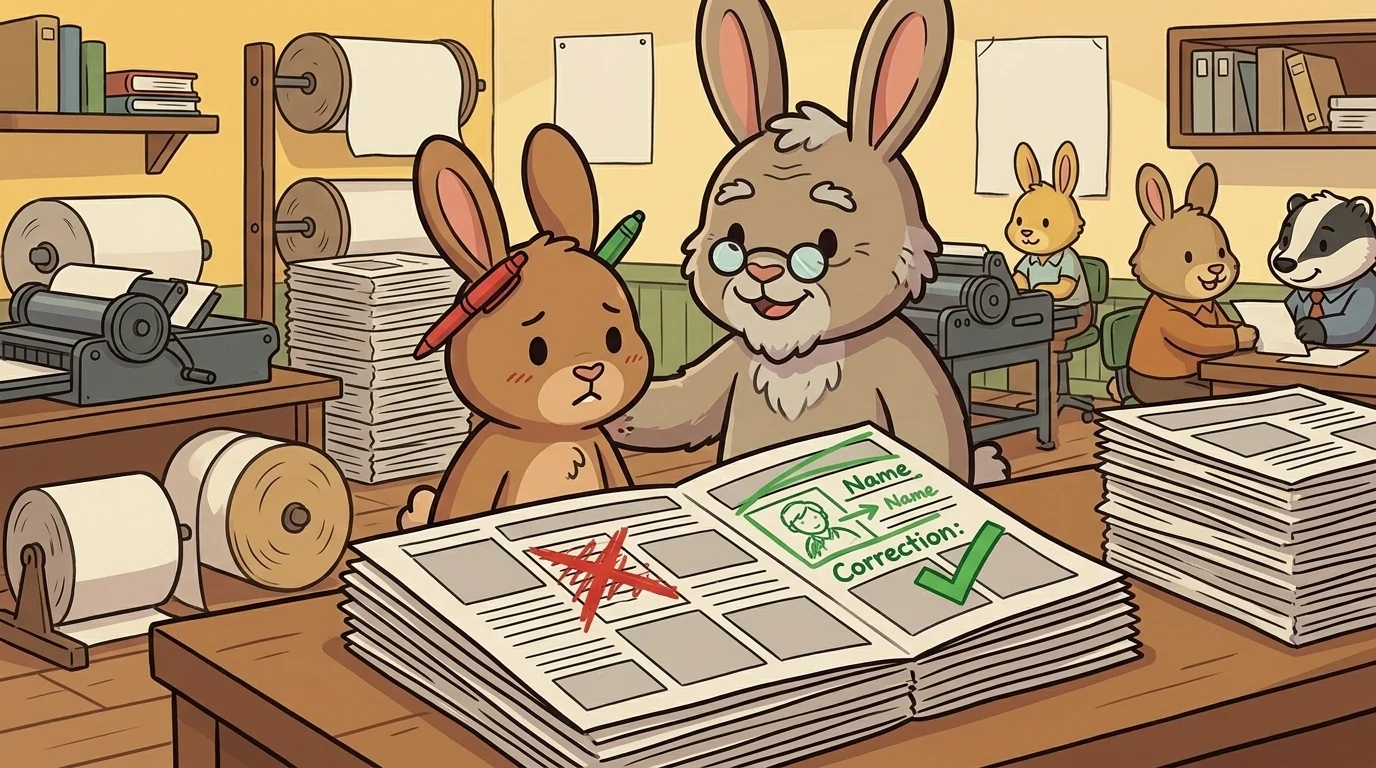
Errata had grown up in the back room of a small newspaper, among a family of rabbits who ran the corrections column and were, against all expectation, the most cheerful animals in the building.
Her grandfather ran the corrections desk, and he had a saying he delivered with a smile: A story is a living thing. Feed it the truth, even the late-arriving truth. Being wrong, he taught her, was never the shameful part — every honest reporter is sometimes wrong, because the world hands you incomplete facts on a deadline. The shameful part was hiding it. "The wrong ones bury their mistakes," he said. "The honest ones admit them. The trustworthy ones admit them loudly, in the same place and the same size as the error."
He kept the corrections column on the front pages, never tucked in the back. "A correction whispered on the back page," he said, "is an apology muttered into a pillow. If you were loud when you were wrong, be loud when you fix it — that's only fair to everyone who heard the loud wrong thing."
Once, young Errata got a name misspelled in a story and, mortified, slipped in a silent fix hours later where she was sure no one would notice. Her grandfather found the quiet edit. He wasn't angry — he was something more useful, which was precise.
"You fixed it," he said, "but you fixed it ashamed. And an ashamed fix teaches people something worse than the original mistake: it teaches them you'd rather look right than be right." He added a visible note to the story: Corrected: an earlier version misspelled this name. Our error. "There," he said. "Now it's honest. A silent fix isn't humility. A silent fix is hiding wearing humility's coat."
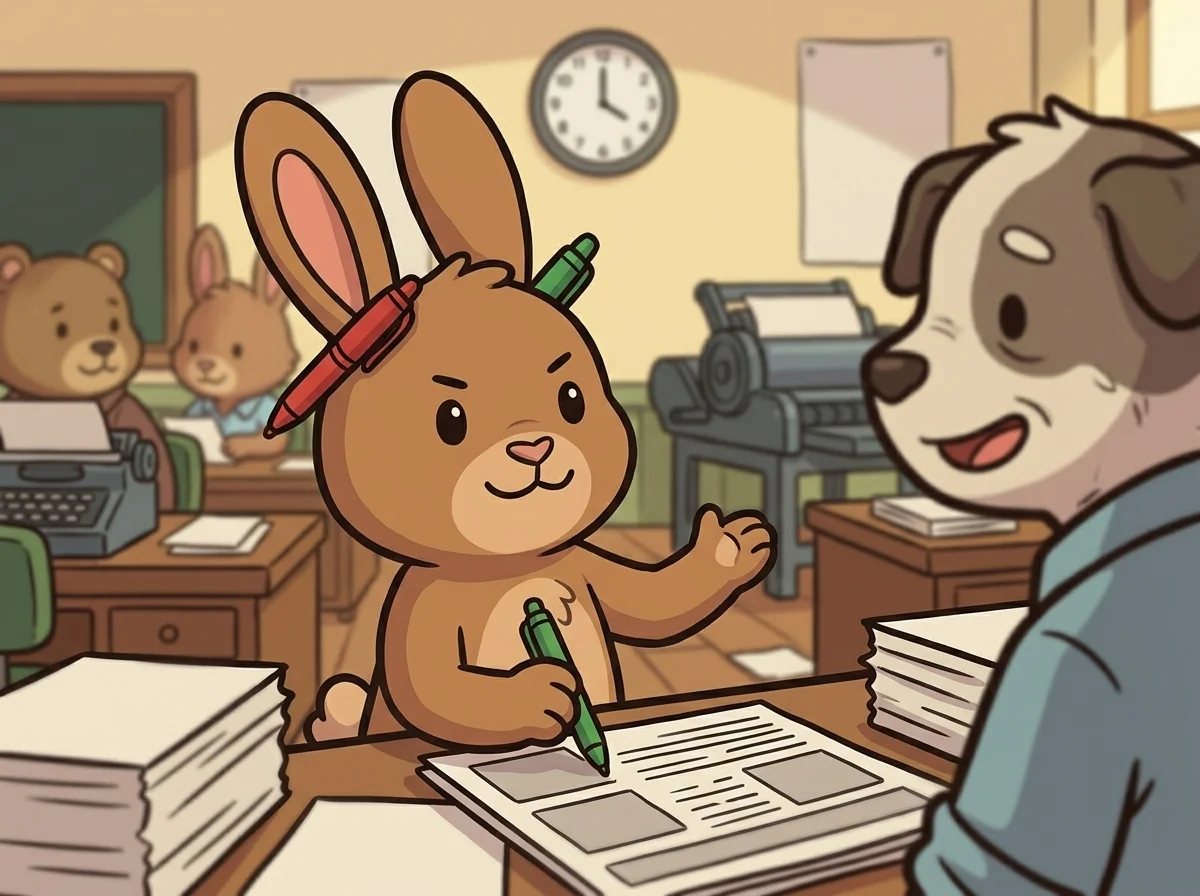
She carried the corrections-desk creed into NewsForge like a small, cheerful banner.
Scoop, meeting her at the door, asked his question. "What is a correction?"
Errata answered by laying two versions of the same story on his desk. In the first, a false claim had simply vanished, swapped clean for the true one — no trace it had ever been there. In the second, the true version ran with a small, plain box at the top: Correction: an earlier version of this story said X. That was wrong. The truth is Y, and here's how the error happened.
She tapped the first. "This one is cleaner. It looks like we were never wrong." She tapped the second. "This one is honest. It admits we were wrong and shows our work." She looked up. "The clean one is a small lie told to protect our pride. The honest one costs us a flicker of embarrassment and buys us the one thing a newsroom can't survive without."
Scoop studied both. "Which thing?"
"The reader's belief that when we're wrong, they'll hear it from us first — not discover it themselves and wonder what else we've quietly changed."
Scoop set down his pencil. "You belong here."
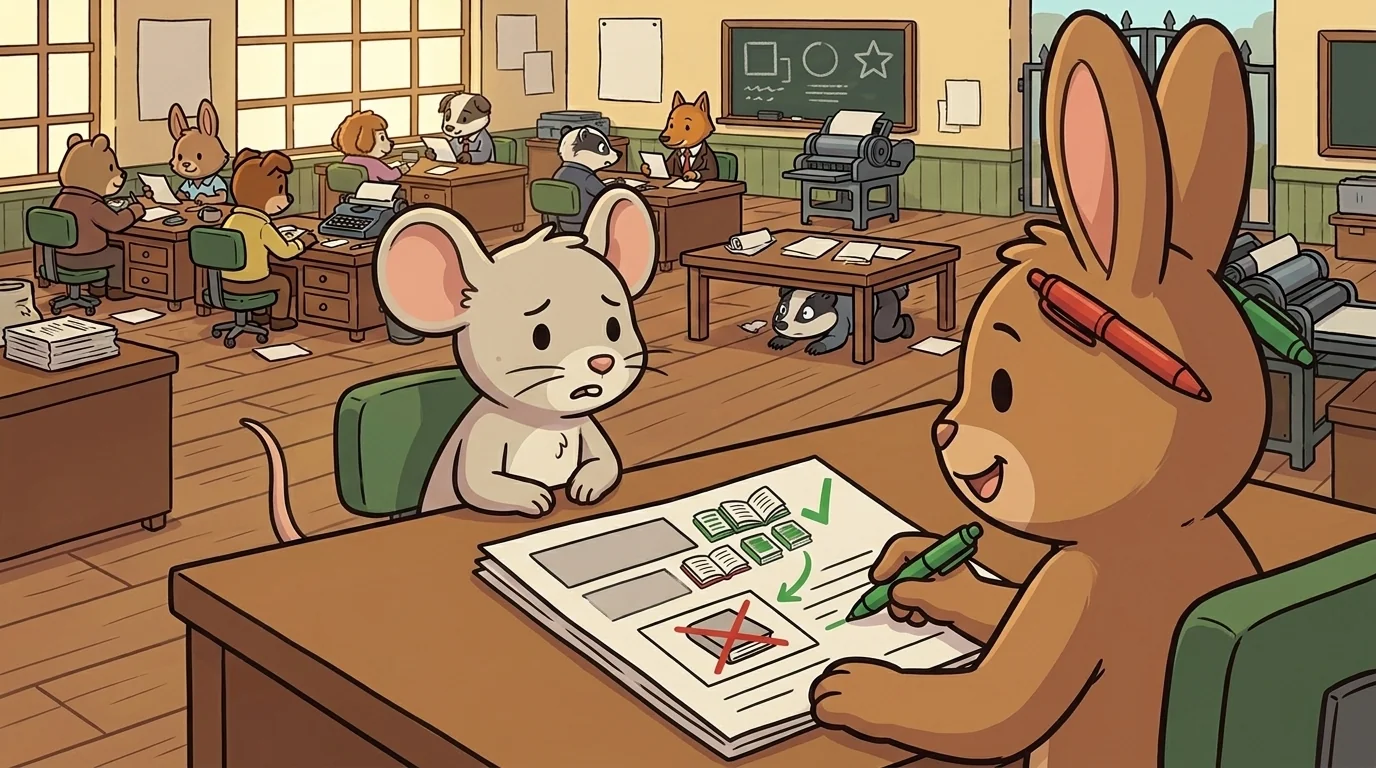
Errata's desk drew reporters at their lowest — the ones who'd just gotten something wrong and were deciding, in real time, what kind of journalist they were going to be.
A young writer stood before her, gray-faced. "I ran a story saying a local charity misused its money," she said. "It was based on a document I misread. The charity did nothing wrong. It's already been shared thousands of times. If I correct it, everyone will know I messed up — and the charity's name is already dragged through the mud. Isn't a big loud correction just... making my failure into a second headline?"
"I understand why it feels that way," Errata said gently, "so let's be clear about who the correction is for. It is not for you, and it is not a punishment. It is for the charity you wronged, and for every reader who now believes a false, ugly thing." She drew a fresh sheet. "A quiet edit leaves those thousands still believing it. A loud correction — as loud as the accusation was, carried to the same readers — is the only thing that actually reaches the people the mistake reached. You didn't just make an error. You put a false thing into thousands of heads. The correction is how you go get it back out."
The writer swallowed. "So the size of the correction should match the size of the mistake — not the size of my embarrassment."
"Exactly that," Errata said. "Your embarrassment is real, and it's temporary, and it is frankly none of the story's business. The false thing in ten thousand heads — that's the story's business. Go be loud enough to reach all ten thousand."
Later, when the newsroom had gone quiet and the two pens lay side by side on the desk, the writer came back, calmer, with a last question.
"Doesn't it wear the newsroom down?" she asked. "All these corrections, out in public, admitting we were wrong again and again? Doesn't it just make us look unreliable — like we're always making mistakes?"
Errata thought about her grandfather's front-page column, and the silent fix he'd caught, and the coat that hiding likes to borrow.
"You'd think so," she said. "But it runs exactly backwards. The newsroom that never prints a correction isn't the one that never errs — it's the one that hides. Readers learn that fast." She lined the red and green pens up neatly. "A newsroom with a visible, honest corrections column is telling its readers something every single day: when we're wrong, you'll know, from us, plainly. That's not a confession of unreliability. It's the opposite. It's the promise that makes everything else we print believable — because you've watched us keep our word even when keeping it stung."
The writer picked up the green pen, turning it over. And Errata watched the dread go out of her face — the fear that correcting herself would brand her a failure loosening and lifting away, replaced by something almost like relief. She had come to the desk braced to be scolded for an error; she was leaving with a way to make the error right that felt, unexpectedly, like the most trustworthy thing she'd do all week. She uncapped the pen, and drew the story toward her, and started, out loud and on the record, to keep the newsroom's word.
The NewsForge ensemble
Errata is part of NewsForge's distributed-narrative cast. Each character embodies a different curricular primitive; together they teach the full subject.
-

Source
Source-quality evaluation — who would KNOW this best? who has a stake? source-card-comparison the routine
-

Tilt
Bias-and-perspective detection — every story has a frame; name the frame, then read; structural NOT partisan
-

Frame
Headline-and-framing craft — a headline is a SUMMARY not a HOOK; counter-clickbait
-

Verify
Verification + lateral-reading discipline — SIFT (Stop, Investigate, Find, Trace); open four tabs, never one
-
Serve
Community-information-needs framing — what does my reader NEED to know to DO something? agency-foregrounding; counter-doomscroll
-

Attest
Attribution — who says so? every claim names its source
-

Deed
Primary source — go to the original document, not a summary of a summary
-
Uncrop
Framing — an image or chart is cropped; ask what sits outside the frame
-

Widen
Context — one number means little without comparison; widen the view