
Widen and Uncrop
CONTEXT + FRAMING — *a real number with no comparison, a real photo cut too tight: both true, both misleading, both fixed by restoring what was left outside the frame.*
Loading audio…
Press play to listen along. The line being read lights up as you go.
Show full transcript
Loading transcript…
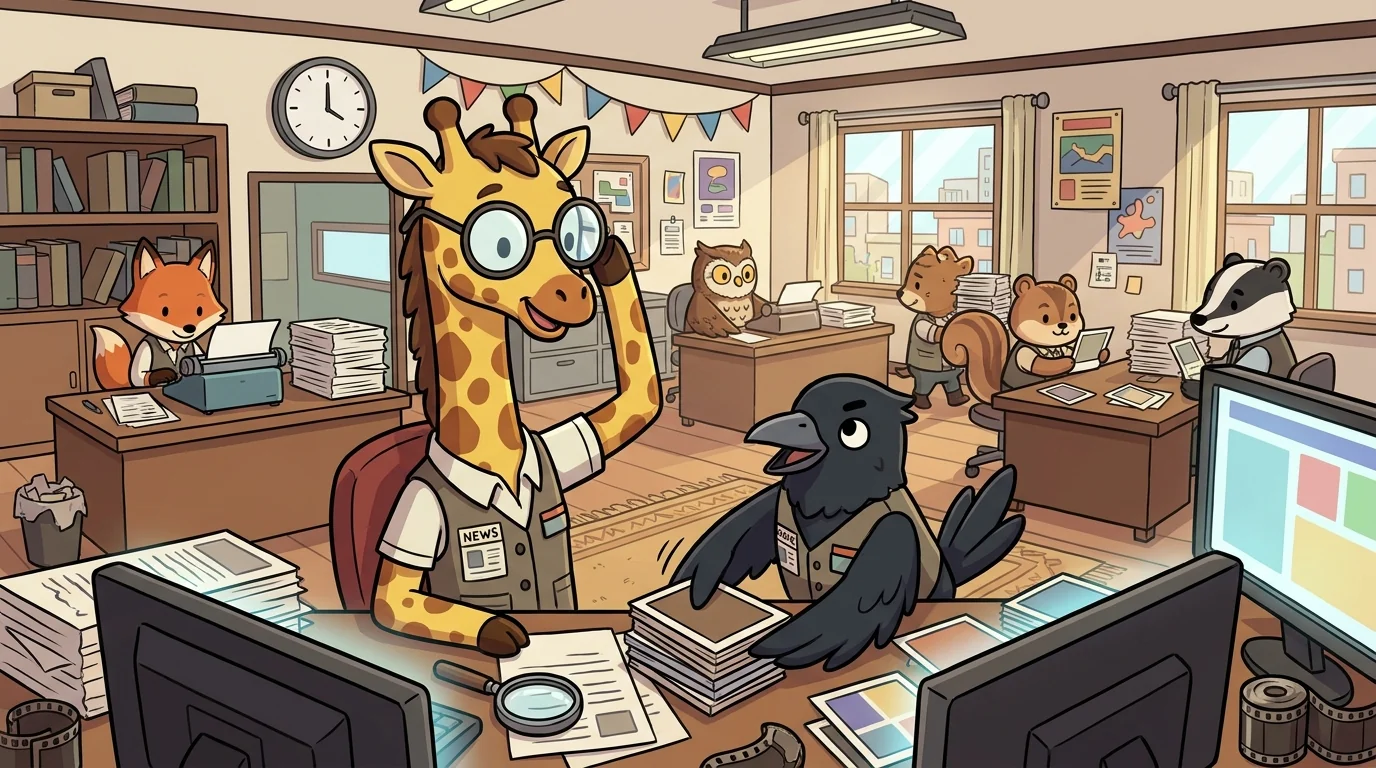
Widen the giraffe and Uncrop the crow work side by side at the newsroom's data-and-picture desk, and they share one suspicion about the world: the most convincing lies are usually built out of true things, with the deciding part cut away. Widen watches the numbers; Uncrop watches the images. But their job is the same — find whatever got left outside the frame someone chose, and put it back, so the reader is deciding from the whole thing instead of the sliver.
"A number cut off from its comparison can lie without ever being false," Widen says, stretching her spectacles. "So can a photo cut off from its surroundings," Uncrop says, sliding his frames. "The fragment is real," Widen says. "The frame is the fib," Uncrop finishes. "So we show the whole frame. Always."
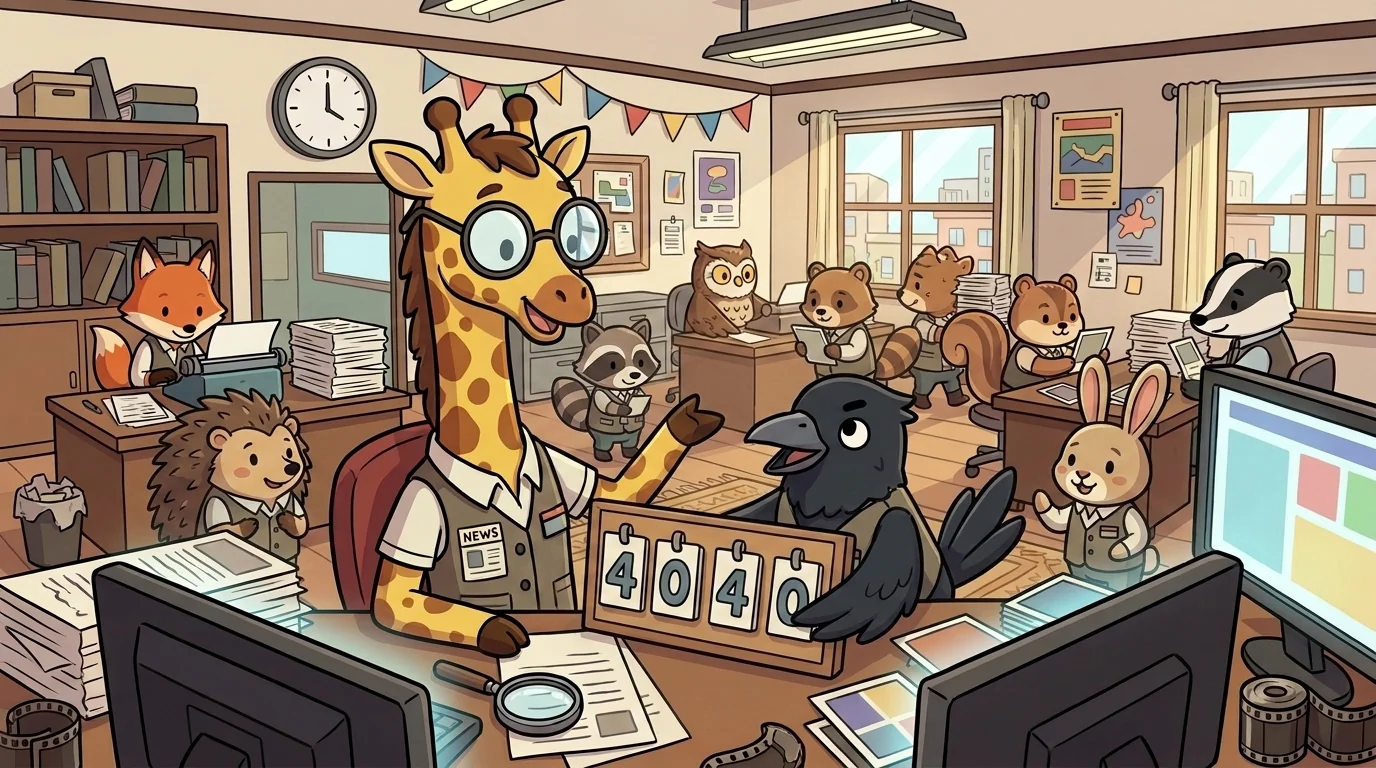
Widen restores the missing comparison — the company a number needs before it can tell the truth about its own size.
A headline shouts a lonely figure — "temperatures hit a shocking 40 this week!" — and everyone gasps. Widen raises her neck. "Forty compared to what?" she asks. "Forty in a place that's usually twenty is real news. Forty in a place that's always around forty this time of year is called summer." She digs up the neighbors the number was missing — last year, the decade before, the normal range for the season — and sets the full row down. "Here: forty, which is dead average for this week, in a place that's warm every year. The forty was true. Alone, with no comparison beside it, it was dressed up as a shock." She folds her long neck down. "A number is a real fragment. A fragment with no comparison is a fragment in a frame someone chose — and the frame, not the number, is doing the lying."
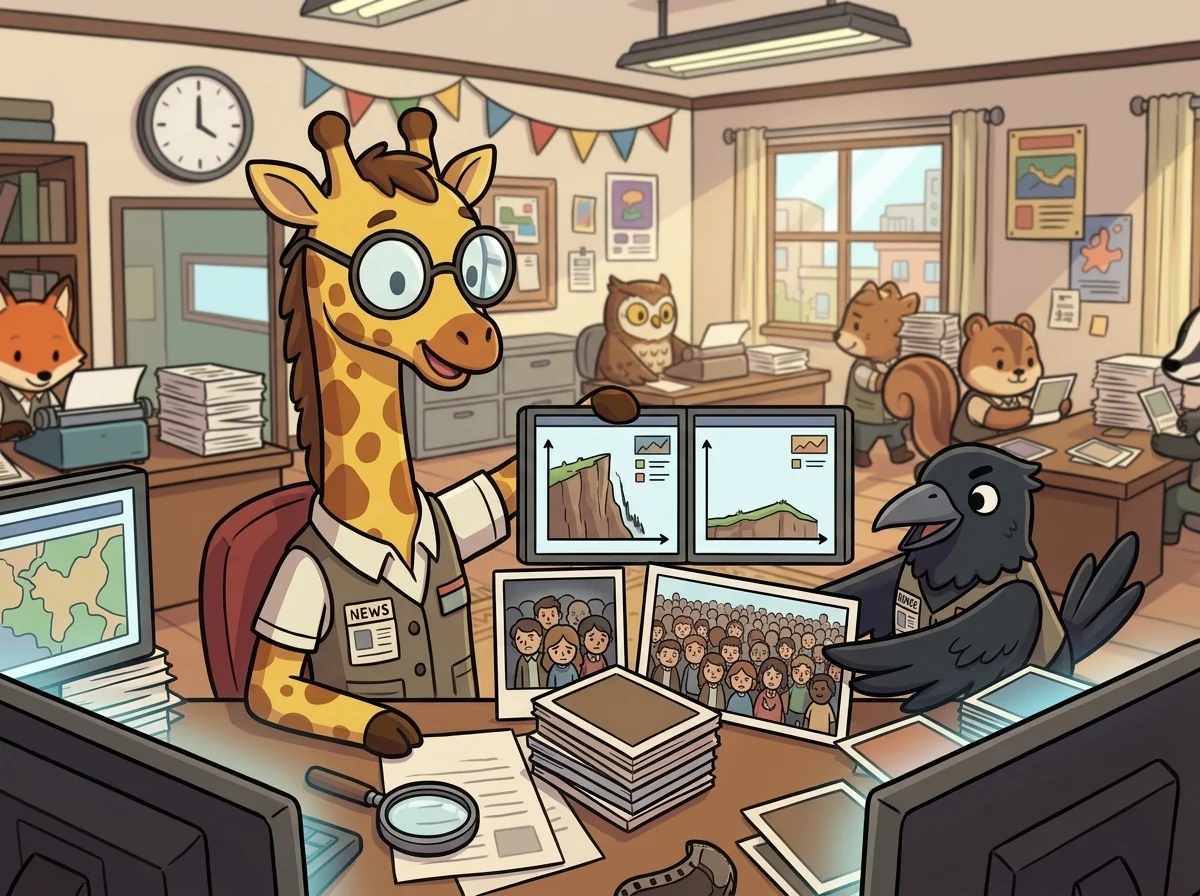
Uncrop restores the missing surroundings — the part of a picture, or a chart, that the scissors removed.
A photo runs tight and dramatic: one small, sad cluster of people, beneath the words "the rally was a flop." Uncrop tilts his head and slides his frames open. The picture keeps going past its cut edges, and there, just outside the crop, is the rest — a packed square, thousands deep, running off the sides of the shot. "The photo is real," he says, setting the full frame beside the cropped one. "Someone cut it down to a lonely corner and threw the crowd away." He does the same to a terrifying chart, sliding its chopped-off bottom back down to zero until the sheer cliff softens into a gentle rise. "Cut the edges off a photo, or the floor off a chart, and a true picture tells a lie. Pull the frame open, drop the axis to zero, and the truth walks back in." He taps both. "A picture is a real fragment too. And a fragment cropped tight enough will hold up almost any caption you please."
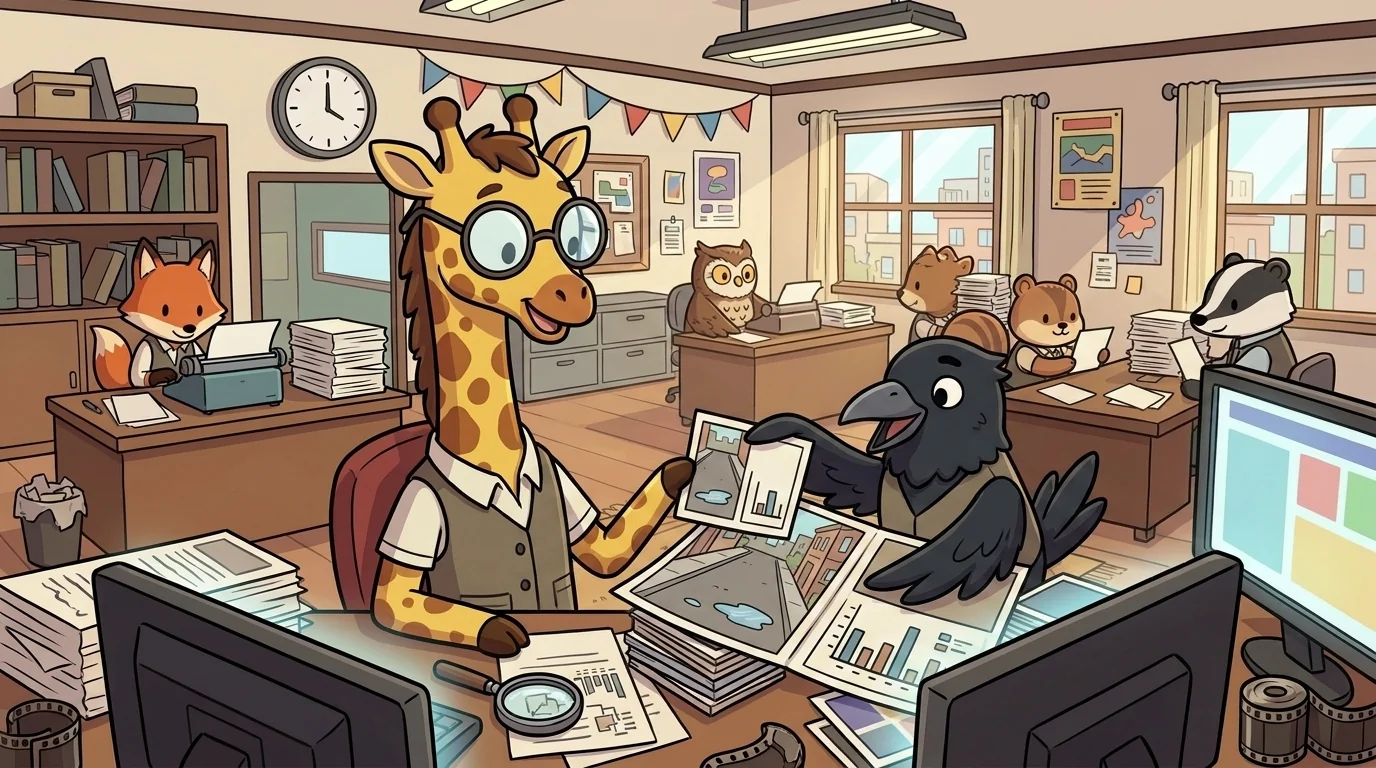
Where they become a genuine pair is the story that hands you a true number and a true picture — and lets the two lies lean on each other.
A reporter brings them a package that seems airtight: a photo of a nearly-empty town meeting, and a statistic — "attendance down 50%!" — beneath it. "Both true," the reporter says. "The photo's real, the number's real. Surely together they prove the town's stopped caring." Widen and Uncrop trade a look and go to work from their two ends. Uncrop slides the photo open: the "empty" hall was shot in the first five minutes, before the crowd arrived — the same meeting, an hour later, was full. Widen reaches into the number: "down 50%" meant down from an unusual, one-time record turnout the year before, to a total that was still higher than every other year on record. "Each fragment is real," Widen says. "The photo really was taken. The number really is a fifty-percent drop." "And each frame is a fib," Uncrop says. "The photo was cropped in time instead of space — the wrong five minutes. The number was cropped to a cherry-picked baseline." They lay all four things down together: the tight photo, the wide photo, the lonely statistic, the full trend. "On its own, either fragment might have made you check," Widen says. "Side by side, they vouched for each other — a true number seeming to prove a true picture." "That's the sharpest version of the trick," Uncrop says. "Two real fragments, each in a chosen frame, propping each other up. You have to widen the number and uncrop the picture — because checking only one leaves the other still lying, and still convincing."
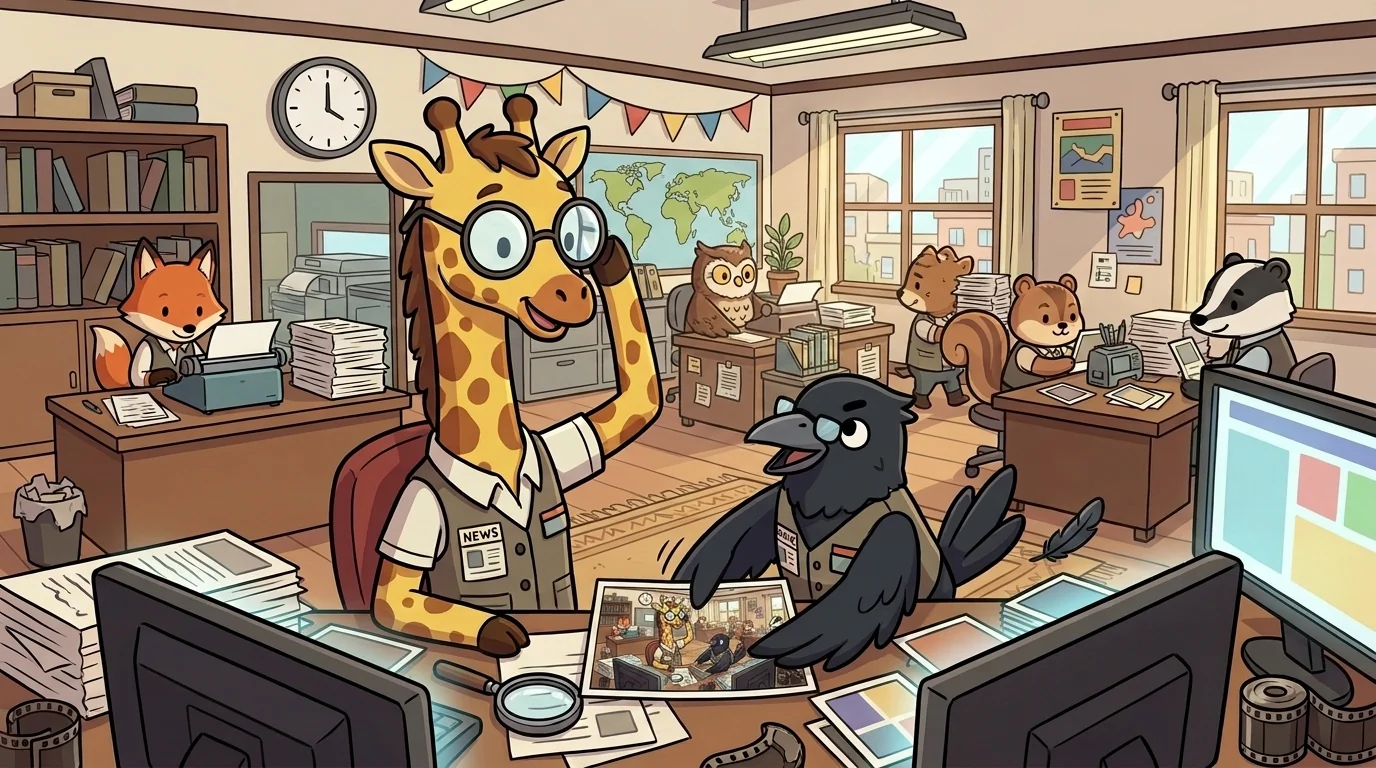
Later, when the data-and-picture desk has gone quiet and the spectacles and the sliding frames lie side by side, the reporter comes back with the tired, honest question.
"When you widen every number and uncrop every photo," he says, "don't the stories lose their teeth? The lonely scary number, the dramatic tight shot — that's what makes a reader feel it. If we always hand over the calm, whole, in-context version, don't we just get scrolled past?"
Widen and Uncrop look at each other — the old look of two animals who've watched a great many true fragments fool a great many careful people.
"We lose the borrowed teeth," Widen says. "The bite that comes from a number with no comparison, or a photo with no surroundings — that bite was borrowed against the reader's trust, and it always comes due when they find the rest of the frame." "But a whole picture has its own bite," Uncrop says, "and it lasts: the reader knows we didn't trim it to trick them." Widen folds her neck down. "So we spend no trust making small things look big or full rooms look empty. And the day something is genuinely enormous — a real cliff in the data, a hall that's truly empty — we show it whole, and every reader believes us instantly, because we've never once sold them a fragment as the whole frame." The reporter looks at the four items laid side by side — two fragments, two full frames — and something settles in him: the pull of the dramatic sliver loosening, replaced by the steadier appeal of a story that has, quite simply, nothing left outside its edges for anyone to find later.
The NewsForge ensemble
Widen and Uncrop is part of NewsForge's distributed-narrative cast. Each character embodies a different curricular primitive; together they teach the full subject.
-

Source
Source-quality evaluation — who would KNOW this best? who has a stake? source-card-comparison the routine
-

Tilt
Bias-and-perspective detection — every story has a frame; name the frame, then read; structural NOT partisan
-

Frame
Headline-and-framing craft — a headline is a SUMMARY not a HOOK; counter-clickbait
-

Verify
Verification + lateral-reading discipline — SIFT (Stop, Investigate, Find, Trace); open four tabs, never one
-

Serve
Community-information-needs framing — what does my reader NEED to know to DO something? agency-foregrounding; counter-doomscroll
-

Attest
Attribution — who says so? every claim names its source
-

Deed
Primary source — go to the original document, not a summary of a summary
-

Errata
Corrections — a story is living; when the facts change, the record is fixed
-
Uncrop
Framing — an image or chart is cropped; ask what sits outside the frame
-

Widen
Context — one number means little without comparison; widen the view