
Widen
CONTEXT — *a number alone means nothing. compared to what? out of how many? since when? give the number its company.*
Loading audio…
Press play to listen along. The line being read lights up as you go.
Show full transcript
Loading transcript…
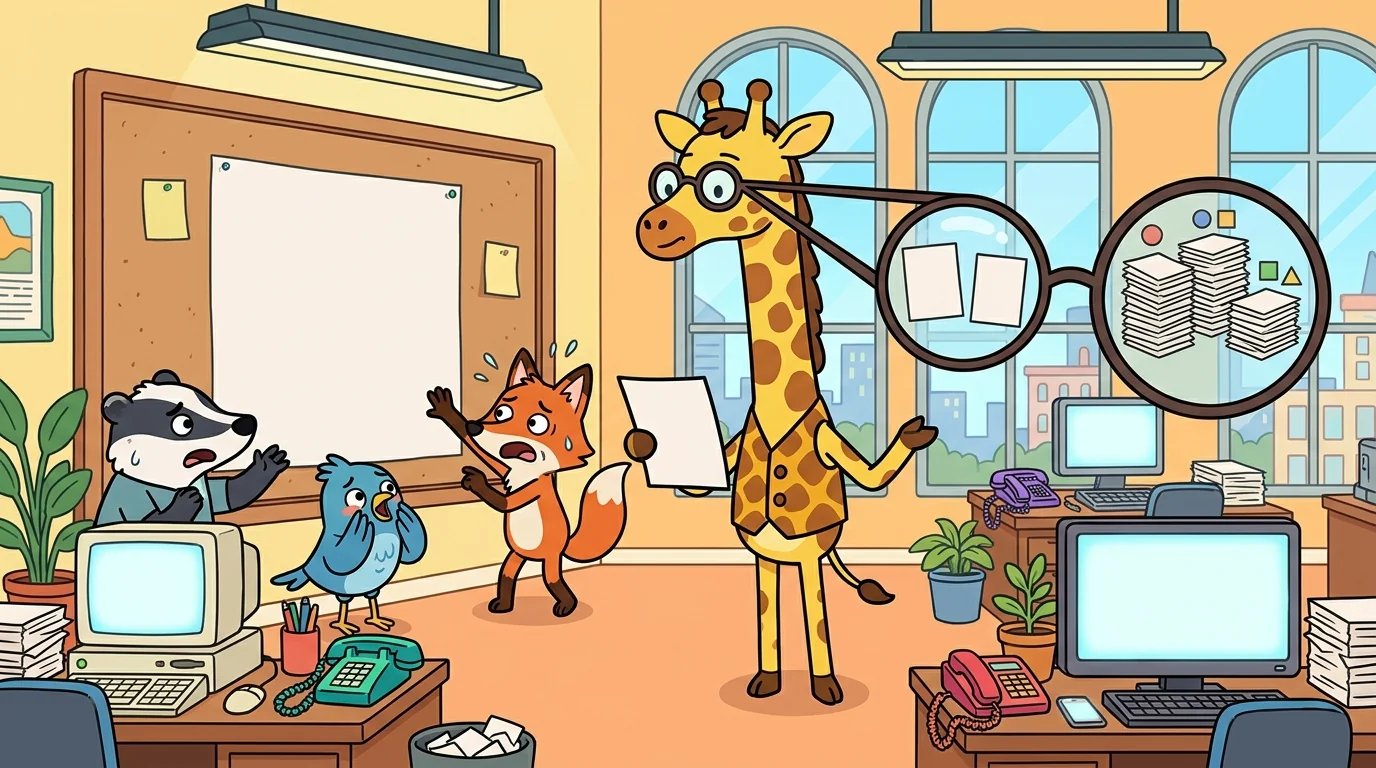
The newsroom was in an uproar over a single number, and Widen was calmly asking it three questions.
She was a tall, gentle giraffe in a spotted vest, with a pair of pull-out spectacles that stretched to take in the far distance. On the board, in enormous type, hung the day's alarm: 1,000 PROBLEMS REPORTED AT CITY HALL.
"A thousand!" a reporter gasped. "It's a scandal!"
Widen raised her long neck and regarded the number from up high, unhurried. "A thousand," she agreed. "Compared to what? Out of how many? Since when?" She stretched her spectacles wide. "A thousand problems out of ten total requests is a catastrophe. A thousand out of two million requests, over ten years, might be the best record in the region — and shrinking." She lowered her head kindly. "A number by itself is a stranger who's just walked in shouting. It can't tell you whether it's big or small — whether to be frightened or reassured — until you introduce it to the numbers it belongs beside."
She dug up the figures the headline had left out. "Here. A thousand reports — out of two million requests — over three years — which is actually fewer per year than the three years before." She let it settle onto the board. "Same thousand. But it isn't a scandal now. It's a city slowly getting better. I didn't change the number. I gave it the company it was missing — a denominator, a baseline, a trend — and in good company, the number finally told the truth about its own size."

Widen had grown up on a high plateau, among giraffes who could see farther than anyone and refused to trust a thing up close until they'd also looked wide.
Her mother had a saying she repeated until Widen breathed it without thinking: A fact up close is a fact out of focus. Step back and widen. Any single measurement — a count, a temperature, a price, a percentage — was only ever half a fact, her mother taught. The other half was always the company: compared to what? out of how many? measured since when? A number handed to you alone, stripped of that company, had usually been stripped on purpose.
"When someone shows you one number and wants you frightened," her mother said, "the first thing they've hidden is the comparison — because the comparison would have set the fear to its right size. Find the missing company, and the fear usually shrinks to fit. Sometimes it grows. But it always comes out true."
Once, young Widen came galloping home with news that a nearby lake was "up — the highest ever!" Her mother stretched her own neck and looked wide. "Highest ever measured," she asked gently, "or highest since we started measuring — which was last spring?" Widen checked. It was the highest in the three months anyone had watched, which meant almost nothing at all. "The number was true," her mother said. "Your story wasn't. You picked a baseline three months long and called it 'ever.' Cherry-pick the starting line and any number can break a record. Widen the window, and the record usually disappears."
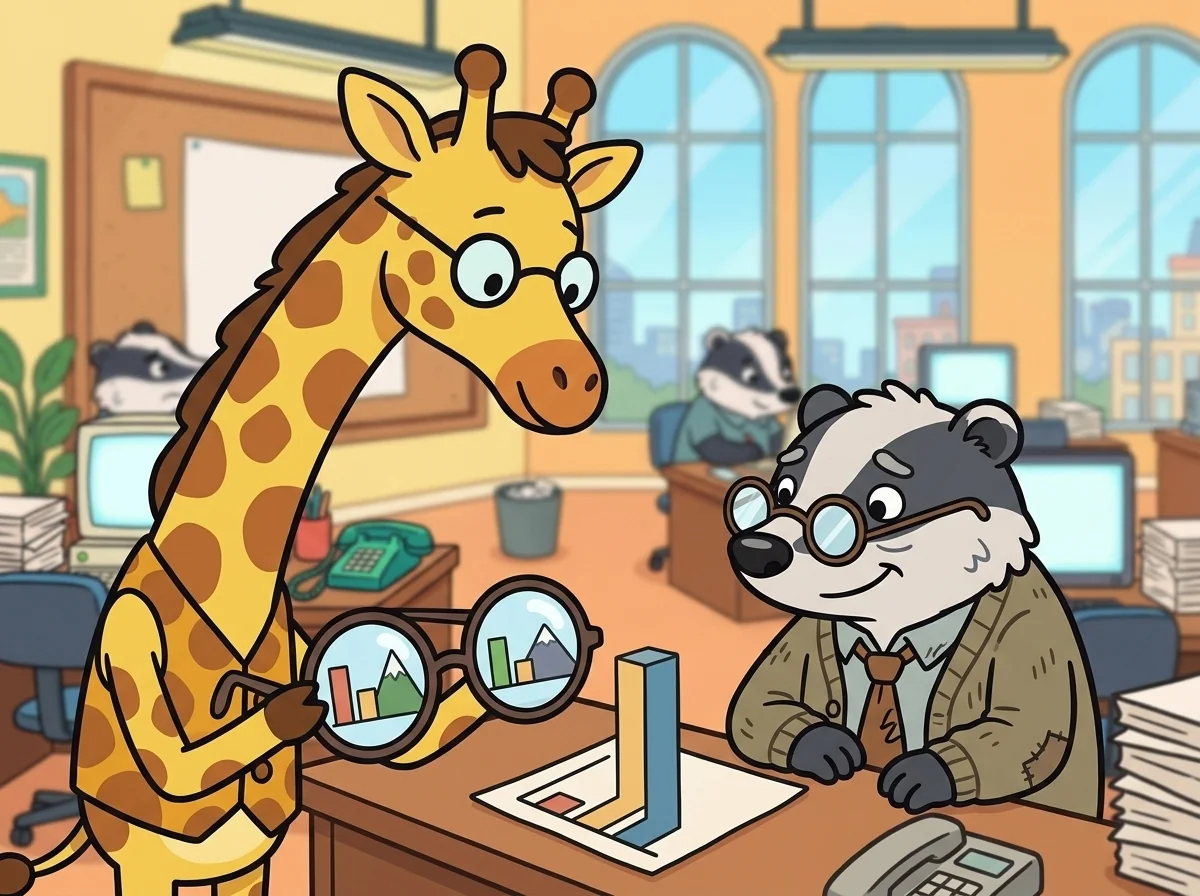
She carried her mother's three questions to NewsForge like a set of tools that were never out of reach.
Scoop met her at the door. "What is context?"
Widen did not recite. She laid two headlines on his desk. The first: CRIME UP 100% IN RIVERTON! The second, quieter: Riverton reported two burglaries this year, up from one last year — both now solved. She tapped the first. "One hundred percent. Terrifying — and true." She tapped the second. "One extra burglary, in a small town, in a quiet year. Also true. Same event." She looked up. "A percentage is a number with its denominator hidden in its pocket. 'Up 100%' means nothing until you know it's two-instead-of-one. My job is to reach into the pocket and put the denominator back on the table — before the reader's heart rate answers the headline."
Scoop read both a long moment. Then he set his pencil down. "This whole newsroom knows how to write a number big," he said. "You're the one who knows how to write it true. You belong here."
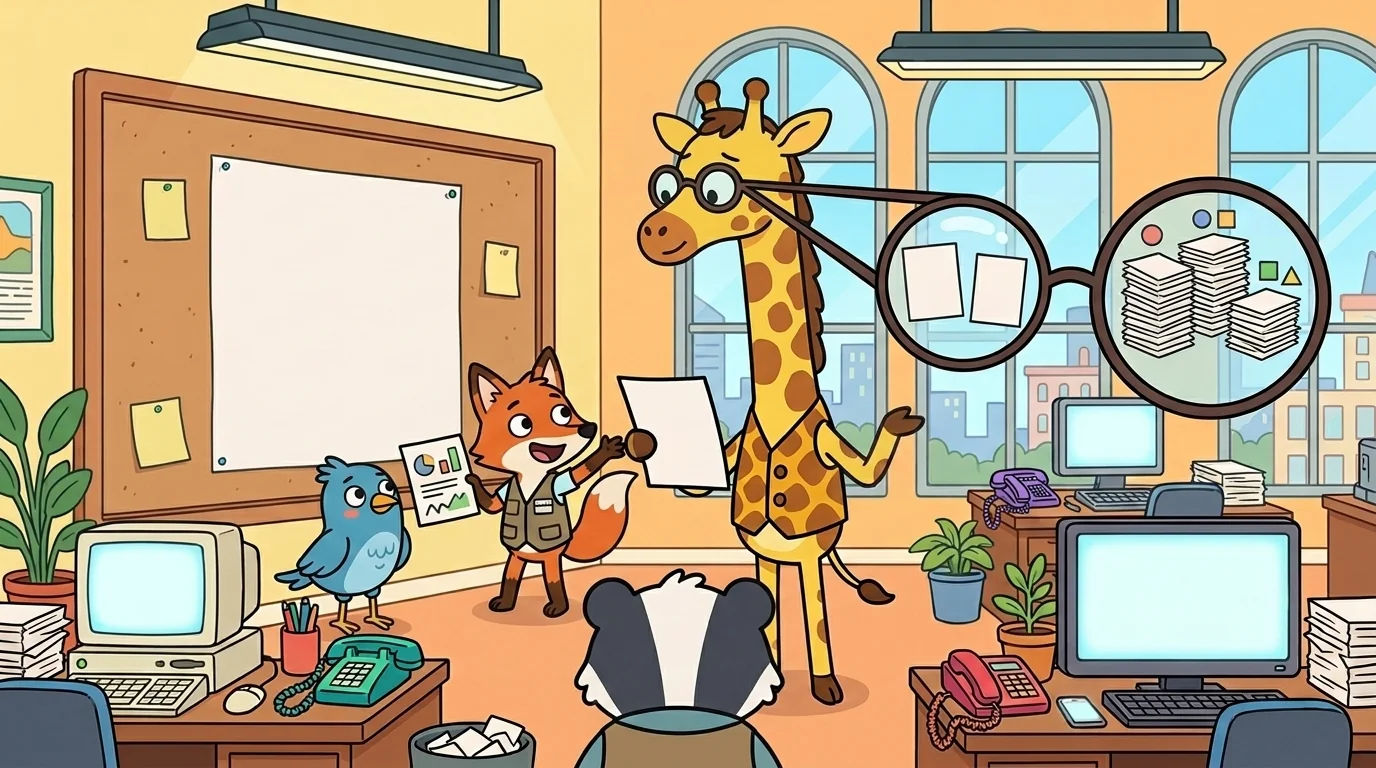
Widen's corner drew reporters clutching numbers that felt enormous.
A young writer set down a figure, breathless. "A study says a food doubles your risk of getting sick," he said. "Doubles! That's my headline, right? It's a real study."
"It may be a real study of a tiny thing dressed up as a huge one," Widen said, and reached for her spectacles. "'Doubles the risk' is a relative number, and relative numbers are the loudest liars in the trade — because they hide the base rate, the size of the risk you started with." She wrote two rows. "If the risk was one in a million, doubling it makes it two in a million — a change so small you'd never notice it in a hundred lifetimes. If the risk was one in ten, doubling it to one in five is genuinely worth a headline." She set the pen down. "'Doubles' tells you the change. It hides the starting size. And a big change to a tiny thing is still a tiny thing — no matter how the number's dressed."
The writer stared at his figure. "So 'doubles the risk' answers a smaller question than I thought — it tells me the risk changed, not whether the risk is big."
"That's the whole trick of a relative number," Widen said. "Always find the two absolute numbers hiding behind it — the before and the after, as plain counts. One in a million to two in a million. Then you'll know whether you're holding a headline or a hiccup. Usually it's a hiccup wearing a headline's coat."
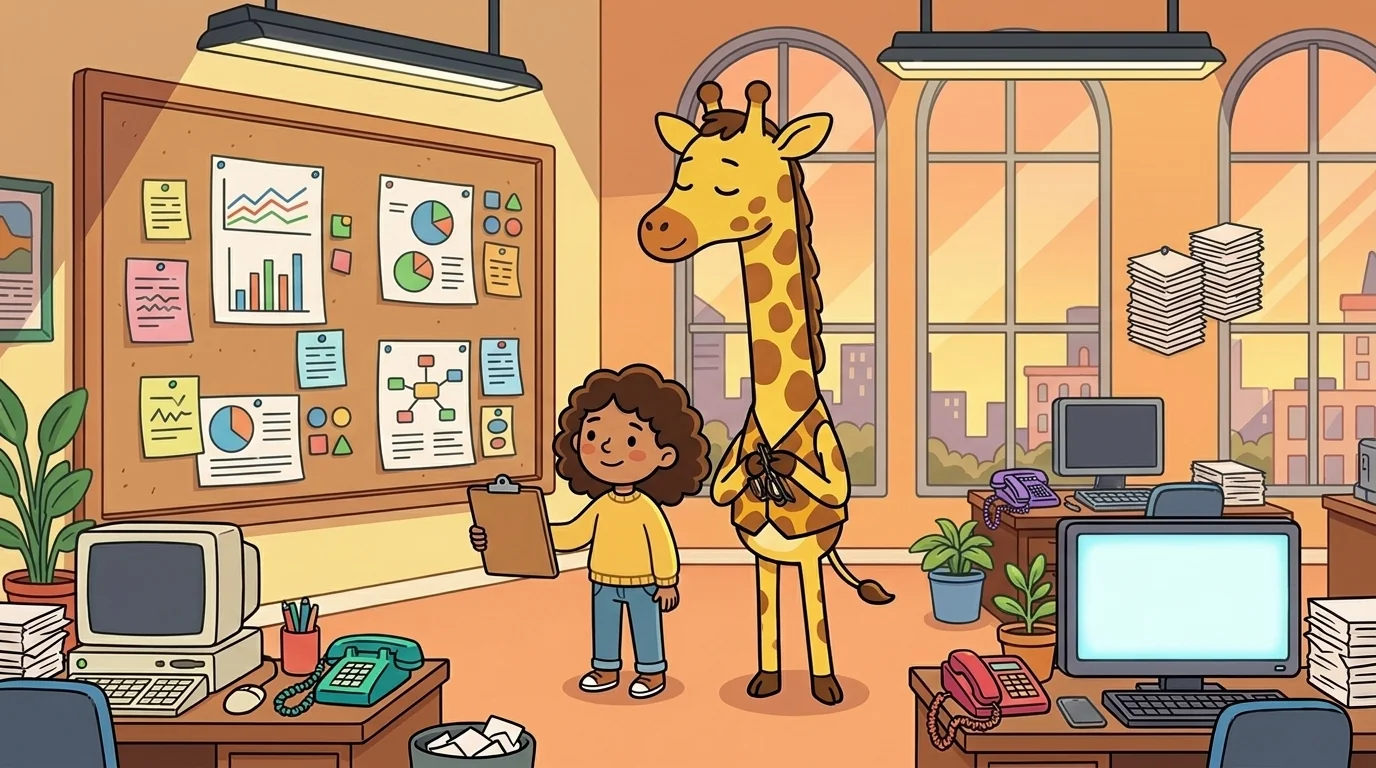
Later, when the newsroom had emptied and the board's big number had been quietly replaced with an honest one, the writer came back with a wearier question.
"When you widen everything," he said, "and put the denominators back, and shrink the scary numbers down to their true size — don't the stories get boring? 'Crime up one burglary' doesn't stop anyone. 'Risk doubles' does. Isn't the honest number just... the one nobody reads?"
Widen thought about the lake that had set a three-month record, and the fear that comes out the right size once it has its company.
"Some honest numbers are quiet," she admitted, "and a quiet true number will always be passed over for a loud false one — for a day. But here's what the loud false number costs, and it's steep: the reader who panicked over 'crime up 100%' and then learned it meant two burglaries doesn't just feel relieved. They feel used. And the next alarm you raise — even a real one — they'll wave off, because you've cried wolf in percentages before." She folded her long neck down to his level. "The newsroom that widens every number is training its readers to believe its alarms. We spend no fear on hiccups. So the day something is genuinely, absolutely enormous, we say so — and every reader sits up, because we've never once wasted their fear."
The writer looked at his shrunk-down, honest figure — one in a million to two in a million — and Widen watched the thrill drain out of him and something sturdier take its place. He had come to her corner half in love with his doubling headline; he was leaving with a habit of reaching into a number's pocket for its denominator. He picked up his pen, crossed out doubles the risk, and wrote, instead, the two small true numbers, side by side, where the reader could see exactly how large the fear was allowed to be.
The NewsForge ensemble
Widen is part of NewsForge's distributed-narrative cast. Each character embodies a different curricular primitive; together they teach the full subject.
-

Source
Source-quality evaluation — who would KNOW this best? who has a stake? source-card-comparison the routine
-

Tilt
Bias-and-perspective detection — every story has a frame; name the frame, then read; structural NOT partisan
-

Frame
Headline-and-framing craft — a headline is a SUMMARY not a HOOK; counter-clickbait
-

Verify
Verification + lateral-reading discipline — SIFT (Stop, Investigate, Find, Trace); open four tabs, never one
-

Serve
Community-information-needs framing — what does my reader NEED to know to DO something? agency-foregrounding; counter-doomscroll
-

Attest
Attribution — who says so? every claim names its source
-

Deed
Primary source — go to the original document, not a summary of a summary
-

Errata
Corrections — a story is living; when the facts change, the record is fixed
-

Uncrop
Framing — an image or chart is cropped; ask what sits outside the frame