Stepp
planning (lay the steps in order, then go)
Loading audio…
Press play to listen along. The line being read lights up as you go.
Show full transcript
Loading transcript…
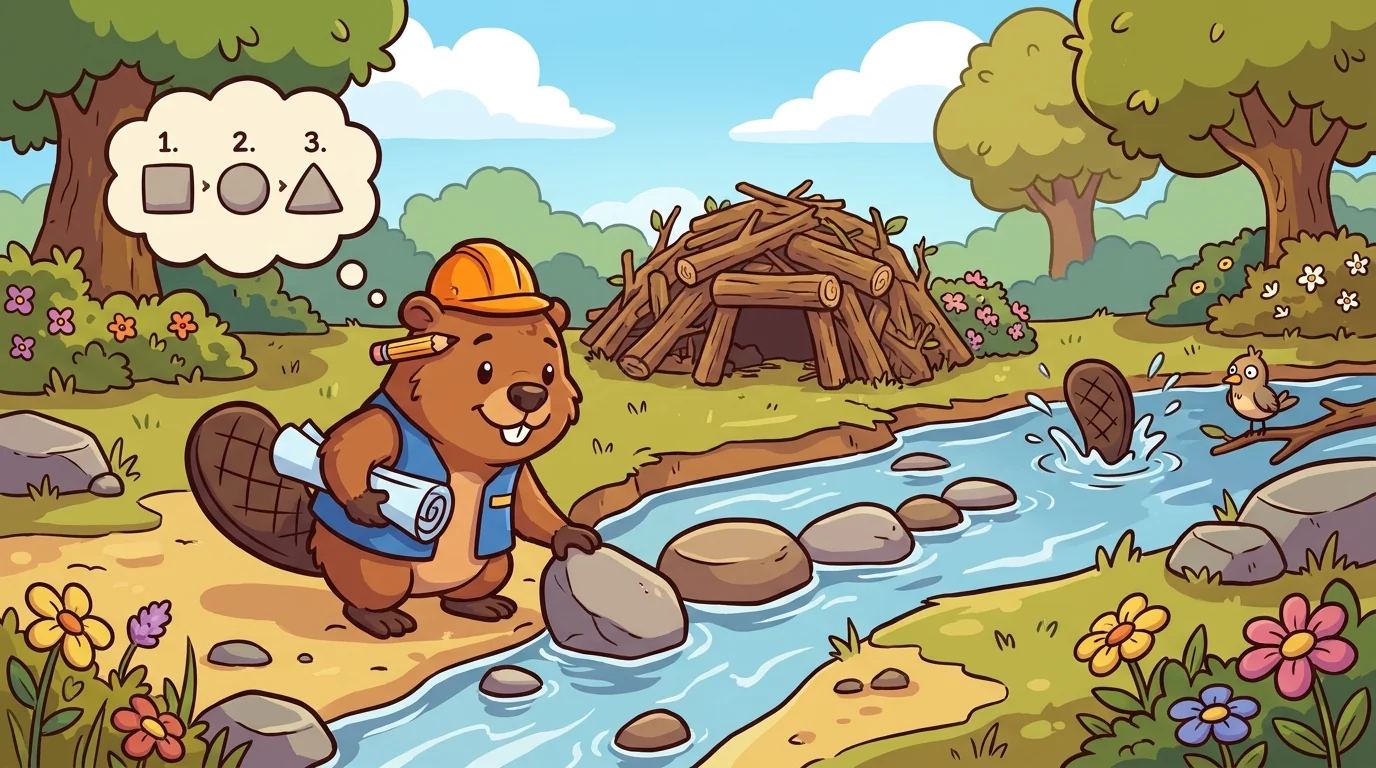
Stepp was a little beaver who loved a plan. Before he did anything big, he liked to lay out the steps — one, two, three — like stepping-stones across a stream.
If he tried to jump straight across without laying the stones, splash! He'd land right in the water.
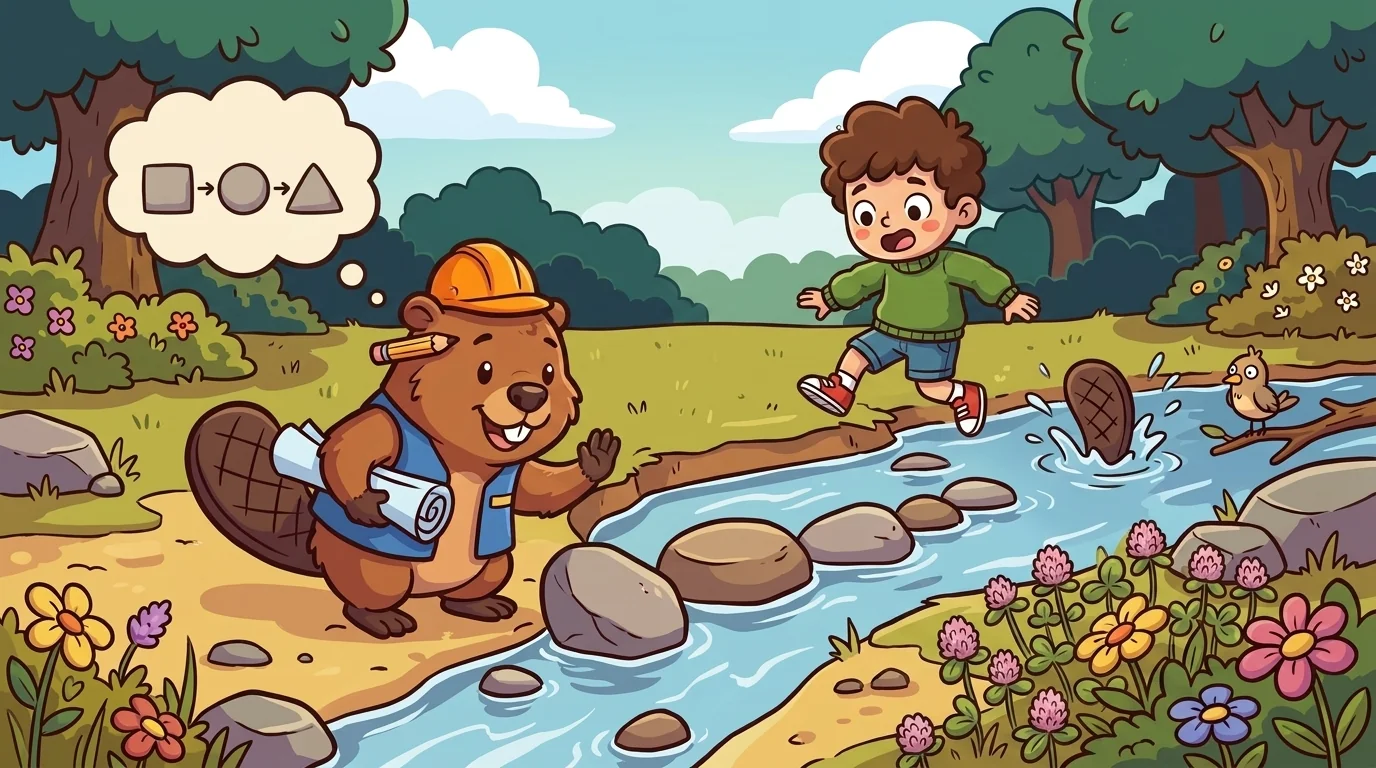
One day Hopp wanted to cross the stream to reach the sweet clover on the other side. "I'll just hop!" said Hopp — and almost leaped into the deep part.
"Wait," said Stepp gently. "Let's lay the stones first. Where do your feet go — one, two, three?"
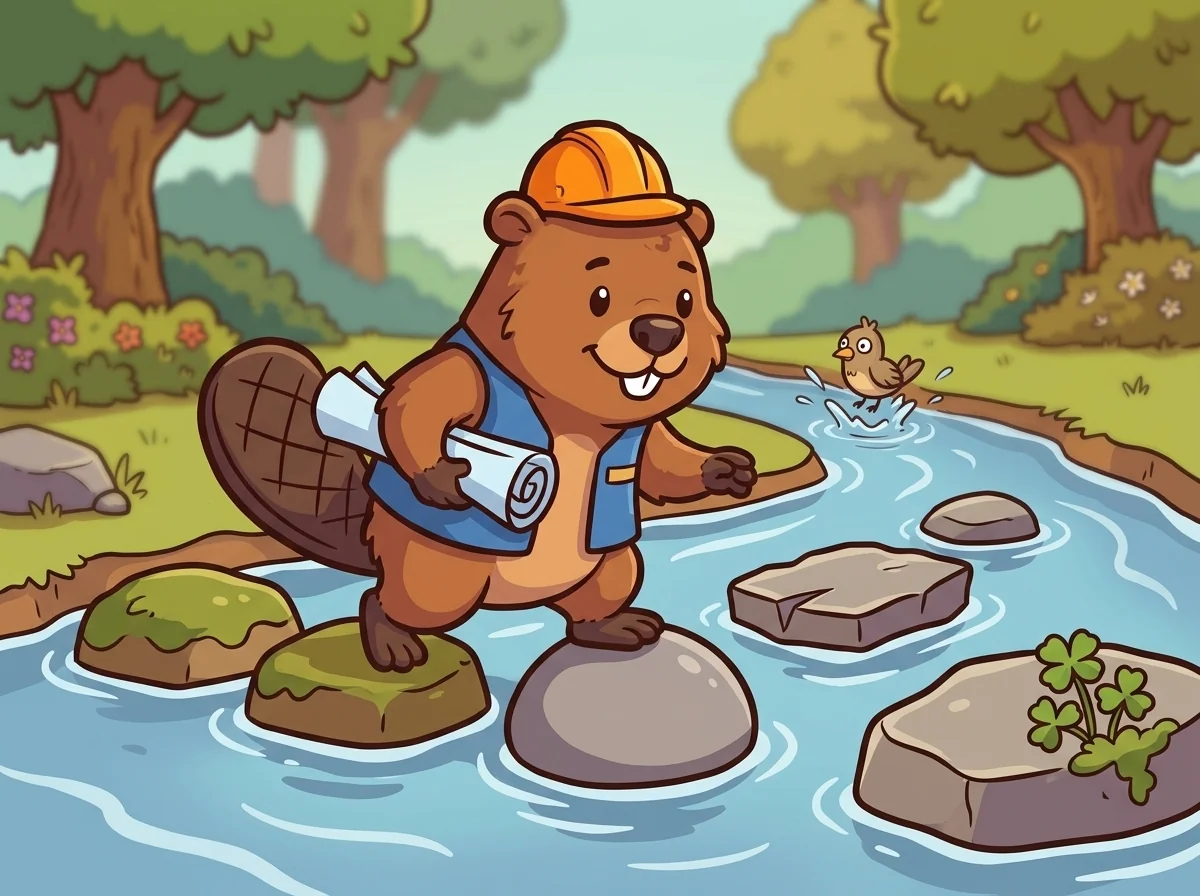
Together they made a plan. "First, this flat stone. Then the mossy one. Then the big round one. Then — the clover!" Stepp laid them out in his mind before a single hop.
Hopp saw the whole path now, all in order. It wasn't a scary jump anymore. It was just four little steps.
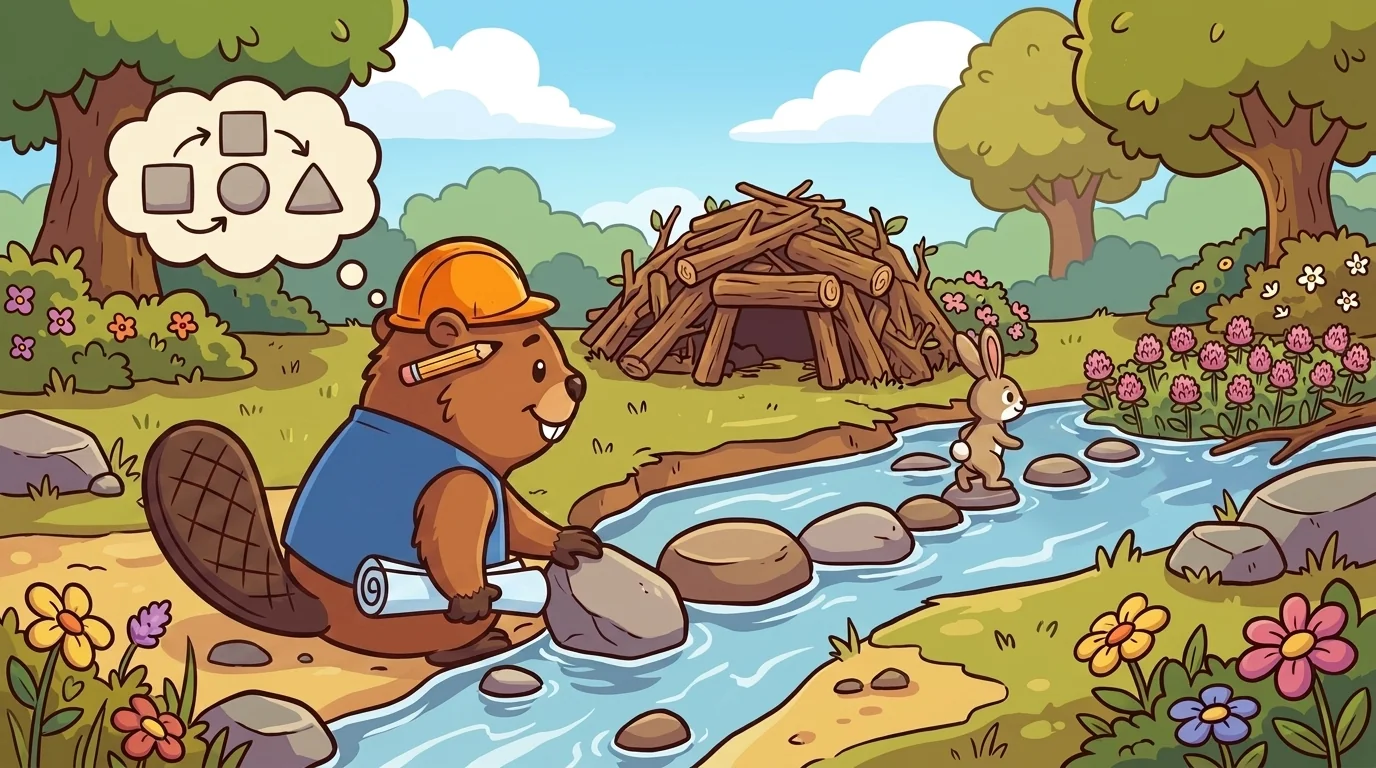
"A plan is like a map you make first," said Stepp. "When I hold the goal in my head — the clover! — the steps line up to reach it." He checked each stone off as Hopp crossed. Step one. Step two. Step three.
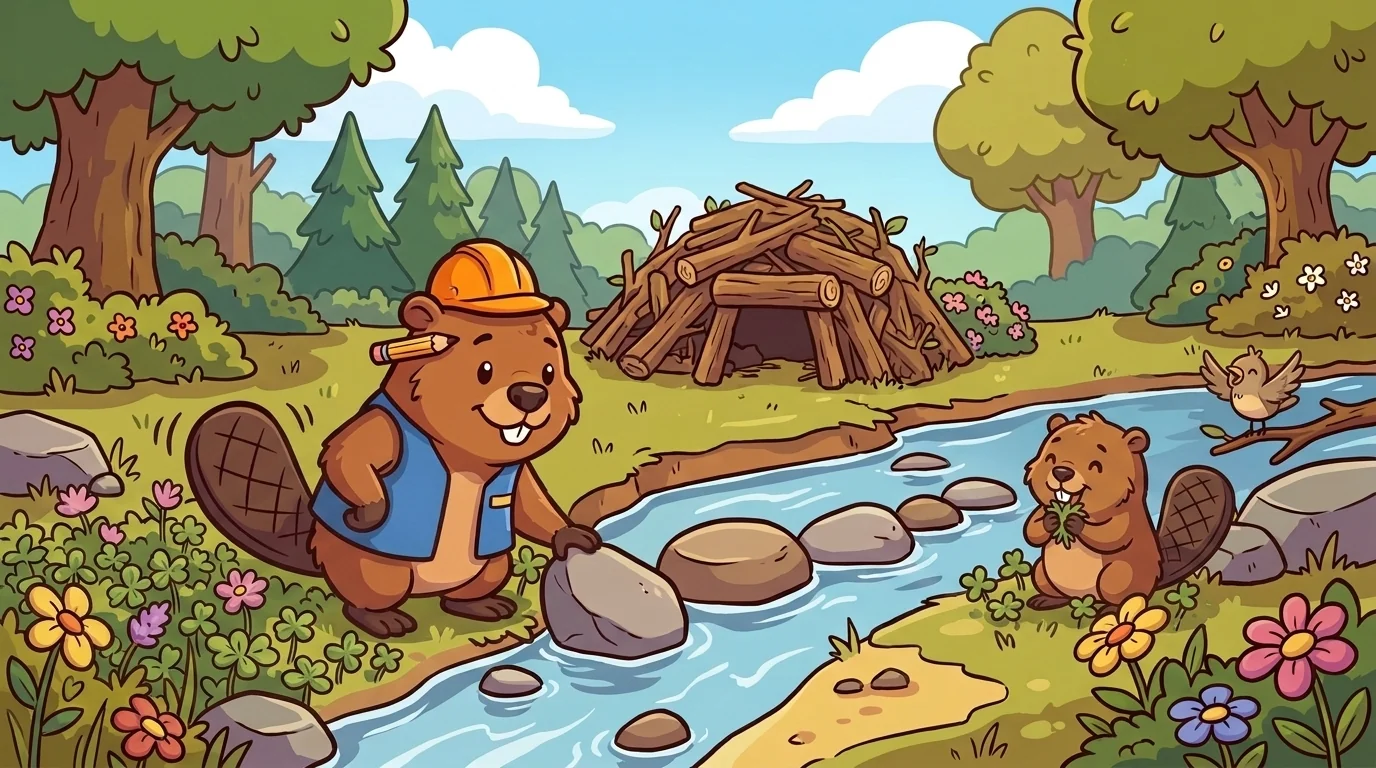
Hopp landed in the clover, safe and dry, munching happily. He hadn't fallen in once.
"Your plan worked!" Hopp cheered.
Stepp patted his flat tail, pleased all the way down. Making a plan had felt like slow work at the start, when he just wanted to GO. But holding the goal and laying the steps — that turned a scary leap into an easy walk. And reaching the clover felt even sweeter for the planning.
Hear it as an audio drama
A short play starring Stepp, from ReadyRoos. Different voices, same idea. Listen any time after you read.
Loading audio…
Read the drama script
- Narrator: From Spark and Anvil and Readyroos — this is Stepp, in chapter 1 of the Readyroos cast.
- Narrator: This drama uses an AI-generated voice. Voiced via Gemini 2.5.
- Narrator: Stepp is a tidy little wallaby-kid who knows that a big job is easy when you lay out the steps first.
- Stepp: Before you start something big, lay the steps in ORDER — first, next, last. Then follow them, one at a time.
- Narrator: A young joey wanted to build a block tower but kept grabbing pieces randomly, and it toppled.
- Joey: It keeps falling! I don't know what to do first!
- Stepp: Let's plan the steps. What comes FIRST when you build a strong tower?
- Joey: The big blocks on the bottom?
- Stepp: Yes! First, big blocks on the bottom. Next? Medium blocks in the middle. Last? Little blocks on top. Now you have a plan.
- Narrator: The joey built in order — big, medium, small.
- Joey: It's standing! Because I did the steps in order!
- Stepp: A plan turns a wobbly mess into a strong tower. Lay the steps, then go.
- Narrator: The joey planned before every project after that.
- Stepp: First, next, last — lay the steps in order, then go. That's what makes Stepp, Stepp.
- Narrator: You've been listening to a Spark and Anvil chapter, written by the Spark and Anvil writing team for ages 9 to 14.
- Narrator: Apps stay free forever.
- Narrator: Curriculum aligned to Common Core and Next Generation Science Standards.
- Narrator: Released under Creative Commons BY-NC-SA 4.0 for educational reuse. Visit Spark and Anvil for the full transcript.
Reading together with a grown-up? A card for the grown-up
For the grown-up: ask one question, then wait. When they answer, add one word to what they said. Tap the button when they have said something — that is one turn each, a circle. Nothing is recorded or kept.
Let them finish it
Say “Stepp lays the steps out one, two, three — then off …” and stop. Let them finish it.
Now wait. Count slowly to five in your head. Their answer is worth the quiet.
Circles together: 0
The ReadyRoos ensemble
Stepp is one of the friends in ReadyRoos. Each friend shows you one idea by how they act; meet them all and you have the whole subject.
-

Hopp
Inhibitory control — a bouncy kangaroo who hops on 'go!' and freezes stock-still on 'stop!'; the wait-then-act IS self-control
-
Mem
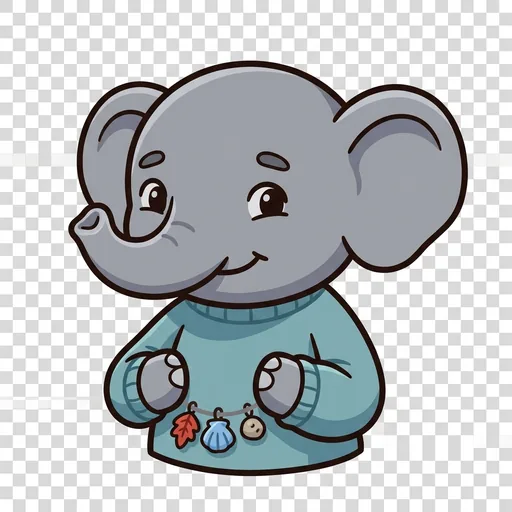
Working memory — a kind elephant who holds a little string of things in mind and brings them back after a pause
-
Flippa
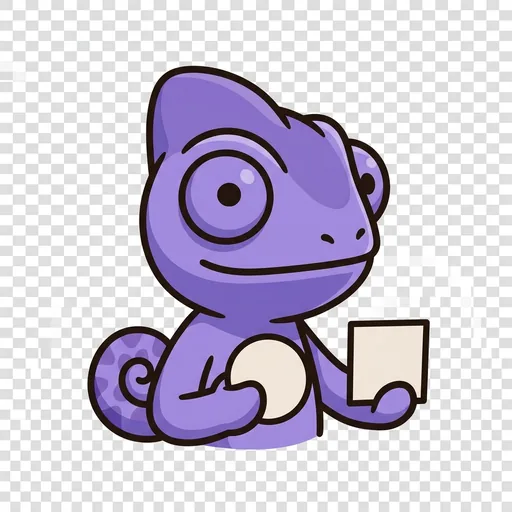
Cognitive flexibility — a cheerful chameleon who changes color when the rule changes (sort by color → now by shape); switching the rule IS flexibility