
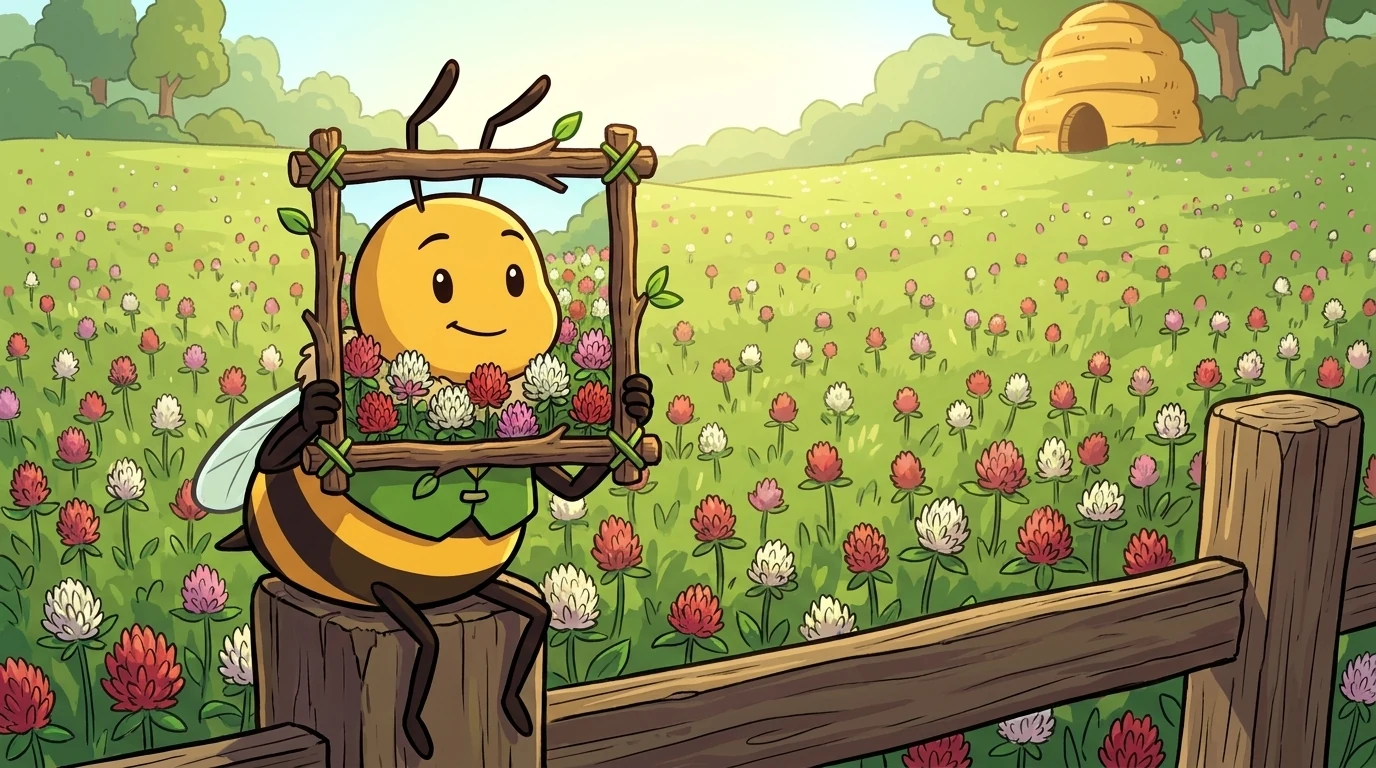
Midge
SAMPLE AND SCALE - you do not have to count everything; count one fair small part carefully, then multiply by how many parts make the whole.
Listen along — Midge
Loading audio…
Press play to listen along. The line being read lights up as you go.
Show full transcript
Loading transcript…
Midge and the Twig Square
Every spring, the Meadow Hive has to answer one question before the scouts fly out: how many clover flowers are open in the north field? If there are lots, the whole hive goes. If there are only a few, they wait a week.
This year Comb, the oldest bee in the hive, asked Midge to find out.
Midge flew to the edge of the north field and her wings went stiff. Clover everywhere. White heads, pink heads, heads hiding under grass, heads bobbing in the wind. She started counting. One, two, three, four… a breeze came, the flowers swayed, and she lost her place at forty-something.
She started again. She lost her place again.
Midge sat on a fence post and felt her stomach go small and tight. The hive was waiting. Hundreds of bees were waiting for her number, and she couldn’t even count to fifty without getting muddled.
Then she noticed four twigs lying on the post. She pushed them together into a little square, about as wide as she was long, and held it up in front of her eyes.
Through the square she could see just one small patch of clover. Not the whole field. Just a patch.
She lowered the twig square onto the grass and counted only the flowers inside it. Slowly, touching each one with her foot. Twelve.
“Twelve in one square,” she said out loud. “Now how many squares fit in the field?”
She flew along the long side of the field, laying the twig square down and picking it up again, over and over. Twenty squares long. Then along the short side. Ten squares wide.
“Twenty rows of ten squares,” she said. “That’s two hundred squares. And about twelve flowers in each one.”
She did it in her head the way Comb had shown her, in two easy steps. Two hundred times ten was two thousand. Two hundred times two was four hundred. Two thousand four hundred.
“About two thousand four hundred,” Midge said, and her wings felt light again.
But then a worry came. What if her square had landed on an extra-thick patch? Or a bare patch? She went back and counted two more squares in different places: one near the brook, one by the old oak. Nine flowers. Fourteen flowers. Together with the twelve, that was thirty-five across three squares, a little under twelve each.
“Still about two thousand four hundred,” she said. “Maybe a bit less.”
She flew home and told Comb.
“You didn’t count them all?” asked Copycomb, who was hovering nearby.
“No,” said Midge. “I counted three little squares really carefully. That’s better than counting the whole field badly.”
Comb nodded slowly. “Did you choose your squares so they were like the rest of the field?”
“I tried three different places,” said Midge. “So one strange patch couldn’t fool me.”
The scouts flew out the next morning. They didn’t count every flower either, but they came back heavy with nectar and buzzing about a field so full it looked like snow.
That evening Midge kept the four twigs in her cell. Her number had been a guess, not an exact count. But it was a careful guess, and she knew exactly how she’d made it.
The SwarmQuest ensemble
Midge is part of SwarmQuest's distributed-narrative cast. Each character embodies a different curricular primitive; together they teach the full subject.
-
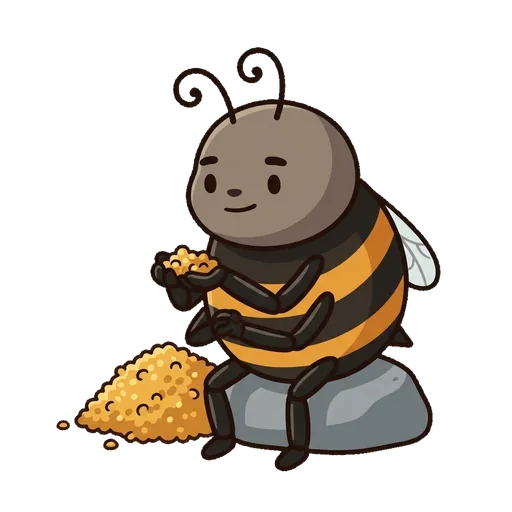
Pebbleton
Holds up something he already knows, a handful is about fifty, and counts in handfuls
-

Bracket
Never gives one number: always between this and that
-

Lonehum
Writes her guess down before anyone else speaks, so nobody's number pulls hers
-

Copycomb
Copies the loudest bee, so the whole swarm drifts the same way
-

Stickle
Hears one number first and stays stuck close to it
-
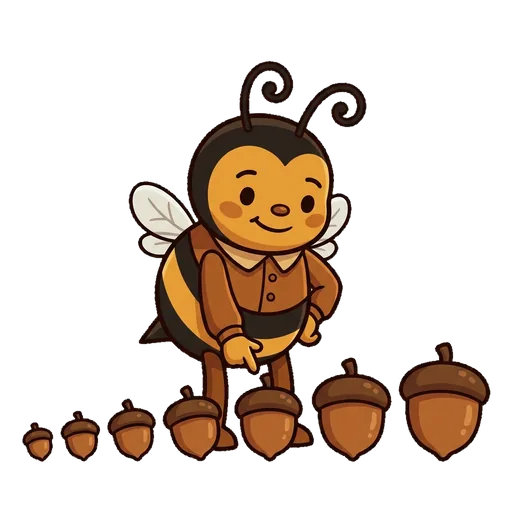
Middling
Lines every guess up from smallest to biggest and picks the one in the middle
-

Farbuzz
Guesses wildly high every time, and the middle guess barely moves when he does
-
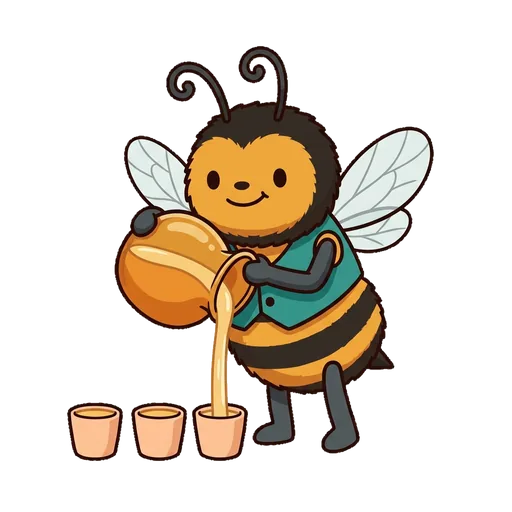
Sharewell
Pours all the guesses together and shares them out evenly
-

Fanspread
Looks at how far apart the guesses are, not just where the middle is