Pebbleton
USE A BENCHMARK - compare an unknown amount to a known one (a handful is about fifty) and count how many known amounts fit, instead of guessing from nothing.
Listen along — Pebbleton
Loading audio…
Press play to listen along. The line being read lights up as you go.
Show full transcript
Loading transcript…
Pebbleton’s Handful
Pebbleton is the slowest bee in the Meadow Hive, and everyone knows it. He flies slowly, he lands slowly, and when a question is asked he sits on his favourite flat stone and thinks before he speaks.
So when the pollen heap appeared, he was the last to answer.
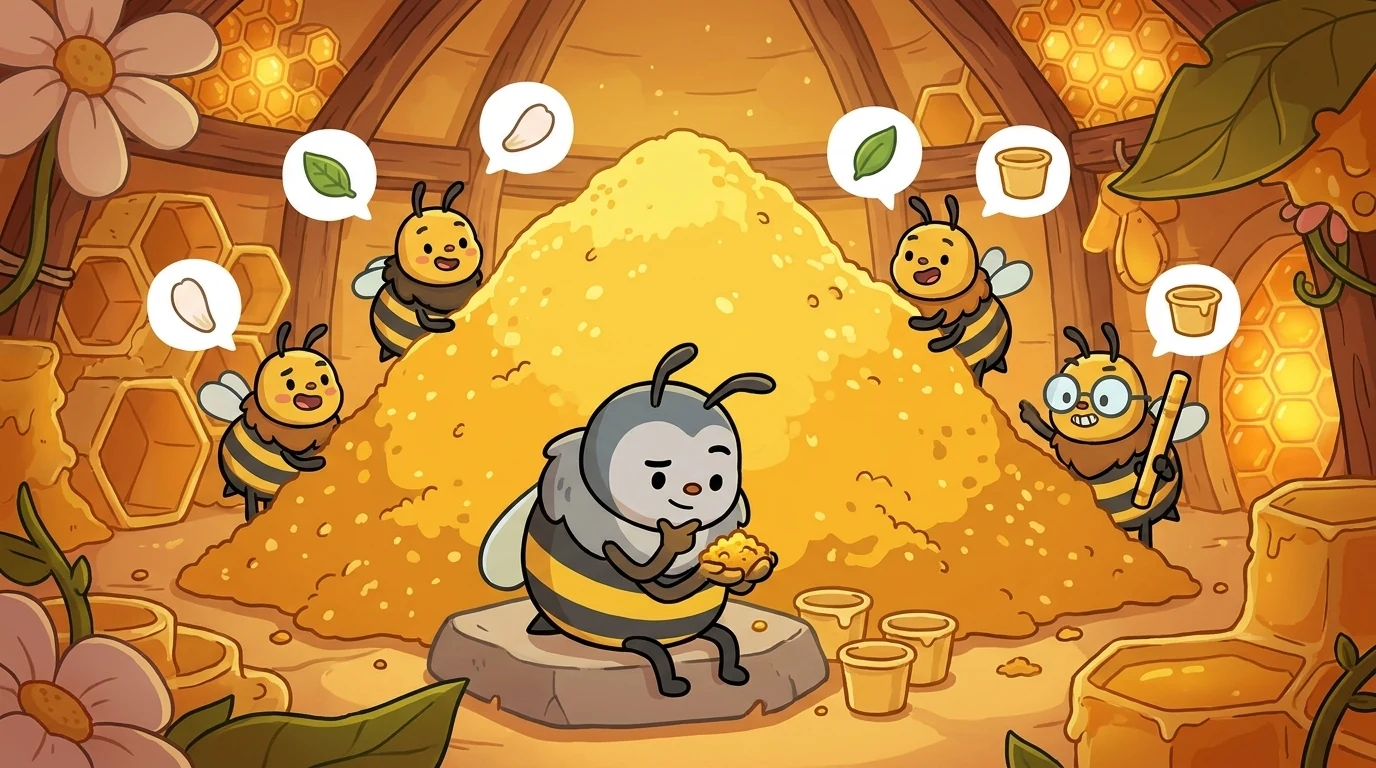
The heap was in the store room, a golden mountain of pollen grains the summer bees had brought in. The hive needed to know if there was enough to feed the new larvae through the rainy weeks. Comb asked everyone to guess how many grains were in the heap.
“A million!” shouted Farbuzz.
“Five hundred,” said someone else.
“A thousand,” said Copycomb, because a thousand sounded like a good middle sort of number.
Pebbleton felt his face go warm. Everyone had answered already, and he hadn’t even started. He looked at the heap and it looked like a mountain, and a mountain doesn’t have a number, it just has bigness.
So he did the only thing he knew how to do. He thought about something small.
Last week he’d helped the nursery bees pack food cells. He knew, because he’d counted them once, very carefully, that one of his own cupped handfuls held about fifty grains. Not exactly. Forty-eight one time, fifty-three another. About fifty.
He scooped one handful from the heap and held it up next to the mountain.
“How many of these,” he said quietly, “would make the whole heap?”
He started scooping handfuls into a row of empty wax cups. One cup, two cups, three. The other bees drifted away; it was boring to watch. Pebbleton didn’t mind. He kept going. When he’d moved about a quarter of the heap, he’d filled ten cups.
“Ten handfuls for a quarter,” he said. “So about forty handfuls for the whole heap.”
Forty handfuls. Fifty grains a handful.
He worked it out slowly on the stone with his foot. Forty times fifty. Four times five was twenty, so forty times fifty was two thousand.
“About two thousand,” said Pebbleton. “Give or take a few hundred.”
Comb came over and looked at the row of cups. “How did you get there?”
“I used something I already knew,” said Pebbleton. “My handful. I can’t picture two thousand grains. But I can picture forty handfuls.”
The nursery bees counted the heap properly that week, grain by grain, as they packed it into cells. It took them three whole days. The answer was two thousand one hundred and sixty.
Farbuzz flew past and stopped. “You were really close.”
“I was slow,” said Pebbleton.
“Slow and close,” said Farbuzz. “I was fast and miles off.”
Pebbleton sat back on his stone and felt warm all the way to his antennae, the good kind of warm this time. He opened and closed his front foot. A handful. It was the most useful thing he owned.
The SwarmQuest ensemble
Pebbleton is part of SwarmQuest's distributed-narrative cast. Each character embodies a different curricular primitive; together they teach the full subject.
-
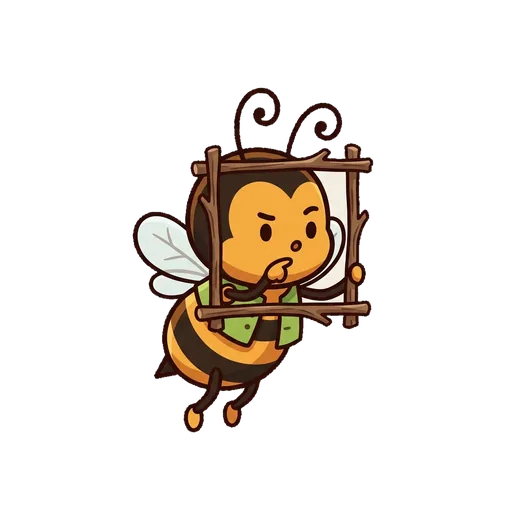
Midge
Counts the bees in one small square, then multiplies by how many squares there are
-

Bracket
Never gives one number: always between this and that
-
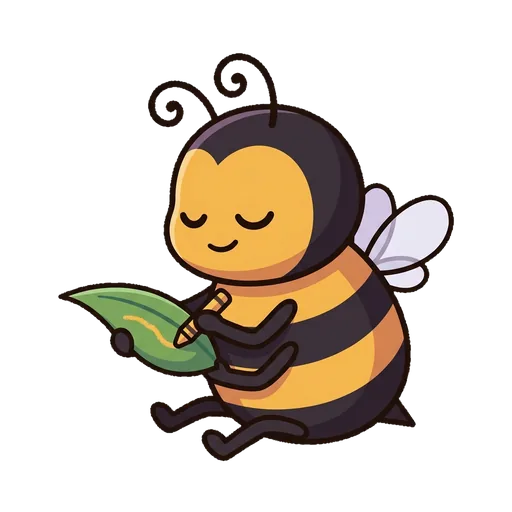
Lonehum
Writes her guess down before anyone else speaks, so nobody's number pulls hers
-

Copycomb
Copies the loudest bee, so the whole swarm drifts the same way
-

Stickle
Hears one number first and stays stuck close to it
-
Middling
Lines every guess up from smallest to biggest and picks the one in the middle
-

Farbuzz
Guesses wildly high every time, and the middle guess barely moves when he does
-
Sharewell
Pours all the guesses together and shares them out evenly
-
Fanspread
Looks at how far apart the guesses are, not just where the middle is