
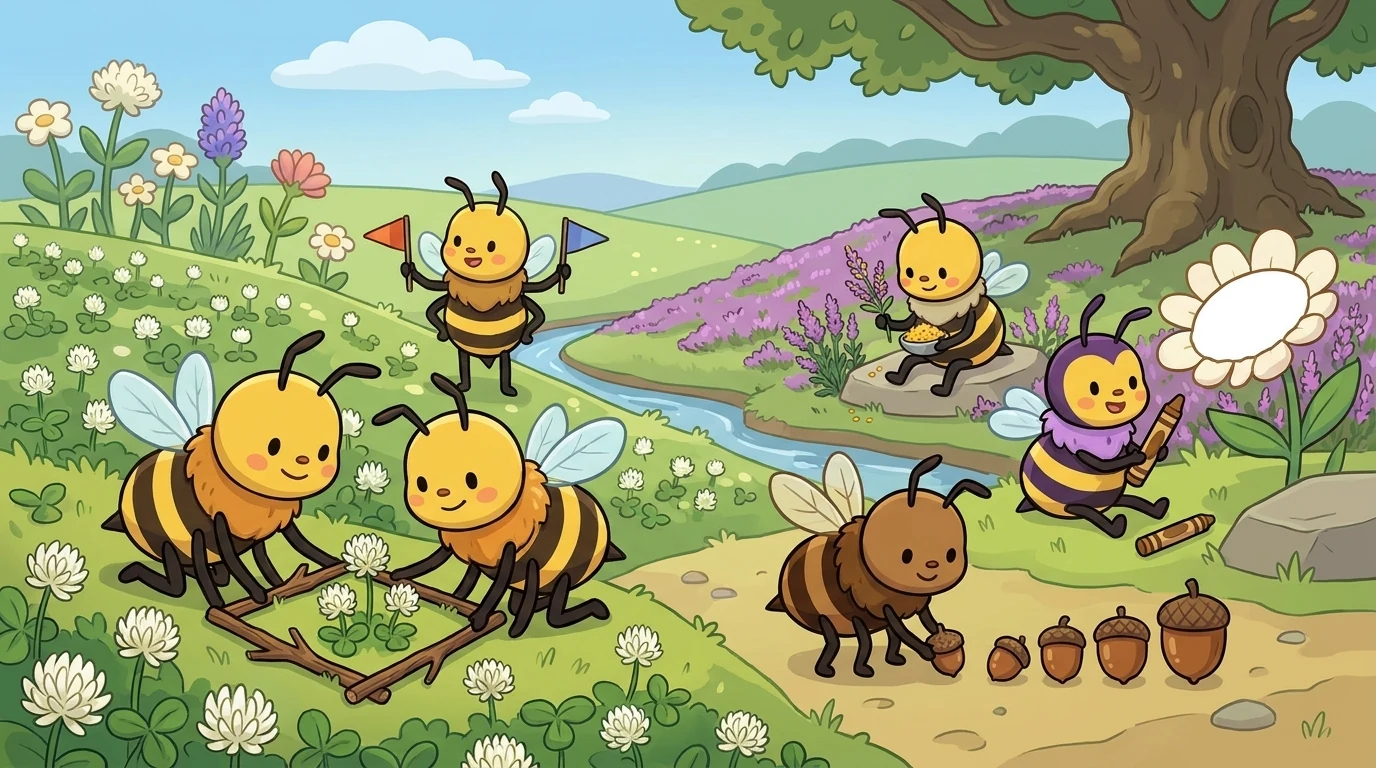
Midge, Pebbleton, Bracket, Lonehum, and Middling
A CROWD OF GOOD GUESSES - when each guesser uses a sensible method, guesses on their own, and says how sure they are, the middle of all the guesses lands closer than almost any one of them.
Listen along — Midge, Pebbleton, Bracket, Lonehum, and Middling
Loading audio…
Press play to listen along. The line being read lights up as you go.
Show full transcript
Loading transcript…
The Great Clover Count
Swarm Day comes once a year. It’s the day the Meadow Hive decides where half the bees will fly to start a brand new home. This year there were two choices: the clover slope by the brook, or the heather hill past the old oak. Whichever had more flowers would win.
Nobody had time to count every flower on two whole hillsides. So Comb chose five bees, one from each corner of the hall, and sent them out with one job each.
“Bring back a guess,” she said. “A good one.”
Midge flew to the clover slope first. She laid her twig square on the ground in three different places and counted only what was inside: fifteen, eighteen, twelve. About fifteen in a square. She paced out the slope. Sixty squares long, twenty wide. Twelve hundred squares. Twelve hundred times fifteen.
“About eighteen thousand clover flowers,” said Midge.
Pebbleton went to the heather hill. He couldn’t picture a whole hill, but he knew one thing very well: one sprig of heather had about fifty little flowers on it, like his handful had about fifty grains. He counted sprigs along one strip and worked out roughly how many strips there were.
“About three hundred sprigs on the hill,” he said. “Fifty flowers each. Fifteen thousand heather flowers.”
Bracket flew both hills twice, once in the morning and once in the afternoon. In the morning sun the clover was wide open; in the afternoon shade, half the heads had closed.
“Clover: between fourteen thousand and twenty thousand,” she said, holding her two flags apart. “Heather: between twelve thousand and seventeen thousand. The clover could win by a lot, or by a little.”
Lonehum didn’t go with anyone. She flew out alone, before breakfast, before she could hear a single number. She counted the clover slope her own way, strip by strip along the brook, and scratched her guess on a petal before she got home.
“Clover: twenty-one thousand,” it said. “Heather: fourteen thousand.”
When the four bees came back, the great hall was packed. Every bee in the hive was waiting. Midge’s wings were trembling. Pebbleton’s face was warm. Bracket kept looking at her flags. Lonehum held her petal tight.
“But the numbers are all different!” said someone in the crowd. “Which bee is right?”
That’s when Middling flew up to the guessing board.
“Maybe none of them,” he said. “Maybe that doesn’t matter.”
He took every clover guess and lined them up on leaves, smallest to biggest. Bracket’s range gave two numbers, a low and a high, so he put in both. Fourteen thousand. Eighteen thousand. Twenty thousand. Twenty-one thousand.
“Four leaves,” said Middling. “The middle is halfway between the two in the middle. Halfway between eighteen thousand and twenty thousand. Nineteen thousand clover flowers.”
Then the heather. Twelve thousand. Fourteen thousand. Fifteen thousand. Seventeen thousand.
“Halfway between fourteen and fifteen thousand. Fourteen and a half thousand heather flowers.”
The hall buzzed. Nineteen thousand against fourteen and a half. The clover slope was well ahead.
“Are we sure?” asked Comb.
Bracket looked at her flags. “My ranges overlap a little. But the clover’s low end is about where the heather’s middle is. I’m fairly sure.”
“And nobody copied anyone?” asked Comb.
“I guessed before I heard a single number,” said Lonehum. “Midge counted squares. Pebbleton used heather sprigs. They didn’t even talk until they got home.”
“Then these are four real guesses,” said Comb, “made four different ways. Not one guess said four times.”
Half the hive flew to the clover slope the next morning. Before they built their new home, a team of young bees did something nobody had done before. They counted, very carefully, every single open clover flower on the slope. It took them two days.
Nineteen thousand three hundred.
Midge had said eighteen thousand. Lonehum had said twenty-one. Bracket’s range had said fourteen to twenty. Not one of them had been right on their own.
But the middle of all of them, the number Middling found by lining them up, had been only three hundred away.
The five bees sat together on the edge of the landing board that evening, watching the new swarm settle on the far slope.
“I thought we’d argue,” said Pebbleton.
“We all had different numbers,” said Midge.
“That was the point,” said Lonehum.
Middling lined up five acorns on the board without even thinking about it, one for each of them. Then he pointed at the one in the middle and smiled, because it didn’t belong to anybody. It belonged to all five.
The SwarmQuest ensemble
Midge, Pebbleton, Bracket, Lonehum, and Middling is part of SwarmQuest's distributed-narrative cast. Each character embodies a different curricular primitive; together they teach the full subject.
-
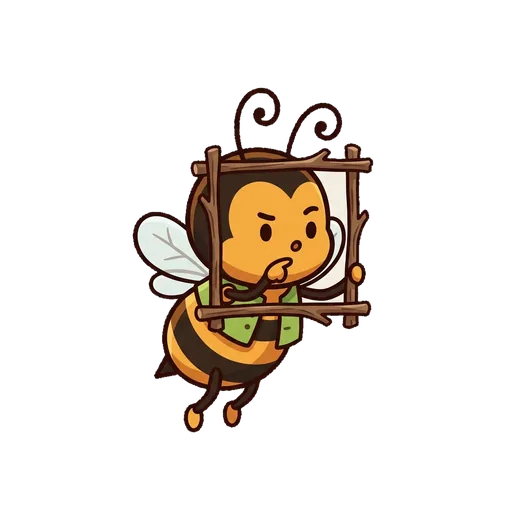
Midge
Counts the bees in one small square, then multiplies by how many squares there are
-
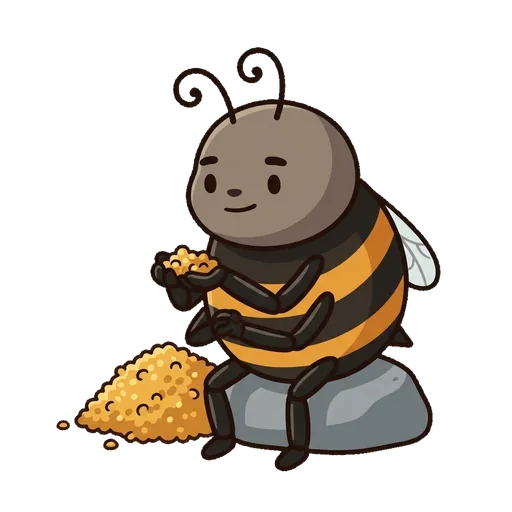
Pebbleton
Holds up something he already knows, a handful is about fifty, and counts in handfuls
-

Bracket
Never gives one number: always between this and that
-

Lonehum
Writes her guess down before anyone else speaks, so nobody's number pulls hers
-

Copycomb
Copies the loudest bee, so the whole swarm drifts the same way
-

Stickle
Hears one number first and stays stuck close to it
-
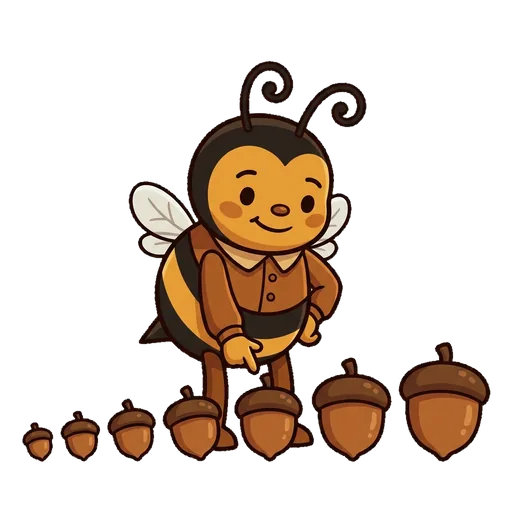
Middling
Lines every guess up from smallest to biggest and picks the one in the middle
-

Farbuzz
Guesses wildly high every time, and the middle guess barely moves when he does
-
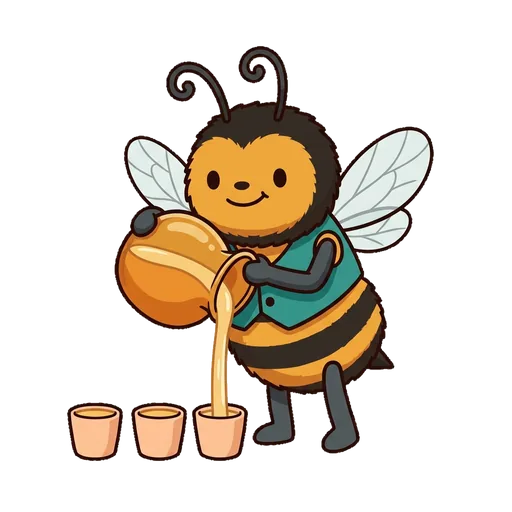
Sharewell
Pours all the guesses together and shares them out evenly
-
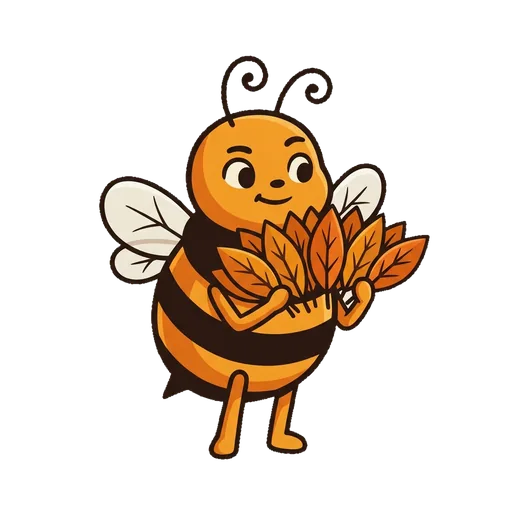
Fanspread
Looks at how far apart the guesses are, not just where the middle is