Before you start
Start here
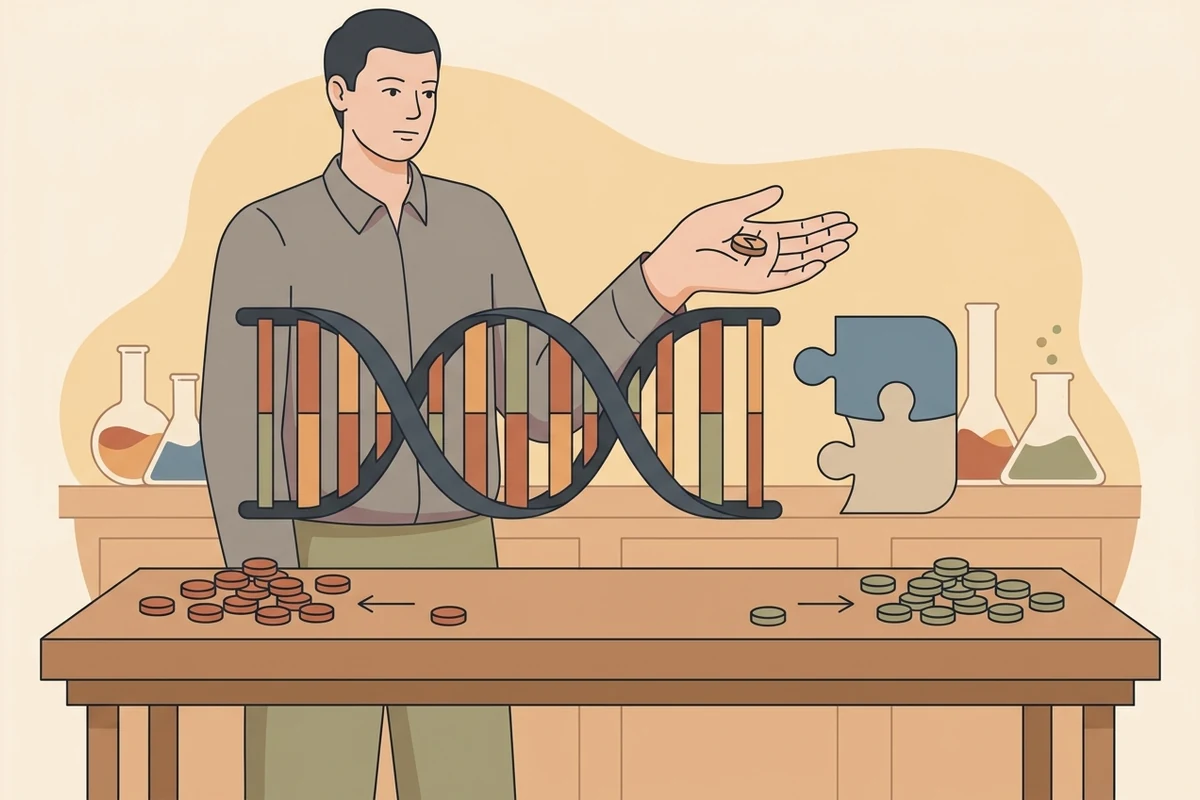
 The Genetics Bench Set up a cross, predict the offspring ratio, then a pure engine computes the real Punnett square — every box, on your device.
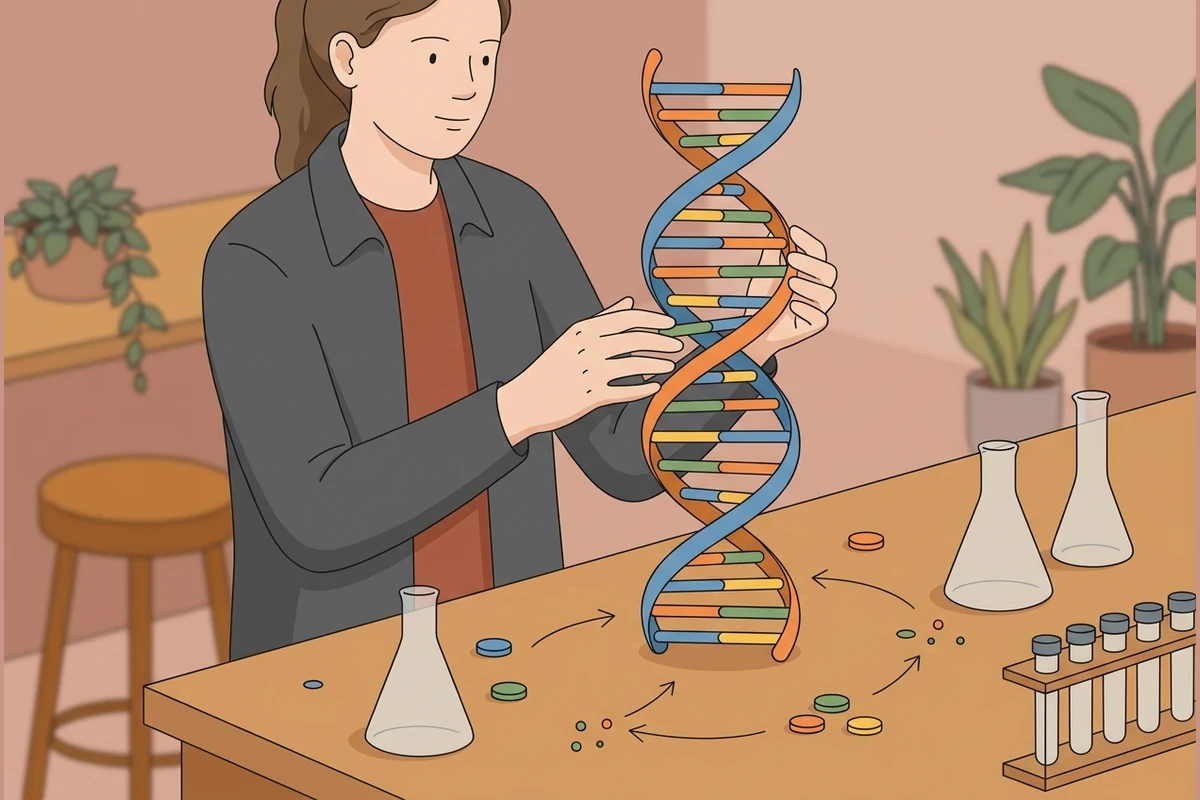
  Population Genetics Bench Predict how an allele frequency shifts after selection, gene flow, or Hardy-Weinberg — then the bench computes p²+2pq+q².
 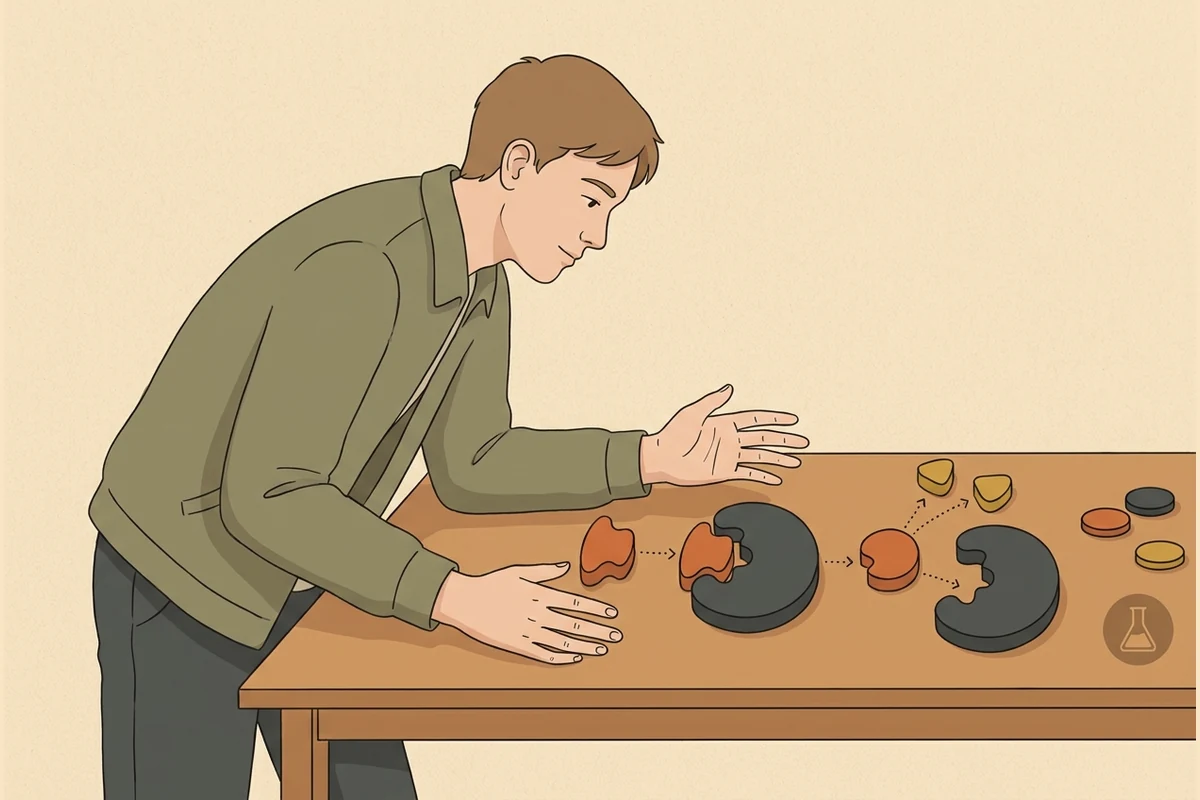 Enzyme-Rate Bench Predict how a reaction rate responds to substrate, temperature, pH, or a competitive inhibitor — then plot the real kinetics curve.
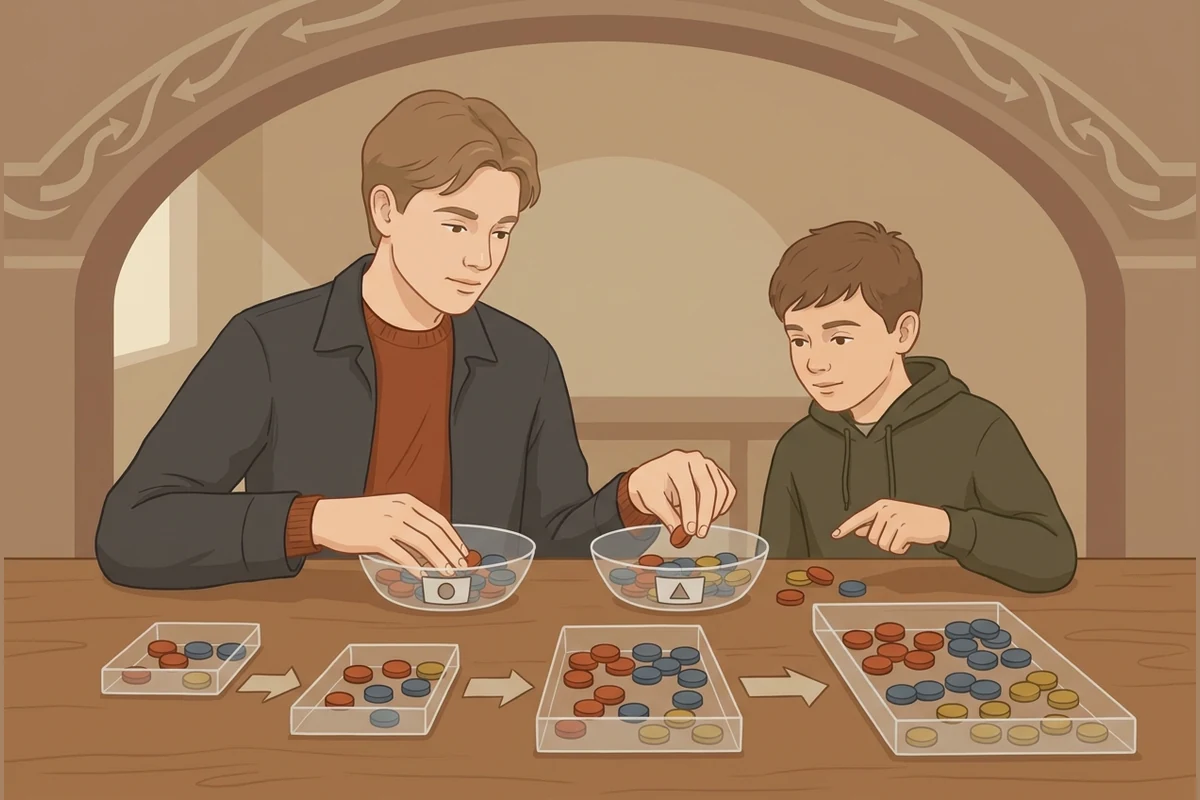
 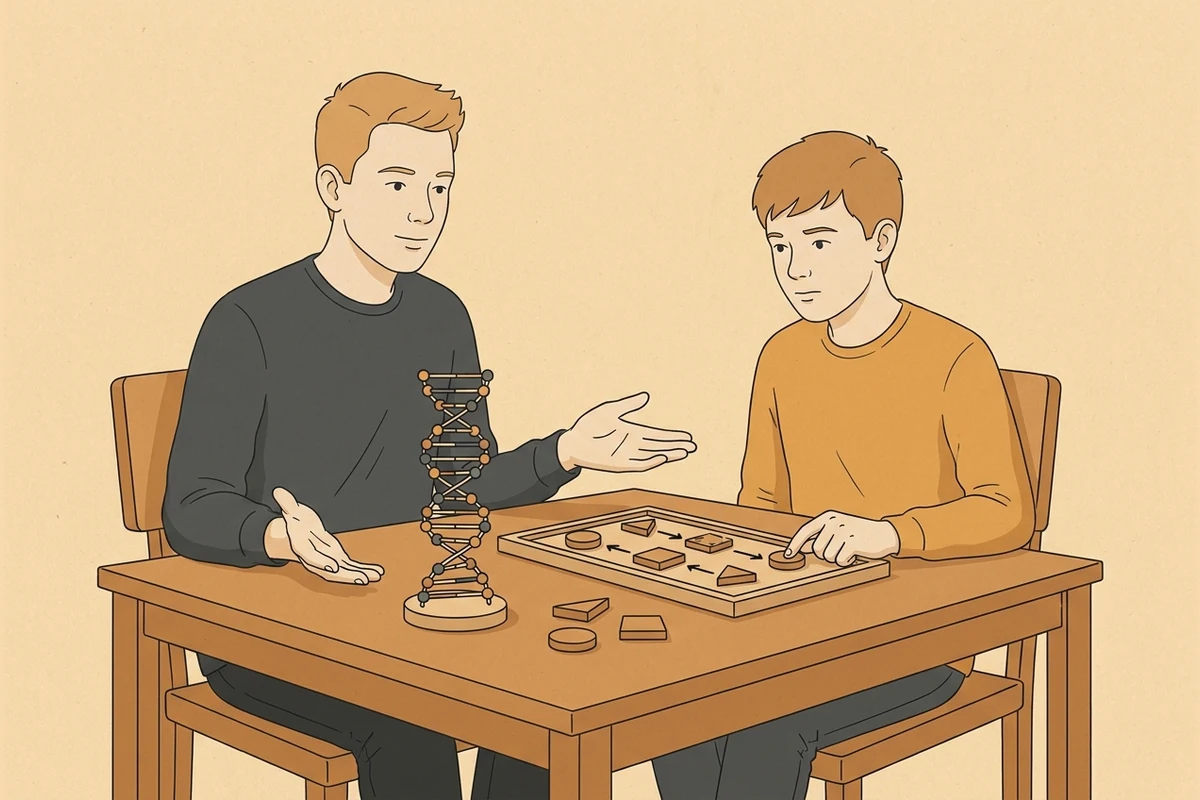 Teach the Cast Teach a biology idea to a near-peer still learning it — teaching makes it stick.
 All activities
Predict & compute
The Genetics Bench Predict the ratio for monohybrid, dihybrid, and test crosses; a pure engine computes the exact Punnett square. Population Genetics Bench Selection against a recessive, heterozygote advantage, migration — predict the next generation, then compute it. Enzyme-Rate Bench Michaelis-Menten saturation, the denaturation cliff, the pH bell — predict, then see the real kinetics curve. Dominant ≠ Common Predict which trait is more common from the allele frequency — dominance decides which allele shows, never how common it is. Pedigree Bench Read a family chart, predict the inheritance mode, then a pure engine shows which modes the pedigree really rules in and rules out. Central Dogma Bench Transcribe and translate a gene by the real genetic code, then predict whether a mutation is silent, missense, nonsense, or a frameshift. Tonicity Bench Predict whether a cell swells, shrinks, or holds steady in each solution; a pure osmosis engine shows which way the water flows. Chi-square Bench Do these offspring counts really fit the ratio you expected? Predict fit or no-fit, then the engine computes χ² and reveals whether a test cross, codominance, or linkage is hiding in the data.
Practice & teach
Concept Kits — 16 kits of HS biology
Kit 1: Mendelian Genetics & Punnett Crosses Predicting inheritance — and revising intuitive errors · 20 questions Kit 2: Cell Structure & Function Organelles, membranes, and the prokaryote/eukaryote divide · 20 questions Kit 3: Photosynthesis How plants convert light energy into chemical energy · 20 questions Kit 4: Cellular Respiration Harvesting energy from glucose — and the misconceptions about it · 20 questions Kit 5: DNA & Molecular Biology Structure, replication, and the flow of genetic information · 20 questions Kit 6: Mitosis & the Cell Cycle How one cell becomes two genetically identical cells · 20 questions Kit 7: Meiosis & Genetic Variation Halving the genome and generating variation for sexual reproduction · 20 questions Kit 8: Gene Expression & Regulation How and when genes are turned on and off · 20 questions Kit 9: Evolution & Natural Selection How populations change over time — and the misconceptions that cloud it · 20 questions Kit 10: Population Ecology How populations grow, level off, and interact · 20 questions Kit 11: Ecosystems & Energy Flow How energy and matter move through ecosystems · 20 questions Kit 12: Homeostasis & Feedback Keeping the internal environment stable · 20 questions Kit 13: Enzymes & Biochemistry Catalysts, macromolecules, and reaction control · 20 questions Kit 14: Membrane Transport How substances cross the plasma membrane · 20 questions Kit 15: Nervous & Endocrine Signaling Two systems that coordinate the body — fast and slow · 20 questions Kit 16: Capstone: Predict-Observe-Revise Across Systems Integrating biology — reasoning and revising across every unit · 20 questions
Who you’ll meet
- Mendel — tracks how alleles assort into offspring ratios (inheritance)
- Rosalind — reads the double helix as the molecule that stores the code (DNA structure)
- Cyra — copies the genome exactly before a cell divides (mitosis)
- Meira — halves and shuffles the genome to make variation (meiosis)
- Sol — captures light energy into sugar (photosynthesis)
- Otto — releases the energy stored in sugar (cellular respiration)
- Darwin — lets the fittest variants leave more offspring (natural selection)
- Vera — keeps the internal balance steady against change (homeostasis)
- Cat — speeds a reaction without being used up (enzymes)
- Dr. Okafor — the mentor — predict the outcome, run the model, then reconcile