Before you start
Think it through first
Start here
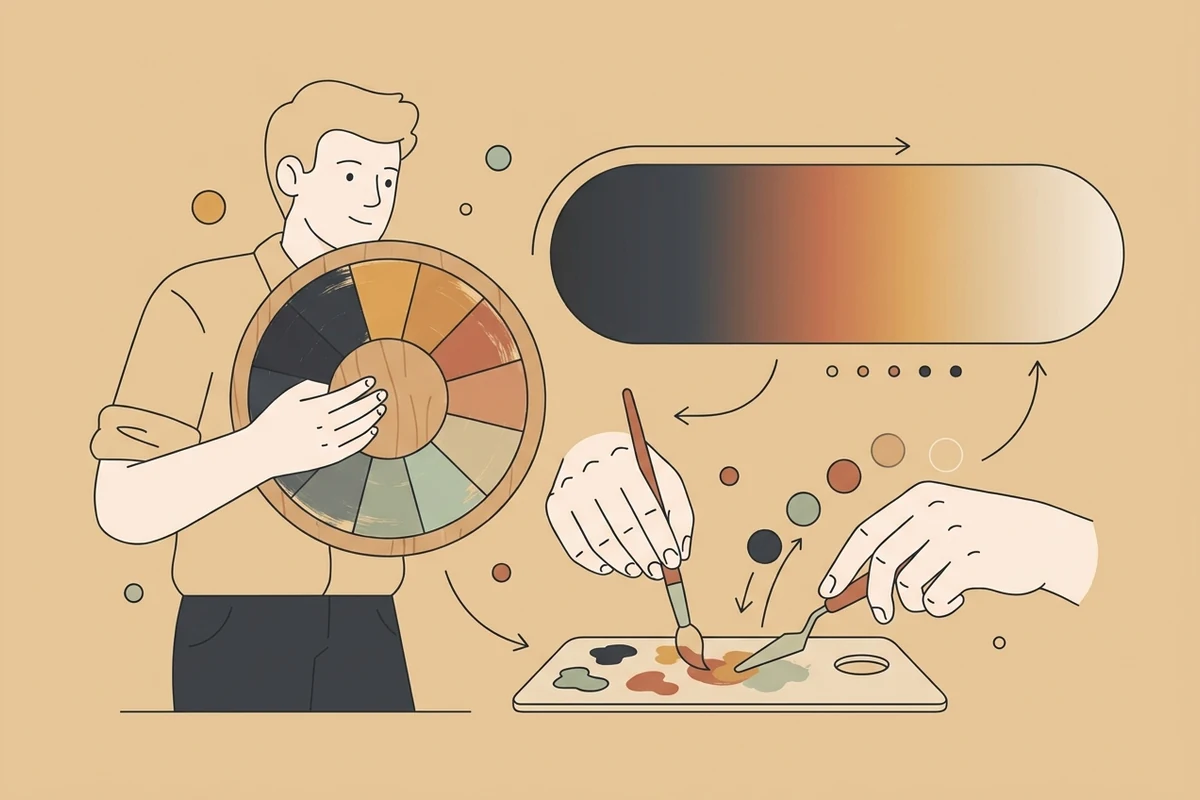 The Color Lab Predict a harmony or which pairing reads with more contrast — a real engine computes the exact hue rotation and WCAG ratio on your device.
 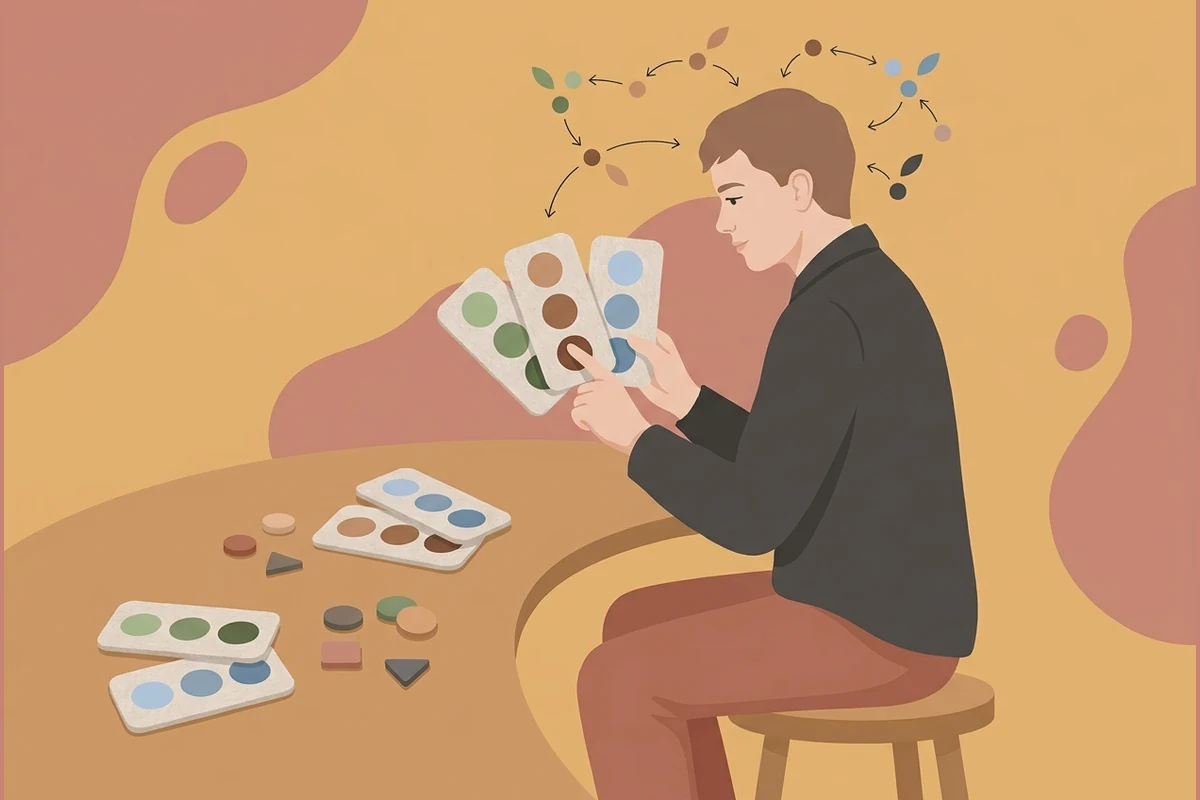 Concept kits Sixteen short kits — hue/value/saturation, harmonies, contrast, hierarchy, alignment, type, grids, and composition critique.
 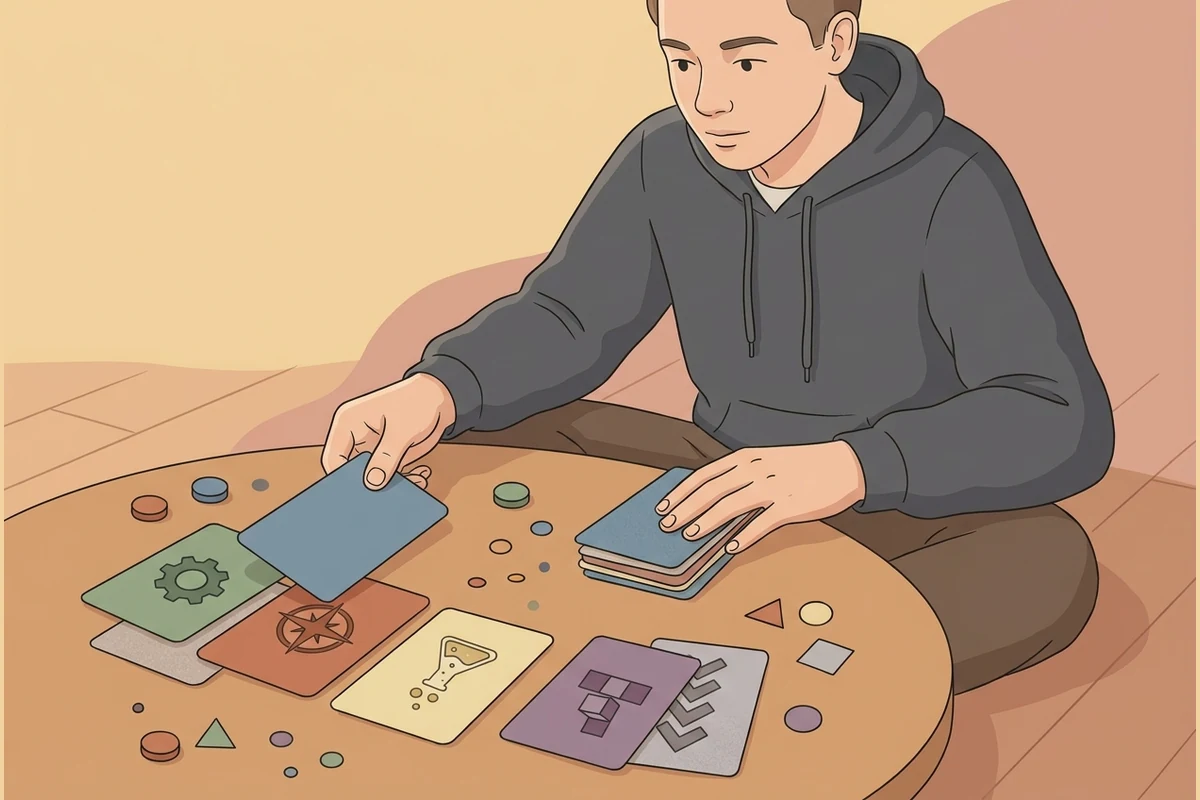 Mixed practice A short round that shuffles questions across the kits you have played, spaced out so it sticks.
 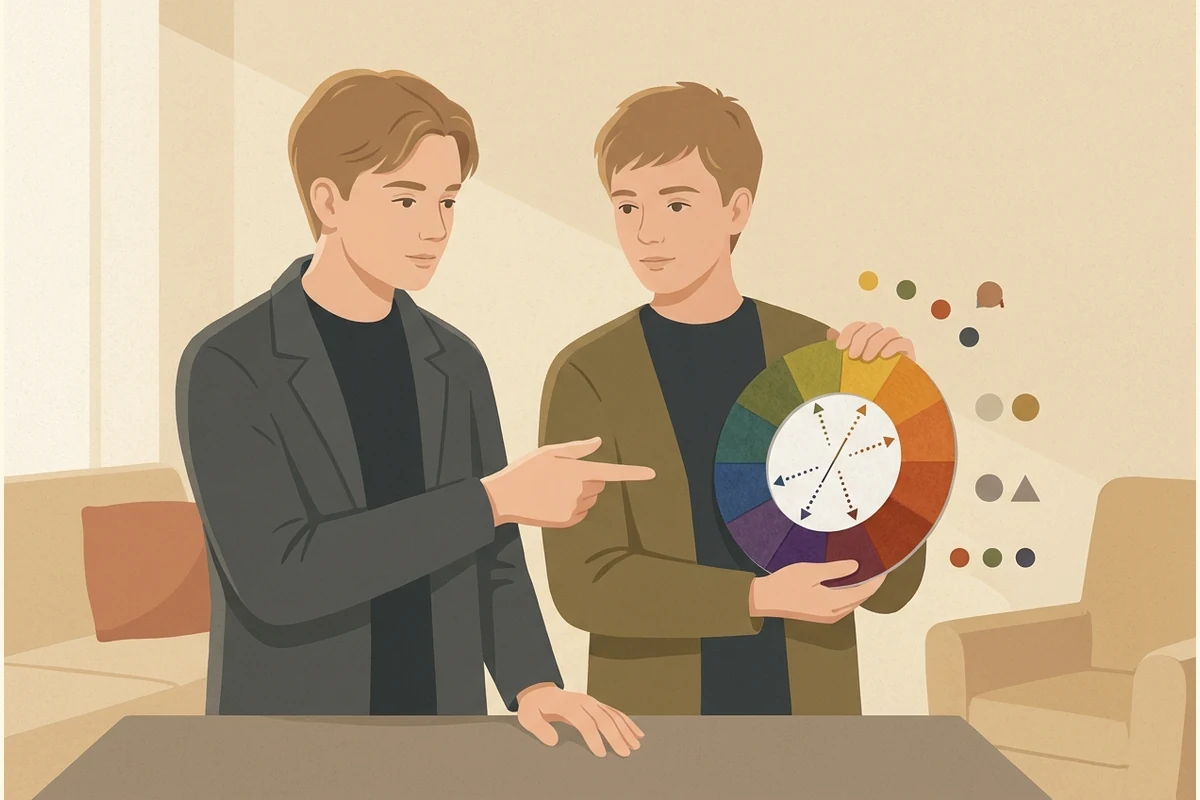 Teach the concept Explain a design idea to someone still learning it — articulating it is how it sticks.
 Who you’ll meet
- Iris — reads a colour as hue, value, and saturation (the three dimensions)
- Ravi — rotates the wheel to build complementary, analogous, and triadic harmonies
- Nova — sets a luminance gap so text stays readable (contrast & WCAG)
- Bex — guides the eye with hierarchy and emphasis (what to see first)
- Cole — aligns and groups elements so a layout feels ordered (alignment & proximity)
- Suki — balances visual weight across the composition (balance)
- Milo — uses empty space on purpose (negative space)
- Dara — sets type for tone and legibility (typography)
- Fen — structures a page on a grid (layout & grid)
- Prof. Adeyemi — the mentor — predict the relationship, compute it, then reconcile
Concept kits — 16 short kits on colour, contrast & composition
1. Hue, Value & Saturation The three properties of color · 20 questions 2. The Color Wheel How colors relate around the wheel · 20 questions 3. Color Harmonies Building effective color schemes · 20 questions 4. Color Relativity & Contrast How context changes how we perceive color (Albers) · 20 questions 5. Warm, Cool & Color Temperature How color temperature shapes mood and space · 20 questions 6. Balance Distributing visual weight in a composition · 20 questions 7. Visual Hierarchy & Emphasis Guiding the viewer's eye to what matters most · 20 questions 8. Contrast Using difference to create interest and clarity · 20 questions 9. Alignment, Proximity & Gestalt How arrangement creates order and grouping · 20 questions 10. Repetition & Rhythm Creating unity and movement through repeated elements · 20 questions 11. Negative Space & Figure-Ground The power of empty space · 20 questions 12. Scale & Proportion Relative size and pleasing proportional relationships · 20 questions 13. Perspective & Depth Creating the illusion of 3D space on a 2D surface · 20 questions 14. Typography Type anatomy, classification, and pairing · 20 questions 15. Layout & Grid Organizing content with structure · 20 questions 16. Composition Critique Capstone Integrating all design principles to evaluate work · 20 questions