← The Game They Made Themselves
The Fair on the Green · Reader · ages 6-8
Listen along
Loading audio…
Read by an AI-generated voice. The words on this page are the transcript.
1. Three Things in a Pocket
The hammer rang once. A spark jumped off the anvil and did not go out. It waited. They followed.
It was the last weekend of the fair. Everybody on the Green knew it. The bunting looked a little more faded than it had at the start of October, and the lemon buns at the cake stall had been joined by a sign that said LAST CHANCE. The hoopla man was telling everyone that this was their final go at the pegs until next year, and more people than ever were throwing rings and missing.
Lan had three things in her pocket now. A plain wooden die, from the first weekend, when she had learned that a game needs a real chance for everyone. A small cloth flag, from the second weekend, when Inkling had learned that a good game leaves things out. And a polished acorn, from the third weekend, when Lan had learned that a game needs a way to end.
One for each weekend. Three plain things that did not look like much. She took them out on the walk to the Green and looked at them in her open hand, and then put them carefully back.
"There's room for one more," said Inkling.
"I know," said Lan. She had thought about that all week.
The spark went the way it always went. Past the cakes, past the hoopla, past the big white games tent, to the striped red-and-white booth at the very end of the row. The sign was still there: ANY GAME YOU WISH, WHILE YOU WAIT. But somebody had pinned a small card under it that said LAST WEEKEND.
They ducked inside.
The booth's striped curtain swung shut behind them, and the noise of the fair went soft. The old stool had one new rung, and somebody had scratched a tiny hammer beside it.
Trial looked up from her stool. The round little capybara had her notebook open on her knee, and for once she did not yawn straight away. She looked at them for a long moment.
"Last weekend," she said. "You know the rule. The fair packs up on Sunday night. This Sunday, my booth goes with it."
"Where do you go?" said Lan.
"Another fair," said Trial. "Another green. Another booth." She closed the notebook. "Well. What do you wish for?"
Lan and Inkling looked at each other. They had talked about this on the walk, and all week at school, and over the phone in the evenings.
"Nothing," said Inkling. "We're not going to wish. We're going to make our own game. Ourselves. With the three pieces."
Trial's small round ears lifted, just a little. It was the most surprised Lan had ever seen her.
"I see," said Trial slowly. "Then I'll just watch, shall I?"
"Yes, please," said Inkling.
2. Lan's Rules
"I'll do it!" said Lan, before Inkling had finished sitting down. "I promise! I know exactly how it should go. I've been thinking about it all week."
She took the pencil from behind Trial's ear, and Trial let her. She took a clean card from the box. She bent over the bench and began to write.
Rule one, she wrote. Roll the die and move that many. Rule two. The first one to the end of the track wins. Rule three. Each player has one flag. Rule four. Every turn, take an acorn. Rule five. When the acorns are gone, the game is over.
She wrote faster and faster, the way she ran faster and faster when she could see the finish. Rule six. Rule seven. She knew what all of them should be. It was going to be the best game ever made.
"Is that all right?" said Lan, without looking up.
"That's fine," said Inkling.
Lan wrote rule eight.
Trial did not take the pencil away. She did not say Lan was doing it wrong. She did not say anything about rules at all. She only said, very quietly:
"Watch what she does, not what she says."
Lan looked up.
Inkling was sitting on the edge of the stool. Her hands were in her lap. She was not looking at the card. She was not looking at the bench. She was looking at the curtain, at the little line of light where the fair came in underneath it. She looked the way Lan had felt on the second weekend, reading the twenty-rule card for the third time. She looked like somebody waiting for something to be over.
"Inkling?" said Lan.
"It's fine," said Inkling. "It's your game. It sounds good."
Lan looked down at the card. Eight rules, all in her handwriting. It was her game. That was the trouble. She had wanted to make a game with Inkling, and instead she had made a game for Inkling, which was not the same thing at all. It was a bit like the booth. You wished, and somebody built it, and it was exactly what you asked for, and you did not care about it very much.
A game one person makes is that person's game.
Lan put the pencil down on the bench.
"Sorry," she said. "I went first again. I always go first." She turned the card over, so the eight rules were face down. "Let's start again. Together. You first this time."
Inkling looked at her for a moment. Then she smiled, and took her hands out of her lap.
3. The First Draft
They emptied Lan's pocket onto the bench. The die, the flag and the acorn sat in a little row.
"Let's do it one piece at a time," said Inkling. "What does each one do?"
Lan picked up the die. "The die is for chance," she said. "So the one behind can still win. Bones said chance has a job."
Inkling picked up the flag. "The flag is for leaving things out," she said. "Only one each. Plant it once, to make the other one wait a turn. That's all it does. Primer said every rule has to earn its place."
Lan picked up the acorn. "And the acorns are for ending," she said. "So nobody plays for ever. Vault said one less every time."
Lan ran outside to the oak tree and came back with acorns, and they counted out eight into a little basket.
"Eight acorns, two of us," said Inkling. "Four turns each. That's short."
"Short is good," said Lan. "Short means you want another go."
They drew a track on the back of a card. Sixteen spaces, side by side, one row for each of them, with a little line down the middle. They put two pieces at the start. They each took one flag. They put the basket of acorns in the middle.
"Ready?" said Inkling.
They played.
It worked. It actually worked. The die rolled, the pieces moved, the acorns came out of the basket one by one. Lan planted her flag and made Inkling wait. When the last acorn came out, Lan was ahead, and the game was over, and nobody had had to read anything or ask which rule.
"We made a game," said Lan.
"We made a game," said Inkling.
They played it again. And again. And on the third time, Inkling put her chin on her hands and said, "It's good. But it's a bit like playing on my own, isn't it? Next to you."
Lan looked at the track. Two rows, with a line down the middle. Her piece went along her row, and Inkling's piece went along Inkling's row, and they never once met. Apart from the flag, nothing Lan did changed anything Inkling did at all.
4. A Blank Page
Trial had watched all three games without a word. Now she opened her notebook on her knee.
"May I show you something?" she said.
They came and looked. She turned to the first page they knew, the one that said THE RACE, from the first weekend. Then the second page, THE EVERYTHING GAME. Then the third page, THE LOOP.
"Look at the bottom of each page," said Trial.
At the bottom of THE RACE she had written: Lan changed it. At the bottom of THE EVERYTHING GAME: Inkling changed it. At the bottom of THE LOOP: Lan changed it.
"I built three games exactly as you wished," said Trial. "And every time a game got better, it was not because of anything I built. It was because one of you changed it. Every time." She turned to a clean page. "And now there are two of you changing the same game. That has never happened in my booth before."
She took her pencil back from the bench, wrote one word at the top of the clean page, and showed them.
OURS.
Then she left the rest of the page blank, and gave the notebook to Inkling to hold.
"Go and look at the games tent," said Trial. "Things look different from a little way off."
5. Bump
The games tent was crowded. It was the last weekend, and everybody wanted one more go at everything. The ladybird's dice garden had a queue. The duck at the ONE BREATH table was saying "Roll, move, first one home wins" so fast it sounded like one word. Vault was there with the peg board, and waved.
But in the corner where the new tent pole was, there was a table they had not seen before, and it was the noisiest table in the tent.
A brown otter in a blue top was leaning right over the board, grinning. On the other side sat a boy with his tongue sticking out in concentration. The board was small, with just a few counters on it, and every time the boy moved, the otter moved right after him, into his way.
"Ooh, can I get in the way?" said Meddle, and slid a counter in front of the boy's piece.
The boy groaned and laughed. He had to go round. Then he did the same thing back to her, and she squeaked with delight.
"Now you have to answer me," said Meddle.
Lan and Inkling watched three games. In every one, the two players were watching each other more than they were watching the board. Every move was a sort of question, and the next move was the answer.
When the boy had gone, Inkling told Meddle about their game. The two rows. The line down the middle. The flag, and the acorns.
Meddle put her head on one side and listened to all of it.
"It sounds like two races, side by side," she said. "That's very tidy. But a game with nobody to bump is a puzzle. A good puzzle, maybe. But a puzzle." She tapped the board with one paw. "What does my move do to yours? That's what makes it a game for two."
"The flag does something," said Lan.
"Once," said Meddle. "What about the other seven turns?"
Lan did not have an answer for that.
They walked back to the booth slowly, past the dice garden and the ONE BREATH table and the peg board, and Lan noticed something she had never noticed before. Every single table in the tent had two people, or three, or a whole family, leaning over the same board. Nobody was playing on their own. Even at Vault's peg board, which was a puzzle for one, a girl's dad was standing behind her, pointing and saying "What about that one?" and being told to be quiet.
"Games are for being with people," said Lan suddenly. "Aren't they? That's what they're for."
"Some of them," said Inkling. "Puzzles are for thinking on your own. That's good too."
"But ours is for two," said Lan. "So it should be for two all the way through. Not just once, with the flag."
Inkling nodded, and wrote BUMP? on the blank OURS page in Trial's notebook, with a question mark, because they did not know how yet.
6. One Leg
On Saturday afternoon they rubbed out the line down the middle. Now there was just one track, and both pieces raced along it, the red one and the blue one, on the same spaces.
They played. It felt different at once. Lan could see Inkling's piece just ahead of hers, close enough to touch. She wanted to catch it.
A pink flamingo in a blue shirt had come into the booth while they were playing. Trial had nodded to her, the way you nod to an old friend. The flamingo stood on one leg by the curtain, perfectly still, and watched the whole game without a wobble.
Lan won. She had planted her flag on her very first turn, the way she always did now, and Inkling had had to wait, and Lan had been ahead from then on.
They played again. Inkling planted her flag on her first turn. Inkling won.
They played a third time. Lan planted her flag on her first turn. Lan won.
The flamingo shifted onto her other leg, and spoke for the first time.
"Is there one move that always wins?" said Poise.
Lan and Inkling looked at each other.
"Plant your flag straight away," said Inkling slowly. "On the first turn. Whoever does that gets ahead and stays ahead."
"So does anybody ever do anything else?" said Poise.
They thought about it. Nobody did. Why would you? If planting the flag on the first turn always won, then you always planted it on the first turn, and it was not a choice at all. It was just a thing you had to do.
"If one way always wins, nobody chooses," said Poise. "Balance it, then try again."
"How?" said Lan.
"Stand on one leg and think," said Poise, and did exactly that.
So they stood on one leg, both of them, wobbling, and thought. And after a while, still wobbling, Inkling said, "What if you can't plant a flag in the first two turns?"
They tried it. Now the flag was a real choice. You could plant it on turn three, when you were nearly level. Or save it for the very end, to stop the other player reaching the last acorn. Or plant it at the wrong moment and waste it. Lan planted hers too late and lost. Inkling planted hers just right and won.
"Tip it back level," said Poise, looking pleased, and folded her leg up under her again.
7. Sunday Evening
On Sunday the whole fair began to come down. The hoopla had gone by lunchtime. The cake stall sold its last lemon bun at two. The bunting came down in long tangled strings, and men with ladders took the big white games tent apart one pole at a time.
On Sunday evening, two men began rolling up the stripes of Trial's booth. They started at the back, so the booth was still there at the front, with the curtain and the sign, but the back of it was open to the sky.
Lan and Inkling sat on the bench with the game between them. One track. Two pieces. One die. Eight acorns. A flag each, but not in the first two turns.
"It's good," said Lan. "It really is. But it's still missing something."
"I know," said Inkling.
"We still never bump," said Lan. "Meddle said a game for two is when my move does something to yours. Apart from the flag, we just run past each other."
The men had rolled up half the booth. The stripes were going, one by one, and the evening sky showed through, pink and gold. There was almost no time left.
Lan felt a hot prickle behind her eyes. She did not want the fair to go with their game still not finished. She did not want Trial to go at all.
"We could just stop here," she said, in a small voice. "It's a good game already. It's better than any game we wished for. We could stop now and it would be fine."
Inkling looked at her. "Is that what you want?"
Lan thought about it. She thought about the loop, and how it had felt to stop a game in the middle, with nobody winning. She thought about the bell at six o'clock, and Inkling's face falling.
"No," she said. "I want it to be finished properly. Even if it takes until the very last minute."
"Then let's use the very last minute," said Inkling.
8. Swap
Inkling did not say anything for a long time. Lan knew that was a good sign now. Inkling was counting first.
She moved the red piece along the track. She moved the blue piece along behind it, until the blue piece landed exactly on the space where the red piece was. Both pieces sat on the same square, one on top of the other.
"Look," she said. "When you land right on someone, nothing happens. You're both just there. But it's the most exciting moment in the whole game. You've caught them." She picked the blue piece up and put it down again. "It should do something. To both of you."
"Send them back to the start?" said Lan. "Like the loop?"
Inkling shook her head. "That made the loop go on for ever. We've got acorns now, but it would still make people cross."
She looked at the two pieces for a long time. Then she thought of something that nobody had shown her. Not Trial, not Bones or Lucky or Primer or Vault or Meddle or Poise. Nobody.
"I noticed something," said Inkling. "I can name it. If you land exactly on the other piece, you swap places."
Lan stared at her.
"So if you're behind, and you land on me," said Inkling, "you jump ahead to where I was, and I go back to where you were. But only if you land exactly. So you're always looking at where the other piece is. Every turn."
Lan opened her mouth to add something. She had a rule ready, about swapping back. She could feel it, right on the tip of her tongue.
Then she closed her mouth again.
"That's it," said Lan. "That's the game."
They wrote OURS at the top of the card, in both their handwriting, Lan doing the O and the U and Inkling doing the R and the S. Then they played.
It was completely different. Every roll, they were both counting. How far is she? If I roll a three, I land on her and swap. If I roll a four, I go past and she might land on me. Lan swapped with Inkling on the second turn and went ahead. Inkling planted her flag on turn three. Lan swapped again. Inkling rolled exactly the number she needed and swapped right back.
They played twice. Both games ended on the very last acorn. Both times, whoever took the last acorn shouted so loudly that the men rolling up the booth stopped to look.
9. The Fourth Piece
Trial had watched both games. She had watched every roll and every swap. She had watched both faces, not the board.
When the second game ended, she did something she had never done before. She did not write anything down. She did not smile and say nothing. She leaned forward on her stool.
"May I play your game?" said Trial.
Lan and Inkling looked at each other.
In four weekends, Trial had built dozens of games for dozens of children. She had built exactly what everyone wished for. And nobody, not once, had ever asked her to play. And she had never asked.
"Yes," said Lan and Inkling together.
So Trial played. She was slow, and careful, and watched both of them more than she watched the board. She swapped places with Lan once and with Inkling twice. She planted her flag on exactly the right turn. And at the very end, she missed the last acorn by one roll, and lost by one home.
She laughed. It was the first time they had heard Trial laugh, a soft, surprised, wheezy laugh, like a kettle starting.
"That," said Trial, "is a good game."
Then she reached into one of the dozens of tiny pockets of her canvas apron and took out a plain wooden counter, round and smooth and the colour of honey. It was the kind of piece every game in the world could use.
"For you," she said, and gave it to Lan. "I only ever give pieces to games people keep."
Lan put it in her pocket, beside the die and the flag and the acorn. That was the fourth piece. The pocket was full.
The men had rolled up nearly all of the booth. Only the front was left, the curtain and the sign.
"Will you come back next year?" said Inkling.
"Perhaps," said Trial. "Will you bring OURS?"
"Yes," said Lan.
The curtain swung open for the last time, and the Green was full of fair again, though most of the fair had gone. By morning, the booth was gone too. There was just a pale square in the grass where it had stood.
The spark dimmed to a warm dot and settled back on the anvil. The Green was just the Green again.
Back on the Green
At home they taught OURS to Lan's little brother Tí. It took one breath. He played three games and lost two, and then he said he had a new rule: if you roll a six, you can jump over the other piece instead of landing on it.
Lan opened her mouth to say no. Then she looked at Inkling. They tried it. It was good. They kept it, and wrote it at the bottom of the card, in Tí's wobbly letters.
Tell the story back to someone. Why did Lan turn her eight rules face down? What does each piece in the pocket do in OURS?
Saved. The next chapter will be here whenever you come back.
Who you met
-
 Lan a child of the Green Goes first; makes a friend in a minute
-
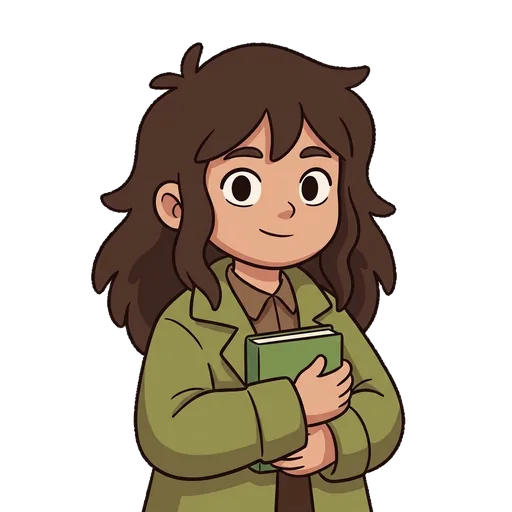 Inkling a child of the Green Names what she notices
-
 Trial Watch what players do, not what they say from TableForge
-
 Meddle A game is better when what you do changes what I do from TableForge
-
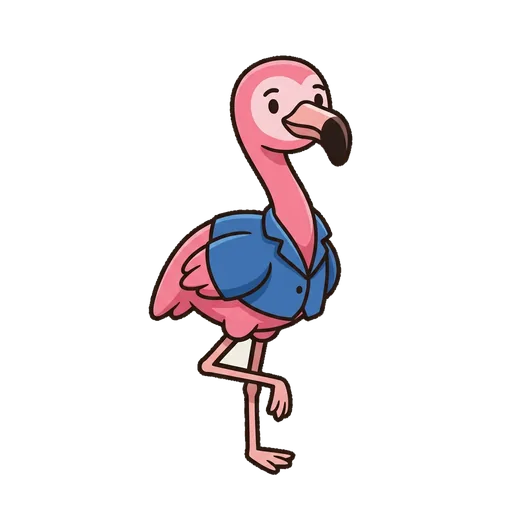 Poise In a good game no one move always wins from TableForge
Every recurring character has a short tune, so you can tell who is on stage before a word is said. The tunes play only when you tap, and the Reading Access sound switch turns them off.
The Honest Page
Which parts of this story are true, stretched or made up?
True
- Game designers call a move that always wins a dominant strategy. When one way always wins, the other choices stop mattering, so designers look for those moves and fix them. Source
- Eight acorns taken one a turn by two players last four turns each.
Stretched
- A game made together is the one you keep. What we simplified: Bought and wished-for games can be kept and loved too. The story's point is that making a game with someone gives you a reason to come back to it.
Made up
- The wishing booth, Trial, the otter, the flamingo and the game called OURS are made up. You can make your own OURS with a die, a flag and some acorns.