
← The Bridge That Went Out with the Tide
Gullwick, the Island That Shares · Reader · ages 6-8
Chapter 1. The Horn
The hammer rang once. A spark jumped off the anvil and did not go out. It waited. They followed.
Lan saw it first, because Lan always saw things first. It was the size of a ladybird and the colour of a candle. It hung in the air above the anvil on the Green. It did not float away the way sparks are supposed to. It waited, the way a dog waits by a door.
"Beto," she said. "Look."
Beto was nine and took things apart. He had a screwdriver in his pocket and a broken clock under his arm. He looked at the spark for a long time.
"Sparks go out," he said.
"This one didn't."
The spark drifted a little way down the lane toward the harbour. It stopped. It waited again.
So they followed it, past the print shop and the mending shed, down the steps to the jetty, where the little green ferry was tied up and puffing. The spark settled on the ferry's rail like a moth and stayed there.
The ferry horn blew once.
"One means leaving," said Beto.
"I know what one means," said Lan. She was already at the rail.
The ferry chugged out into the grey. The Green got small behind them. For a while there was nothing but fog and the slap of the water. Then Gullwick came out of the fog the way it always did in the stories Grandmother told: gulls first, then the lighthouse, then the bridge.
Except there was no bridge.
There were two posts sticking up out of the water, a rope sagging between them, and a great deal of water.
Chapter 2. Half an Island
The ferry bumped against the jetty. Lan jumped off before it had finished bumping.
Gullwick was small. You could see most of it from the jetty. On the left side of the water stood a bakery with a crooked chimney. On the right side stood a flour mill with a red door. Between them, where the bridge should have been, the sea ran fast and brown.
An old fish in a blue jumper and round glasses was standing by the two posts, a plank under one fin. He was looking at the gap as if it had been rude to him.
"That's Poppa Pike," whispered Beto. "He builds things."
"Storm took her," said Poppa Pike, without turning round. "Last night. The whole bridge, gone with the tide. The bakery's on one side. The flour's on the other. No bridge, no bread."
He turned. He had kind eyes and very strong fins.
"Eight planks, and not one fewer," said Poppa Pike. "That's what the first span needs. Eight planks will get the flour across. I have three."
He pointed at three planks leaning against the post. They were good planks, straight and pale.
Beto did the sum in his head. "Eight take away three is five," he said. "You're five planks short."
"Five planks short," said Poppa Pike. "And the tide turns at sundown. After that the posts are under water till morning, and the bakery runs out of flour tonight."
Lan looked at the bakery. Somebody was standing in the doorway with an empty sack. She looked at the gap. She looked at Poppa Pike's three planks.
The baker was a hedgehog in a floury apron. She waved at the mill. On the far side, the miller waved back. He held up a full sack of flour and shrugged, as if to say, and how am I supposed to get this to you? Between them the water rushed past, carrying a bucket, a rope, and somebody's hat.
"Every morning she bakes forty loaves," said Poppa Pike. "Every morning the whole island comes for one. Tomorrow there won't be any, unless that flour gets across."
"Could you swim it over?" asked Beto. "You're a fish."
Poppa Pike looked at him for a long moment. "Have you ever tried swimming with a sack of flour?" he said. "It doesn't stay flour for long."
Beto thought about wet flour and nodded. That was a good point.
Chapter 3. The Promise
"I'll get five planks by sundown," said Lan.
She said it very fast. It came out of her mouth before her brain had finished thinking it, which was something that happened to Lan quite a lot.
Poppa Pike raised his eyebrows. "Will you, now."
"Yes," said Lan. "I promise."
Beto looked at her sideways. "From where?"
Lan opened her mouth. Then she closed it again. She didn't know where. She didn't know who on Gullwick had planks, or how many, or whether they would give them to a girl who had arrived ten minutes ago on a ferry. She had promised before she counted.
Her ears went hot. That was what happened when she was embarrassed. She could feel them glowing like the spark.
"Well," said Poppa Pike, not unkindly. "A promise is a plank you haven't cut yet. Let's see if we can find the wood."
Chapter 4. Spares!
Gilly was the busiest otter on Gullwick. She ran the little market by the harbour, and she ran it at a run. She came skidding round the corner of the fish shed before Lan had even decided where to look.
"Spares!" said Gilly. "Who's got spares?"
She hopped up onto an upside-down crate so everybody could see her.
"I never sit on spare goods," said Gilly. "That's the first thing. If you've got something you don't need, it's doing nobody any good in your shed. So. Count what you don't need. Go on. Everybody."
Islanders began to gather. A rabbit counted nets. A heron counted buckets. A family of mice counted thimbles, which was not helpful, but they enjoyed it.
"Look, look, everybody has something," said Gilly, pointing as she went. "You've got buckets you don't need. You've got nets. Me, I've got two spare planks left over from my boat shed. But I need rope. My boat's mooring line snapped in the storm."
Lan's heart jumped. Two planks!
Then Gilly pointed at Beto.
"And you've got two rope and need none," said Gilly.
Beto looked down. He had forgotten. Over his shoulder hung two coils of rope from Grandmother's shed. He had brought them to tie up the broken clock, because Beto liked to carry things that might be useful.
"I don't need two," said Beto slowly. "I don't really need any."
"There you go," said Gilly. "Spares."
Lan was already doing sums. Gilly had two spare planks. Poppa Pike had three. That made five. They needed eight. Not enough yet, but closer.
"And I'll want both coils," said Gilly, hopping off the crate. "Both! Rope's always useful!"
Beto frowned. He did not mind giving rope. But both coils sounded like a lot.
"Hold on," said Lan. "Do you need both?"
Gilly opened her mouth to say yes. Then she stopped and counted, the way she had told everybody else to count. "One mooring line snapped," she said. "So, one. One coil. The other would just sit in my shed." She laughed at herself. "I'd be sitting on a spare. That's the thing I never do!"
Chapter 5. The Wrong Swap
But Lan was not listening to Gilly any more. She had seen something else.
Next to the fish shed was a small house with a blue door, and leaning against the blue door was a plank. Just one. A good straight plank.
Lan ran to it. A young fox was sitting on the step, mending a basket. Her name, Lan found out later, was Vera.
"Hello," said Lan. "Can I have your plank? It's for the bridge."
"Oh, I'd love to help!" said Vera. She jumped up. Then she stopped and looked at the plank, and her face changed. "Only, it's my only one. It holds my door shut when the wind blows."
"But it's for the bridge," said Lan. "Everybody needs the bridge."
Vera's whiskers drooped. She put her paw on the plank. She looked like she might say yes, because she was the kind of fox who said yes. But she also looked worried.
"Wait," said a voice.
It was a kingfisher with a little brown satchel over one shoulder. He had been watching from the corner of the shed roof, and now he flew down between them. His name was Rafi.
"That's her last one," said Rafi. He did not say it crossly. He said it the way you say "mind the step". "Ask for a spare, not a last. A swap shouldn't leave anybody short. If Vera gives you her only plank, her door blows open tonight, and then Vera has a problem instead of us."
Lan felt her stomach sink all the way to her shoes. She had been so sure. She had been sure the whole way across the sand. Now she felt small and silly, and her ears were glowing again.
But Rafi was not laughing at her. Nobody was. Rafi just smiled and pointed back toward Gilly's crate.
"Let's find two spares instead," said Rafi.
"Sorry, Vera," said Lan.
"That's all right," said Vera. "Ask me for a spare. I'm sure I've got some somewhere."
So that was the first thing Lan learned on Gullwick. Wanting something very much does not make it fair to take.
Chapter 6. Does It Help Both?
When they got back to the crate, a badger was waiting. He moved slowly, the way badgers do when they have been thinking about something for a long time. This was Barter, who kept the scales at the market.
"I hear there's a swap brewing," said Barter. He set down a small brass scale. "Let's put it on the scale."
"There's no swap," said Lan. "We just need planks."
"Everybody needs something," said Barter. "That's where a swap starts. Now. What do you have spare, and what do you need?"
He looked at Beto.
"Rope spare," said Beto. "Planks needed."
He looked at Gilly.
"Planks spare," said Gilly. "Rope needed."
Barter nodded slowly. "Then here's my one question," he said. "Does it help both?"
He set one coil of rope in the left pan of the scale and two planks in the right pan. The scale did not balance, because rope and planks do not weigh the same. Barter didn't seem to mind.
"The scale isn't for weighing," he said. "It's for thinking. Left side, what Beto gives. Right side, what Beto gets. Now turn it round. Left side, what Gilly gives. Right side, what Gilly gets. If both of them walk away with something they need, and nobody has handed over their last, then it's fair. If only one of them is glad, it isn't a swap. It's a grab with good manners."
Lan thought about it. If Beto gave Gilly rope, Gilly could tie up her boat. If Gilly gave Beto planks, the bridge got closer. Nobody was giving away their last of anything. Gilly had two planks she wasn't using. Beto had two coils of rope he wasn't using.
"Yes," said Lan. "It helps both."
"Fair for you, fair for them," said Barter. "Then shake on it."
Beto and Gilly shook. It was a strange handshake, because one of them had a paw and the other had a screwdriver, but it counted. Beto gave Gilly one coil of rope. Gilly gave Beto two planks.
They carried the two planks to Poppa Pike and leaned them next to his three.
"Three planks and two planks," said Beto. "That makes five."
"Five," said Poppa Pike. "Three short."
Lan looked at the five planks and felt something warm in her chest. It was not as good as having all eight. But it was five planks nobody had been made sad to give.
Chapter 7. The Seven Patch
"Where else is there wood?" said Lan. "Real wood. Not anybody's last."
Something small and red landed on her sleeve. It was a ladybird with seven black spots, and it was looking at her as if it had been waiting for this question all day.
"Try the seven patch," said the ladybird. "I'm Lucky. That's my name, not my opinion."
"What's the seven patch?" asked Beto.
Lucky pointed with one leg toward the long beach on the far side of the mill. The beach was marked off with little painted stones into patches, and each patch had a number on a stick, from two at one end to twelve at the other.
"After a storm, driftwood washes up all along that beach," said Lucky. "Gullwick children play a game with it. The tide tumbles the wood about like two dice being rolled, and wherever it lands, that's the number. Some patches fill up fast and some hardly ever."
"Why?" asked Beto. He liked whys.
"Not luck. Counting," said Lucky. "Think of two dice. To get two, you need one and one. That's the only way. Two has only one way. But to get seven, you can have one and six, two and five, three and four, four and three, five and two, six and one. Six ways to make seven. More ways than any other number."
Beto counted on his fingers. One-six, two-five, three-four, four-three, five-two, six-one. Six.
"So seven turns up most," he said.
"Then I want twelve," said Lan. "Twelve's the biggest."
"Biggest isn't most," said Lucky, quite cheerfully. "To make twelve you need six and six. One way. Same as two. Go and look, if you like."
Lan went and looked. The twelve patch had one shell in it and a crab who did not want to be disturbed. The two patch at the other end had nothing at all except a feather. Patches three and eleven had a twig each.
But as she walked back along the beach, the patches got fuller. Five had a pile. Six had a bigger pile. Eight had a pile the same size as six.
"Seven turns up most," said Lucky. "Not always. Just most."
They ran to the seven patch. It was piled with driftwood: twisty bits, rotten bits, a boot, a bucket with no bottom. And there, half buried in the sand, were two long flat planks, washed off some broken fence somewhere far away.
They dragged them back to the posts.
"Five and two makes seven," said Beto.
"Seven," said Poppa Pike, and for the first time all afternoon he smiled properly. "One short."
Chapter 8. One Short
One short.
Lan had thought that being one short would feel better than being five short. It felt worse. Five short is a big job. One short is a small job you cannot do.
The sun was going down behind the lighthouse. The water between the posts was rising. Gilly had no more spares. Beto had given his rope. The seven patch was empty. Barter had nothing in his scale but a feather.
Lan sat down on the sand. She had promised five planks by sundown. She had found four. Well, she had helped find four. Other people had found them, really.
"I promised," she said quietly.
Beto sat next to her. He didn't say anything clever. He just sat.
Then he did say something, because Beto could not sit still for long. "The bakery has a sign," he said. "It's a plank. Painted. It says BREAD. We could take that."
Lan looked at the sign over the hedgehog's door. It was a good plank. It was also the only sign the bakery had, and without it, nobody coming off the ferry would know where the bread was.
"That's her last one," said Lan slowly. She heard herself say it, in Rafi's voice. "Ask for a spare, not a last."
Beto looked at her in surprise. Then he grinned. "You learned it," he said.
"I learned it," said Lan. It did not make the plank appear. But it made her feel a little less small.
Across the water the baker was taking in her empty sacks. The gulls were going quiet. Lan watched the tide creep up the posts, one barnacle at a time, and tried very hard not to cry, and mostly managed it.
Then Vera came running down the beach, still holding her basket.
"I can't spare my plank," said Vera, out of breath. "It's my only one. But I can spare my legs! The Commons store! Ambo keeps the Commons store. I'll get Ambo!"
And she was off again before anyone could answer, a little fox racing the tide.
Chapter 9. Not a Trade
Ambo was a large, gentle beaver who lived in the stone hut by the lighthouse, where Gullwick kept the things that belonged to everybody. Lan had never heard of a store where things belonged to everybody. She had thought that every thing belonged to somebody.
Ambo came down the beach with Vera trotting beside him. He was carrying a plank under one arm. Not a new one. A grey, salty, sensible plank.
"Here," said Ambo.
Lan stood up. "What do you want for it?" she asked. "We haven't got anything left. Beto's rope is gone. We could—"
"It's not a trade," said Ambo. His voice was low and warm. "I have more than I need. That's what the Commons is for. When nobody has a spare, the one who has the most gives one. Nobody on Gullwick goes short."
"The Commons is a room full of things nobody owns and everybody uses," said Ambo, before Lan could ask again. "Ladders. Lanterns. The big pot for festival soup. Planks for when a roof blows off. Every family puts something in when they have more than they need, and takes something out when they don't. I just keep the key."
"What if somebody takes too much?" asked Beto.
Ambo thought about it, slowly. "Then the room gets empty," he said, "and the next person who needs a ladder doesn't have one. So people don't. Mostly. It's the island's room, so it's everybody's job to keep it full."
He leaned the plank against the others.
"Keep it," said Ambo.
"Seven and one makes eight," said Beto.
"Eight," said Poppa Pike. He rested a fin on the pile. "Eight planks, and not one fewer."
Chapter 10. Everybody Lays One
"Everybody lays one," said Poppa Pike. "That's the rule for bridges. A bridge is a promise you can stand on, and everybody's got to hold one end of it."
So they did. Poppa Pike laid the first plank. Gilly laid one. Vera laid one, carefully, as if it were made of glass. Ambo laid one and didn't hurry. Beto laid one and checked the nails twice, because he was Beto. Barter came down and laid one at the speed of a badger. Even Lucky helped, by sitting on a nail head to show where it was.
Lan laid the last plank.
It was the grey, salty plank from the Commons. When she turned it over, she saw that someone, long ago, had carved a word into the end. The word was FAIR.
She pressed it into place. Poppa Pike drove the last nail. The first span stretched across the water, from the bakery side to the mill side, just as the tide came up to the top of the posts.
It held.
The miller came out of the red door with a sack of flour on his back. He walked across the span, slowly, testing every step. Then he walked faster. Then he was on the other side, and the baker was taking the sack, and somebody inside the bakery cheered.
"That's one span," said Poppa Pike. "Three more to go before she's a whole bridge again. But that's tomorrow's job."
"Why does it say FAIR?" asked Lan, touching the carved end.
"Every span of the old bridge had a word," said Poppa Pike. "Whoever built them carved one into the last plank. The storm took the other three. We'll find out what they said when we build them." He looked at Lan. "You'll have to come back."
"I'll come back," said Lan. Then she stopped. "I mean, I'll try to. I'll ask Grandmother first."
Poppa Pike laughed, a bubbly fish laugh. "That's a promise you've counted," he said.
The ferry horn blew twice.
"Two means home," said Lan, before Beto could say it.
They ran back along the jetty. The spark was waiting on the rail, glowing a little brighter than before. The ferry chugged out into the fog, and Gullwick went small behind them: bridge first, then the lighthouse, then the gulls.
The spark dimmed to a warm dot and settled back on the anvil. The Green was just the Green again.
Back on the Green
At home, Grandmother had made moon cakes. There was one left on the plate, and Lan wanted it very much.
Then she saw Tí looking at it too. Tí was four. It was his last one. He had saved it all afternoon.
Lan put her hand down. She went to the cupboard instead and found a spare biscuit, and she offered Tí the swap. He thought about it for a long time. Then he kept his moon cake and took the biscuit as well, because he was four.
That was all right. Nobody went short.
Tell the story back to someone in your own words. Then cover the names on one page and guess who is talking. Which helper could the island not do without?
Saved. The next chapter will be here whenever you come back.
Who you met
-
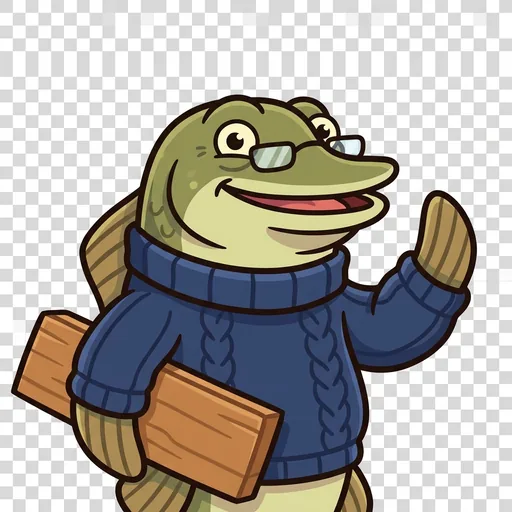 Poppa Pike The bridge is built by everyone laying one plank from IslePals
 -
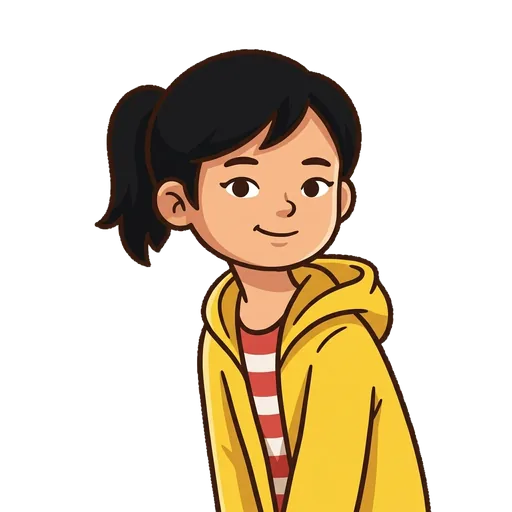 Lan a child of the Green Goes first; makes a friend in a minute
 -
 Gilly Know your spares before you swap from IslePals
 -
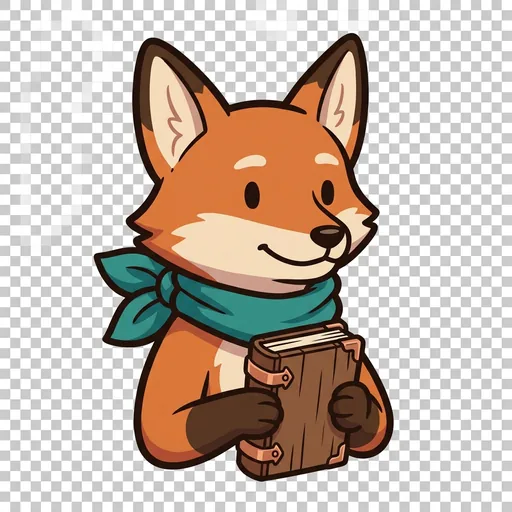 Vera Give from what you can spare from TradePals
 -
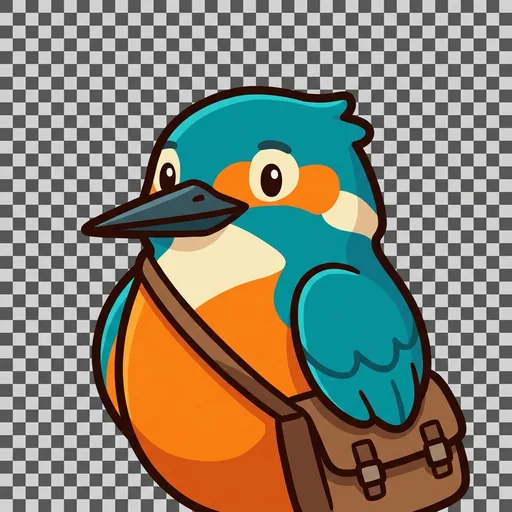 Rafi Ask for a spare, never someone's last from TradePals
 -
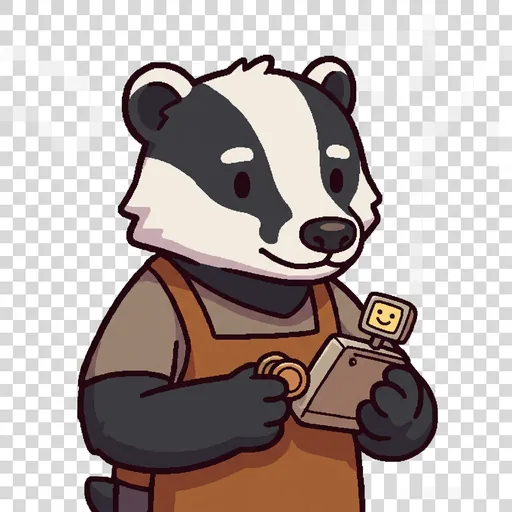 Barter A swap is fair when it helps both sides from TradePals
 -
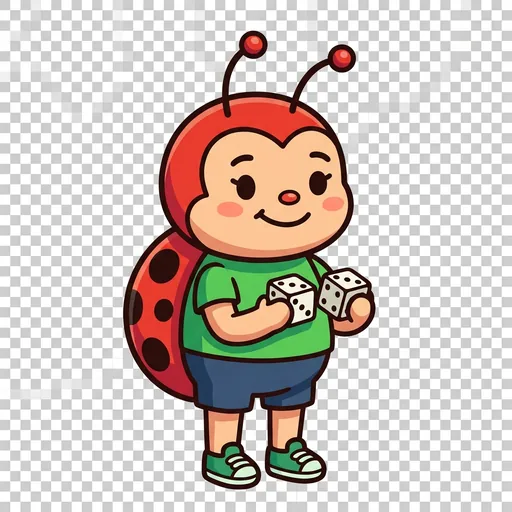 Lucky With two dice, seven has the most ways to come up from SevenPals
 -
 Ambo The commons — whoever has the most can give one so nobody is left short from IslePals
 -
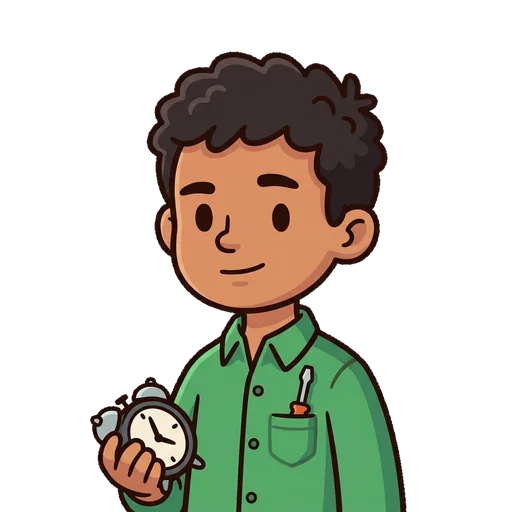 Beto a child of the Green Takes things apart
Every recurring character has a short tune, so you can tell who is on stage before a word is said. The tunes play only when you tap, and the Reading Access sound switch turns them off.
The Honest Page
Which parts of this story are true, stretched, and made up?
True
- Two dice make seven six ways, more than any other total.
- A swap is fair when both sides end up better off. Source
- Three planks and two planks make five; five and two make seven; seven and one make eight.
Stretched
- The tide does not number driftwood patches or roll them like dice. What we simplified: The seven patch stands in for a dice game so the odds can be seen.
Made up
- Gullwick, its bridge and its talking islanders are made up.
- No island has a Fair-o-meter. People have to check that themselves.